When archaeology meets physics, new depths are revealed

Cosmic Particles Help Archaeologists Detect Hidden Underground Spaces

TAU study demonstrates how muon detectors can be used to map subterranean voids before excavation, offering archaeologists a powerful new tool.

A technological breakthrough at Tel Aviv University offers archaeologists a way to identify underground spaces before digging. The system detects muons — elementary particles generated when cosmic rays hit Earth’s atmosphere — which can penetrate rock and soil up to 100 meters deep. By tracking their paths, researchers can locate hidden voids such as tunnels and cisterns.

The method was successfully demonstrated at the City of David archaeological site in Jerusalem, where the system mapped Jeremiah’s Cistern by identifying changes in soil permeability to muons.

Combining Physics and Archaeology

The study was led by Prof. Erez Etzion from TAU’s Raymond and Beverly Sackler School of Physics and Astronomy, and Prof. Oded Lipschits from TAU’s Jacob M. Alkow Department of Archaeology and Ancient Near Eastern Cultures. Other participants included: Prof. Yuval Gadot from the Department of Archaeology and Ancient Near Eastern Cultures; Prof. Yan Benhammou, Dr. Igor Zolkin, and doctoral student Gilad Mizrachi from the School of Physics and Astronomy; Dr. Yiftah Silver and Dr. Amir Weissbein of Rafael Advanced Defense Systems; and Dr. Yiftah Shalev of the Israel Antiquities Authority. The study’s results were published in the Journal of Applied Physics.

“From the pyramids in Egypt, through the Maya cities in South America, to ancient sites in Israel, archaeologists struggle to discover underground spaces,” explains  Prof. Lipschits. “Above-ground structures are relatively easy to excavate, and there are also various methods for identifying walls and structures below the surface. However, there are no effective methods for conducting comprehensive surveys of subterranean spaces beneath the rock on which the ancient site is situated. In the Judean Foothills, for example, the top layer of hard limestone overlies soft chalk, in which the ancients easily carved out vast spaces for water reservoirs, agricultural uses, storage, or even dwellings. Clearly, in such regions, most above-ground archaeological sites resemble Swiss cheese beneath the rock, but we have no way of knowing this. If by chance we excavate above ground, reach the rock, and identify an entrance to a cavity, we could excavate it, but we have no way of locating the subterranean spaces in advance. In the current study, we propose for the first time an innovative method that has been proven very effective in detecting underground spaces with detectors of cosmic radiation, specifically muons.”

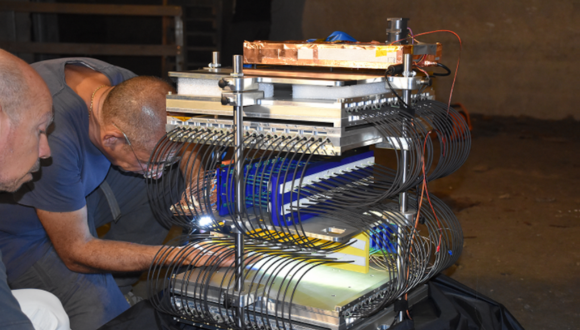
A team from TAU is installing the muon detectors in Jeremiah’s Cave beneath the City of David site

How Muon Imaging Works

The researchers explain that a muon is an elementary particle similar to an electron but 207 times more massive. Muons are created in the atmosphere when energetic particles, mainly protons, collide with the nuclei of molecules in the air. This collision generates unstable particles called pions, which decay very quickly into muons. Muons also have a very short lifetime, decaying after 2.2 microseconds, but they move at speeds close to the speed of light, and thanks to Einstein’s special relativity theory, many of them manage to reach and penetrate the ground.

“The muon shower hits the ground at a fixed and known rate,” explains Prof. Etzion. “Unlike electrons, which are stopped by the ground at just a few centimeters deep, muons lose energy slowly as they pass through the ground, and some can penetrate much deeper – even up to 100 meters for highly energetic particles. Therefore, by placing muon detectors underground and monitoring the environment, we can identify empty cavities where energy loss is minimal. This process is similar to X-ray imaging: the X-ray beam is stopped by bones but passes through soft tissue like flesh or fat, and a camera on the other side captures the resulting image. In our case, the muons act as the X-ray beam, our detector is the camera, and the underground features are the human body.”

Next Steps

As noted, the researchers conducted an impressive demonstration in a rock-hewn installation known as Jeremiah’s Cistern at the archaeological site of the City of David. Combining a high-resolution LiDAR scan of the interior cavity with simulations of the muon flux, they were able to map structural anomalies. Detecting changes in soil penetrability to muons, the system demonstrated the feasibility of using muon tomography for archaeological imaging.

“This article is a first milestone,” says Prof. Lipschits. “We ask physicists to respond to the archaeological need and develop smaller, simpler, cheaper, more durable, more accurate, and more power-efficient detectors. In the next stage, we intend to combine physics and archaeology with AI to produce a 3D image of the subsurface from the vast data generated by the detectors. Our test site will be Tel Azekah in the heart of the Judean Foothills, overlooking the Elah Valley.”

“This is not our invention,” adds Prof. Etzion. “Already in the 1960s, muons were used to search for hidden chambers in the pyramids in Egypt, and recently the technology was revived. Our innovation lies in developing small and mobile detectors and learning how to operate them at archaeological sites. After all, there is a difference between a detector in laboratory conditions and a detector that must be taken to a cave or excavation, where practical problems of electricity, temperature, and humidity inevitably arise. Detection ranges depend on measuring time; the farther the detector’s location, the fewer particles reach it, but realistically, it is possible to analyze images from a distance of up to 30 meters within a reasonable timespan. Therefore, our goal is to place several detectors or move one detector from place to place to produce a 3D image of the entire site eventually. And we have just begun. The next stage involves sophisticated analysis, which will allow us to map everything beneath our feet – even before the excavation begins.”

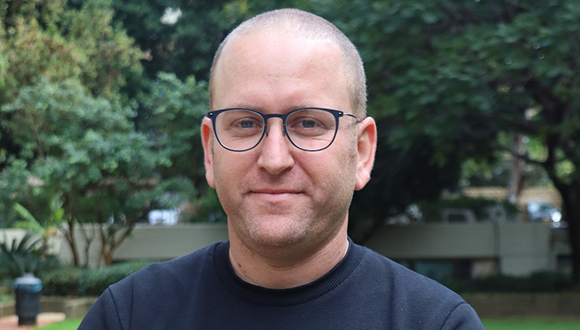
Dr. Gilad Levy (seated) & Prof. Boaz Barak.

New Biological Mechanism Boosts Myelin Production in the Brain

AU researchers discover how to increase myelin production — a finding that could aid treatments for Alzheimer’s and multiple sclerosis.

The study was conducted in the laboratory of Prof. Boaz Barak of the Sagol School of Neuroscience and the School of Psychological Sciences at Tel Aviv University and led by Dr. Gilad Levy. The lab collaborated with researchers from the Hebrew University of Jerusalem, the Weizmann Institute of Science, Tel Aviv University, and Germany’s Max Planck Institute. The findings were published in Nature Communications.

Releasing the Brain’s “Biological Brakes”

Prof. Barak explains: “Damage to myelin is associated with a variety of neurodegenerative diseases such as Alzheimer’s disease and multiple sclerosis (an autoimmune disease in which the body itself attacks the myelin), as well as neurodevelopmental syndromes like Williams syndrome and autism spectrum disorders. In this study we focused on the cells that produce myelin in both the central and peripheral nervous systems. Specifically in these cells, we investigated the role of a protein called Tfii-i, known for its ability to increase or decrease the expression of many genes crucial for cell function. While Tfii-i has long been linked to abnormal brain development and neurodevelopmental syndromes, its role in myelin production had not been studied until now.”

Prof. Barak’s team discovered that the Tfii-i acts as a ‘biological brake’ that inhibits myelin production in the relevant cells. Based on this finding, the researchers hypothesized that reducing Tfii-i activity in myelinating cells might increase myelin output.

Prof. Boaz Barak

Testing the Hypothesis

To test this, the team  used advanced genetic engineering in model mice: Tfii-i expression was selectively eliminated only in myelin-producing cells, while remaining unchanged in all other cells. These genetically modified mice were compared to normal mice in a wide variety of measures, including levels of myelin proteins, structure and thickness of the myelin sheath surrounding axons, speed of nerve signal conduction, and even motor and behavioral performance.

Dr. Gilad Levy explains: “We found that in the absence of Tfii-i, the myelin-producing cells generated higher amounts of myelin proteins. This resulted in abnormally thick myelin sheaths, which enhanced the conduction speed of electrical signals along the neural axons. These improvements resulted in a significant enhancement of the mice’s motor abilities, including better coordination and mobility, along with other behavioral benefits.”

Prof. Barak concludes: “In this study we demonstrated for the first time that it is possible to ‘release the brakes’ on myelin production in the brain and peripheral nervous system by regulating the expression of Tfii-i. This study is among the few to identify a mechanism for increasing myelin levels in the brain. Its results may enable the development of future therapies that suppress Tfii-i activity in myelin-producing cells, to restore myelin in a wide variety of degenerative and developmental diseases in which myelin is impaired — including Alzheimer’s disease, multiple sclerosis, Williams syndrome, and autism spectrum disorders. We believe this fundamentally new approach holds great therapeutic potential.”

Important Campus Updates

“We Stand Strong and Keep Our Sights on a Better Future”

 
Letter from TAU President Welcoming the 2025–26 Academic Year

To the University Community,

Wishing a successful and fruitful academic year to our thousands of students and to our academic and administrative staff!

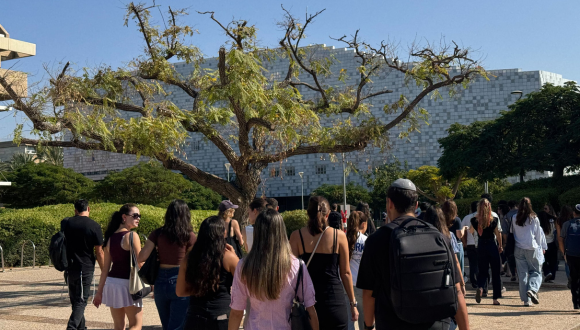
A special greeting goes out to the students beginning their first year at Tel Aviv University. The University management, academic staff, and administrative staff will do everything in their power to make your study experience both beneficial and enjoyable. You are invited, beyond class attendance, to spend time on the lawns and in the cafeterias, and to enjoy everything our campus has to offer.

You will find here a microcosm of Israeli society, where people of all religions and nationalities, from Israel and from around the world, study, teach, research, and meet. This rich human tapestry is what creates the unique community of our University.

Finally, I would like to update you about changes in the University’s leadership. A few weeks ago, our Rector, Professor Mark Shtaif, completed a very successful five-year term, during which he led a dramatic transformation in teaching and learning methods. At the same time, Vice Rector Professor Eyal Zisser also concluded his term, after having made an immense contribution to the University’s academic management.

Professor Noga Kronfeld-Schor of the Faculty of Life Sciences, who until recently headed the New Environmental School, has succeeded Professor Shtaif as Rector. I wish to express my deep gratitude to Mark and to Eyal for their devoted service to the University, and to extend my best wishes to Noga for much success in her important new role.

The full letter

A Letter from TAU President Welcoming the 2025–26 Academic Year

Wishing a successful and fruitful academic year to our thousands of students and to our academic and administrative staff!

 
To the University Community,

Wishing a successful and fruitful academic year to our thousands of students and to our academic and administrative staff!

A special greeting goes out to the students beginning their first year at Tel Aviv University. The University management, academic staff, and administrative staff will do everything in their power to make your study experience both beneficial and enjoyable. You are invited, beyond class attendance, to spend time on the lawns and in the cafeterias, and to enjoy everything our campus has to offer. You will find here a microcosm of Israeli society, where people of all religions and nationalities, from Israel and from around the world, study, teach, research, and meet. This rich human tapestry is what creates the unique community of our University.

The academic year opens after two years of war, which appears to have ended about two weeks ago. The living hostages returned home, and we all experienced a few days of collective uplift. We pray for the swift return of all the fallen hostages and for better and quieter days ahead. The end of the war leaves us with many challenges, first and foremost, providing support for bereaved families and assistance to those who have been physically or emotionally wounded. During the past two years, Tel Aviv University has granted numerous scholarships to support our students who served in the reserves, or whose family members did so, in addition to broad academic assistance. This year, too, we will continue to offer such scholarships. Our debt to the reservists is immense, and the least we can do is help them complete their studies successfully.

Unfortunately, the end of the war does not also end the deep internal rift that has been tearing Israeli society apart since the beginning of the judicial overhaul. This division threatens us to no lesser degree than the external dangers we face. I am sure that each of you holds your own opinions about its causes and about the ways we might overcome this grave social crisis – the most severe one our country has faced since its founding. We expect all members of our University community, including our students, not to hesitate to express their views on this crucial matter, which is vital to our continued existence. We encourage active citizenship, value social engagement in all its forms, and are committed to maintaining a safe and democratic campus where everyone’s freedom of expression is protected.

Finally, I would like to update you about changes in the University’s leadership. A few weeks ago, our Rector, Professor Mark Shtaif, completed a very successful five-year term, during which he led a dramatic transformation in teaching and learning methods. At the same time, Vice Rector Professor Eyal Zisser also concluded his term, after having made an immense contribution to the University’s academic management. Professor Noga Kronfeld-Schor of the Faculty of Life Sciences, who until recently headed the New Environmental School, has succeeded Professor Shtaif as Rector. I wish to express my deep gratitude to Mark and to Eyal for their devoted service to the University, and to extend my best wishes to Noga for much success in her important new role.

Wishing you all a productive academic year and better days ahead,

Yours,

Ariel Porat
President of the University

From left to right: Prof. Elshan Gurbanov, Head of International Programs (AzTU); Prof. Milette Shamir, Vice President International (TAU); Prof. Fariz Mammadov, AzTU Vice-Rector, Head of the delegation; Mr. Konstantin Platonov, Director for Asia Engagement (TAU); Prof. Lev Eppelbaum, Department of Geophysics, Faculty of Exact Sciences (TAU); Dr. Rahid Alekberli, Founding Director and Researcher of the Institute of Defense Technologies and Cybersecurity (AzTU)

Azerbaijan and Israel Strengthen Academic Ties Through TAU–AzTU Collaboration

Azerbaijan Technical University visits TAU to explore joint research, innovation, and exchange opportunities

On October 22, 2025, Tel Aviv University (TAU) welcomed a high-level delegation from Azerbaijan Technical University (AzTU), marking an important step in strengthening academic cooperation between the two institutions.

Led by Vice-Rector Prof. Fariz Mammadov, the Azerbaijani delegation visited TAU to explore new opportunities for collaboration in areas such as cybersecurity and innovation management. The guests expressed particular interest in TAU’s leadership in entrepreneurship education and its expertise in technology transfer and research commercialization. 

During their visit, the delegation met with Prof. Milette Shamir, TAU Vice President for International Academic Collaboration, and Konstantin Platonov, Director for Asia Engagement, for in-depth discussions on expanding joint initiatives in various fields. 

They also held talks with TAU’s Faculty of Engineering, which has an impressive record of patenting innovations and supporting faculty-led startups, resulting in an agreement to launch student and faculty exchange programs.

“The visit of the AzTU delegation marks another step in the steady development of TAU’s ties with Azerbaijan.”—Konstantin Platonov, Director for Asia Engagement

The opening of the Azerbaijani Embassy in Israel in 2023 has significantly promoted university-level connections. Konstantin Platonov emphasized the growing potential for joint academic and research projects, particularly in advanced engineering and technology fields. “Collaboration with Azerbaijan holds great potential, especially in joint PhD training,” Platonov noted. 

“We’re glad to strengthen these ties and look forward to seeing more students and researchers move between our universities in the coming years.”

Cotler fellows 2024/25 on the Terrace Lookout in Mitzpe Ramon during one of the program's field trips

TAU’s Irwin Cotler Fellowship Welcomes Its Most Diverse Cohort Yet

24 international students from 21 countries explore democracy, human rights, and Israel’s story at Tel Aviv University

 
Quick Facts:

Irwin Cotler Fellowship

Who can participate: International students enrolled at TAU
Program focus: Israeli society & history
Program includes:
Lectures and discussions
Field trips across Israel
Public speaking workshops
Leadership and advocacy training


In a time when questions of justice, democracy, and human rights resonate louder than ever, Tel Aviv University’s Irwin Cotler Fellowship Program continues to bring together exceptional international students committed to understanding Israel and the global pursuit of freedom.

Now entering its fourth year, this flagship initiative of the Irwin Cotler Institute for Democracy, Justice and Human Rights has selected 24 fellows from 21 countries for the 2025–2026 academic year, making it its largest and most diverse cohort to date.

Participants hail from India, Turkey, Spain, the United States, New Zealand, Switzerland, the Netherlands, Brazil, and Australia, alongside first-time representatives from South Korea, Kenya, Haiti, China, Liberia, Ghana, and Malta.

Who Are the Cotler Fellows? 

The Cotler Fellowship brings together TAU’s international graduate, PhD, and postdoctoral students from multiple disciplines, including law, political science, medicine, biology, sustainable development, diplomacy, and disaster management.  

Fellows participate in academic lectures, practical training workshops, and field studies that expose them to Israel’s history, society, and ongoing democratic debates.

They engage directly with leading intellectuals, scholars, and activists who shape public conversation on human rights and justice.  
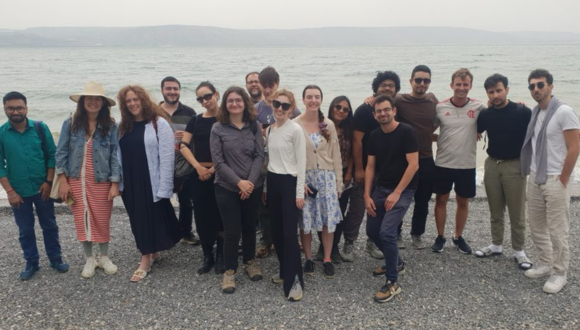
Cotler fellows 2024/25 on one of the field trips

Beyond campus, the program emphasizes experiential learning through visits to sites such as Yad Vashem, Israel’s Holocaust memorial and museum. 

What Makes This Year’s Cohort Stand Out? 

According to Irwin Cotler, Canada’s former Minister of Justice and Attorney General — after whom the Institute is named — the expanded cohort reflects the program’s unique role in shaping global human rights ambassadors. 

“Tel Aviv University’s Cotler Institute Fellowship Program has welcomed exemplary students from all over the world to engage in a unique exploration of today’s most critical human rights challenges, and to be shaped as ambassadors of human rights, carrying a deep understanding and appreciation of Jewish history and of Israel as a Jewish and democratic state.”—Irwin Cotler 

He added that this year’s cohort is “the largest and most diverse to date, which is particularly inspiring given the difficult times we are experiencing.” 

For Ariela Cotler, who founded the Institute with her husband, the fellows’ choice to study in Israel at this moment carries special meaning. “It is not a simple time in the lives of Israelis, or Jews world over,” she reflected.  

“Their interest in deepening their knowledge about Israel’s and the Jewish people’s story, and their choice of studying at Tel Aviv University during these challenging times, makes them all the more special to me.”—Ariela Cotler 

How Do Fellows Describe Their Experience? 

Alumni of the program refer to it as a turning point in their academic and personal development.  “Participating in the fellowship was a meaningful addition to my education,” said Amarah Friedman, an American fellow from the 2024-2025 cohort.  

“Traveling with the group allowed me to visit places I would not otherwise get to see and provided insight into a range of perspectives and opinions different from my own. I value the understanding I have gained about democracy as well as the challenges it faces.”—Amarah Friedman, USA 

Lindsay MacKinnon, a Canadian, called the fellowship “a valuable and eye-opening experience,” adding: “The in-class meetings and discussions were thought-provoking, and the field trips were varied and engaging.”  

“The field trips to Yad Vashem and Ben-Gurion’s house at Sde Boker were particular highlights for me.”—Lindsay MacKinnon, Canada
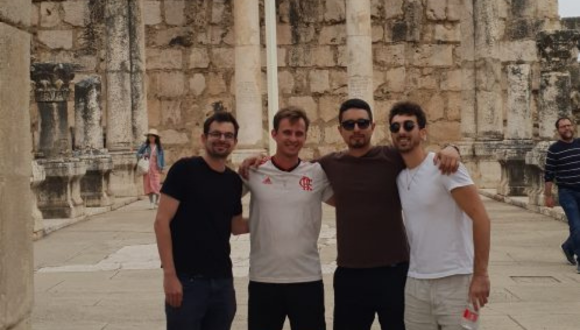
Antonio Peña (second from the right) with other Cotler fellows on a field trip

Antonio Peña from Colombia emphasized the program’s international diversity: “Being able to learn from engaging lectures by people who play different roles in society and visiting historically significant sites across Israel has provided insights that go beyond traditional study methods.  

“But what went beyond my expectations was the presence of a diverse group of participants from various cultural and professional backgrounds, which made my experience even more engaging and unique.”—Antonio Peña, Colombia  

How Does the Cotler Institute Extend Its Impact? 

Beyond the fellowship, the Irwin Cotler Institute for Democracy, Justice and Human Rights has established itself as a global hub for dialogue on antisemitism, justice, and human rights. 

The Institute co-publishes the Annual Antisemitism Worldwide Report, organizes international conferences, and leads workshops for diplomats, policymakers, and civil society leaders in Israel and abroad.  
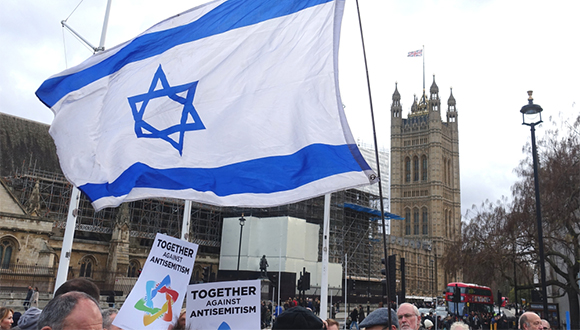
Programs have taken place in countries as diverse as Brazil, Japan, Rwanda, Finland, Latvia, Bulgaria, Portugal, and Cyprus, extending the Institute’s reach far beyond Tel Aviv. 

Why Does It Matter? 

The record-breaking size and diversity of this year’s fellowship class highlight not only the Institute’s expanding international recognition, but also the enduring relevance of Israel as a place to confront today’s most pressing questions of justice and democracy. 

From TAU’s Film School to the Red Carpet in New York

TAU alumnus Meyer Levinson-Blount wins a Student Academy Award

 
It’s not every day that a film student gets to live every creator’s dream — to walk the red carpet, hear the applause in a glittering New York theater, and win one of the most coveted prizes in the film world.

Meyer Levinson-Blount, a graduate of Tel Aviv University’s Steve Tisch School of Film and Television, did exactly that when he won second place in the narrative category of the Student Academy Awards for his film Butchers’ Mark.

“At the end of the evening, we found ourselves sitting in a restaurant, trying to understand what had just happened,” Levinson-Blount recalls. “And what happened is simple: thanks to Tel Aviv University, we got to experience a once-in-a-lifetime evening — something not everyone gets to have.”

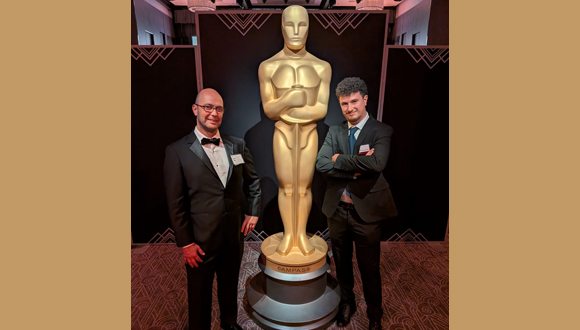
The Oscar was waiting for them. Meyer Levinson-Blount and Oron Caspi

A Global Stage for Emerging Filmmakers

The Student Academy Awards, granted annually by the American Academy of Motion Picture Arts and Sciences, aim to nurture the next generation of filmmakers around the world.
The competition is considered one of the most prestigious and influential in the field, with thousands of films submitted each year from academic institutions worldwide. Winners are selected for artistic quality, originality, and creative courage, and the award is widely regarded as a gateway to the international film industry.

Like the Halls of TAU’s Film Department — Only with a Tuxedo

Levinson-Blount says he truly grasped the significance of the moment only when he arrived at the ceremony at New York’s Ziegfeld Ballroom:
“There was a red carpet at the entrance, journalists interviewing the winners, and inside a big open bar and a giant Oscar statue for photos,” he shares. “The night before, we stayed up late working on the speech — I even prepared a pitch document with a QR code for our next productions. At the event, we met filmmakers, producers, and academics — it felt like home, just like the corridors of TAU’s Film Department, only with tuxedos.”

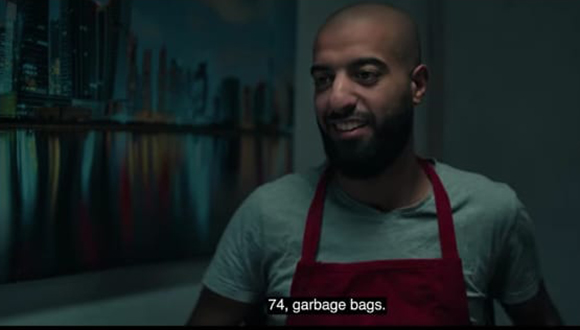
The film’s plot, inspired by Meyer’s experience working at a supermarket in the fall of 2023, follows Samir, an Arab butcher in Tel Aviv accused of removing posters of the hostages, who sets out on a journey to prove his innocence.
The film explores themes of suspicion and racism in the wake of the October 7 events, portraying their complexity from a human, sensitive, and thought-provoking perspective.

From the film Butchers’ Mark. Actor Omer Samir

Gratitude and Partnership

Levinson-Blount, who immigrated to Israel from the United States about a decade ago, expressed heartfelt thanks to his creative partners after the win:
“I’m overjoyed for this opportunity — I prayed a lot for this moment,” he said. “Thank you to Oron Caspi, the film’s producer, and Omer Samir, the lead actor — I couldn’t have done it without you.”

Jewish Life at Tel Aviv University: Find Your Home Away from Home

Where Jewish tradition meets university life

 
Jewish life at Tel Aviv University is thriving, thanks to the dedicated efforts of Eitan and Elana Phillips, TAU’s onsite rabbinic couple and the M.D. Katz Jewish Learning Initiative on Campus (JLIC) program directors.

They are successfully building a welcoming and inclusive environment for students wishing to observe a religious life on campus or learn more about Judaism. Their home, located just steps from the university, has become a hub for social activities, religious studies, and community building.

Creating Connections

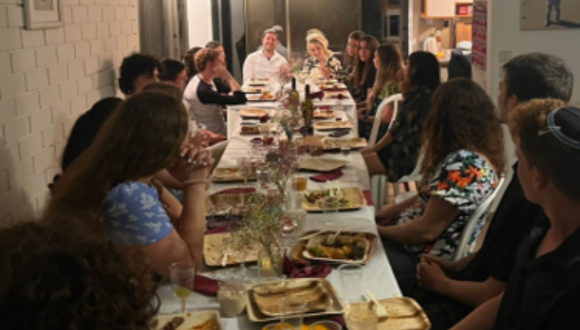
Eitan and Elana, working closely with the Lowy International staff, are passionate about fostering an open and accessible Jewish community on campus. “Our aim is to provide a home away from home for students and to incorporate them into our family,” Elana shared. This vision is reflected in the variety of events they host, from weekly Shabbat dinners to special holiday celebrations.

One of the gatherings at the Philipps’s house

Phillips’s efforts are already making a significant impact. The second semester of 2023/24 kicked off with a barbecue at their home, drawing over 70 students.

“The BBQ was a nice time for students to come, know our home, meet us and each other, and see what this community is like,”—Elana Philips.

Engaging Learning Opportunities

Jewish learning is a central pillar of Phillips’s work: there are weekly *chabura* sessions where students take the initiative to teach their peers.

“It’s very important that students lead their own learning and share what they’ve learned.”—Rabbi Eitan.

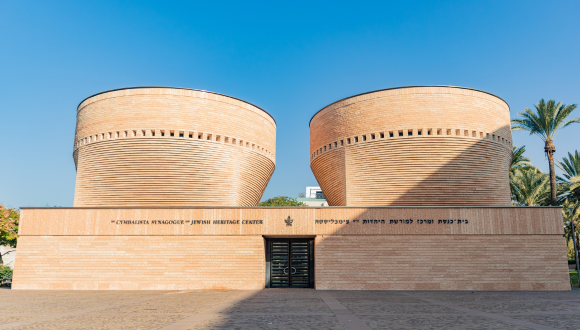
These sessions are held on the grass outside the Cymbalista Synagogue on campus, providing a relaxed setting for exploration and discussion.

Cymbalista Synagogue

This year, the Phillipses also hosted a student debate on antisemitism, held at the Lowy International School’s building. The debate, run by the students with a professional setup including teams of three and a judging panel, tackled this critical issue head-on, particularly relevant to students in the dual degree program with Columbia University.

Another highlight of the year was the Shavuot learning session, which began at 11 pm and continued until 2 am.

“It was incredible—packed out with 40 people who decided to come and learn together.”—Rabbi Eitan. 

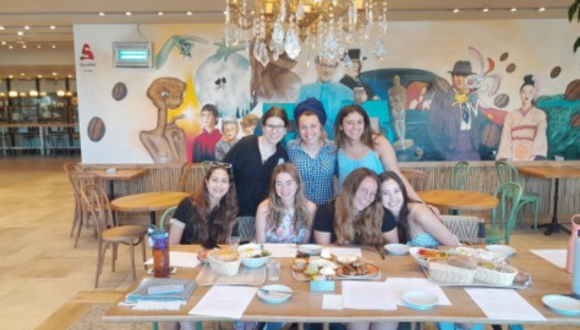
Elana Philips with the study group at their morning meeting

For the past two years, Elana has also led a women-only study group, which she describes as “a fun experience” where they meet weekly to explore topics of interest.

Plans for the Coming Year

As they look to the future, Eitan and Elana are excited to expand their offerings. “Next year, we have something planned every day for our students,” says Eitan. The upcoming schedule is set to include meditation sessions, Tanach learning focused on the Books of Judges and Samuel, a special session led by Elana, and continued opportunities for meaningful volunteering at a children’s home.

Students debate antisemitism

In addition, there are plans to launch an Israel discussion forum, providing a safe space for students to explore and discuss their feelings about Israel.

“We’ll be reading and discussing various texts on Israeli history. We feel that this is something the students really need and want,”—Rabbi Eitan.

Through their open and pluralistic approach, Eitan and Elana strive to provide Jewish life for those who seek it and an opportunity for exploration for those who are curious. Their work is not only about religious observance but also about building a vibrant, supportive community where every student can feel at home.


For updates on their activities and to get involved, follow the Jewish Learning Initiative at TAU on Instagram

Watch our webinar with Rabbi Eitan:

You can also download the brochure to learn more about the Jewish Learning Initiative at TAU.

TAU Visiting Professor Joel Mokyr Awarded Nobel Prize in Economics

The distinguished economic historian, who teaches at TAU’s Berglas School of Economics, recognized for groundbreaking research on innovation and economic growth

 
Prof. Joel Mokyr, Visiting Lecturer at Tel Aviv University’s Eitan Berglas School of Economics, has been awarded the 2025 Nobel Prize in Economic Sciences.

He shares the prize with Philippe Aghion and Peter Howitt for their pioneering work on how innovation and the forces of creative destruction drive economic growth and improve living standards around the world.

The Royal Swedish Academy of Sciences, which awards the Nobel Prize in Economics, noted that their research explains how technological innovation leads to new products and production methods that replace older ones, ultimately improving living standards, health, and quality of life. The Academy also emphasized that such progress cannot be taken for granted.

Prof. Mokyr, a faculty member at Northwestern University and an Israeli-American scholar, was awarded half of the prize, valued at 11 million Swedish crowns (approximately $1.2 million).

In an interview following the announcement, he reflected on his lifelong focus on the forces that drive prosperity, describing his research as an exploration of “why we are so much richer and live so much better than our great-great-grandfathers.”

Prof. Joel Mokyr

A historic day for Israeli academia

Prof. Amal Jamal, Dean of the Gershon H. Gordon Faculty of Social Sciences at Tel Aviv University, said:

“On this historic day, we are proud to congratulate our colleague Prof. Joel Mokyr on receiving the Nobel Prize in Economics. Prof. Mokyr regularly teaches as a visiting lecturer at the Eitan Berglas School of Economics at Tel Aviv University, and his win is a great honor for us. It is yet another testament to the international prestige of Israeli research and to the high standing of our School of Economics.”

Prof. Nitai Katz Bergman, Head of the Eitan Berglas School of Economics, added:

“Prof. Joel Mokyr has been teaching with us for many years as a visiting lecturer at the School of Economics. He is a world-renowned scholar who has greatly contributed to the study of economic growth, and we send him our warmest congratulations. This is a very happy day for all of us.”

TAU to Honor Steve Witkoff with the George S. Wise Medal

In recognition of his role in securing the return of the hostages, ending the war, and initiating a path toward regional peace

 
Tel Aviv University is proud to announce that it is awarding Steve Witkoff the George S. Wise Medal, one of the University’s highest honors. This accolade recognizes his pivotal contributions to the return of the hostages to Israel, efforts to end the war, and role in initiating early steps toward regional peace.

This prestigious decoration is given to prominent leaders with vision and impact as a tribute to their exceptional service to humanity, the people of Israel, and the State of Israel. Previous recipients include President of Singapore Tharman Shanmugaratnam, Prime Minister of Canada Dr. Mark J. Carney, former President of Poland Aleksander Kwasniewski, and the late Foreign Minister and Ambassador Abba Eban.

Tel Aviv University President Prof. Ariel Porat informed Mr. Witkoff of the decision just hours after the hostages’ return. Mr. Witkoff answered that he would accept the medal with great pride. The award ceremony is scheduled for May 2026 on the University campus during its annual Board of Governors meeting, with over one thousand attendees expected.

In the letter sent to Mr. Witkoff, the University outlined its reasons for bestowing this honor:

“You have been selected for the George S. Wise Medal for your tireless and successful work in bringing home the hostages, your remarkable availability to the families, and your commitment to achieving peace and an end to the war. Your actions reflect profound moral courage, empathy, and solidarity — values that lie at the heart of TAU’s mission.”

President Prof. Ariel Porat remarked: “There is no one more deserving than Steve Witkoff for our gratitude and recognition for his efforts in securing the return of the hostages, which ultimately succeeded. When I informed him of the University’s decision, he was deeply moved and asked if I would deliver the news personally to his mother. I asked him to bring her to the ceremony and he promised to do so. I felt honored to share in that moment.”

Victoria

Phone: +61 3 9296 2065
Email: office@aftau.asn.au

New South Wales

Phone: +61 02 7241 8711
Email: admin@aftau.org.au

Western Australia

Phone: :+61 0418 46 5556
Email: davidsolomon@aftau.org.au