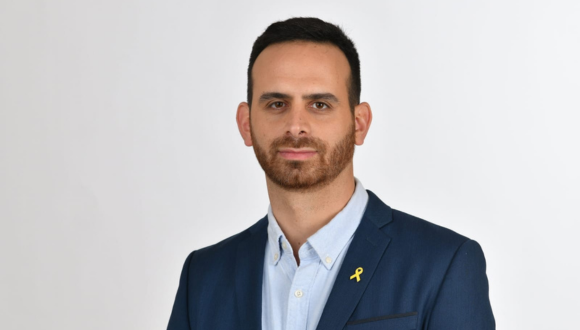
Bridging the Gap: TAU Students Assist an Impoverished Town

A hands-on course at the TAU Buchmann Faculty of Law brings legal knowledge to needy citizens

A low railing separates the distressed town of Jisr al-Zarqa from the affluent coastal city of Caesarea. Just a thin barrier, yet it represents a vast divide—socially, economically, and historically. Nestled along Israel’s Mediterranean coast, Jisr al-Zarqa is the country’s only Arab town on the shoreline, home to some 16,000 residents living on barely two square kilometres of land. Established in the 1920s around fishing and agriculture, the town today faces high unemployment, overcrowded housing, and decades of planning neglect.

Into this gap steps Tel Aviv University. Through its Buchmann Faculty of Law, the University is pioneering an educational initiative that merges legal education with social responsibility, societal change, and coexistence. The course, “Jisr al-Zarqa – Space, Planning, and Housing,” invites law students to bring the classroom to the community. Once a week, students visit Jisr al-Zarqa’s social services headquarters, offering pro bono legal advice on matters ranging from housing assistance and other governmental benefits to more complex legal matters, such as housing registration and permits.

“I enrolled in this course out of a deep sense of obligation, especially toward vulnerable groups or those who have experienced exclusion for various reasons,” says Bashar Siri, a third-year TAU law student.

“I’m glad I took part in the course to help, even if only in a small way. The residents here are an inseparable part of us.”

Hands-on Learning

Led by Prof.Neta Ziv, TAU’s Vice President for Equity, Diversity and Community, along with attorney Sharon Karni Kohn from the Hagar Carasso Social  Housing Program, the course is a model of engaged scholarship.

“The Jisr al-Zarqa Housing and Planning course is unique in the way teaching and research are conducted at the law school,” explains Prof. Ziv.

“First, it brings together Arab and Jewish students in work settings to explore how law can improve the lives of people in the poorest locality in Israel—and at the same time, how law can be used by the powerful to reinforce inequality. Second, students go out into the field, applying their skills to assist real people in real situations while studying doctrine and legal theory. Finally, for Arab students, this is one of the few opportunities to study their own communities academically, with hands-on reflective practice.”

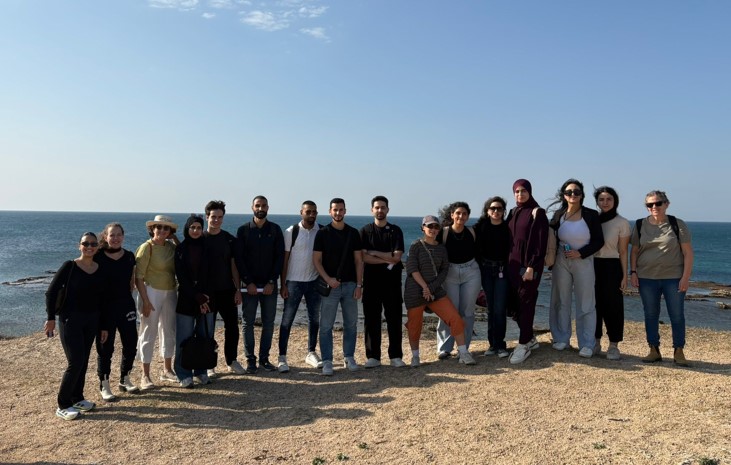
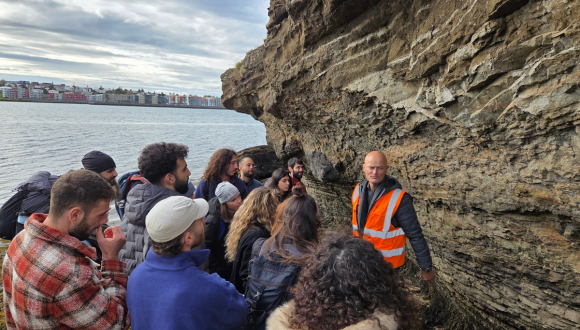
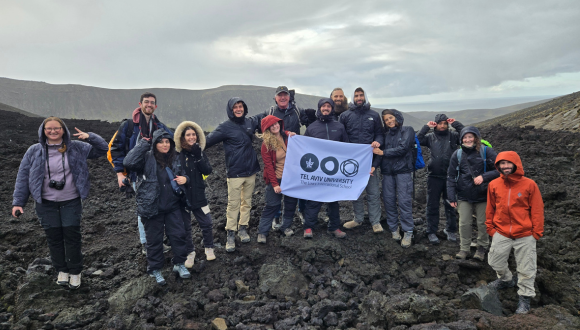
Jisr al-Zarqa Housing and Planning course students and professors

The TAU work is tangible and immediate. On a recent morning, Kohn helped a resident whose home had been recently demolished due to the absence of a building permit. Together, they filled out a rent-assistance form, a small but vital step toward stability.

Diving Deep

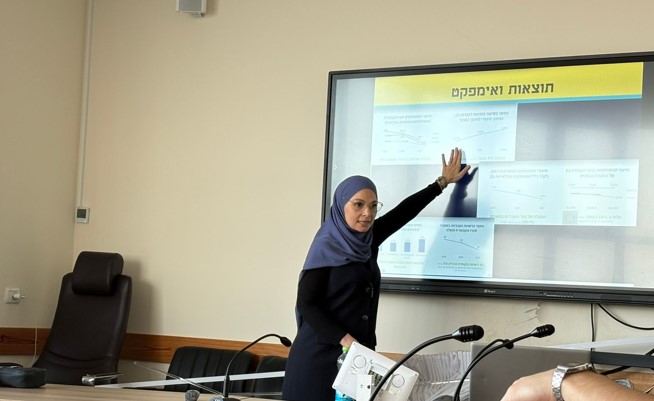
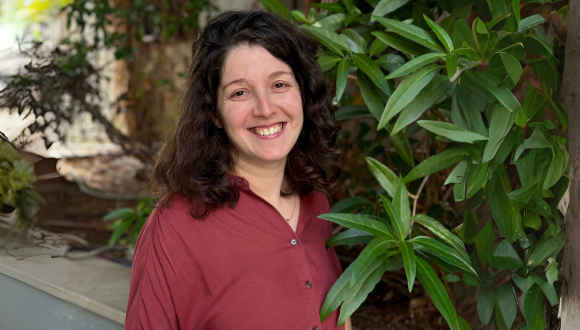
The course is supplemented by guest lectures from experts across multiple disciplines, including architect Areej Serhan, a planner who discussed the challenges of mobility and development in Arab communities. “Arab towns often suffer from a lack of proper paperwork, planning, and development,” she explained. “It becomes a vicious cycle that is not easy to break.” Yet, Serhan said, in recent years, the situation is changing. “There’s talk of advancing social mobility and cooperation. We see progress in closing gaps in educational results and economic growth in certain communities.”

Architect Areej Serhan addressing the students

The TAU course is part of the change. Funded by the Social Initiative for the Implementation of Government Decision 1804 (through the JDC) and the Galileo Fund, and supported by TAU’s Commission for Equality and Diversity, the course exemplifies the University’s commitment to social impact. It bridges gaps—between communities, between students and society, and between legal knowledge and real-world application.

New TAU Study: 75% of Arab Israelis Support an Arab Party in the Coalition

A new study from Tel Aviv University’s Moshe Dayan Center finds major shifts in political attitudes among Arab citizens of Israel, including record-high support for an Arab party joining the next governing coalition.

This marks a significant increase from 63% in May 2023, before the war.

The data also indicate that if the Joint List were re-established, voter turnout in Arab society would climb to 61.8%, and the party could secure 15.5 Knesset seats.

Main findings:

If elections were held today, expected voter turnout in Arab society would be 52.4%, similar to the turnout in the 25th Knesset elections (53.2%) held in November 2022. In this scenario, Hadash-Ta’al (5.3 seats) and Ra’am (3.9 seats) are expected to pass the electoral threshold, while Balad (at 2.6 seats) is not. However, if the Joint List were re-established, as in the past, as a union of the four Arab parties — Hadash, Ta’al, Ra’am, and Balad — expected voter turnout in Arab society would rise to 61.8%, and the Joint List could win 15.5 seats.

A large majority (77.4%) support the inclusion of an Arab party in the government to be formed after the next elections: 45.6% support joining any government that emerges, and 31.8% support joining a center-left government. These levels are similar to findings from previous surveys conducted by the Konrad Adenauer Program during the war.

An overwhelming majority of respondents (74%) indicated that the most pressing issue facing the Arab public today is the need to tackle violence and crime. Other key concerns include resolving the Palestinian question (7.6%) and regulating planning and construction in Arab towns (7%).

Regarding the personal identity of Arab citizens, two main components stand out: Arab identity (35.9%) and Israeli citizenship (31.7%). Additional elements include religious affiliation (17.3%) and Palestinian identity (14.7%).

A substantial majority of the Arab public (76.6%) report a weak sense of personal security. The main factor negatively affecting their mood is the high number of violent incidents in Arab communities (51.9%), followed by fear of a new war breaking out in the region (14.2%), the situation of Palestinians in Gaza (11.3%), and economic hardship (10%). At the same time, a large majority (73.4%) of respondents describe their economic situation is relatively good — the highest figure recorded in Konrad Adenauer Program surveys during the war.

A large majority of respondents (74.6%) said that relations between Arab and Jewish citizens of Israel have deteriorated over the past two years as a result of the war; 45.8% even stated that relations have deteriorated significantly. Additionally, 37.5% of respondents said their sense of belonging to the state has weakened over the past two years due to the war. However, 50.8% reported that the war did not affect their feelings toward the state one way or the other.

A majority of the Arab public (64.6% of respondents) believe in Arab-Jewish political cooperation, yet only 44.7% believe that the Jewish public actually supports such political cooperation.

About half of the Arab public (47.3%) believe that the realistic solution to the Israeli-Palestinian conflict is a two-state arrangement based on the 1967 borders. Only 14% view a single state — from the river to the sea — shared by Israelis and Palestinians as a realistic option, and 8.5% propose a regional solution with international mediation. In contrast, 21% of respondents believe that no political solution is currently on the horizon.

Dr. Arik Rudnitzky, Director of the Konrad Adenauer Program for Jewish-Arab Cooperation at the Moshe Dayan Center: “The last two years have not been easy for Arab citizens, as the ongoing war in Gaza and the suffering of the Palestinian population have deeply troubled them. Yet the support for including an Arab party in the coalition, as well as the belief in Arab-Jewish political partnership, even in the shadow of a prolonged war, indicate that the Arab public is demonstrating noteworthy political maturity, upholding values of public order and democracy, and now seeking to contribute to the rehabilitation of Israeli society as a whole after the war. Despite the harshest and longest confrontation in the history of the Israeli-Palestinian conflict, the political compass of Arab Israelis remains focused on the civic issues that concern them on a daily basis. The Palestinian issue is always present in the background, but for the overwhelming majority of Arab citizens, it does not dictate their political agenda.”

TAU Student Team Wins Gold Medal at Prestigious iGEM Competition

For Developing an Innovative Strategy Toward a New Treatment for Advanced Lung Cancer

Tel Aviv University’s iGEM student team has won a gold medal at the prestigious international iGEM competition, held recently in Paris, France, for developing an innovative therapeutic strategy aimed at treating metastatic lung cancer – offering new hope for patients who until now had no effective treatment options. The project also reached the finals for Best Oncology Research and Best Model.

About the iGEM Competition

iGEM is a global competition in synthetic biology in which each team develops an innovative idea designed to solve a challenge in the field. Teams then implement the idea using engineering, biological, and computational tools in a process that resembles early-stage startup development.

This year, more than 400 teams from around the world participated.

At Tel Aviv University, the iGEM team is composed each year of students from diverse academic backgrounds—including engineering, life sciences, medicine, and exact sciences—who come together to conduct research in synthetic biology.

The Team’s Strategy: Confronting Five Central Challenges in Cancer Treatment

Under the guidance of Prof. Tamir Tuller from the Faculty of Engineering, this year’s team developed a strategy addressing five major challenges that must be overcome to achieve an effective treatment for metastatic lung cancer in particular, and for cancer more broadly:

  1. Drug delivery: One of the main challenges in the pharmaceutical world today is finding a strategy that enables transporting a therapeutic molecule directly to the target tissue.
  2. Incomplete eradication: It is rare for cancer treatments at advanced stages to destroy all cancerous cells. Even a small number of remaining cells can divide and eventually cause the cancer to return—often in a more aggressive form.
  3. Limitations of biological therapies: Most biological treatments identify cancer cells based on altered proteins that typically appear on the cell membrane. However, in many cases, cancer-driving mutations do not change the protein, or they change a protein that is not membrane-bound.
  4. Trial-and-error development: Unlike engineering fields, drug development today still relies heavily on trial and error.
  5. Patient variability: While pharmaceutical companies aim to develop drugs that can treat many patients, there is often high variability in the distribution of mutations among different individuals, making it difficult for standard strategies to provide a universal solution.

To illustrate these challenges, the team described the effort to overcome them as a chess match against cancer.

Their solution includes a DNA sequence that silences a cancer-related gene and is attached to an antibody capable of penetrating cancer cells. The various components were designed using a combination of diverse computational strategies and innovative algorithms.

From Competition Success to Real-World Impact

Following their success, the team submitted a patent application through Ramot – Tel Aviv University’s technology transfer company. A scientific paper describing the development will be published soon.

The team also prepared a comprehensive and detailed business plan aimed at bringing the product to market. Loza, a company operating in the international pharma and biotech sectors, was impressed with the project and contributed to the team.

Educational Outreach: National High-School Competition

In collaboration with the ORT high-school network, the team organized a national synthetic biology competition for high-school students, with hundreds of participants.

Team Members

Shir Shance (Captain, Faculty of Life Sciences),
Idan Eyni Galanti (Captain, Faculty of Engineering),
Michael Kovaliov (Head of Modeling, Faculty of Exact Sciences),
Ester Buderovsky (Head of Biology, Faculty of Medicine),
Ariella Nouman (Faculty of Engineering),
Gal Aziel (Faculty of Medicine),
Niv David (Faculty of Engineering & Faculty of Life Sciences),
Roni Zarkhovsky (Faculty of Engineering & Faculty of Life Sciences),
May Lieber (Faculty of Engineering),
Din Saadon (Faculty of Engineering),
Hillel Charbit (Faculty of Exact Sciences),
Dr. Daniel Dovrat (Team Advisor, Faculty of Engineering).

The iGEM steering committee included Yair Sakov from the TAU Innovation Center, the team from Startup Nation Central, and Professors Martin Kupiec, Avigdor Eldar, Uri Gophna, and Itai Benhar.

Prof. Tuller: “The Team Was Outstanding”

Prof. Tuller concludes:
“This year’s team was remarkable by every measure. I believe that their developments—including the models and software—will influence not only the field of lung cancer, but also other types of cancer, genetic diseases, and basic research in molecular biology and medicine. I would like to extend special thanks to the Startup Nation Central team, who helped train the group in entrepreneurship at the highest level.”

Underwater Robotics Expert Lectures at Tel Aviv University

Prof. Benedetto Allotta from the University of Florence joins TAU as a visiting scholar

For Prof. Benedetto Allotta, this year’s visit to Tel Aviv University as a Lowy Distinguished Guest Professor builds on a connection to Israel that began more than a decade ago.

Originally from Sicily and now based in Florence, he first came to Israel in 2014 while collaborating with the Israel Antiquities Authority. Wanting to understand the culture before he arrived, he turned to a colleague in Florence who teaches biblical Hebrew for guidance.

“I asked her to teach me the Hebrew alphabet. This helped me gain a basic understanding of the place before my arrival,” recalls Prof Allotta.

“Since that initial visit, I have returned to Israel ten times, traveled extensively throughout the country, and formed many meaningful friendships.”

A Decade of Collaboration and Friendship

Over the past decade, Professor Allotta, a Mechanical Engineering Professor at the University of Florence, has developed a profound connection with Israel. His relationship with the country deepened further when he was invited to serve as a Lowy Distinguished Guest Professor, within the framework of the Institute of Advanced Studies and the Lowy International School.

In November, Professor Allotta gave several lectures at Tel Aviv University on cutting-edge robotics research projects, which drew considerable interest.

Professor Allotta opened his talks at TAU by speaking candidly about his longstanding support for Israel, including his leadership role in the Association Italia–Israele Florence. Over the years, he has hosted Israeli scholars and students in his lab and has spoken up for Israel on social media. These actions sometimes came at a personal cost.

In February 2025, he helped organize a TAU workshop in Florence on antisemitism and resilience. Once news of the workshop became public, pro-Palestinian activists began targeting him online, leading to widespread harassment across several platforms. He faced threats, protests, and even needed police protection. A disciplinary procedure initiated at his university, based on claims of racism and Islamophobia, was eventually dismissed at the first hearing.

Professor Allotta also shared how he traveled to communities affected by the events of October 7th, including Ofakim, Sderot, some kibbutzim and the Nova festival site. Meeting survivors and bereaved families deeply moved him. At one point in his lecture, he paused to regain composure, gently telling the audience, “I’m ok, let’s move on,” when they urged him to take his time.

Research at the Frontier of Robotics

At the Mechatronics and Dynamic Modeling Lab (MDM) at the University of Florence, Professor Allotta focuses on two major research areas: marine robotics and wearable robotics.

He observes that the underwater world is explored far less than outer space.

“The working conditions of underwater workers are far worse than the working conditions of astronauts.”

To address these challenges, his team develops highly advanced robots designed to substitute for humans in the depths of the sea. These underwater robots serve a wide range of purposes and are utilized by industries, navies, and archaeological researchers.

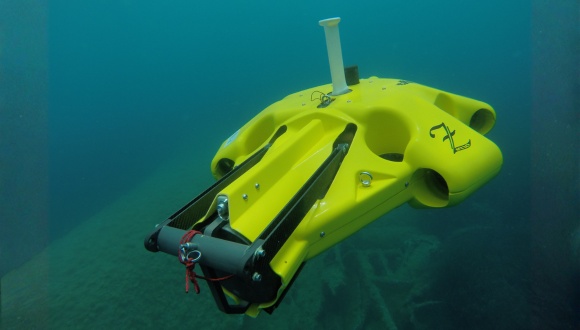
ZENO Autonomous Underwater Vehicle with extreme maneuverability capabilities is one of maritime robots developed in Professor Allotta’s team at his lab

In the realm of wearable robotics, Professor Allotta specializes in creating hand exoskeletons aimed at rehabilitation and daily assistance for people with disabilities.

The inspiration for this work came from an Italian patient affected by Clenched Fist Syndrome (CFS), who approached Professor Allotta with a request for a mechanical device that could restore basic hand function.

This personal story became a catalyst for the development of innovative solutions in wearable robotics to enhance quality of life for individuals facing physical challenges.

Restoring hand function with wearable robotics

Prof Allotta presented this research in the Biological and Soft Matter Physics Seminar series at the TAU School of Physics and Astronomy, where he highlighted how engineering innovation and rehabilitation science are coming together to shape new possibilities in human–machine interaction.

For TAU’s engineering and biophysics students and faculty, the lectures by Prof Allotta offered a fresh perspective on how robotics can improve lives both underwater and on land.


Inspired by the intersection of robotics, physics, and human health?

Learn more about TAU’s MSc in Biomedical Engineering and join a community advancing non-invasive technologies that improve diagnostics and patient care.

RNA-Based Gene Therapy Offers New Hope for ALS Patients

TAU researchers identify a key molecular mechanism behind ALS and succeed in stopping, and even reversing, nerve degeneration.

The team uncovered a previously unknown molecular mechanism that drives the progression of ALS and succeeded in neutralizing it using RNA-based gene therapy. “When we added a specific RNA molecule to human cells and animal models for ALS, the nerve cells stopped degenerating and even regenerated,” the researchers said. The breakthrough findings may offer new hope to millions of patients worldwide.

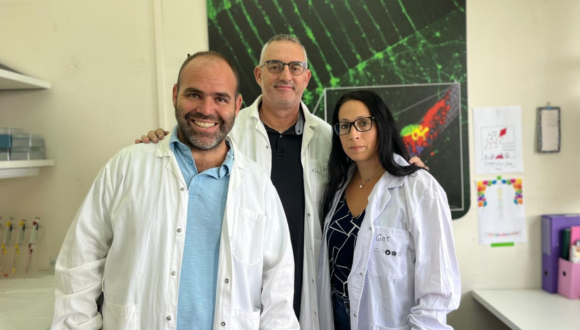
The research team (Left to right): Dr. Ariel Ionescu, Prof. Eran Perlson & Tal Pery Gradus.

Uncovering the Mechanism Behind ALS

The study was conducted in the laboratory of Prof. Eran Perlson from the Gray Faculty of Medical & Health Sciences and the Sagol School of Neuroscience at Tel Aviv University. It was led by Dr. Ariel Ionescu and Dr. Lior Ankol, in collaboration with Dr. Amir Dori, Senior Neurologist and Head of the Neuromuscular Disease Unit at Sheba Medical Center. Additional participants included researchers from the Weizmann Institute of Science, Ben-Gurion University of the Negev, and research institutions in France, Turkey, and Italy. The paper was published in the leading neuroscience journal Nature Neuroscience.

Prof. Perlson explains: “Our lab studies ALS – a fatal, incurable neurodegenerative disease. ALS affects motor neurons and causes gradual paralysis of all muscles in the body. Most patients die within 3–5 years of diagnosis, due to paralysis of the diaphragm muscles and respiratory failure. We know that in ALS, the neuromuscular junctions – where nerve fibers (axons) meet muscle cells and transmit electrical signals from the brain to the muscles — are disrupted. However, the molecular mechanisms causing this damage remained unknown until now, and consequently no effective treatment has been developed. In this study, we wanted to get to the root of the matter and generate new knowledge that would enable the development of effective drugs for ALS.”

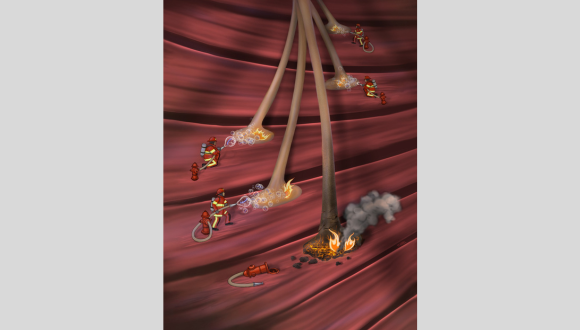
Illustration showing the gene therapy’s protective effect on motor neurons, preventing the “fire-like” degeneration characteristic of ALS

How the Disease Develops

The current study was based on a feature of ALS discovered previously in Prof. Perlson’s lab: toxic clusters (aggregates) of a protein called TDP-43 (usually responsible for regulating protein production at the site) form at the tip of the nerve, where it meets the muscle. To discover how these TDP-43 aggregates are formed, the researchers used a mouse model for ALS, tissues from ALS patients, and cultures of human stem cells.

The study found that muscle cells produce small RNA molecules called microRNA-126 and send them in vesicles, through the synapsis, to the tip of the nerve cell. The role of these molecules is to prevent the expression of the TDP-43 protein at the neuromuscular junction when it is not needed. Dr. Ionescu explains: “We discovered that in ALS, the muscle produces a smaller amount of microRNA-126, which leads to an excess of TDP-43. The excess protein forms toxic aggregates that attack molecules essential for functioning of the mitochondria — the nerve cell’s powerhouse. Damage to the mitochondria causes an energy deficit, gradually destroying motor neurons and leaving patients’ muscles paralyzed.”

Reversing the Degeneration

The study further showed that when the amount of microRNA-126 is reduced, a process similar to ALS occurs, and the neurons are destroyed. Conversely, increasing the level of microRNA-126 in tissues taken from ALS patients and in ALS model mice led to a decrease in the levels of TDP-43, and the neurons stopped degenerating and even regenerated. The researchers concluded that adding microRNA-126 rescues neurons damaged by ALS, prevents degeneration of the neuromuscular junction, and could serve as a basis for developing effective drugs for this currently incurable disease.

Prof. Perlson concludes: “In this study, we identified for the first time a critical molecular mechanism of ALS in its early stages: a reduction in the amount of microRNA-126 transferred from muscle to nerve, resulting in the formation of toxic aggregates of the TDP-43 protein that kill neurons. Our findings may serve as a basis for developing an effective gene therapy focused on adding microRNA-126, which could bring hope to millions of patients and their families around the world.”

Rethinking Insurance in a Warming World

A new TAU study reveals how the insurance sector, one of the world’s largest financial forces, can take a leading role in the global response to climate change.

As global warming intensifies and extreme weather events become more frequent, insurance systems worldwide are under pressure. In the United States, for instance, rising flood and hurricane damages have driven major reforms in the federal flood insurance program (NFIP), reducing public subsidies and raising costs for homeowners.

Published in Humanities and Social Sciences Communications (Nature Portfolio), the study examines how climate change–driven hurricanes could impact profitability in the U.S. homeowners’ insurance market — and proposes a new approach: transforming anticipated financial losses into climate-mitigation investments.

The research was conducted by a joint team from Tel Aviv University, Max Stern Yezreel Valley College, and the University of Haifa, including PhD student Moran Nabriski and Prof. Colin Price from TAU’s Porter School of the Environment and Earth Sciences, and Dr. Ruslana Palatnik from the University of Haifa.

From Risk Management to Climate Leadership

Insurance is a major economic force with a dual role; on the one hand it is a risk manager, and on the other a large institutional investor with long-duration capital. Given its systemic weight – and because insurance is fundamentally a pooling mechanism that links economic sectors – the study calls for the industry to be a proactive partner in addressing climate change. It should not only react to extreme events but also reduce risk at its source (akin to building-safety standards that prevent fire losses).

Insurance plays a dual role in the global economy: it manages risk and serves as a powerful institutional investor. Given its influence and financial reach, the researchers argue that the industry should act not only as a responder to natural disasters, but as a proactive force in reducing climate risks, much like building codes prevent fire losses before they occur.

By combining a market-equilibrium model with climate-driven hurricane damage projections, the study shows that insurers’ profitability could decline by 11%–100% across modeled scenarios, leading to higher premiums and reduced coverage. Redirecting that expected loss into emissions-reduction initiatives, the researchers note, could generate climate benefits that far exceed the industry’s direct economic share.

“Insurance is commonly viewed as a tool for transferring risk over time and across geographies, yet natural disasters occur in the same places at the same time,” said lead author Moran Nabriski. “As natural disasters intensify, the insurance industry should represent the economy not only as a responder to a changing climate, but also as a leader in confronting it. Because insurance connects all sectors of the economy, it can leverage that position into a coordinated effort with a meaningful impact on climate risk.”

The study provides a quantitative framework for assessing future risks and demonstrates how insurers’ long-term capital can become a powerful engine for financing global climate solutions.

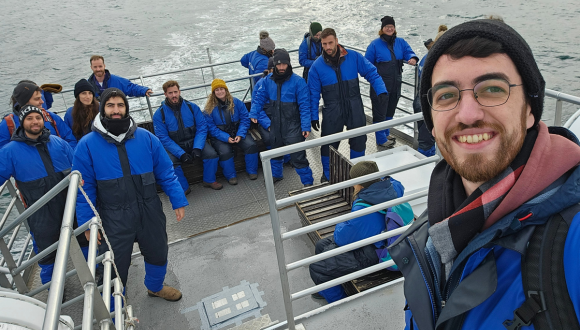
Tel Aviv University's geophysics students on their study trip to Iceland, hiking on Vatnajökull Glacier, which is Europe’s largest glacier

Exploring the Living Laboratory of the Earth

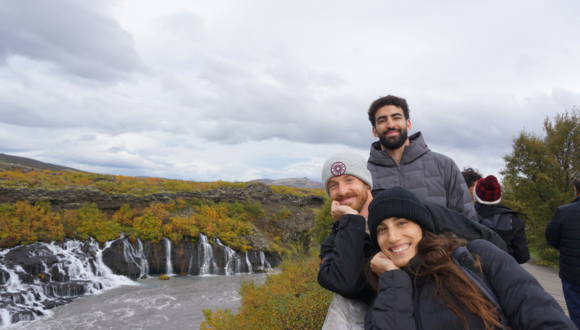
TAU Geophysics students travel to Iceland with support from the university

 
A group of 18 students from Tel Aviv University’s Department of Geophysics recently returned from a unique study trip to Iceland, which brought textbook theory to life amid glaciers, geysers, icebergs, and volcanic fields. The trip was made possible thanks to the support of the Lowy International School, which funds academic study tours and experiential learning opportunities for TAU students, and a generous donation from the Australian Friends of TAU.

A Classroom Beneath the Northern Lights

Led by Colin Price, Full Professor at the Department of Geophysics of the TAU’s School of Exact Sciences, and Dr. Judi Lax, a former Geophysics student, the group spent several days exploring Iceland’s striking landscapes and observing first-hand the geological, atmospheric and space phenomena that shape our planet.

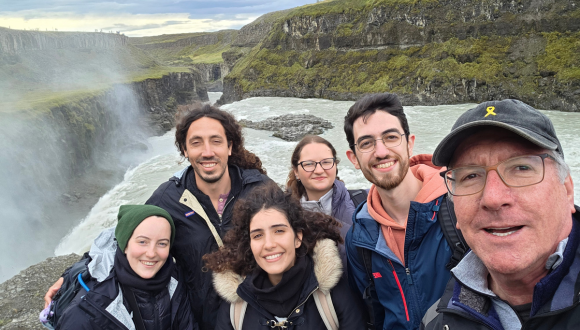
TAU geophysics students with Prof Colin Price (right) at the Gullfoss Waterfall

Students prepared and presented research on-site, covering topics such as plate tectonics, geothermal energy, glacial retreat, volcanoes, space weather and carbon capture.

“We study these processes for years in the classroom, but seeing signs of plate tectonics, melting glaciers, and geothermal energy is a life-changing experience.”—Professor Price

Learning in the field with Reykjavik University

The students also visited Reykjavik University, where they met a local professor and students specializing in climate and sediment research. The students joined a lab course that gave them a glimpse into cutting-edge climate studies and even a chance to observe sediment-core analysis in action.

Connecting Theory, People, and Purpose

For the participants, the trip deepened their understanding of their field and their sense of purpose.

Krýsuvík, a geothermal area with steaming vents and colorful sulfur deposits

“To see energy produced from the Earth with my own eyes was mind-blowing,” said Yuval Goldstein, a fourth-year undergraduate in the dual degree BSc in Mechanical Engineering and Geosciences. “It’s hard to imagine how it’s actually done until you watch steam rise from the ground.”

“Standing where a glacier once was, seeing how far it has receded, made me rethink what I want to do with my skills, how I can contribute,”—Naomi Friedman, a third year BSc student

“Also, to finally see things we’d only studied in class, like cloud formations and erosion processes, made everything click,” added Naomi.

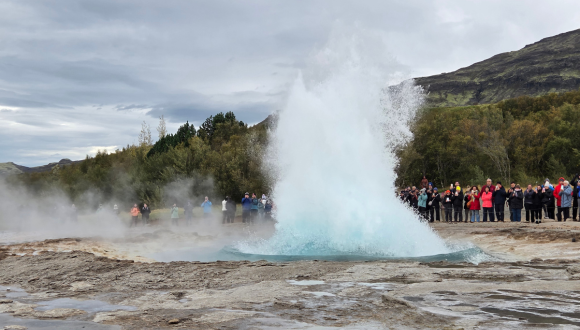
Observing Strokkur, a geyser erupting every few minutes

Yana Novomodsky, who has just started her MSc in Geophysics and is also involved in promoting geophysics studies, added: “All the pictures we took during the trip will help us show what geophysics actually is, because people often don’t know what the field involves.”

“Iceland is the ‘Mecca’ for geophysicists. We didn’t just see the phenomena, we felt them: the wind, the rain, the smell of sulfur, the sudden weather changes.”—Tal Zahavi, a graduate student


Tal Zahavi: “As for the Northern Lights, we used our own geophysical calculations to find the best place to see them on the last night. It was magical.”

For PhD student Jonathan Levy, the experience went beyond academic discovery: “Iceland has always been a dream. To see everything we’ve been studying, in person, with people who understand the field, took it to another level. It even gave me research ideas for possible collaborations there.”

A Community in Motion

Beyond the scientific encounters, the trip strengthened a sense of academic community.

Tal Zahavi (right) with his fellow students during the trip to Iceland

“Geophysics is a small department, maybe 20 or 30 students, so you always see the same faces in the hallway,” said Lidor Ivgi a new MSc student.

“Now I really know everyone, from undergrads to PhD students. That connection motivates me to continue to advanced studies. And traveling with our professor, Colin, across Iceland, even watching the Northern Lights together, that’s unforgettable.”— Lidor Ivgi, a graduate student

Samir Asad, Yahav Nayar, and Gal Menzor at Barnafoss Waterfall

“All the concepts we’ve studied suddenly became real,” added Gal Menzor, a 4-year BSc student in Mechanical Engineering and Geosciences. “Doing it alongside amazing classmates and professors made it even more impactful.”

“I hadn’t expected to join,” said Hadar Erez Reshef, who begins her MSc studies this year. “It was incredible. I really gained a sense of belonging to my department and the degree. It made me understand why I chose this path.”

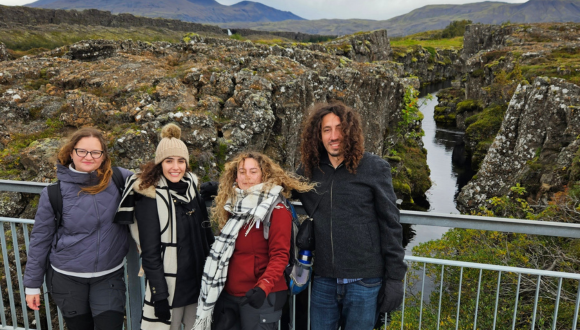
From left to right: Yana Novomodsky, Hadar Erez Reshef, Noam Rachmilevitch, and Ophir Ariel at the Þingvellir National Park, a UNESCO site where the Eurasian and North American tectonic plates meet.

Irina Rogovsky, who has just completed her PhD in Geography, reflected on the difference of traveling with fellow scientists:

“On a group tour, people usually ask where we’re sleeping or what’s for dinner. Here, everyone cared about the rocks and formations, which made it completely different.”—Irina Rogovsky, PhD in Geography

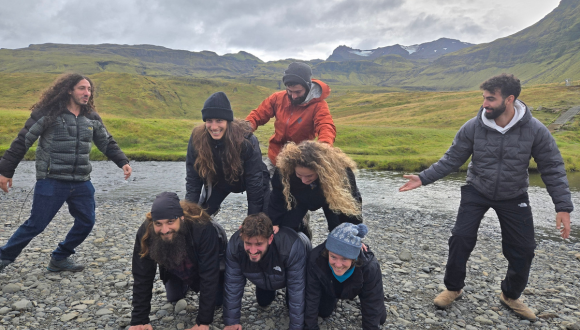
Team spirit in action

Global Learning in Action

At a post-trip gathering, Professor Milette Shamir, TAU Vice President for International Affairs, praised the initiative: “This trip embodies the mission of the Lowy International School: connecting academic excellence with global engagement.”

“Field-based learning allows our students to see how their studies relate to real-world phenomena.”—Professor Milette Shamir, TAU Vice President for International Affairs

Maureen  Adiri Meyer, Director of the Lowy International School, added that moments like these make the team’s efforts worthwhile: “Usually, we see only emails, reports, and budget lines, but here we see the real impact on people’s lives. That’s what gives our work meaning. Thank you for taking part in something so significant.”

TAU geophysics students at the Fagradalsfjall volcano

Sharon Ziv Kafri, Director of International Development at Tel Aviv University, emphasized the program’s vision: “Hearing what you’ve shared today is exactly what we had in mind when we created this opportunity.

“Academic study tours give Israeli students the chance to experience the world in an educational context. When we hear students say this trip motivated them to continue to graduate studies or made them feel a stronger sense of belonging, that’s exactly our goal.”—Sharon Ziv Kafri, Director of International Development

For Professor Price, the trip’s value was clear: “I am sure this trip will have long-term implications for the students’ careers, research and even their outlook on life. 

At a pioneering direct air capture plant removing CO₂ from the atmosphere.

“I think for some of the students this was a life-changing experience.”—Professor Price

As Professor Shamir concluded, “This kind of global, hands-on education is the future, and it’s wonderful to see our students leading the way.”

Getting to know the campus during Orientation 2025

Meet the Community Leaders Supporting International Students at TAU

Empowering students to build lasting connections and discover Israel

 
On October 19, the Lowy International School welcomed the 2025/26 cohort of international students starting their undergraduate, graduate and postgrad degrees at Tel Aviv University. Supporting them throughout their journey will be the School’s Community Leaders, offering guidance, organizing events, and immersing students in Israeli culture while helping them become active participants in the international campus community.

Orr Abergel, the head of the community team, encapsulates the spirit of the team: “Our goal is to help international students integrate into living and studying at TAU and empower them to start their own community initiatives that will enrich their experience while in Israel.” 

Orr Abergel, the head of the community leaders team

Abergel, who has extensive experience working with international students at the Lowy International School, believes that enabling students to start their own community-building projects, such as clubs or various events, is key to having a successful and enjoyable student experience: 

“When students get to develop something they feel passionate about, it gives them an absolutely amazing feeling of being heard and being involved. They become active members of the university community.”—Orr Abergel, the head of the community leaders team

Let’s meet the team, who will be by your side on your exciting journey.

Hanna Alexander: Community Leader for Undergraduates

Hanna’s focus is on helping students feel at home and creating opportunities for them to connect, both on and off campus.

“My goal is to get to know the students, find out what they’re interested in, and build activities that make their experience here more complete.”

“That could mean social events, day trips, overnight tours, or even exploring internship opportunities,” she adds.

Thinking back to her student days at Ben Gurion University helps Hanna come up with ideas for community activities to engage students. Her background in Sociology and Anthropology, Conflict Management and Resolution, and European Studies also proves useful.

“Conflict management comes in handy in any job that involves people,” she says. “There’s always going to be some kind of disagreement, and the key is to make sure everyone feels heard and understood.”

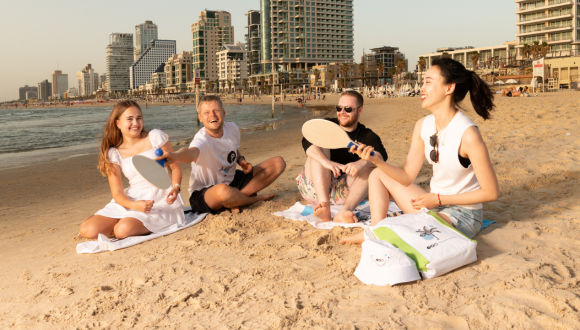
Recently relocated to Tel Aviv, Hanna admits she’s also discovering the city through fresh eyes, much like her students. “Tel Aviv is so international,” she says.

“You hear different languages, see people from all over the world, and eat food from every culture. I live in Florentin, which is full of street art and energy. I always tell students: ‘walk around, explore, and get to know the city through your feet.’ ”

TAU international students enjoying a nice day at the beach

For first-year students, her advice is simple: take it slow. “You’re in a new country, starting at a new university, meeting new people, so show yourself compassion. It’s normal to feel homesick or overwhelmed at first. Take things step by step and try to minimize the FOMO.”

“There’s always something happening in Tel Aviv, so if you miss one thing, there’s another around the corner.”

Hanna also recognizes the challenges undergraduate students might face when starting their studies abroad. “For many of them, this is the first time they’re living away from home and in a different country,” she explains. “Even Israelis their age who serve in the army can usually go home for Shabbat. That separation from family and friends can be tough.”

That’s where the Lowy’s community leaders step in. “Our job is to make Tel Aviv University your home away from home,” Hanna says.

“Whether it’s through our events or our partners’ Shabbat meals and community activities, there are always ways to connect. It’s okay to take a few weeks to adjust, but at some point, push yourself to meet people. Everyone’s in the same boat and you can bond over it.”

Tamar Solange Shalem: Community Leader for International Researchers (PhD students and Postdocs)

Solange brings a wealth of experience in social impact development, community engagement, and cultural diversity. An anthropologist by training, Tamar loves studying people and cultures. She views Israel as a ‘beautiful garden of human diversity’ where different cultures come together. Having worked at the Ministry of Foreign Affairs and as a higher education counselor, Tamar is no stranger to guiding people through transitions. 

“I’ve always been interested in working with young people and diverse populations. For me, it’s about creating meaningful change and social impact.”

When it comes to navigating Israeli culture, Tamar offers valuable advice to incoming researchers: 

“Being open-minded to a very dense and dynamic culture is key.”

She also emphasizes that flexibility and acceptance of Israel’s fast-paced, often chaotic environment can help you adapt more smoothly. 

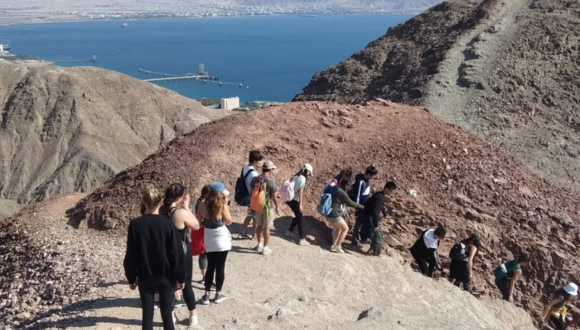
International students on a field trip

Tamar is keen to encourage everyone to explore Israel beyond Tel Aviv, recommending places like the Israeli Valley, Beit Govrin, Lachish, and the Dead Sea for those seeking a deeper connection with the country’s rich landscapes. 

For an authentic Israeli culinary experience, Tamar suggests trying local foods, especially the iconic Israeli breakfast, which she describes as “the most quintessential part of Israeli cuisine, filled with fresh vegetables, spreads, and cheeses.”

Usu Baraka: Community Leader for Graduate Students

Originally from Darfur, Usu’s journey to Israel has been one of resilience and perseverance. After arriving as a minor and completing high school in Israel, Usu pursued a BA in Government, Diplomacy, and Strategy and an MA in Public Policy. With a strong entrepreneurial spirit and a love for learning (he speaks eight languages!), Usu is dedicated to helping graduate students feel at home in Israel.

“I love interacting with people, hearing their stories, and building communities from the ground up.” 

He is passionate about creating social opportunities that mix academic life with cultural experiences. From tours of South Tel Aviv to trips to the Dead Sea, Usu’s focus is on exposing students to the rich diversity of Israel while building meaningful friendships.

Another aspect Usu is going to actively work on is integrating international students with their Israeli peers and building bridges across cultural lines. 

“I want to create opportunities for students to connect with each other, learn from each other, and form lasting bonds.”

Whether through cultural exchanges or casual meetups at the local market, Usu is always seeking new ways to enrich the student experience. “In Israel, you have to try falafel,” he recommends, adding that knafeh from Jaffa is also a must: “It’s amazing, perfect, and delicious.” For those interested in something more unique, he suggests trying injera, a traditional Ethiopian flatbread popular in Israel.

At the Levinsky market

Usu’s favorite spots in Tel Aviv for hanging out and meeting new people are the Abraham Hostels, which have “a bar where you can enjoy live performances”, and Teder.fm, a venue that’s “open 24/7 and always full of people and events.” Be sure to check them out after classes!

As you prepare for your flight to Tel Aviv, Usu has one important tip to share: if you’ve never been to Israel before, take some time to learn a bit about the country and pick up a few Hebrew words.

“Shalom” [Hello] is known to open the hearts of Israelis in an instant!

Whether you’re exploring Tel Aviv’s streets, learning about Israeli culture, or simply needing a supportive ear, our community leaders are here to ensure you feel welcome, supported, and ready to move forward.

Why Do We Tip? TAU Study Challenges Common Assumptions

New research reveals that tipping is driven more by social conformity than genuine appreciation, offering only weak motivation for better service, yet pushing tipping rates ever higher.

What makes us tip?  A new study explores two main motives: genuine appreciation for the service and conformity with social norms. Those who truly value the service tend to tip above the standard rate, while conformists usually align with them — leading to a gradual rise in average tipping rates over time.

The study, published in Management Science, was conducted by Dr. Ran Snitkovsky of the Coller School of Management at Tel Aviv University, together with Prof. Laurens Debo of the Tuck School of Business at Dartmouth College. Their theoretical model sheds light on the complexity of tipping and its economic and social implications.

“Tipping is a phenomenon that is difficult to explain using classical economic tools,” explains Dr. Snitkovsky. “The ‘homo economicus’, who is only interested in their own material wealth, has no reason to tip once the service has been provided.”

He adds that earlier research suggested tipping ensures better service in the future — but this doesn’t explain why people tip even when they are unlikely to meet the same service provider again, such as a taxi driver abroad. “Another common argument is that tipping provides an incentive for servers to give better service. Whether this is true or not, a self-interested customer would prefer others to tip and maintain good service quality while avoiding the expense himself. The conclusion is that to understand this phenomenon in depth, we must examine psychological and behavioral considerations.”

A recent study reported by USA Today revealed that the average American spends nearly $500 annually on tips in restaurants and bars, and that the tipping system in the U.S. generates over $50 billion each year, providing a primary source of income for millions of servers.

“We used a mathematical model and tools from game theory and behavioral economics to understand the motivations behind tipping,” says Dr. Snitkovsky. “Into this model we fed the two main reasons people report for tipping: the first is to express gratitude to the service provider, and the second is conformity —doing what everybody else does.”

“The first reason relates to my personal valuation of the service I received or the server-customer interaction, and can stem from wanting to reward the server for doing their job or showing empathy towards them,” he continues. “The second reason is tied to how I perceive myself in society — my interaction with other customers. In other words, we can distinguish between ‘appreciators’ and ‘conformists’.”

Why Tipping Rates Keep Rising

The researchers found that in societies with stronger social pressure, where people feel a greater need to comply with the norm, average tip amounts tend to rise over time.

Dr. Ran Snitkovsky, Photo credit:  Israel Hadari, Tel Aviv University

“The process is inherently driven by appreciators pulling the conformists upward, but not the other way around,” says Dr. Snitkovsky. “This might explain why tipping rates in the U.S. few decades ago were around 10% and are now closer to 20%. Those who appreciate the service are willing to tip well above the average, while those who wish to comply with the customary practice ‘chase’ the average. Additionally, rising tipping rates may also reflect growing economic inequality — a hypothesis proposed by another researcher from Tel Aviv University, Prof. Yoram Margalioth of the Buchmann Faculty of Law, and supported by our model.”

A Weak Incentive for Better Service

The study also explored whether tipping provides an effective incentive for servers to improve their performance. The model shows that while tips can encourage servers to exert effort, it is a relatively weak motivator, since many customers are conformists who will tip the standard amount in any case.

“If a server knows most customers are conformists, there’s little reason to put in extra effort since they will tip the customary amount anyway,” explains Dr. Snitkovsky. “This is indeed the situation in countries like the U.S.”

 “In an imaginary world where all customers are appreciators, unaffected by each other’s tipping rates, tipping would serve as a much stronger incentive. On the other hand, in such a world where tips only reflect appreciation, businesses might conclude that customers are willing to pay more for the service experience and charge higher prices upfront. This may trigger customers to adjust their expectations and reduce the tip percentage accordingly.”

The ‘Tip Credit’ System

The researchers also examined the ‘tip credit’ regulation applied in most U.S. states. This law allows employers to pay less than the minimum wage for tipped professions, covering the difference with tips. For instance, if the minimum wage is $8 per hour and the state has set the sub-minimum wage at $3, employers may pay servers only $3 and use tips to cover the $5 difference. Only if tips fall short of the minimum wage are employers required to make up the gap. If a server makes more than $8 after tips, they can keep the difference.

“We see that a higher tip credit allows businesses to reduce prices — because they rely more on tips to finance labor,” says Dr. Snitkovsky. “Consequently, they can increase supply and serve more customers. This suggests an element of economic efficiency, but the efficiency in this case comes at the expense of the individual server’s earnings. So essentially, tip credit is a mechanism allowing employers to cut into tips that ostensibly belong to servers, using them to pay wages.”

A Complex Social Phenomenon

As for his personal view, Dr. Snitkovsky admits he dislikes tipping. “I came to this study with a bias. Personally, I don’t like this practice, and I wanted to understand what drives it. First of all, tipping puts customers in an uncomfortable position. Studies have shown that tipping can encourage sexist behavior toward female servers – who may refrain from setting boundaries to avoid losing tips. Other studies demonstrate that people tend to tip more generously when a server is of their own ethnicity, introducing an element of racism. It’s easy to find good reasons to do away tipping, but the custom also has some positive effects, making it a complex phenomenon.”

He adds: “Ultimately, tipping allows those willing to pay more for the service to do so, thereby subsidizing the service for others. That’s a positive aspect. Additionally, tips do seem to encourage servers to provide better service, even though this effect is very limited. In my opinion, in the 21st century business owners have better tools to assess server performance, such as online reviews and even in-house cameras.”

From Hostage Square to the Doctorate: TAU to Award Einav Zangauker an Honorary Doctorate

In recognition of her courageous and inspiring struggle for the return of all hostages held in Gaza to Israel

 
Tel Aviv University has announced that it will confer an Honorary Doctorate upon Ms. Einav Zangauker, honoring her courageous and inspiring fight—led over nearly two years together with the Hostages and Missing Persons Families Forum and the wider public—for the return to Israel of all hostages, living and deceased.

Just weeks ago, on October 13, with the return of 20 living hostages to Israel, Einav was finally reunited with her son, Matan—one of the most emotional days Israel has known in recent years. Yet her struggle did not end there. Like many others, she continues to dedicate her efforts to ensuring the return of all remaining hostages and the recovery of those who were killed in captivity.

A Symbol of Solidarity, Unity, and the Sanctity of Life

Tel Aviv University emphasized that the decision to award the honorary degree also reflects the deep national yearning for the return of all hostages, including Hadar Goldin, the son of Leah and Prof. Simcha Goldin, a faculty member at TAU.

“Einav Zangauker represents the social movement calling for the return of the hostages and has been one of its most prominent leaders,” the University said in its statement. “Since October 7, she has become for many a symbol of social solidarity, the sanctity of life, unity, and parenthood.”

The honorary degree ceremony will take place in May 2026 on the University’s campus during the annual Board of Governors meeting, attended by more than a thousand guests from Israel and abroad.

At the same event, Steve Witkoff, U.S. Special Envoy to the Middle East, will receive the George S. Wise Medal for his efforts to secure the return of the hostages.

Victoria

Phone: +61 3 9296 2065
Email: office@aftau.asn.au

New South Wales

Phone: +61 02 7241 8711
Email: admin@aftau.org.au

Western Australia

Phone: :+61 0418 46 5556
Email: davidsolomon@aftau.org.au