Should Platforms Control Your Data?


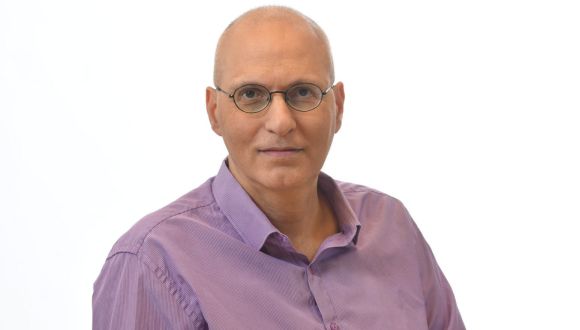
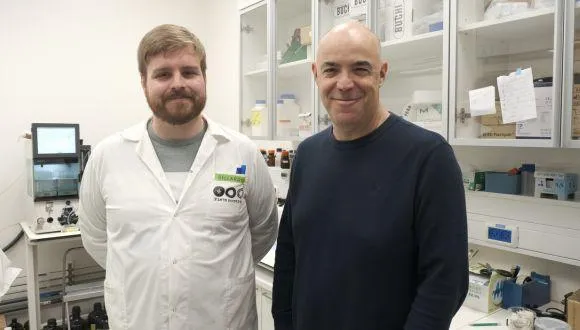
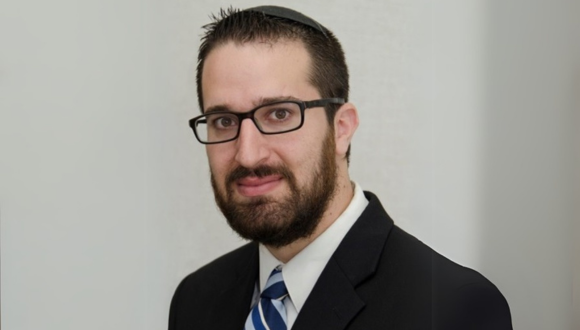
Prof. Yaron Yehezkel. Photo credit: Israel Hadari, Tel Aviv University.

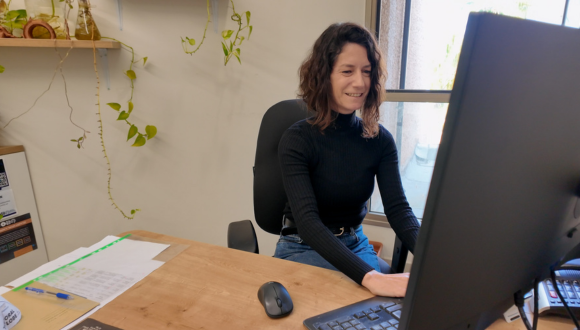
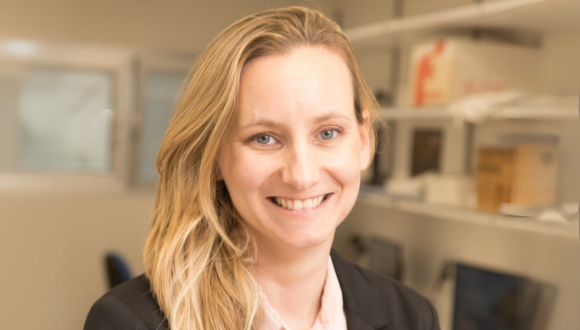
Prof. Sarit Markovich. Photo credit: Evanston Photographic Studios.

“Our research examined platforms that collect and commercialize user data”, explains Prof. Yehezkel. “For instance, when we search for information on Google, the platform can collect data about us. Similarly, when we listen to music on Spotify, Spotify can gather information about our habits. Platforms can choose to trade this data—for instance, selling it to advertisers who then use it to display targeted ads based on our activity on Google or Spotify. In this study, we asked: Who should have the right to impose the collection and sale of this data on users? Who benefits, who loses, and under what circumstances?”.

Data Privacy: American vs. European Models

Broadly, there are two approaches to this issue. The American model grants platforms full discretion over data collection and usage. When a user signs up for a platform, they agree to its terms, effectively relinquishing control over the data collected about them. Platforms are free to use the data as they see fit, and users who disagree can simply stop using the platform. The European model, in contrast, is embodied by the General Data Protection Regulation (GDPR). Under GDPR, users, not platforms, retain control over their data. Users can decide how their data is used while still being able to access the platform. This is why European users encounter consent pop-ups when browsing platforms like Google, allowing them to approve or deny various uses of their data. In Israel, the American model is the prevailing approach.

“The question we explored is which approach is better—giving users control over their data or leaving control with the platform”, says Prof. Yehezkel.

He continues: “Our study was mathematical and theoretical, rather than quantitative and empirical. We used game theory to model the behavior of users and platforms through mathematical utility functions that reflect societal benefit and company profit, aiming to identify the market’s equilibrium point”.

In their research, Prof. Yehezkel and Prof. Markovich were the first to demonstrate that data has not only economic value but also social value. “A platform that uses data it collects from me can provide better services to other users,” explains Prof. Yehezkel. For instance, Waze can sell user data to advertisers, but it also uses this data to guide other drivers to less congested routes. Similarly, Spotify can recommend music based on listening habits, age, and other preferences. Data can, therefore, have social value, benefitting society as a whole.

According to the researchers, the key question is identifying scenarios where data provides social value versus cases where its value is purely economic. “Data has a negative side when sold to third parties that infringe on our privacy, but it also has a positive side when used to improve platforms for the benefit of all users”, says Prof. Yehezkel. “Imagine a scenario where I use Waze to find the quickest route to Tel Aviv University but restrict the app from collecting information about my trip. The platform’s efficiency would drop, leading to longer traffic jams for everyone. Our model shows that in cases of low social value, the European approach has a clear advantage. However, in cases of high social value, particularly with less sensitive data, the American all-or-nothing approach offers significant benefits”.

Tel Aviv University Launches TAU Shop

The merch store with Telavivian flair.

Tel Aviv University is taking university merch to the next level with the launch of TAU Shop, the official e-commerce store for TAU-branded apparel and accessories. This isn’t just another university merch shop—it’s stylish, it’s unique, and true Tel Aviv essence. Designed for students, alumni, and anyone who wants to rep their TAU pride with a touch of urban chic.

From sleek hoodies, T-shirts, thermal mugs, totes and laptop cases to a unique collaboration with the iconic Tel Aviv design studio Gelada, TAU Shop brings together quality, creativity, and local artistry. Whether you’re a current student, a proud graduate, or simply a fan of Tel Aviv’s vibrant energy, you’ll find something here that speaks to you.

The Gelada Collection: When Tel Aviv Becomes Your Campus

One of the highlights of the new shop is a special mini-collection of T-shirts designed in collaboration with Gelada, a Tel Aviv-based creative studio known for its unique, travel-inspired illustrations. This collection, inspired by TAU’s slogan ‘Pursuing the Unknown,’ transforms the entire city into a campus, with each design paying homage to iconic Tel Aviv landmarks. Designed by illustrator and architect Kiril Cherikover, the collection blends urban nature, beach culture, and the city’s innovative spirit into wearable art.

Gelada founder Yaron Mendelovich explains: “This collection, inspired by Tel Aviv University, emphasizes the values it represents innovation, freedom and creativity. Together with illustrator/architect Kiril Cherikover, graduate of the Architecture Department at the Bezalel Academy, we created a series that combines urban nature, beaches and culture. We tried to connect the graphic language with unique icons of Tel Aviv and the spirit of the city as we see it: a city of initiative, knowledge, pluralism and freedom.”

A Big Hit at TAU’s Open Day

TAU Shop made its first big splash during Tel Aviv University’s recent Open Day, where attendees got an exclusive first look at the merch. The collection was displayed and sold on-site, and the response was incredible—students, alumni, and visitors alike were excited to grab their own piece of TAU style. The event was a great success, proving that TAU Shop is more than just a store—it’s a movement.

How to Get Your TAU Merch

TAU Shop is now live online, making it easy for anyone in Israel to order their favorite items. Currently, shipping is available within Israel only, but there’s also a free pickup option from the Administration Building on campus.

Visit shop.tau.ac.il to explore the collection and start shopping now.

TAU Breaks Israeli Record in Space

Tevel 2: Israel’s Largest Satellite Constellation Launch.

 
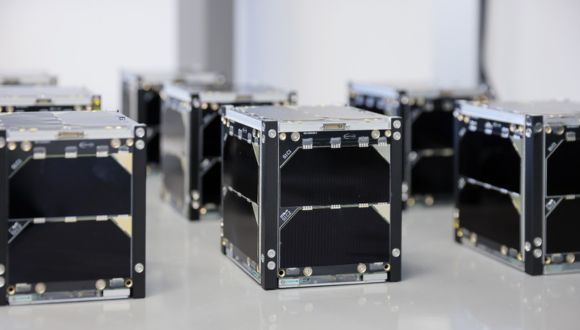
The Ministry of Innovation, Science, and Technology, Tel Aviv University, and nine municipalities across Israel have announced an unprecedented milestone in space research and scientific education: a constellation of nine research nanosatellites—the largest Israeli satellite constellation ever—has been launched into space from Vandenberg Space Force Base in California. The nanosatellites, each measuring 10×10×11.3 cm, were designed and built by high school students from across the country. They were launched into low Earth orbit at an altitude of 500 kilometers aboard a SpaceX Falcon 9 rocket.

Gila Gamliel, Minister of Innovation, Science, and Technology: “The Tevel 2 project symbolizes the pinnacle of Israeli innovation, combined with scientific and technological education. This is an especially emotional moment for me — to see young people from all sectors of Israeli society working together, transforming a dream into reality, and making history in space. What these talented students have accomplished is nothing short of amazing — they have built the largest Israeli satellite constellation ever launched! I am especially proud of the first-ever Druze satellite and the moving memorial mission of the Sha’ar HaNegev satellite. Our substantial investment in this initiative is not just an investment in technology — it is an investment in you, the next generation of Israeli space scientists and engineers”.

Tevel2 students testing environmental conditions at the satellite laboratory at Tel Aviv University (photo credit: Ronen Horesh).

Scientific and Educational Innovation

The revolutionary Tevel 2 project combines scientific innovation with a pioneering educational and social vision. This 10.5m NIS project — initiated and funded by the Israel Space Agency at the Ministry of Innovation, Science, and Technology — connects different communities within Israeli society and promotes equal opportunities in science and technology education, while combining scientific innovation with educational and social objectives.

The satellites were built under the guidance of Tel Aviv University’s Faculty of Engineering, in R&D centers established in nine municipalities throughout the country, uniquely incorporating diverse populations: five Jewish municipalities (Yeruham, Sha’ar HaNegev, Ma’ale Adumim, Givat Shmuel, and Herzliya), three Arab municipalities (Ein Mahil, Tayibe, and Kafr Qara) and one Druze municipality (Yarka).

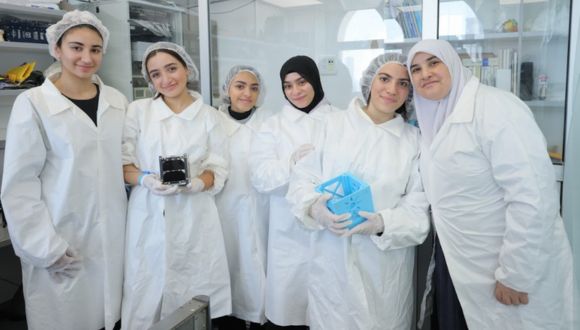
A representative photo of students in the Tevel2 project. The project includes Jewish, Arab, and Druze students from 9 municipalities across the country (photo creditSivan Shachor).

Brigadier General (Res.) Uri Oron, Director General of the Israel Space Agency: “The Tevel 2 project is a testament to the power of Israeli innovation. We see here a winning combination of scientific excellence, technological education, and societal integration. These satellites will not only provide crucial scientific data; they will also serve as an inspiration for the next generation of Israeli space scientists”.

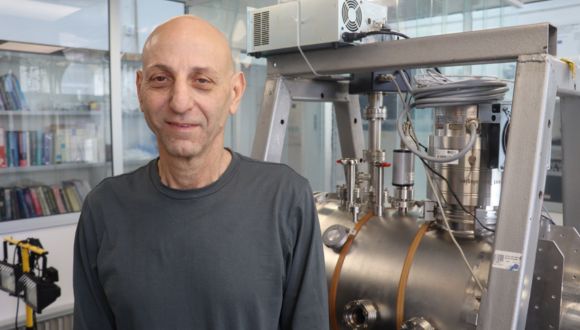
Prof. Meir Ariel.

Groundbreaking Scientific Research

The satellites, built in special clean rooms in nine municipalities across the country, will perform an important scientific mission.

Prof. Meir Ariel, Head of the Space Engineering Center at Tel Aviv University’s Faculty of Engineering, explains: “The satellite constellation is designed to measure cosmic radiation in orbit. Cosmic radiation consists of high-energy particles (mainly protons) originating from the Sun, and events in the deep universe, such as supernova explosions. While life on Earth is relatively protected from this radiation by the planet’s magnetic field and atmosphere, astronauts in space and electronic systems on satellites are exposed to this potentially harmful radiation”.

Tevel2 satellites are ready to be sent to the US for integration into SpaceX Falcon 9 launcher after undergoing environmental tests at the Satellite Laboratory at Tel Aviv University (photo credit: Ronen Horesh).

The nanosatellites, launched as a clustered swarm from the Space Force base in California, are expected, over time, to disperse randomly in their orbit, ultimately creating an accurate high-resolution map of cosmic radiation at every point above Earth’s surface. Another experiment will examine the radiation’s effects on the satellites’ electronic components. The data will be analyzed by the students under the guidance of researchers from Tel Aviv University and the Soreq Nuclear Research Center, where the space radiation sensors were developed.

It should be noted that a significant part of this project is dedicated to promoting science education and strengthening Israel’s social periphery. The satellites were built by outstanding high school students who joined the program in the 10th grade and are now completing the 12th grade. The students worked in R&D centers, complete with clean rooms, established by Tel Aviv University in the nine participating municipalities specified above. Satellite communication stations connected to the main station at Tel Aviv University were set up in Herzliya, Yeruham, Givat Shmuel, and Sha’ar HaNegev, enabling students to control and receive data from the satellites.

One of the program’s main goals is to promote scientific education in Israel’s periphery and provide students from remote regions with an equal opportunity to participate and excel in a national project. This is a key aspect of the visions of the Ministry of Innovation, Science, and Technology, the Israel Space Agency, and Tel Aviv University – all deeply committed to Israeli society and working to reduce social inequality and provide equal opportunities through a variety of affirmative action programs and extensive community initiatives.

Students work on the satellite in the clean room (photo credit: Tapuach Pais, Tayibe).

Commemoration and Remembrance

In addition to its scientific tasks, the project also includes a unique memorial mission: Sha’ar HaNegev’s satellite will telemetrically transmit the names of all Israeli civilians and soldiers killed from October 7, 2023, through December 2024, with the signal displayed continuously, throughout the satellite’s lifespan, on the website of the Israel Space Agency. This unique commemoration holds special significance, since the Sha’ar HaNegev Regional Council suffered great losses in the October 7 attack, with its Mayor Ophir Libstein ז”ל killed by terrorists while defending his community. Moreover, the Sha’ar HaNegev students who participated in the project itself had been evacuated from their homes for many months.

The satellites will remain in orbit for approximately three years, during which they will provide essential scientific data and serve as an inspiration for the next generation of Israeli space scientists and engineers.

Universities as Catalysts for Climate Change Solutions

TAU joins forces with international universities to tackle pressing environmental challenges

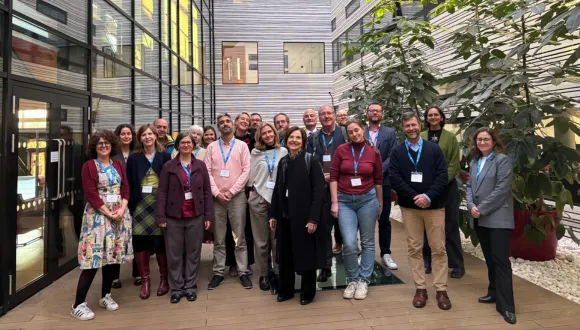
On March 3rd and 4th, a joint workshop hosted at the University of Cambridge and funded by the British Council’s Wohl Clean Growth Alliance brought together experts from Tel Aviv University, the University of Cambridge, and other universities in the UK, France, Italy, and North America. The workshop explored how higher education institutions can support and promote climate change solutions. 

The TAU Climate Crisis Initiative and the Lowy International School co-organized the event with Cambridge Zero (the climate change hub at the University of Cambridge) as part of an ongoing collaborative project focused on examining the impact and ethical responsibilities of universities in addressing the climate crisis.  

“As institutions focused on creating and disseminating knowledge, universities can make a huge contribution to how we tackle the climate crisis, and some would say also have a moral obligation to do so.”—Dr. Shula Goulden, Co-director of the TAU’s Climate Crisis Initiative and project co-organizer   

As Prof. Colin Price, Head of the TAU’s Climate Crisis Initiative (PlanNet Zero) and one of the key professors in the TAU’s MA in Social Policy of Climate Change, adds, “Our goal is to bring students, faculty, and administration together to develop comprehensive solutions for the climate crisis.  These may involve not only new technology but also new economic models, policies, regulations, and public engagement strategies.”  

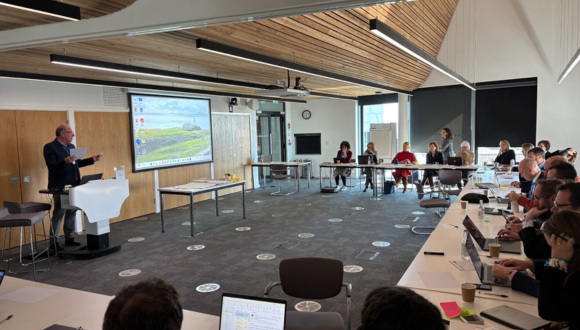
Prof. Colin Price presenting at the workshop

Workshop participants included academic researchers holding sustainability and climate leadership positions within their institutions (e.g. Vice-Rectors, heads of schools, researchers focused on environmental policy outreach), as well as professionals spearheading university initiatives in environmental education, sustainability leadership programs, climate initiatives, and policy and communications.  

In addition to the organizers from TAU, the university was represented at the event by Prof. Noga Kronfeld-Schor, Prof. Marcelo Sternberg and Prof. Danny Rabinowitz, the head of the MA program in Social Policy of Climate Change.  

Developing a Conceptual Model for University Climate Action  

To guide the discussion, the organizers presented a model to help frame and communicate climate action within universities according to four modalities: research & knowledge production, teaching, outreach & external engagement, and campus operations.  

“The framework we are initiating through such international collaborations provides a flexible, adaptable model that allows universities to align their climate actions with their core missions, enabling them to tailor strategies to their unique goals and capacities, ultimately driving more effective climate solutions.” —Dr. Michal Linder Zarankin, project co-organizer from The Lowy International School

Prof. Bhaskar Vira, Pro-Vice-Chancellor for Education and Environmental Sustainability at the University of Cambridge, placed particular importance on the role of universities in advancing sustainability.  

Throughout the workshop, participants engaged in interactive sessions and case study presentations, discussing how universities can lead by example and contribute to global climate solutions by advancing research, educating the next generation of climate leaders, integrating sustainability into daily operations, and engaging with a broader community through advocacy and policy development.  

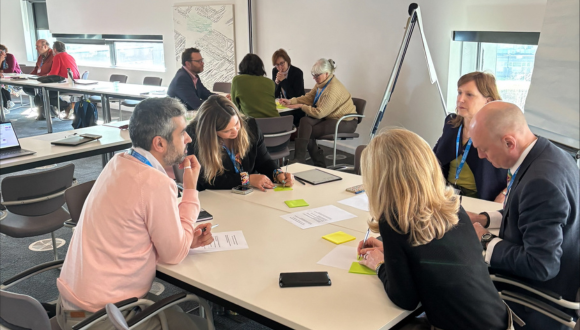
Workshop participants during one of the sessions

The event also fostered normative debates on the ethical responsibilities of academic institutions, helping participants reflect on their role within their own institutions promoting a more active stance in tackling the climate crisis.   

“The diversity of university-led climate actions reflects differences in institutional strategies, challenges, and policy contexts. While there is no one-size-fits-all model, there is a pressing need to create a common language for university climate action.”—Dr. Shula Goulden, Co-director of the TAU’s Climate Crisis Initiative and project co-organizer  

Going forward, the project aims to deliver publications on the workshop model, conduct a follow-up workshop in Israel, and develop research proposals to apply the model to case studies of universities in different geographical contexts.   

Such multifaceted collaboration will strengthen the network of academic institutions and climate professionals, enabling a dynamic exchange of knowledge and ideas. By deepening these connections, universities can amplify their collective impact, drive coordinated action, and propel global efforts toward a more resilient and sustainable future.  


To educate the next generation of climate leaders, TAU runs an MA program in Social Policy of Climate Change. Learn more about the program and submit your application to contribute to the well-being of our planet.

TAU international students are active participants of the TAU’s Climate Crisis Initiative (PlanNet Zero) and have recently launched the Voices of Change initiative, a platform that presents personal testimonies about climate challenges around the world.

Tel Aviv University Students Help Keep Women’s Rights on the Agenda at the UN

Traveling to Geneva, the students witnessed firsthand the challenges and urgency of sustaining international human rights efforts

From February 3 to 21, 2025, the United Nations (UN) Committee on the Elimination of Discrimination Against Women (CEDAW) convened in Geneva, Switzerland for its 90th session, addressing critical issues affecting women’s rights globally. Among those present were two Tel Aviv University (TAU) students, Maya Zippor Ben Tsvi and Roni Shaked, who attended the session as interns to Prof. Daphna Hacker, a member of CEDAW and a full professor in TAU’s Faculty of Law and Women and Gender Studies Program.

“When it comes to the committee, even in Geneva and even at the UN, Daphna is always one of the most professional people in the room,” reflects Shaked on her experience attending CEDAW with Hacker for the second time.


“To be there, surrounded by feminists from around the world, like Egypt and Australia and the UK and the Netherlands, and to know that we’re all from different homes and countries but we care about the same things … it gave me hope.”—Roni Shaked


Attending the UN’s Committee on the Elimination of Discrimination Against Women 

CEDAW, a key UN body dedicated to monitoring the implementation of the Convention on the Elimination of All Forms of Discrimination Against Women, reviews the progress of countries every four years. Each country’s delegation presents a report on its adherence to the convention, while committee members scrutinize their commitments, ask questions and provide recommendations.

With support from The Lowy International School, Zippor Ben Tsvi and Shaked had the opportunity to travel to Geneva and contribute to the committee’s work, helping draft questions and recommendations on cases brought before CEDAW.


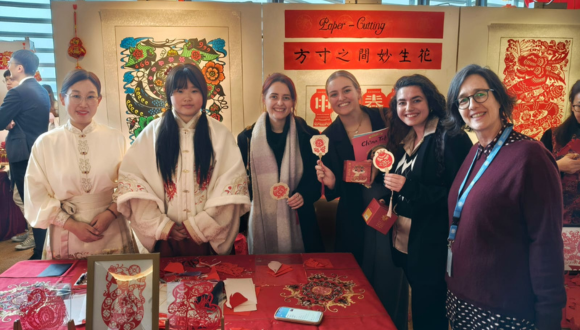
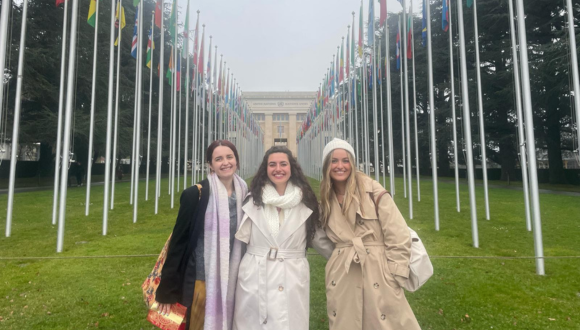
Daphna Hacker (far right) and Roni Shaked (second from the right) at a Chinese New Year’s festival that took place during their time in Geneva.

For both TAU students, their involvement at CEDAW was an extension of their academic and professional commitment to human rights. Zippor Ben Tsvi, a master’s student in law supervised by Hacker, works on reproductive rights.


“When I heard Daphna was a member of the CEDAW Committee, I asked if there was a way to get involved, maybe learning more about the procedure and the work of the committee.”—Zippor Ben Tsvi


Shaked, a research assistant for Hacker for the last couple of years, is just finishing her bachelor’s in law and is about to begin her master’s; she previously attended CEDAW with Hacker in May and was excited to attend again. “It’s really a special experience to be there,” Shaked says.

Tackling Women’s Rights Across the Globe

Zippor Ben Tsvi attended the CEDAW session for the first week, when dialogues for Nepal, the Democratic Republic of the Congo (DRC) and Belarus were presented. Shaked attended the second week, when women’s rights in Belize, Liechtenstein, Sri Lanka and the DRC (an additional time) were reviewed.

CEDAW’s 90th session highlighted a broad range of human rights concerns. In the DRC, discussions centered on widespread sexual violence amid ongoing conflict. Belarus faced scrutiny over its authoritarian policies, including crackdowns on protest rights. Nepal’s dialogue highlighted the persistence of child marriage and issues related to LGBTQ+ rights.


Maya Zippor Ben Tsvi (second from the right) and Daphna Hacker (far right) chatting with representatives from NGOs in Nepal.

“In Nepal, the legal situation is quite good—they have feminist laws in place—but enforcement is lacking,” Zippor Ben Tsvi observed. “They have intentions, but implementation is still a challenge.”

In the lead-up to the trip and during her time at CEDAW, Zippor Ben Tsvi assisted Hacker with questions and recommendations specifically for Nepal, sharing how what she helped draft made it into the final UN report, with two recommendations designated as urgent and to be fulfilled within two years instead of four.


“Seeing something I worked on just months ago become part of official UN recommendations—it was powerful.”—Zippor Ben Tsvi


A Lesson in Global Political Complexities 

Shaked and Zippor Ben Tsvi also saw firsthand how varied the issues are across countries, and how they often relate to political complexities. Shaked noted how all countries have issues that can be worked on. “For example, in Liechtenstein, abortion is illegal in most cases, and there’s a significant gender pay gap,” Shaked said. “Also, only men can inherit the monarchy, which is another issue with women’s rights.” 


Daphna Hacker captured on the big screen asking questions while the Committee on the Elimination of Discrimination Against Women was in session.


The experience also reinforced their views on the importance of the UN, despite its imperfections. “The UN is criticized a lot for not doing enough, for not having real power to enforce its recommendations, but being in the room where people are actively working on human rights was powerful,” Zippor Ben Tsvi said.


She also noted the fragility of these mechanisms, with budget cuts and political withdrawals threatening their sustainability. “While I was there, there were headlines about Trump cutting more UN funding. People were worried—maybe this is the last time, maybe there won’t be money for the next session. But if we don’t have this system, what do we have?”


Finding a Place in the Fight for Human Rights


For both students, the CEDAW experience was transformative. “Being a part of it, entering the UN for the first time and seeing that I’m supposed to be here … it gave me the feeling that it’s not something that is too big for me,” said Zippor Ben Tsvi. “It’s something I can be a part of … I am welcome here, I can work here, I can influence things.” 


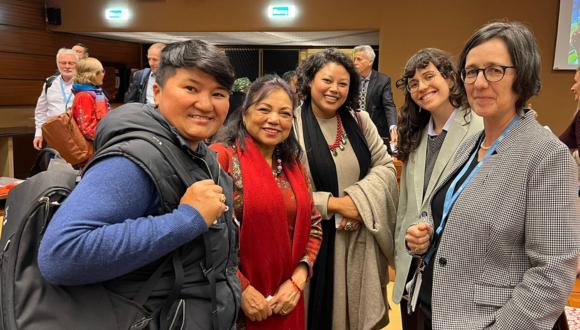
Roni Shaked (middle) with two Australian interns, Jen and Charlotte, who work with CEDAW committee member Natasha Stott Despoja.


Both students expressed gratitude for the opportunity. “Some of the other interns were from Europe; they could take a train and stay with relatives,” Shaked noted. “For us, this wouldn’t have been possible without the funding.” Looking ahead, Shaked hopes to continue working in academia or advocacy related to women’s rights, while Zippor Ben Tsvi is about to begin her dream job leading a coalition of Israeli organizations working on reproductive rights.


Despite the political challenges facing CEDAW and the UN at large, their experiences reinforced the importance of international human rights mechanisms. “This model isn’t perfect, but it’s the best we have,” Zippor Ben Tsvi said. “It’s something worth fighting for.”


Join Us at Tel Aviv University


Did you know that TAU offers an international LLM program, which allows you to specialize in international law and human rights, in law and technology, or in law and business? Learn more today.


From Startups to Stagecraft: TAU’s Student Clubs Have It All

Meet the passionate international students shaping TAU’s club scene

With the second semester starting March 17, it’s the perfect time to explore Tel Aviv University’s vibrant student life. Here, everyone can find their niche—whether in business, creativity, or many other fields. At the heart of it all are student clubs, driving connections, new experiences, and community. Discover student-led initiatives at TAU and meet the people behind these organizations as they answer unexpected questions and share their experiences. 

Business and Career Development 

TAMID Group: Drafting the Business Plans and Running the Numbers 

The club connects future business leaders to Israel through hands-on experience in finance and consulting. At TAU, members can join the Investment Fund Branch, where they gain practical financial expertise, or the Consulting Branch, where they collaborate with Israeli startups to solve real-world problems. The club fosters professional growth and builds a global network of innovators.  

Lior Shwartz, President of TAMID at TAU: “If I could time-travel, I’d skip forward 10 years to see a thriving pre-professional ecosystem at TAU International, with TAMID alumni leading top firms worldwide.” 

Connect TA(YOU): Even Barbie Needs a LinkedIn 

Connect TA(YOU) presents diverse career opportunities for undergraduate and graduate students through events, guest lectures, and bi-weekly email updates. By creating meaningful connections across various fields, the club empowers students to navigate their career paths with confidence and clarity.  

Ellah Nahum: “Barbie would be the ultimate honorary member of our club—she’s mastered every career under the sun and makes it look effortless!”  

TAUFF (TAU Financial Futures): Making Markets Scary Instead of Fun 

TAUFF empowers students to explore the finance industry with confidence through workshops, networking events, and expert panels. The club transforms curiosity into real-world expertise, creating a space for collaboration and peer learning.  

Lior Shwartz: “If we could have unlimited funding for one outrageous event, we’d host a nationwide stock pitch competition judged by leading Israeli financiers, bringing together the brightest minds in the country.”  

Arts, Creativity, and Expression  

The Writing Collective: Where Your Pen Is Mightier Than a Pharaoh’s Scroll 

The Writing Collective offers a safe and intimate space for writers to explore creative themes, analyze literature, and foster self-expression. The club encourages personal and academic growth through its workshops and discussions.  

Niara Popat, the founder: “If we could meet in one location forever, it would be at the Library of Alexandria—writing among ancient texts would be transformative.”  

Learning some salsa moves with Natasha Bilinsky

Dance Club: Every Misstep Is a Step in the Right Direction  

The Dance Club invites everyone, from beginners to seasoned performers, to express themselves through movement. Offering styles from Latin ballroom to Indian dance, the club provides a space to connect through rhythm and build community.  

Natasha Bilinsky: “One playlist or song we would use as theme music would be Ihiye Beseder by Café Shahor Hazak—it captures the energy and positivity of our group.”  

Stagecraft Theater Club: Turning Faint Echoes into Standing Ovations  

The Stagecraft Theater Club is a club for people who love theatre, performing or technical, regardless of experience level. Stagecraft meets twice a week for workshops and rehearsals. The team hopes to have a full-scale production announced soon to be performed at the end of the year. In addition, there are weekly acting, singing, and theatre history workshops.  

Gavin Rubin: “The strangest skill I’ve gained since leading this club would be learning to roar like a lion—quietly enough not to disturb meetings next door.”  

The Movie Club  

The club brings together film enthusiasts to explore and discuss cinema across genres, cultures, and themes. Through screenings and workshops, members gain a deeper appreciation for storytelling and visual art.  

“Everyone should watch films from unfamiliar cultures with an open mind, avoiding judgment, and research any stereotypes or exaggerations to better understand the truth behind the story.”  

Social Impact and Identity 

Student Council (STUCO) 

The Student Council is the heartbeat of student-led initiatives on campus. Through committees focusing on academics, extracurriculars, and student life, STUCO ensures a vibrant experience for all.  

Ari Greenblatt, President of STUCO: “One of our main channels of communication is our Instagram account, where many of the board members’ moms follow us. We have been posting “Take Over Tuesday” content, along with funny or informative stories, and the moms have truly been our biggest supporters. I’m happy we can keep the moms entertained, if no one else.”  

TAU Summit Society: The Power of Camaraderie 

The club provides a supportive community for students navigating the challenges of studying abroad, including academic struggles, cultural adjustment, and language barriers. By providing mentorship, leadership opportunities, and peer support, the society empowers students to overcome obstacles and build resilience. More than just a club, it’s a platform for growth and connection, helping students thrive and make meaningful contributions in a new environment. 

Shanee Malka, the club founder: “I was inspired to found the club because my struggles in Calculus showed me the need for a supportive community.”  

Women’s Club: Turning Willpower into WOW Moments 

The Women’s Club celebrates cultural diversity through art, music, and traditions. It’s a space for women to share their stories and build connections across cultures.  

Bhavana Velpula, founder of Women’s Club: “If we had our own reality show it would be called “WOW (Women with Will) starring Michelle Obama.” 

Celebrating Hanukkah and Christmas at the Lowy International School

The International Cultural Club: Connecting Culture and Carbs 

The International Culture Club at Tel Aviv University offers a vibrant space for international students and culture enthusiasts to share their backgrounds and experiences. Through monthly themed meetings on topics like traditions, sustainability, and health, the club fosters dynamic discussions and intercultural exchange. 

“If our club were a dessert it would be rice pudding—it’s universal and comforting!”  

Public Speaking and Intellectual Engagement 

Mock Trial: Where Justice Is Served with a Side of Party Emoji Vibes 

Mock Trial gives aspiring lawyers a chance to simulate courtroom proceedings and develop practical legal skills. With roles ranging from attorneys to judges, members engage in intellectual challenges while honing their craft.  

“If we were to describe our club’s vibe in three emojis, these would be ”  

TAUMUN Society: The Unifying Power of Diplomacy  

TAUMUN Society serves to develop diplomacy and leadership through weekly simulations, events, and conferences. The club connects Israeli and international students in meaningful collaboration. 

Maya Dunayer: “Our biggest achievement is bridging gaps between different student communities while fostering collaboration.”  

TAUMUN at the International Week 2024

Debate Club: Stay Cool-Headed with Hot Topics 

The Debate Club serves as a platform for respectful and structured discussions on provocative topics. Members engage in meaningful debates inspired by thought-provoking questions.  

Valentina Alberti: “For an initiation ritual for new members we could require a ‘no-troll oath’ to promise respectful dialogue.”  

Foreign Lawyers: Great Minds Run on Caffeine 

The club provides a space for aspiring and practicing lawyers to network, learn, and grow. The club focuses on bridging cultural and professional gaps within Israel’s legal landscape.  

Ian Signori: ‘Our go-to power-up drink when planning our activities is an ice-cold Diet Coke—it’s the only right answer!”  


Tel Aviv University offers an incredible spectrum of student-led clubs, each with its own unique flair and purpose. These communities don’t just enrich your time in Israel—they provide platforms for growth, collaboration, and cultural exchange. Interested in joining or starting a club?

Reach out to our Community Leaders for more information. 

Text by Ellah Nahum, first-year student in BA in Liberal Arts, member of the Student Council, and founder of Connect TA(YOU)  

“The Complexity of the Human Brain Is What Drives People to Study Neuroscience”

Tel Aviv University’s research-intensive MSc is at the forefront of discovery

If you are eager to understand the most complex machine imaginable—the human brain—Tel Aviv University’s MSc in Neuroscience offers a rigorous, research-driven program at the intersection of biology, psychology, medicine, engineering, computation, and many other fields. Designed for ambitious students ready to tackle some of neuroscience’s biggest questions, this program provides unrivaled opportunities for interdisciplinary research. Applications are open until March 20, 2025.  

Prof. Aya Meltzer-Asscher, a neurolinguist and a psycholinguist, and the Head of the Sagol School of Neuroscience, explains what makes neuroscience an exciting field of study.  

“Our students do research from their first day at TAU—they get to work in the best labs and are exposed to some of the most cutting-edge research.” 

Why Neuroscience Matters More Than Ever: Aging, AI, and the Mysteries of Cognition 

According to Prof Meltzer-Asscher, new medical challenges people face with the growing life expectancy and the AI revolution are among the key drivers of modern neuroscience.  

“The children born today are expected to live beyond 120 years, meaning that people could live with Alzheimer’s or Parkinson’s for 50 years instead of 10, so understanding and addressing neurodegenerative diseases is critical.” 

The use of AI can help achieve significant progress in early-stage diagnostics. For instance, special AI tools can analyze video footage from a patient’s home for early-stage Parkinson’s detection. Such technology is already being developed at one of the TAU labs at Ichilov hospital. For Alzheimer’s diagnostics, TAU researchers are working on identifying early biomarkers in blood samples.  

“Since we know that the brain starts changing decades before cognitive decline becomes noticeable, having the diagnostic tools will be a game-changer.” 

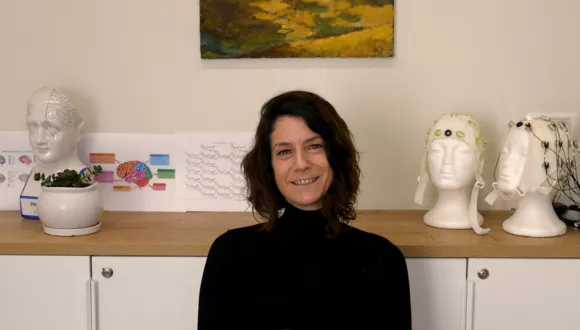
Prof. Aya Meltzer-Asscher

Another fascinating intersection is between neuroscience and the arts. Examples of such research include studying how different filming techniques influence audience perception or the ways VR and neurofeedback can help individuals regulate stress.  

And then there is one of the biggest unanswered questions of how cognition—memory, emotions, and consciousness—is implemented at the cellular level. 

Prof. Meltzer-Asscher’s research aims to reveal the neural and cognitive mechanisms behind our ability to speak and understand language. “What seems so effortless and trivial is arguably the most complex cognitive mechanism humans have!” she comments. 

Choose Your Research Path, Piece by Piece 

While all students are required to complete several core courses, the majority of the curriculum is built from a vast pool of elective courses. Starting in 2025, the MSc in Neuroscience will offer three distinct study tracks, enabling graduate students to tailor their study path at the Sagol School of Neuroscience.

  • Molecular, Cellular & Systems Neurobiology track focuses on researching the fundamental building blocks of the brain in health and disease with the use of optogenetics, calcium imaging, electrophysiology, and other molecular biology tools. 
  • In the Cognitive Neuroscience track graduate students explore how memory, emotions, attention, language and other cognitive processes work and how they can be impaired due to developmental or acquired causes.  
  • Neural Computation & Brain Modeling track involves using deep learning and AI tools for computational modeling of brain structure and functioning. 

Notably, students in each track can take electives from other tracks, allowing them to build a personalized curriculum that best aligns with their research interests. 

From Lab Work to Career Success in Neuroscience 

MSc in Neuroscience is defined by its flexibility and breadth, offering students a wide array of opportunities. With around 150 researchers spanning all nine faculties at TAU, the Sagol School of Neuroscience provides unmatched options for selecting a research lab and supervisor.  

“The diversity and interdisciplinarity of the school give our students a broad understanding of all the different worlds that are part of neuroscience—this is something that will serve them well into the future.”

The school also maintains strong clinical collaborations, partnering with leading institutions such as Ichilov and Tel HaShomer hospitals, as well as research centers specializing in music therapy, psychedelic medicine, sleep studies, and more.  

This ensures that every graduate student can find the perfect fit at the School—whether it’s studying the molecular mechanisms of Alzheimer’s, understanding the role of cognitive biases in anxiety disorder, developing new spectroscopy methods, working in neuro-marketing, studying cerebral palsy, or pursuing any other exciting and promising research avenue. 


“The program definitely gives the necessary knowledge and skills to make the choice that suits you best by the end of your studies.”—Nivedha Mohan Raj, a program graduate and doctoral student in neuroscience.  

Nivedha Mohan Raj, MSc Neuroscience alum’24

“After graduation, it is certainly possible to stay in academia with many postdoctoral positions, but a lot of alumni also choose to work in the industry.”   

Read more about student experiences here 


An extensive alumni network is another major strength of the program—its graduates go on to work in international high-tech or biotech companies, open their startups, or continue research in top universities worldwide. The strong connections students build during their studies provide valuable career opportunities in neuroscience, whether in academia, industry, or innovation-driven fields. 

ShapeWho Is the Program for 

MSc in Neuroscience invites applications from students with strong scientific backgrounds and high academic achievements who are ready to commit to rigorous research and study.  

“The program is intensive, and our students benefit from a full-tuition exemption and an enhanced living scholarship. This way, they can concentrate on their research and studies.” 


Ready to Learn More?

Read more and apply now to shape the future of neuroscience. 

Contact program coordinator Orly Segev for more information on the program and the application process at Sagolmsc@tauex.tau.ac.il 

Pushing the Boundaries of Nanomedicine

International researcher Riccardo Rampado helps lead discovery of new mRNA delivery system

Legendary physicist Richard Feynman famously said, “There’s plenty of room at the bottom.” For Dr. Riccardo Rampado, an international postdoctoral fellow at Tel Aviv University (TAU) working at the cutting edge of nanomedicine (and specifically mRNA drug delivery), this quote—originally about manipulating matter at the atomic and molecular levels—has become a guiding principle.

Like Feynman, Rampado truly believes that nanotechnology is more than just science; it is the key to unlocking new frontiers in medicine—from targeting diseased tissues with unprecedented precision to pioneering new ways of delivering genetic therapies.

From Padua to Tel Aviv: Expanding Nanomedicine Horizons

Rampado’s fascination with nanomedicine began during his time at the University of Padua in Italy, where he originally studied pharmacy but soon realized that his passion lay in research rather than traditional pharmaceutical practice. Immersing himself in the world of drug delivery, he explored biomimetic nanoparticles, or how particles derived from cell membranes could be designed to target inflammation.

Yet, a pivotal moment arrived during the COVID-19 pandemic when the world witnessed the unprecedented success of mRNA vaccine technology. This real-world demonstration of nucleic acid therapeutics captured Rampado’s imagination, prompting him to seek out an opportunity that would allow him to contribute to this cutting-edge field on a global stage.

“I turned my eye towards a postdoc that was first of all international, in order to expand my horizons and try to set up a network for my future career and at the same time that involved this technology.”

That search led him to TAU, where he joined Prof. Dan Peer—a recently elected fellow of the US National Academy of Inventors and TAU’s vice president of research and development—in his lab on precision nanomedicine. Rampado’s decision to join Peer proved to be transformative, placing him in an environment that offered not only vast resources but also an unparalleled collaborative spirit.

“At the very beginning, it was quite challenging. I found myself in a much bigger lab, with far more means at my disposal than in my previous university,” he recalls. “This required me to learn a lot, but with the help of Prof. Peer’s group, I was able to integrate into the team and get familiar with all the new techniques.”

A Breakthrough in mRNA Drug Delivery

Once Rampado gained his footing in Peer’s lab, his research then turned to demonstrating that by modifying the composition of lipid nanoparticles mRNA-based drugs could bypass the liver and be delivered directly to the inflamed gut. The advancement has profound implications for the treatment of conditions like inflammatory bowel diseases. “It was a sort of surprising finding,” Rampado admits, reflecting on the initial observation that different nanoparticle compositions resulted in altered biodistribution.

“By tweaking the lipid nanoparticle composition, we found that we could direct the delivery of mRNA to inflamed areas in the colon, something that could significantly improve treatment selectivity.”

This breakthrough was then published in Advanced Science. However, for Rampado, this is only the beginning. Now, his research is evolving in two critical directions: refining the precision of these nanoparticles to target other inflamed organs and unraveling the underlying mechanisms behind their selective biodistribution. “We are keeping all the particle components the same—just in different proportions. And somehow, that changes everything,” he says with enthusiasm. “Understanding why this happens could enable us to design even smarter drug delivery systems in the future.”

The Impact of TAU’s International Research Environment

Beyond the lab, Rampado credits the international atmosphere at TAU for shaping his growth as a scientist. “I have to stress how the environment I found here in Tel Aviv was essential for me,” he emphasizes.

“The group I worked with was key in helping me learn, integrate, and really flourish as both a researcher and a person.” 

Moreover, the exposure to colleagues from around the world has provided Rampado with invaluable networking opportunities and a broader perspective on scientific collaboration. “I’ve had the chance to work not only with Israelis, but with people from many different parts of the globe,” Rampado reflects. “I really hope to keep in contact and collaborate with them in the future, so we can continue to do good science together.”

After his postdoc at TAU is completed, Rampado hopes to eventually bring his expertise back to Italy and to the University of Padua, specifically—though he emphasizes that he is also open to other options. “Maybe one day, I can establish my own small group working in this field,” he muses. “There is still not a lot of attention to this kind of technology at Padua University, and I hope I can bring it myself.”


Advance Your Research Career at TAU

Want to know about current opportunities for pursuing your research at TAU? Check out our database of open research positions.

Four Tel Aviv University Professors Honored as Senior Members of the US National Academy of Inventors

Prestigious recognition highlights TAU’s leadership in innovation, with honorees from engineering and medical sciences

Four professors from Tel Aviv University (TAU) have been named Senior Members of the National Academy of Inventors (NAI) in a single year—an unprecedented recognition that underscores the university’s role as a global leader in innovation. With three honorees from TAU’s Faculty of Engineering and one from the Faculty of Medical & Health Sciences, this achievement places them among the just 715 distinguished inventors worldwide who have previously received this honor.

The NAI Senior Member designation is awarded to academic inventors with proven success in patents, licensing and commercialization, recognizing their contributions to real-world technological advancements. The four TAU researchers will be formally inducted at the 14th NAI Annual Conference in Atlanta in the United States in June 2025, joining an elite network of university-affiliated inventors dedicated to transforming scientific discoveries into meaningful innovations.

The Lowy International School caught up with each of TAU’s new NAI Senior Members to learn more about their research.

Rosen’s Clean Fuel Innovation is Powering a Better Future

Department of Materials Science and Engineering, Head of the International BSc in Electrical Engineering, and the Faculty of Engineering’s Vice Dean for International Affairs

How would you describe your research?

My research is focused on designing catalytic materials for the production and conversion of green fuels such as hydrogen, ammonia, and synthetic methane. There is no single technology that can solve the electrification and decarbonization of our large industries; therefore, our lab works on multiple solutions in parallel, including several types of fuel cells for the conversion of fuels to electricity, as well as thermochemical and electrochemical reactors, to efficiently produce the fuels. 

Can you tell us about an invention or innovation that you are most proud of?

We are very proud to announce that our most recent invention is the basis for a recently founded Israeli startup, PyroH2.  At PyroH2, we are developing a reactor (based on research that started in our lab at TAU) designed to convert natural gas or biogas into clean hydrogen and graphite, without emitting carbon dioxide in the process.

What does it mean to be recognized by the National Academy of Inventors? 

I am very humbled to have been selected alongside such strong Israeli innovators, and excited to join the NAI where we can continue to promote deep tech startups in Israel and the USA. 

Adler-Abramovich Mimics Nature to Transform Bone Healing 

Prof. Lihi Adler-Abramovich, Department of Oral Biology, The Goldschleger School of Dental Medicine

How would you describe your research?

My research focuses on the design and development of bioinspired materials that mimic natural materials and their function. At Tel Aviv University, I lead a multidisciplinary team that integrates medicine, chemistry, biology and engineering to create innovative biomaterials with applications in tissue engineering, regenerative medicine, drug delivery and antimicrobial treatments. My overarching vision is to translate fundamental scientific discoveries into practical, real-world solutions that address critical challenges in healthcare, sustainability and beyond.

Can you tell us about an invention or innovation that you are most proud of?

I am particularly proud of developing an advanced hydrogel platform for tissue regeneration, with a special focus on bone healing. My inspiration came from studying the natural bone healing process—observing how, in young individuals or in cases of minor fractures, the inherent physical, mechanical, and biological properties of the tissue promote effective recovery. Drawing on nature’s sophisticated biomineralization and self-assembly processes, we designed and formulated the hydrogels. We then optimized its properties so that it also serves as a foundation for novel bio-inks used in 3D printing. This innovative approach enables the fabrication of patient-specific scaffolds, marking a significant leap forward in regenerative medicine and personalized healthcare.

What does it mean to be recognized by the National Academy of Inventors?

Being recognized by the National Academy of Inventors is a profound honor that highlights the impact of my research and the dedication of my team to advancing science through innovation. This recognition strengthens my commitment to transforming academic discoveries into groundbreaking technologies that address real-world challenges and contribute to society. It also serves as a source of inspiration to continue mentoring the next generation of scientists and inventors, promoting a culture of creativity and scientific excellence that drives meaningful progress in both technology and societal well-being.

Tzvi Shaked Is Revolutionizing IVF with Label-Free 3D Imaging

Prof. Natan Tzvi Shaked, Chair of the Department of Biomedical Engineering (photo credit: Tel Aviv University)

How would you describe your research?

We are developing novel tools for biomedical optical microscopy and nanoscopy (imaging nano-scale objects) for clinical applications. Specifically, we are interested in label-free 3D imaging of biological cells, which is essential when chemically labeling the cells is not possible and therefore [the cells] cannot be well diagnosed. 

Can you tell us about an invention or innovation that you are most proud of?

We have invented and patented portable and mechanically stable modules and associated methods that can image biological cells in 3D without staining via optical interferometry, making this technology accessible for direct clinical use for the first time. A ‘killer application’ where chemical labeling of biological cells is not permitted is sperm selection for egg injection during in vitro fertilization (IVF). Today, embryologists select sperm cells for fertilization based on a subjective impression and cannot image well the sperm’s internal structure. Based on the technology developed in my research lab with the help of tens of graduate students that I supervised, I co-founded a startup company, QART Medical, which is now in advanced clinical trials on many tens of couples undergoing IVF in seven leading hospitals, two of them abroad, with the goal of significantly increasing IVF success rates, and with very supportive results so far.

What does it mean to be recognized by the National Academy of Inventors?

I am humbled to receive the prestigious appointment of a Senior Member in the National Academy of Inventors of USA. It is given to researchers with exceptional achievements as academic inventors and leading researchers in their respective fields of research, including notable success in patenting, licensing and commercialization, along with their persistence in developing technologies that create or aspire to create change in society. 

Golberg’s Electroporation Research Is a Game-Changer in Diagnostics, Treatment and Sustainability

Prof. Alexander Golberg (second from the right), School of Mechanical Engineering, School of the Environment and Earth Sciences

How would you describe your research, as well as your overall research vision?

I am a researcher specializing in bioengineering and biological manufacturing. My work focuses on developing non-thermal processes using high-voltage electrical pulses to induce membrane perforation in biological cells, a phenomenon called electroporation. I have applied this method to environmental and medical challenges, from molecular extraction in seaweed and agricultural waste to wound treatment and diagnostic applications. I have received multiple grants from national and international funding agencies to support this work, and currently lead the European MATISSE project, which advances electroporation-based molecular biopsy technology.

Can you tell us about an invention or innovation that you are most proud of?

I am proud of all my inventions both in the field of medical electroporation for scar treatment and non-invasive molecular sampling for diagnosis, and environmental application for seaweed processing.

What does it mean to be recognized by the National Academy of Inventors?

For me, this acknowledgment represents not only a personal achievement but also a testament to the collaborative efforts of my students, colleagues and partners who have contributed to advancing electroporation-driven diagnostics and therapeutics. The goal of our research has always been to bridge fundamental science with real-world applications, from non-invasive molecular biopsies for early disease detection to sustainable bioengineering solutions that address global challenges in healthcare and environmental sustainability. Ultimately, this recognition strengthens my commitment to fostering innovation, mentoring the next generation of scientists and engineers, and continuing to push the boundaries of electroporation technology to improve precision medicine, bioengineering and resource sustainability.


Learn more about recent research discoveries at TAU.

The Lowy International School Supports Successful Goethe University–Tel Aviv University Winter School

Israeli and German early career researchers participate in academic exchange on adaptive cognition

Prof. Tom Schonberg, co-organizer of the Winter School, and Prof. Roy Mukamel, from TAU’s School of Psychological Sciences, speak to the audience

Goethe University Frankfurt (GU) and Tel Aviv University (TAU) recently held a Winter School that brought together leading early career researchers (ECRs) from Germany and Israel for an engaging academic exchange on Adaptive Cognition in Noisy Environments. Hosted in the Brain Imaging Center building at GU, the event featured dynamic lectures, interactive group activities and ample networking opportunities.

A Platform for Collaboration, Learning, and Scientific Exchange

 “The school brought people together to discuss and meet face-to-face; this creates a real human connection that can lead to scientific collaborations,” reflects Prof. Tom Schonberg—a neuroscientist from TAU—who co-organized the event with his colleague Prof. Christian Fiebach, from GU’s Department of Psychology.

“It really was a heartwarming success.”—Prof. Christian Fiebach, GU’s Department of Psychology.

The success of this Winter School was made possible through the generous support of multiple institutions, including TAU’s The Lowy International School, as well as the German-Israeli Foundation, the German U15, and TAU’s Minerva Center for Human Intelligence in immersive, augmented and mixed realities.

The Winter School included 12 Israeli early career researchers and 13 German early career researchers, as well as more advanced academics who gave talks on their work.

The event attracted 12 ECRs from Israel and 13 ECRs from Germany, alongside distinguished faculty members who gave talks on areas of expertise like attention, language, and motor control methods utilizing cutting-edge research methods like virtual reality and mobile EEG. With thought-provoking discussions, hands-on sessions, and even research on primates and rodents, the program offered an expansive and immersive educational experience.

“Participation in the Winter School was a truly valuable and very inspiring opportunity. It enabled me to interact with experts in the field, create potential collaborations with researchers from diverse backgrounds, and acquire new insights into my own research.”—Tamar Ben David, a PhD student at TAU’s Sagol School of Neuroscience 

Cultivating Community in and Beyond the Classroom

Beyond academia, the Winter School featured an engaging social program, including a cooking class and local market tour, creating a relaxed environment for participants to connect beyond the classroom. The initiative also emphasized collaborative learning, with attendees divided into research teams and delivering a group presentation on the final day.

Winter School participants not only collaborated on academic matters, but in the kitchen, too.

Lea Alexandra Müller Karoza, a PhD student who attended from GU’s Scene Grammar Lab, said the whole experience was transformative. “I have honestly profited from it so much more than I ever thought possible,” Müller Karoza says.

“It was a unique experience, the atmosphere was open and collaborative and to meet people from all over Israel and Germany was so insightful.”—Müller Karoza, a PhD student at GU’s Scene Grammar Lab


Looking Ahead: Opportunities for Future International Projects

Interested in creating a joint international project like the Winter School? Learn more about how The Lowy International School can support.

Victoria

Phone: +61 3 9296 2065
Email: office@aftau.asn.au

New South Wales

Phone: +61 02 7241 8711
Email: admin@aftau.org.au

Western Australia

Phone: :+61 0418 46 5556
Email: davidsolomon@aftau.org.au