Author: Raphael

Why Pursue an Undergraduate Degree at Tel Aviv University?

It’s your launchpad to a truly global career

 
Considering an international education for your undergraduate degree? Tel Aviv University (TAU) offers an exciting, accessible and academically rigorous alternative to traditional US options. From affordable tuition to a globally recognized degree and exclusive opportunities for early-career experience, here’s why studying at TAU should be on your radar.

World-Class Education Recognized in the US and Beyond

A degree from TAU is not just globally recognized—it’s also a respected credential for students planning to pursue graduate studies or a career in the US. Many of our alumni have gone on to top graduate programs in the US and around the world, and we count among our academic partners universities like Columbia and Northwestern.

“At TAU, you have the opportunity to be part of something so meaningful and still get the education that you’re looking for—with all of the aspects of the American-style education of having so many classes to choose from and a great community.”—Kayla Goldberger, BA in Management and Liberal Arts

TAU alumni are also thriving at Google, Meta, Alphabet and other industry leaders. This university isn’t just a stepping-stone; it’s a launchpad for a truly international career. 

“Tel Aviv University is very well recognized. I’m glad to have this degree behind me.”—Tyla Shur, BA in Management and Liberal Arts

Affordable Education and Federal Aid Options

One of the most attractive aspects of studying at TAU is the significantly lower tuition. Compared to US-based universities, TAU’s tuition offers savings without sacrificing quality.

Plus, in addition to the many scholarships you can apply for, students from the US can use their 529 college savings plans, federal loans or even Veterans’ benefits to pay tuition at TAU, making it even easier to fund an international education. 

Shorter Program Duration = Faster Career Launch

Why wait four years when you can complete a bachelor’s degree in three? TAU’s accelerated program structure allows you to complete your undergraduate studies in less time than most US universities, while at the same time being fully equivalent (i.e., a three-year program at TAU = a four-year program in the US).

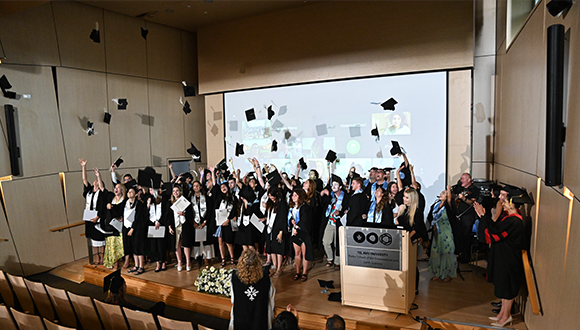
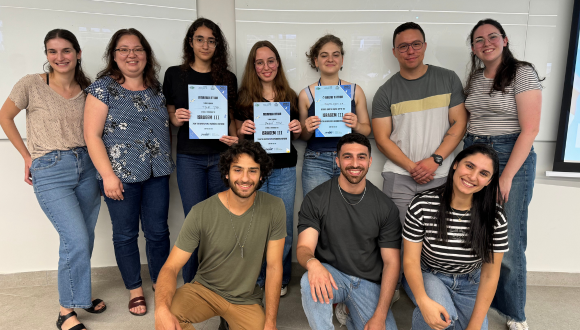
The graduation ceremony of the Liberal Arts BA program

And if you’re ambitious, TAU offers options to transition directly into a graduate program, meaning you could potentially complete both degrees in only four years. 

Real-World Experience in a Thriving Tech Hub

Israel is known for its tech innovation, and Tel Aviv is at the center of this exciting scene. TAU’s unique position in one of the world’s leading tech hubs opens doors to internships and networking opportunities.

“I was equipped through various university courses to be able to build my connections, improve my LinkedIn profile, and find internships.”—Kayla Goldberger, BA in Management and Liberal Arts

The university’s close ties with industry leaders mean that students benefit from a smaller, more intimate academic ecosystem while still gaining access to world-class opportunities. With direct pathways to internships and a strong presence in the tech and business sectors, studying at TAU gives you a competitive edge in the global job market.

A Vibrant, Coastal Place to Discover

Nestled along the beautiful Mediterranean coast, Tel Aviv offers a unique blend of rich history and lively and inclusive cultures (New York Times called us the “capital of Mediterranean Cool”). No matter your interests and background, there’s a place here for you.

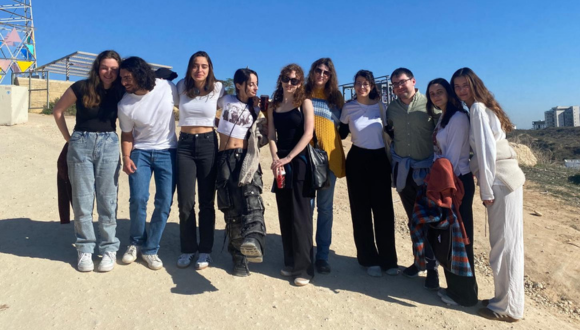
TAU students enjoying a day at the beach not far from the TAU campus

At TAU, moreover, you’ll quickly find a community of like-minded people, world-class facilities (like our Olympic-sized swimming pool and spa amenities) as well as a team of community leaders dedicated to supporting you during your time with us.

Unique Program Flexibility and Admission Pathways

At TAU, you’re not limited to a single program when applying. The university allows students to apply to multiple programs simultaneously, including our dual degree programs with Columbia University or Yeshiva University and our International BA in Liberal Arts or International BA in Management and Liberal Arts

Our dual degree programs also mean you spend half your time in Israel and half your time in the US, resulting in a diverse academic background with global experiences. 

“The dual degree program is a perfect combination—starting at Tel Aviv University and continuing at Columbia gives an excellent international academic experience. I learn so much from other students in the classroom.”—Chloe Katz, Dual Degree with Columbia University

Need a little extra time before diving into your studies? TAU also offers a one-year deferral option for accepted students, giving you the flexibility to plan your educational journey.

Curious About TAU? 

TAU offers more than just an undergraduate degree—it’s an experience that combines global recognition, affordability and unrivaled opportunities in a vibrant, high-tech city. Plus, by doing an international degree in English at TAU through The Lowy International School, you’ll find a community of global, like-minded people here to support you and cheer you on, every step of the way.

“When I decided to go to college in Israel I definitely expected it to be at a different level than what an American University experience would be like both academically and just socially but I’ve been so pleasantly surprised from my first day arriving on campus—it’s just blown away my expectations of what an Israeli college experience could be like.”—Joe Block, Dual Degree BA with Columbia


Explore program websites for more information and send your application online.

Two Out of Every Three Arab Citizens Support Political Partnership Between Arabs and Jews

New study by the Moshe Dayan Center at Tel Aviv University examines the views of Arab citizens in Israel – after the war with Iran

A new study by the Konrad Adenauer Program for Jewish-Arab Cooperation at TAU’s Moshe Dayan Center finds that a large majority (73.2%) of Israel’s Arab citizens support the inclusion of an Arab party in the government that will be formed after the next elections. In addition, the turnout of Arab voters is expected to increase.

The study’s main findings:

A large majority (73.2%) support the participation of an Arab party in the next government: 41.8% support joining any government formed, and 31.4% support joining a center-left government. If elections for the Knesset were held today, the expected voter turnout in Arab society would be 57%, slightly higher than the 53.2% turnout in the 25th Knesset elections held in November 2022.

The war between Israel and Iran did not change the priorities of Arab citizens regarding fundamental political issues such as joining the government or support for Arab-Jewish political partnership. However, some impact is evident in the definition of personal identity.

Most of the Arab public (66% of respondents) believe in political cooperation between Arabs and Jews in Israel, but only 40.2% believe that the Jewish public actually supports such cooperation.

A large majority of the Arab public (75.4%) report a low sense of personal security. The two main factors negatively affecting their mood are the high incidence of violence in Arab communities (41.9%) and the ongoing war in Gaza (37.6%). At the same time, 64% of survey participants report that their financial situation is relatively good.

54% of survey respondents stated that the most important issue for the Arab public today is addressing the problem of violence and crime. A significant portion (23.2%) said that ending the war in Gaza is the most important issue.

The personal identity of Israel’s Arab citizens includes three main components: Arab identity (36.2%), Israeli citizenship (30.3%), and religious affiliation (21.4%). For a relatively small portion of this public (9.7%), their Palestinian identity is the most important.

The study was initiated by the Konrad Adenauer Program for Jewish-Arab Cooperation, operating under the German Konrad Adenauer Stiftung at the Moshe Dayan Center for Middle Eastern and African Studies at Tel Aviv University.

Dr. Arik Rudnitzky, Director of the Konrad Adenauer Program for Jewish-Arab Cooperation at the Moshe Dayan Center: “A large, solid majority of Israel’s Arab citizens support political partnership between Arabs and Jews, as well as the inclusion of an Arab party in the government that will be formed after the next elections. The importance of this political standpoint cannot be overstated”.

“It should be understood against the backdrop of a harsh reality in which the mood in the Arab public is low due to the rampant violence in Arab communities, the negative effects of the war in Gaza, and also the recent brief war with Iran, which starkly exposed the severe lack of protective facilities in Arab communities. Nevertheless, and contrary to expectations, Israel’s Arab citizens refuse to despair and look soberly at the day after the war. According to this survey, voter turnout of Arab citizens in the next Knesset elections will be slightly higher than in the elections of November 2022. Opinions are divided on whether the precedent of the inclusion of Arab party Ra’am in the Bennett-Lapid government (2021-22) was successful, but even those who criticize MK Mansour Abbas (Head of Ra’am) for this move do not necessarily oppose the attempt itself — rather, they believe Ra’am could have achieved more. Thus, precisely in the context of the longest and harshest war in the history of the Israeli-Palestinian conflict, the survey points to the hope residing in the hearts of Arab citizens for establishing a political partnership between Arabs and Jews in the day after the war”.


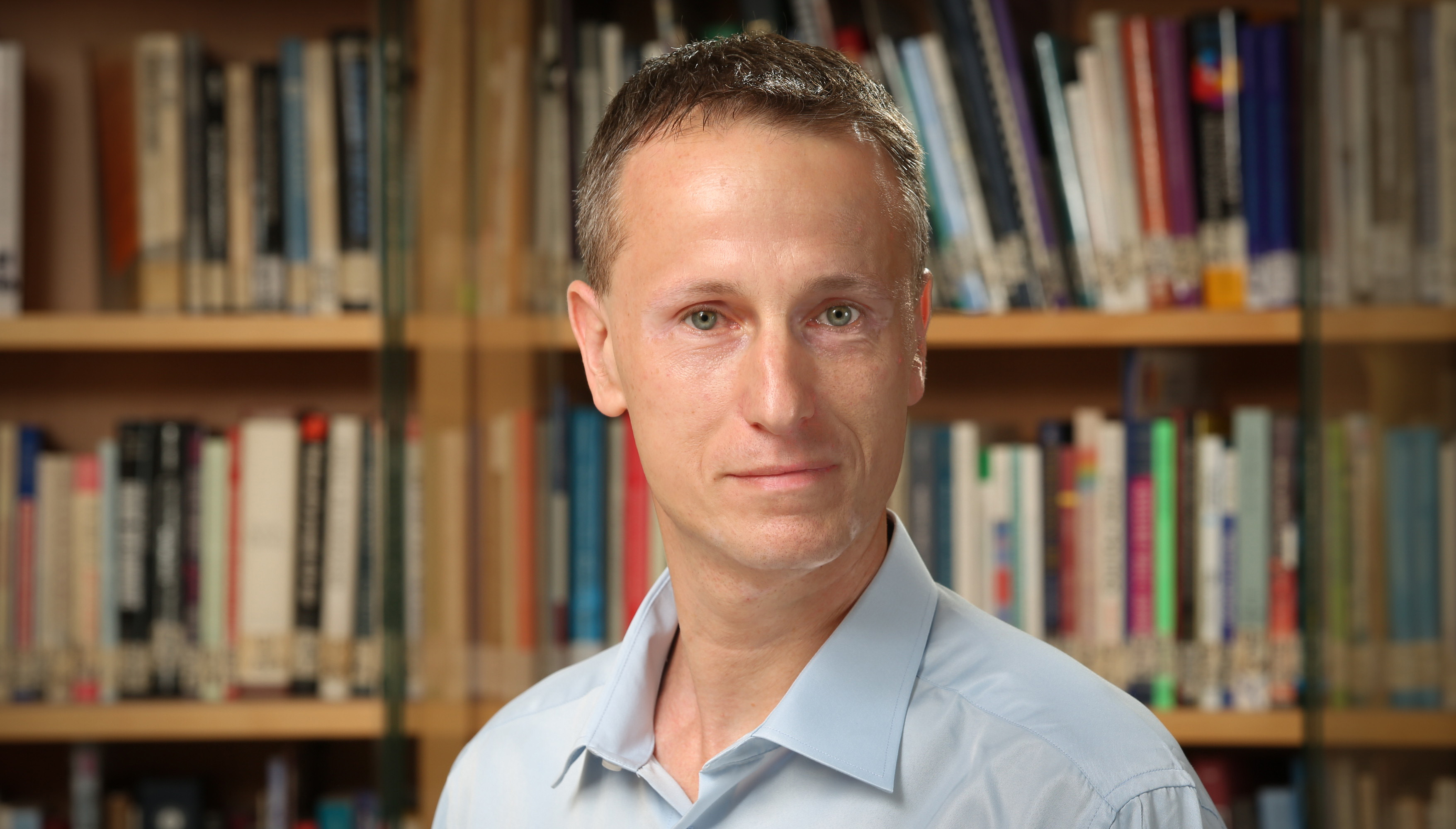
dr. Arik Rudnitzky

Dr Arik Rudnitzky

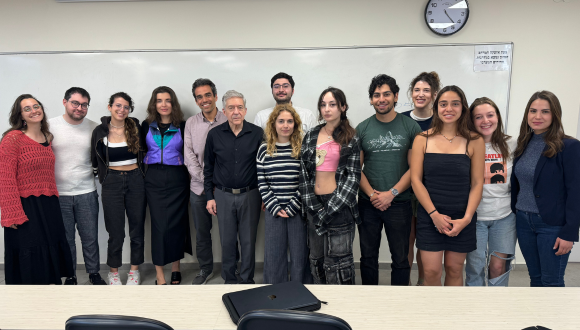
Alexandra Seaman (fourth from the right) with her Conflict Resolution & Mediation MA classmates on a field trip to Jerusalem

Empowering Women, Advancing Peace

TAU alumna establishes scholarship fund for women in Conflict Resolution and Mediation MA at TAU

 
 The MA in Conflict Resolution and Mediation at Tel Aviv University is proud to announce the establishment of a new scholarship fund made possible by a generous donation from Alexandra Seaman, a Class of 2025 program alumna. 
 

The Alexandra Ruth Seaman Scholarship Fund will provide financial assistance to up to 3 deserving female students who demonstrate academic promise and a commitment to making a positive impact in their communities specifically through the arts, culture and women’s empowerment. 

“I believe deeply in the power of education, and the knowledge I gained through the program is truly priceless,” says Seaman. 

“I want more people to access what I had the privilege to learn. Understanding human nature and the mechanisms of conflict is more crucial than ever—not just for Israel, but for the world at large.”

With an initial contribution of US$25,000 a year for five years, the scholarship will support female students of all backgrounds who seek to become changemakers in their societies. 

“I also believe strongly in female empowerment,” she adds.

“I want to see more young women stepping into their unique roles and realizing their full potential.”

The scholarship selection will be coordinated in partnership with the program’s Admission Committee, and the first awards will be granted for the 2025/2026 academic year.

Alexandra Seaman (fourth from left) with Dr. Nimrod Rosler (fifth from left) and classmates in a Conflict Resolution class

Dr Nimrod Rosler, head of the MA in Conflict Resolution and Mediation, welcomed the announcement of the scholarship, thanking Alexandra Seaman for this important and meaningful contribution to future leaders globally striving for peace:

“This scholarship will open doors for students who may not otherwise have the opportunity to pursue their academic dreams. It is an investment not only in education, but in the future leaders globally.”—Dr. Nimrod Rosler.

Seaman’s own path to Tel Aviv University was unexpected, but rewarding: “A year ago I had been accepted into the MA in Global Studies at Berkeley, but I wasn’t able to get my student visa in time. I came to Israel to make Aliyah and began looking for a similar academic program so I wouldn’t lose a year that I have been allocated for studies already.” 

“I was immediately drawn to TAU’s Conflict Resolution and Mediation program, and, luckily, admissions were still open. It turned out to be one of the most meaningful decisions I’ve made.”

Seaman recalls that when she originally discovered the MA in Conflict Resolution, she spoke with her professional coach about it and was pleasantly surprised to learn that the program is considered one of the strongest in the field.

Conflict Resolution & Mediation students on one of the field trips that are included on the curriculum

Alexandra praises the program for its academic excellence and community spirit: “Our program truly felt like a family—I felt supported at every step. It went far beyond the professional excellence of Nimrod Rosler and his team, there was a profound sense of community deeply embedded in TAU’s DNA. That feeling of care and belonging became especially meaningful in the aftermath of October 7th.”

“One of the highlights of my experience is that my high expectations were not only met, but exceeded. I gained essential knowledge that enabled me to open a new chapter in my professional life.”

A lifelong humanitarian, Alexandra began her career as a television host before becoming a multidisciplinary media producer, leading social impact projects that address some of the world’s most urgent challenges, from environmental justice and climate change to human and animal rights. Her work reflects a broader vision for Israel and the region:

“My dream is to make Israel a blueprint for peaceful coexistence. I work toward that vision through my NGO, lov.foundation. Without the MA in Conflict Resolution & Mediation, I would never have fully understood what we need to do to help turn that dream into reality.” 

Alexandra Seaman, the founder of the Alexandra Ruth Seaman Scholarship Fund

Her passion for strengthening Israel’s educational ecosystem is equally clear. “I want Israel to have a strong educational system, with institutions so inspiring that the world looks to them as models,” she says.

“During my time on TAU’s campus, I noticed that nearly every building, garden, and corner bore the name of someone who shared that vision for Israel. But vision alone is not enough—you have to act on it. This scholarship is my small but meaningful step toward that future.”

Seaman holds a BA in Art History from Moscow State University and an MA in Conflict Resolution and Mediation from Tel Aviv University, with further studies at Christie’s Education. Her current focus lies in exploring how art and culture can serve as powerful tools for peacebuilding and global connection.

The Alexandra Ruth Seaman Scholarship Fund reflects her belief in action-driven leadership, inclusive education, and the transformative power of women-led change. It also aligns with the program’s ongoing mission to ensure that every student has the resources they need to understand and solve global conflicts. 

“We are part of a powerful and inspiring global community,” says Seaman about TAU alumni community. “I encourage each of us to be more proactive, to connect, and to join forces in strengthening Israel by supporting TAU and its mission. Together, we can make a real impact.”

For more information about the scholarship or how to apply, please visit the website. 


Applications for the Conflict Resolution and Mediation MA are now open. Learn more about the program and apply online.

This year’s TAU iGEM team includes, clockwise, from top left: Oren Haviv, May Lieber, Ariella Nouman, Ester Buderovsky, Shir Shance, Michael Kovaliov, Din Saadon, Nir David, Idan Eyni and Roni Zarakhovsky.

TAU Students Develop RNA-Based Therapy to Fight Lung Cancer

As part of 2025 iGEM competition, team prepares to highlight their work on global stage

 
A team of 12 Tel Aviv University (TAU) students, from undergraduates to PhDs, is currently developing a novel, RNA-targeted therapy for lung cancer. The project, Oncoligo, aims to disrupt cancer at its genetic roots, using advanced modeling and molecular biology to selectively kill cancer cells with minimal side effect; it will be presented October 28 to 31, 2025 on the global stage in Paris at the annual iGEM competition, the world’s largest showcase for synthetic biology.
 

A Team Built Across Disciplines

Led by Shir Shance and Idan Eyni, third-year undergraduate students in biotechnology and in biomedical engineering respectively, the TAU iGEM team brings together campus collaboration across disciplines like medical sciences, computer science, mathematics, biotechnology and biomedical engineering. 

“Synthetic biology is a combination of molecular biology and sophisticated engineering tools,” explains Eyni.

“So iGEM is really all about interdisciplinary teams and bringing all these different strengths together.”—Idan Eyni, biomedical engineering undergraduate

The TAU IGEM program was founded by Prof. Tamir Tuller from the engineering faculty (an expert in computational and synthetic biology), who is the lead supervisor of the program. The team is also supported by a scientific steering committee that includes Profs. Avigdor Eldar, Uri Gophna, Martin Kupiec and Itai Benhar.

Members of TAU’s iGEM team join Startup Nation Central for mentorship on entrepreneurship.

In addition, it is supported by an entrepreneurship committee that includes Yair Sakov (founder and managing director of TAU’s Entrepreneurship Center) and the team at Startup Nation Central. 

A New Approach to Cancer

Oncoligo targets a fundamental weakness in cancer cells: their faulty mRNA. Rather than trying to destroy cancer cells via their mutated – proteins, as many current therapies do, the team is working to target cancer cells via the mutations in the mRNA molecules. The key lies in molecules known as antisense oligonucleotides (ASOs), which can bind to mutated RNA and deactivate it.

“Think of DNA as a recipe book, RNA as like a single recipe out of this book … and the protein is the final dish.”—Shir Shance, biotechnology undergraduate

“In cancer cells, the DNA has mutations, meaning the recipe is often damaged, leading to defective proteins … and so we’re thinking about how to kill cells with errors in the recipe so the damaged, cancerous proteins can’t exist anymore,” explains Shance.

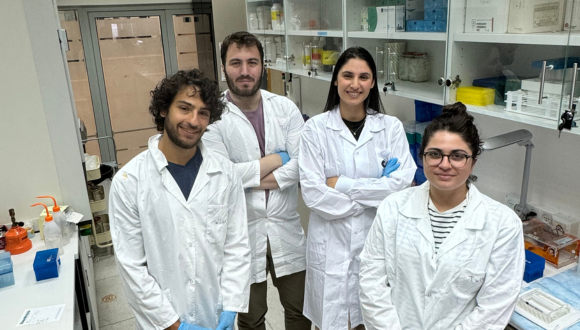
Oncoligo members in the lab (from left to right): Roni Zarakhovsky, Oren Haviv, Shir Shance and Gal Aziel.

By designing novel ASOs that specifically bind to cancerous mRNA, the team hopes to offer a therapy that selectively targets tumor cells while leaving healthy tissue unharmed. This approach diverts from most current therapies, which target the cancer cells via chemotherapy and other nonspecific methods. 

Powered by Modeling, Guided by Experimentation

One aspect that makes the project especially innovative is the use of computational modeling to design the most effective ASO sequences. 

Michael Kovaliov, a master’s student in applied mathematics, leads the modeling team. “RNA can be difficult to distinguish and so we want to build a computational model that knows how to target certain areas” he explains.

“So, we’re first coming up with the computational model … then running some sequences in vitro in an actual cell line to test how effective it is. Once we get our results, we plug them back into the computer, we analyze them, and we try to make the model better once again.”—Michael Kovaliov, graduate student in applied maths

The team is currently testing their ASOs in model organisms like yeast and in human cell lines, with plans to eventually move into human cancer cell lines in the months ahead. If successful, their approach could offer a template for developing RNA-targeting therapies across a range of cancers.

Building Community, Locally and Globally

In parallel, the team has helped organize ISRA-GEM, a local version of the iGEM competition that took place in June and invited Israeli high school and university students from across the country to submit their own synthetic biology projects. This year, the competition saw over 250 participants from both central and peripheral regions of Israel.

TAU’s iGEM team members award winners of the 2025 ISRA-GEM competition.

The team is also holding an international online meetup on August 28, connecting iGEM teams from more than 17 countries—including Egypt, France, India, Pakistan, the United Arab Emirates, Zimbabwe and Ghana. “The idea is to share ideas and collaborate and also practice for the iGEM grand final in Paris,” says Shance. 

Looking Ahead to Paris—and Beyond

With the main iGEM competition approaching, TAU’s iGEM team is focused on preparing a proof of concept and finalizing a research tool they’ve built to help others design ASOs for different diseases. While the team is hoping to once more bring home gold (TAU won a gold medal at last year’s competition), they’re also just excited for what the opportunity will bring.

“It’s a great experience for us to present our project and to reach other researchers from all over the world to learn from them.”—Idan Eyni. 

The TAU team additionally hopes that the iGEM competition marks the beginning of a lasting contribution to cancer research, one that can be continued in the form of a startup: “iGEM is designed to prepare you for the industry,” says Kovaliov. “Good science needs to come in conjunction with a coherent business plan; if this project matures enough, we would love to open a company.” 

Learn more about TAU’s 2025 iGEM team and the Oncoligo project.

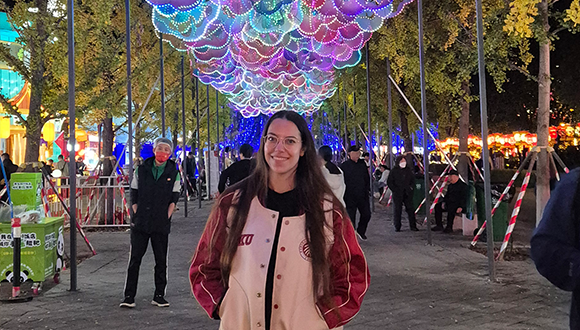
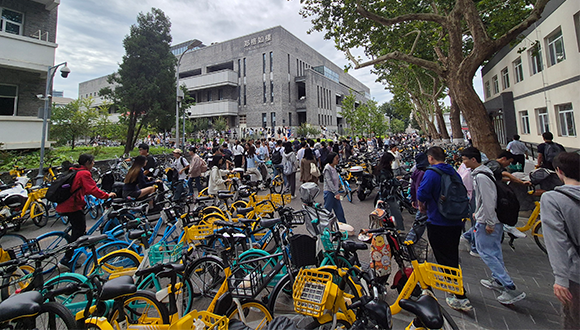
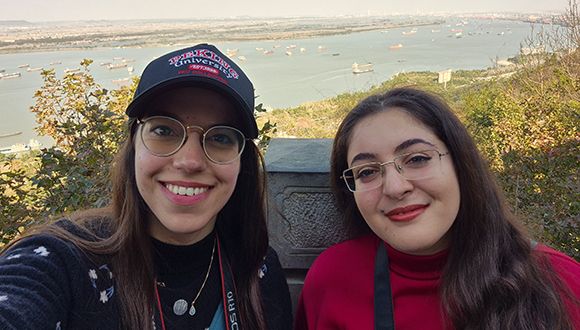
Oren Vaserman with a fellow Israeli student during their exchange semester in China

Global Learning in Changing Times: A Guide to TAU’s Student Exchange Program

Even in challenging times, we at TAU continue to dream, learn, and build new global opportunities, including through our Student Exchange Program.

 
Despite our daily routine changing and shifting, Tel Aviv University remains committed to global partnerships, offering our students opportunities for learning, growth, and connection. Through the Student Exchange Program, you can spend a semester at a partner university abroad, gaining academic experience, expanding your horizons, and building an international network for your future.

The call for outgoing exchange for Spring 2026 opens July 1. Whether you’re an undergraduate, graduate, or PhD student, TAU’s University-wide student exchange program can take you to new places academically and personally. Still not sure it’s for you? We asked someone who’s been there. 

Here we break down what to expect, with insights from Oren Vaserman, TAU student in East Asian Studies BA who just recently returned from a semester in Beijing at Peking University.

Is exchange only for certain students or programs?

The exchange program is open to the vast majority of TAU students, spanning all faculties and degree levels, from undergrad to PhDs, with only a few exceptions of programs that have special schedule limitations.

“I went to Beijing because I wanted to live and study in East Asia. Since I was studying Chinese at TAU, it made sense to go to China and experience the culture firsthand.”

Peking University even has a lake on campus!

Whether you’re studying environmental studies, history, business, biology, or other fields, there’s a destination that fits. Browse the catalog to find your perfect match.

Will I fall behind in my degree at TAU if I go abroad?

Not if you plan ahead. At TAU, all courses must be pre-approved before departure, and exchange credits count toward your degree. 

“I’m graduating on time because I got course approvals from my department before I left. But if not, I probably would’ve needed to put in extra effort this semester or take extra courses to finish on time. Planning ahead really paid off.”

The key is coordination with your academic advisor and with the TAU Outgoing Student Exchange Office at the Lowy International School. Students are expected to complete their degrees on time, and exchange should not extend your study period.

How can I shape my exchange to fit my goals?

Your destination and course selection can (and should) align with your academic and personal interests.

“I didn’t just pick a random place. I knew I wanted to be somewhere where I could improve my Chinese and experience the culture.

“The program in Beijing was intense, but that’s exactly what I wanted. Now when professors at TAU mention certain places in class, I can say, ‘I’ve been there.’ It made my studies way more real. My Chinese has also become much more fluent.”

Peking University campus

You can prioritize research, language immersion, or cultural experiences and choose courses in the fields that excite you.

Do I need to speak the local language to go on exchange?

Not at all. Most partner universities offer plenty of courses in English, even in non-English-speaking countries.

Oren studied Chinese before going, but that didn’t mean it was smooth sailing from the start:

“I handed the taxi driver a note with the dorm address because I didn’t really know how to pronounce it properly. In Chinese, if you don’t pronounce something exactly right, people won’t understand you.”

“But over time, I got more confident and started talking to locals. I even joined a club that brought together international and Chinese students for activities like group dinners.”

Even if you don’t speak the language, you’ll be fine. Students manage well with English in countries like Germany, the Netherlands, Korea, France, and others.

Is it just about taking classes?

Far from it. Exchange is about life beyond the classroom.

“I took 20 hours of Chinese a week, and the classes were quite intense. But I also traveled a lot around China. During a national holiday, I went to Shanghai alone for five days.”

“That was the first time I took a trip completely alone. I almost missed the train, everything was a mess, but I managed. And when I saw the Bund, the place you always see in pictures… that moment, I thought, ‘It’s not a picture, it’s real. I’m really here.’”

Travelling solo around China—done.

From cultural immersion to exciting trips and new friendships, the exchange experience shapes who you become.

Is it expensive to go on exchange?

It’s more affordable than you think. You don’t pay tuition to the host university, and scholarships are available.

“I thought going abroad would be really expensive, but living costs in Beijing were actually pretty low. Ordering food was easy and cheap once I figured out the apps.

“I’d screenshot the Chinese and translate it later. Once I liked something, I just kept ordering the same thing.”

TAU and other organizations offer scholarships to make exchange accessible to more students.

Is the application process long and complicated?

Not at all. It’s straightforward and user-friendly.

“I thought applying would be a huge deal, but it was manageable. The hardest part was picking the right courses and making sure they’d be approved. TAU Outgoing Student Exchange Office at the Lowy International School helped me figure that out.

“After that, it was just logistics with the visa, flight, and paperwork. The Chinese university was super clear about what to do.”

The application guide walks you through the steps, and staff at the TAU Outgoing Student Exchange Office are there to support you.

What kind of support is available and when do I need it most?

You’ll have guidance from the TAU Outgoing Student Exchange Office and the host university, but independence is an important part of the experience.

“TAU helped a lot before I left, especially when I was trying to navigate the Chinese university’s website and figure out which courses I could take.”

Once I got to Beijing, it was mostly up to me. The university offered dorm options in advance, and I got lucky with a great room. I also contacted an Israeli student who was already there. She met me the next day after I arrived and helped me get settled. That made a huge difference.”

The sprawling campus of Peking University

You’ll learn how to handle new situations, build new connections, and grow more capable with every challenge.

What if I feel unwelcome as an Israeli student?

It’s a valid fear, but not what most students actually experience.

“A lot of people worry about how they’ll be treated abroad because of where they’re from. But honestly, I didn’t feel any hate or tension in China. Most of the international students just wanted to be friends and study together.”

“I did talk about my background with a few people, and everyone was respectful, even curious. The media doesn’t always reflect what’s really happening between students.”

Your experience will depend more on who you meet than where you go, and the exchange community tends to be open-minded and inclusive. Importantly, during each semester, TAU Outgoing Student Exchange Office opens a WhatsApp group where you can contact the staff personally in any emergency.

Does going on exchange help my career?

Without a doubt. Exchange adds serious value to your resume and worldview.

“Before this, I thought studying abroad was only for people from big-name universities or with perfect grades. But being in China made me realize I can do more than I thought.

It also opened my eyes to the possibility of doing a master’s abroad. I didn’t know how many options were out there, or that international students are sometimes even more welcome than you’d expect.”

Whether you’re aiming for grad school or your first job, international experience gives you an edge.

So… should you apply?

Yes! Exchange is for anyone curious enough to take the leap. And as Oren’s story shows, it can completely reshape your confidence, your academics, and even your future.

Curious to see what opportunities are available for you? 

Explore the range of programs, destinations, and partner universities here. 

Please note that applications are open until July 31, 2025. 

For detailed application guidelines, click here. 

Still unsure? Reach out to the TAU Outgoing Student Exchangу Office and we’ll help you find the right fit, guide you through the application process, and support you throughout your time abroad. 

Because this isn’t just about one semester abroad. It’s about who you’ll become when you get there.

“It’s the Place Where You Can Experience It All”

Meet the Class of 2025 graduate who found her path through Tel Aviv University’s double-major BA

 
When Tyla Shur first arrived in Israel for her gap year, she had no intention of staying longer than planned. But something about the energy of the country, the warmth of the people, and the opportunities that lay ahead convinced her to extend her adventure. Now, three years later, she’s graduating as part of the first cohort from Tel Aviv University’s BA in Management and Liberal Arts, and she couldn’t be happier with her decision.

“Israel is the best place to study,” says Tyla. “It’s the place where you can experience it all. You can have the student life and the parties. You can have a good education. You can meet people from all over the world. You have the beach right here. And of course, there are a lot of opportunities to give back.”

The Perfect Academic Balance

Coming from Johannesburg, Tyla knew she wanted to continue her studies in English but wasn’t entirely sure which direction to take. The unique structure of TAU’s International BA program proved to be exactly what she was looking for, a degree that wouldn’t force her to choose between her interests.

“I really didn’t know what field exactly I wanted to go into, so I felt like this was a good, broad way to approach it,” she explains. The program combines business fundamentals from the world-class Coller School of Management with liberal arts courses from the Faculty of Humanities, allowing students to take courses in economics, marketing, and entrepreneurship alongside psychology, philosophy, literature, and Middle Eastern studies.

“What’s unique about this degree is how it allows you to mix the arts and the business side. It gives you a broad background to go into the business world with a good understanding of other areas.”

“I did psychology, for example, and that’s really helped me understand the way people function. I think this understanding adds to my management skills,” she says.

The academic rigor of a double major BA might seem daunting at first glance, but Tyla found her balance. “It’s definitely a challenging degree, but it’s manageable,” she comments. “Every semester, we only have three management classes, and usually a maximum of two of those will be numbers-heavy, while one will be more management-oriented. With the liberal arts side, you’re using a different part of your brain: it’s more essay writing and assignments.” 

“The balance makes it doable and fun.”


Applications for Management & Liberal Arts BA for 2025/26 academic year are open!

Various scholarships are available for international students. New olim are eligible for tuition scholarships from the Israeli Student Authority.

Visit the program website and contact the program manager at mgmtla2@tauex.tau.ac.il for more details.


A Global Classroom Experience

Students in the first cohort come from Russia, Germany, the Netherlands, the USA, Italy, England, South Africa, Brazil, and beyond.

Class of 2025: The first cohort of Management & Liberal Arts BA

“For a lot of people English isn’t even their first language. At the Lowy International School, we’re all learning in English together, gives us  this natural common ground and allows us to connect so well,” Tyla reflects.

“What stood out most is how amazing it is to be in a class surrounded by people from all over the world, getting to know their different backgrounds and cultures, and finding out how much we actually have in common.”

Expanding Horizons with Study Abroad in London

The program’s international focus extends beyond the diverse student body. Tyla took advantage of Tel Aviv University’s extensive partnership network to spend a semester at NYU London.

“I did three management classes—International Economics, Money and Banking, and Operations Management—plus one psychology class, Social Psychology,” she recalls. “I only took four classes so that I could have free time to explore and get to know London.” 

“It was an amazing experience academically, but also an opportunity to experience exciting life in London, which felt like the center of the world.”

The experience of commuting via the London Underground during rush hour gave her and her TAU roommates “the feel of a local,” while university-organized activities like hiking in Surrey Hills and West End theatre trips enhanced the cultural immersion.

A Supportive Community Away from Home

Living independently for the first time, thousands of miles from family and friends, could feel isolating. But Tyla found that Tel Aviv University and its surrounding community offered multiple layers of support that helped her not just survive, but thrive.

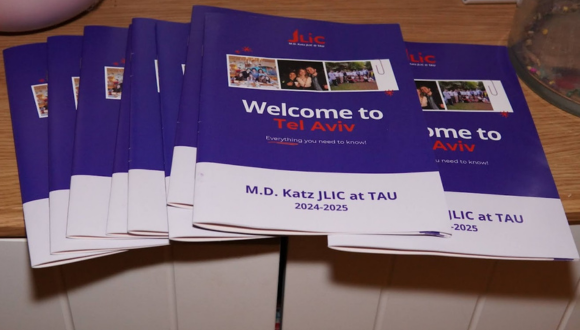
The Jewish Life organizations on campus played a particularly significant role. “The JLIC community became a second family. Eitan and Elana, TAU’s rabbinical couple, have created a warm community with Shabbat dinners and activities,” she explains. 

“When I was living in dorms, I could go there any Shabbat, and now they do kiddush on Saturdays too. There are lots of different talks and events going on throughout the week, so you get to connect with other people that aren’t necessarily in your degree. 

“It forms a base of consistency that really makes you feel at home.”

These connections proved especially meaningful during challenging times. Tyla recalls powerful speakers who visited through JLIC and Thrive, including discussions about anti-Semitism on university campuses and deeply moving presentations from individuals directly affected by recent events in Israel.

“I miss my family and friends back home, but being in Israel, everyone’s so open and welcoming,” she concludes.

Practical Independence and Learning Life Skills

The transition to complete independence wasn’t without its challenges. “At the start, it’s definitely an adjustment. You learn that you need to spend a lot more time doing chores and cooking,” Tyla admits. But like many aspects of her university experience, she found her rhythm.

“Eventually, you work out a balance. One day you make school lunch in advance, the next day you buy on campus, and the next day you go to a JLIC event where they’re giving you dinner,” she explains. “I’ve also started doing online grocery shopping, which is much easier and a time saver.”

“I wouldn’t trade the independence I’ve gained for anything. Living here has made me more resilient and more grounded.”

Along the way, Tyla has also discovered several favorite spots on campus and in Tel Aviv that have become integral to her daily routine and sense of belonging. “Aroma is definitely a favorite,” she says of the popular campus café. “I love the vibe there. It’s always full, there’s good music, and it’s just a good place to study.” 

Tyla Shur (on the right) and Ariella Roitman, also a Management & LIberal Arts BA graduate, at a student meetup

Beyond campus, she’s found her rhythm in the city’s diverse offerings, from studying at Cafe Daisy in Tel Aviv (“a very good spot to work and just order a coffee”) to dining at Pankina for Italian food and Kanki for sushi. Her absolute favorite spot remains the Tayelet at Gordon Beach, where she goes both to relax by the water and attend Zumba classes. And when she’s craving the acai, she heads to Fruit Kingdom, “right outside the Shuk on Shenkin,” which she insists serves “the best acai” around. 

Real-World Applications with Internships and Career Preparation

Internships are an integral part of the program, connecting students with Tel Aviv’s startup ecosystem and offering workshops on CV writing, networking, and career planning.

“After doing internships in both large and small companies, I realized I prefer more structure, but I also loved the creative aspects I found in startup work. Now I’m looking for something that combines both,” she says. 

Currently, Tyla’s interning writing for a newsletter called The Relisher, crafting articles about Michelin-starred chefs and their favorite restaurants, a role that combines her improved writing skills from liberal arts coursework with her management studies.

As graduation approaches, Tyla feels confident about her prospects: 

“Tel Aviv University is very well recognized. I’m glad to have this degree behind me.”

Her post-graduation plans involve staying in Israel and finding work that incorporates her diverse interests. “I would like something that incorporates a bit of psychology and creativity, while still in a business environment,” she explains. 

Message for Future Students

For students from South Africa, the US, UK, or Latin America considering a similar path, Tyla’s advice is unequivocal: 

“Don’t hesitate. You’ll grow so much academically and personally. It’s a journey worth taking.”


Applications for Management & Liberal Arts BA for 2025/26 academic year are open!

Various scholarships are available for international students. New olim are eligible for tuition scholarships from the Israeli Student Authority.

Visit the program website and contact the program manager at mgmtla2@tauex.tau.ac.il for more details.


Important Campus Updates – We Stand Strong and Keep Our Sights on a Better Future

“We Stand Strong and Keep Our Sights on a Better Future”

June 26, 2025

Message from Tel Aviv University

After nearly two weeks of uncertainty and disruption, Tel Aviv University has reopened its campus following the Israel-Iran ceasefire. The abrupt end to the semester was challenging for everyone in our community—students, faculty, and staff alike—but today, we are grateful for a return to quiet, to calm, and to one another.

While we are attending to those who have been deeply impacted by the war, our spirit is strong. Our students are preparing for final exams, our labs and libraries are coming back to life, and our flowering campus is once again filled with possibility.

We’re glad to be back—and even more grateful for the resilience, compassion, and determination that define our university community.

June 24, 2025

Message from Prof Mark Shtaif, Rector, Tel Aviv University

Dear Students, Faculty Members, and Academic Staff,

In light of the ongoing hostilities with Iran and the resulting restrictions, and out of consideration for the pressure and distress experienced by many students and faculty members, we have decided—together with the Student Union—to postpone the start of the exam period by one week. The exam period is now scheduled to begin on Sunday, July 13. The possibility of a further one-week postponement will be considered as the situation develops.

At the same time, we have instructed the academic units to explore the option of replacing some exams with alternative assignments, where necessary and academically appropriate.

The combination of this postponement of the exam period and the shortening of the semester by one week provides two important additional weeks for both students and teaching staff to prepare, and is intended to ease the overall process.

I wish all students success in their end-of-semester exams, and to all of us—calmer and safer days ahead.

Sincerely,
Prof. Mark Shtaif
Rector, Tel Aviv University

June 22, 2025

While a rocket recently fell near Tel Aviv University, the campus’ property damage is limited and most importantly no one at TAU was physically harmed. As President Ariel Porat emphasizes, carefully following the safety measures from Home Front Command saves lives. Let’s all work together to ensure safety instructions are followed.

Find the message from the University President, Prof Ariel Porat here: 

Security FAQ

June 17, 2025

Dear Lowy International Community,

We hope this message finds you safe and well. Thank you for your ongoing support and concern; it continues to mean a great deal to our team, as well as to our international students and researchers, whose safety and wellbeing remain our priority. 

Today, we write with some key updates:

University Status

Tel Aviv University’s academic year will end one week early on Wednesday, June 25. Course materials will be reduced accordingly.

Remaining instruction will take place remotely via Zoom for the remainder of the week and until further notice. All classes will be recorded and uploaded to course websites. Attendance is not mandatory.

In-person instruction, laboratory work and training sessions will only resume once deemed safe by Home Front Command. All campus shelters are open and accessible.

Possibilities for Leaving

Foreign nationals wishing to leave and who haven’t yet done so should contact their embassies in Israel. Real time status updates on Ben Gurion Airport are available via the Israel Airports Authority. 

The Lowy School has received inquiries about leaving Israel via land border crossings. We are currently looking into effective options for leaving that prioritize safety.

Secure Areas/Shelters

Our Lowy community leaders remain in close contact day and night with international students and researchers, including during times when sheltering is required. Being in a protected space saves lives. During a siren, leave the shelter door open briefly so others can enter quickly. Once the siren alert ends, close the door(s) and/or window(s) to keep the shelter secure. Please wait in the protected space until you receive further notice from Home Front Command.

Anyone in our community living off campus and worried about their secure area options should email housing@tauex.tau.ac.il. We will do our best to find a solution.

Public Transportation

If essential, there are some train and bus services available. Those in our international community should contact their Lowy community leader for more information.

Health and Wellbeing Services

Health services are available. Should your loved ones have health concerns, please have them contact their Lowy community leader directly about next steps.

  • A 24/7, English-language emotional support line (ERAN) is currently available: 076-884-4492.
  • Our Lowy Educational Counselor is also available for personal support, for anyone feeling overwhelmed or anxious: lowycounsel@tauex.tau.ac.il.
  • Confidential, AI-powered emotional support can be accessed via WhatsApp (free and available 24/7): +972-54-888-4855.

Find the full Security FAQ here 

Lowy Quarterly Bulletin 19


June 14, 2025

Dear Lowy community,

Our current priority is the safety and wellbeing of our international students and researchers at Tel Aviv University (TAU), with whom we are in direct contact. We are following the security and safety protocols in place, as set out both by TAU and The Lowy International School and in coordination with the Home Front Command. We are also vigilantly monitoring all circumstances and are in frequent contact with government agencies. 

As we work directly with our international community, please keep the following in mind: 

⁠For students and visitors in campus dorms

The Home Front Command defines required levels of protection based on circumstances; we are in complete alignment with their recommendations. The MAMAK (protected space) on each floor of the dormitories and the staircases are considered the most protected areas. Please use them as instructed.

For students and visitors residing off-campus

Home Front Command requires that residential buildings have a secure area that meets safety specifications. Should you be concerned about your safety options, please reach out to housing@tauex.tau.ac.il.

For everyone

Please remember that once you enter a protected area, you must remain there until you receive an official notification from the Home Front Command that it is safe to exit. Do not leave based on the assumption that it’s safe after 10 minutes.

If you are feeling anxious or worried because of the events, please contact our Educational Counselor at lowycounsel@tauex.tau.ac.il.

Cybersecurity alert

Please be aware of fraudulent phone calls impersonating the Home Front Command from the number 073-3103014, urging people to prepare emergency kits or visit a website. Do not click on any links or visit websites mentioned in such calls. The Home Front Command does not make unsolicited phone calls with instructions or links. Rely only on official sources such as their website and app.

Regarding classes and exams

Instructions about studies and upcoming exams will be shared by the Rector’s Office on Saturday evening, based on the situation assessment and the Home Front Command’s instructions at that time. 

We will continue to provide regular updates in the coming days.

When Teaching Calls You Back

Rediscovering professional identity through TESOL training

 
Sometimes the most transformative educational journeys begin with a moment of unexpected discovery. For Haneen Abu-Khet, this year’s Tel Aviv University MA in TESOL (Teaching English to Speakers of Other Languages) graduate, that moment came through a simple Facebook scroll that would completely redirect her academic and professional path.

Hear from Haneen  Abu-Khet About Her Journey:

“Five years ago, after completing my BEd at Beit Berl College, I struggled to choose an academic program that aligned with my future goals and interests. I remember reaching out to former instructors and my college peers to seek advice. 

Eventually, after a prolonged period of contemplation and hesitation I decided to register for an MA in English literature and Creative Writing at Bar Ilan University, since I enjoyed both fields equally and was very enthusiastic about composing my writing in a creative, innovative way.  

I finished my MA in 2022 and completed my thesis with a plan to pursue a PhD soon. However, not too long after the graduation ceremony, I felt lack of motivation to proceed with a PhD. That sense of demotivation stemmed from the realization that I was drifting away from the field I was most passionate about and dedicated to, the thing that fills my sense of purpose which is teaching English. I soon came to the realization that this academic path had reached its conclusion and that my aspirations for further professional and intellectual growth would need to be pursued through a different avenue. 

One day, during one of my daily scrolls on Facebook, I came across a Facebook account on my friends’ suggestion list, and it was of one of my old friends.  I remember how my attention was fixated on where she did her MA, and it says “TESOL program at Tel Aviv University.” 

Instantly, I felt this intense rush of adrenaline, and I was ecstatic. I recall the numerous voices echoing in my head. It was hard to keep up: “How come I haven’t come across this program before?”, “Is it new?”  How come I never heard of it? “I NEED TO DO THIS”. 

As a fresh MA graduate from Bar Ilan University in 2022, deciding to sign up for another MA at a different university one year later was challenging.  

However, I was certain that this was the right next move for me.   

We began the program in August 2023, during the summer semester, with four intensive courses to complete by September. Despite the time constraints and the challenges of balancing work, particularly my responsibilities as an elementary school teacher, the experience was deeply fulfilling.  

The sense of professional growth and being part of a like-minded community with a shared vision was truly inspiring. 

Throughout the program, I was fortunate to deeply explore the multifaceted field of English language teaching through theoretical, pedagogical, and practical lenses. The program developed different aspects of my teacher identity, equipping me with essential tools to navigate educational institutions with knowledge, skills, and confidence.  

Courses like Teacher Identity helped me immensely to embrace and understand the challenges educators face on both personal and universal levels.  

In addition, courses like Curriculum Design and the Practicum enhanced my understanding of the Israeli education system and provided me with valuable insights on how to address Israeli learners’ needs, navigate diversity, and use it as an asset to enrich the learning experience—never allowing it to become a barrier to instruction. 

Diversity was also a hallmark of our TESOL classroom.  

It was truly wonderful to share this experience with individuals from around the world; this added significant value to my learning and allowed me to witness the beauty of diversity up close. Each person contributed a unique perspective shaped by their own cultural background, opening our minds and hearts to the richness of “the other.” This experience reaffirmed the importance of embracing diversity in our own classrooms.”


Applications for MA TESOL for2025/26 academic year are still open and you have a chance to apply!

Various scholarships are available for international students. New olim are eligible for tuition scholarships from the Israeli Student Authority.

Visit the program website and contact the program manager at tesol@tauex.tau.ac.il for more details.

Is This the Future of Burn Care?

TAU researchers and Sheba Medical Center developed bioengineered skin that accelerates healing time.

Researchers from Tel Aviv University and Sheba Tel Hashomer Medical Center have developed an innovative bioengineered skin equivalent for grafting in burn victims. The bioengineered skin produced from the patient’s cells is more stable, robust, and flexible than current treatments, making it easier to handle. A full-thickness wound model, it achieved wound closure in half the time of standard therapies. This pioneering study was driven by the ongoing war and the surge in severe burn injuries, which underscored the urgent need for better treatment solutions.

The groundbreaking study was led by Prof. Lihi Adler-Abramovich and PhD student Dana Cohen-Gerassi from the Laboratory for Bio-Inspired Materials and Nanotechnology at the Goldschleger School of Dental Medicine, at TAU’s Gray Faculty of Medical and Health Sciences, in collaboration with: Dr. Ayelet Di Segni, Director of the Sheba Tissue Bank and the Green Skin Engineering Laboratory at Sheba; Dr. Amit Sitt from TAU’s School of Chemistry, Faculty of Exact Sciences, Prof. Josef Haik, Head of the Plastic Surgery Division and National Burn Center at Sheba; Dr. Moti Harats, Head of the Israeli National Intensive Care Burn Center at Sheba; Dr. Marina Ben-Shoshan and Dr. Adi Liiani scientists from the Green Skin Engineering Laboratory at Sheba; Prof. Itzhak Binderman from TAU’s Goldschleger School of Dental Medicine and Prof. Yosi Shacham-Diamand from TAU’s Fleischman Faculty of Engineering, as well as PhD candidate  Tomer Reuveni and Offir Loboda from TAU. The paper was published in the prestigious scientific journal Advanced Functional Materials.

The research team from Tel Aviv University and Sheba Medical Center (From left to right): Dr. Amit Sitt, Dr. Marina Ben-Shoshan, Dr. Ayelet Di Segni, Prof. Lihi Adler-Abramovich & Dana Cohen-Gerassi.

“Surgical intervention is often essential for second-degree burns and above to restore skin, prevent infection, and save lives,” explains Prof. Lihi Adler-Abramovich. “The current gold-standard treatment is ‘autologous skin grafting’, in which healthy skin is harvested from another area of the patient’s body and transplanted onto the burn site. However, this approach has significant disadvantages, particularly the need to damage healthy tissue to treat the injury. This becomes especially problematic in cases of extensive burns, where the availability of intact skin is limited.”

Smart Skin That Heals You Faster

“One of the most advanced alternatives, currently offered in Israel only at Sheba Medical Center, is ‘cultured epidermal autograft’ (CEA). Instead of removing a large skin section, a small biopsy is taken, and cells extracted from that sample are cultured in the lab to produce skin grafts for transplantation. While this method avoids donor-site damage, it comes with several challenges: First, the skin cells are grown on a layer of mouse-derived feeder cells, requiring strict regulation to ensure no mouse cells remain in the graft; Second, once removed from the culture dish, the CEA shrinks by over 50%, significantly reducing yield up to 30 grafts may be needed to cover a single area, such as an arm or leg. Finally, the lab-grown skin consists of only the upper epidermal layer, making it extremely thin, fragile, and prone to curling at the edges.”

The need for advanced solutions is particularly urgent in wartime, with many soldiers suffering from burns. For both soldiers and civilians, a durable bioengineered graft could significantly improve chances for recovery and a good quality of life. “Since October 2023, Sheba has treated many young people with burn injuries,” says Dr. Ayelet Di Segni. “At such a time, bringing knowledge accumulated in the lab directly to the patient’s bedside becomes an urgent and tangible goal. We aim to develop a graft that can truly transform the process of recovery.”

Made from Your Own Cells

To address this challenge, researchers from Tel Aviv University and Sheba Medical Center collaborated to develop multi-cellular, multi-layered bioengineered skin grafts designed to mimic the properties and function of natural skin, without shrinking,  tearing upon contact, or relying on animal-derived additives.

“We designed a nanofiber scaffold made of a polymer called PCL, which is already FDA-approved, and combined it with a bioactive peptide – a short amino acid sequence that promotes cell adhesion, growth, and proliferation,” explains PhD student Dana Cohen-Gerassi. “We then seeded this scaffold with skin cells derived from a patient’s biopsy. Remarkably, the cells organized themselves naturally: fibroblasts populated one side of the scaffold, while keratinocytes grew on the other – mimicking the structure of real human skin.”

Dr. Marina Ben-Shoshan, senior researcher at Sheba’s Green Center for Skin Graft Engineering, adds: “Our graft is unique in that it does not shrink, and is durable, flexible, and easy to handle. Implantation in model animals has yielded impressive results, accelerating the healing process. While the standard treatment closes half of the burn wound in eight days, with our method, this took only four days. Moreover, we observed that essential skin structures, such as hair follicles, began to grow.”

Dr. Amit Sitt from TAU’s School of Chemistry adds: “The nanofiber scaffolds are made from easily available biocompatible materials and produced via a scalable spinning process. In the future, this will enable large-scale production of fiber sheets, as well as incorporation of additional substances to facilitate the healing process.”

Prof. Yossi Haik of Sheba Medical Center concludes: “The bioengineered skin we’ve developed represents a true breakthrough in burn care. Made entirely from the patient’s cells, it is strong, flexible, easy to handle, and significantly accelerates healing. This is a major step towards personalized therapies that can greatly improve the recovery and quality of life of severe burn victims, both soldiers and civilians. In the next phase, we plan to conduct trials in additional models and advance the necessary regulatory processes to bring this innovative technology closer to clinical application.”

Can CRISPR Make a Better Tomato?

Researchers from Tel Aviv University used CRISPR to edit thousands of genes in tomato plants.

Researchers from the School of Plant Sciences and Food Security at the Wise Faculty of Life Sciences at Tel Aviv University have developed a genetic editing method tailored to crop plants, which has influenced various traits in tomato plants, including the taste and shape of the fruit. The researchers believe this innovative technology can be applied to various crop species and may eventually be used to cultivate new and improved plant varieties. “We demonstrated that with our technology, it is possible to select specific traits and influence them, a capability that is essential for advancing agriculture and achieving food security,” the researchers stated.

The study was led by Prof. Eilon Shani, Prof. Itay Mayrose and PhD student Amichai Berman (School of Plant Sciences and Food Security at Tel Aviv University) together with PhD student Ning Su and Dr. Yuqin Zhang (University of Chinese Academy of Sciences in Beijing), and Dr. Osnat Yanai from the Israeli Agri-Tech company NetaGenomiX. The article was published in the prestigious journal Nature Communications.


Prof. Shani explains: “Researchers around the world are engaged in advancing agriculture in order to address accelerated global changes and feed the global population in the coming decades. Among other things, genetic editing technologies are being advanced to develop new plant varieties with desirable traits such as resistance to drought, heat, and disease, improved flavor, optimized nutrient usage, and more. One such method is CRISPR-Cas9, which has revolutionized the field of genetic editing by enabling the precise modification of specific genes in the genome.

However, in the realm of agricultural development, this method has encountered several fundamental challenges: Firstly, while CRISPR technology allows for targeted gene editing, until now, this capability was limited in scale – the number of genes that could be edited and studied was very small. In the current study, we significantly improved the method’s efficiency, enabling us to examine the roles of thousands of genes. Secondly, many plants exhibit ‘genetic redundancy’: different genes from the same family, composed of similar amino acid sequences, compensate for one another and preserve the trait even if one gene is deactivated or edited”.

PhD student Amichai Berman.

Amichai Berman: “To overcome genetic redundancy, we aimed to alter entire families of similar genes simultaneously. In a previous study, we developed a breakthrough solution to overcome the issue of genetic redundancy, a dedicated algorithm, and fed it a list of thousands of genes we wanted to edit. The algorithm identified a suitable CRISPR unit for each gene (or gene group) on the list that would induce the desired modification, thereby constructing CRISPR libraries. The first study achieved good results in the model plant Arabidopsis thaliana, and this time we sought to test the method in a crop plant for the first time. We chose the tomato.”

In the current study, the researchers built 10 libraries comprising approximately 15,000 unique CRISPR units targeting the tomato genome – each unit designed to affect a specific gene group from the same family. They then used the CRISPR units to induce mutations in around 1,300 tomato plants, each plant with an alteration in a different gene group. The researchers then tracked the development of each plant to examine whether the selected changes appeared in fruit size, shape, taste, nutrient utilization, or pest resistance. Indeed, the researchers identified several lines with sweetness levels either lower or higher than the control plants.

Prof. Shani concludes: “In this study, using our innovative method, we successfully made targeted genetic changes to gene families in the tomato plant, and identified precisely which genetic edits produced the desired result.” The Israeli Agri-Tech company NetaGenomiX has received a license to commercialize the new technology, with the goal of advancing food security by developing non-GMO crops adapted to the changing climate, providing benefits for both farmers and consumers.

Amichai Berman adds: “We believe our research opens the door to breeding improved varieties for a wide range of crops and also advances the field of plant science as a whole. In follow-up studies, we are working on developing additional selected traits in tomatoes and in rice.”

Large-Scale Functional Genomics in Tomato Using a High-Throughput Multi-targeted CRISPR Screening Approach. The tomato plant genome is divided into gene families. For each group of similar genes, a unique CRISPR unit is designed to alter their function (in total, over 15,000 CRISPR units were designed). These CRISPR units are delivered into tomato plants, which are then monitored for growth and development. In the final stage, plants exhibiting changes in selected traits are identified and genetically and physiologically characterized. This new approach enables the large-scale targeting of genetic redundancy within gene families, on the scale of hundreds of genes.

Victoria

Phone: +61 3 9296 2065
Email: office@aftau.asn.au

New South Wales

Phone: +61 02 7241 8711
Email: admin@aftau.org.au

Western Australia

Phone: :+61 0418 46 5556
Email: davidsolomon@aftau.org.au