Author: Raphael

Getting to know the campus during Orientation 2025

Meet the Community Leaders Supporting International Students at TAU

Empowering students to build lasting connections and discover Israel

 
On October 19, the Lowy International School welcomed the 2025/26 cohort of international students starting their undergraduate, graduate and postgrad degrees at Tel Aviv University. Supporting them throughout their journey will be the School’s Community Leaders, offering guidance, organizing events, and immersing students in Israeli culture while helping them become active participants in the international campus community.

Orr Abergel, the head of the community team, encapsulates the spirit of the team: “Our goal is to help international students integrate into living and studying at TAU and empower them to start their own community initiatives that will enrich their experience while in Israel.” 
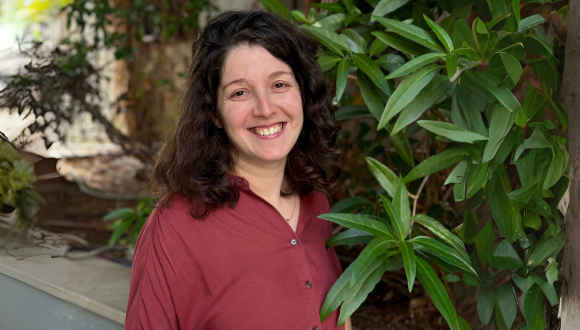
Orr Abergel, the head of the community leaders team

Abergel, who has extensive experience working with international students at the Lowy International School, believes that enabling students to start their own community-building projects, such as clubs or various events, is key to having a successful and enjoyable student experience: 

“When students get to develop something they feel passionate about, it gives them an absolutely amazing feeling of being heard and being involved. They become active members of the university community.”—Orr Abergel, the head of the community leaders team

Let’s meet the team, who will be by your side on your exciting journey.

Hanna Alexander: Community Leader for Undergraduates
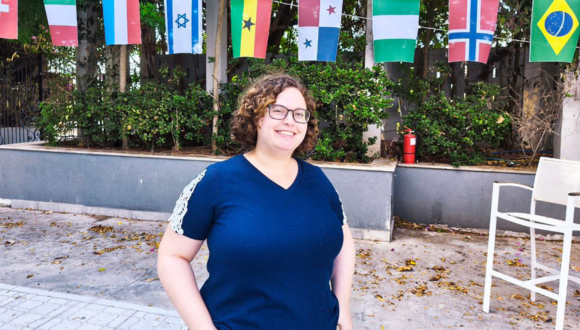
Hanna’s focus is on helping students feel at home and creating opportunities for them to connect, both on and off campus.

“My goal is to get to know the students, find out what they’re interested in, and build activities that make their experience here more complete.”

“That could mean social events, day trips, overnight tours, or even exploring internship opportunities,” she adds.

Thinking back to her student days at Ben Gurion University helps Hanna come up with ideas for community activities to engage students. Her background in Sociology and Anthropology, Conflict Management and Resolution, and European Studies also proves useful.

“Conflict management comes in handy in any job that involves people,” she says. “There’s always going to be some kind of disagreement, and the key is to make sure everyone feels heard and understood.”

Recently relocated to Tel Aviv, Hanna admits she’s also discovering the city through fresh eyes, much like her students. “Tel Aviv is so international,” she says.

“You hear different languages, see people from all over the world, and eat food from every culture. I live in Florentin, which is full of street art and energy. I always tell students: ‘walk around, explore, and get to know the city through your feet.’ ”

TAU international students enjoying a nice day at the beach

For first-year students, her advice is simple: take it slow. “You’re in a new country, starting at a new university, meeting new people, so show yourself compassion. It’s normal to feel homesick or overwhelmed at first. Take things step by step and try to minimize the FOMO.”

“There’s always something happening in Tel Aviv, so if you miss one thing, there’s another around the corner.”

Hanna also recognizes the challenges undergraduate students might face when starting their studies abroad. “For many of them, this is the first time they’re living away from home and in a different country,” she explains. “Even Israelis their age who serve in the army can usually go home for Shabbat. That separation from family and friends can be tough.”

That’s where the Lowy’s community leaders step in. “Our job is to make Tel Aviv University your home away from home,” Hanna says.

“Whether it’s through our events or our partners’ Shabbat meals and community activities, there are always ways to connect. It’s okay to take a few weeks to adjust, but at some point, push yourself to meet people. Everyone’s in the same boat and you can bond over it.”

Tamar Solange Shalem: Community Leader for International Researchers (PhD students and Postdocs)
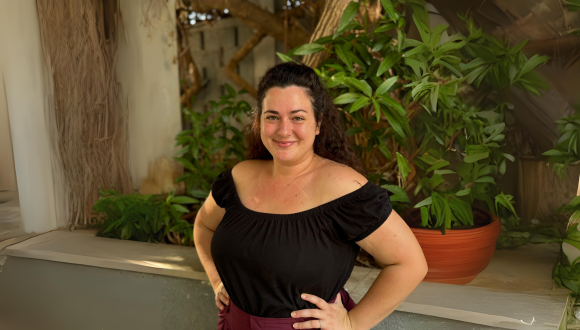
Solange brings a wealth of experience in social impact development, community engagement, and cultural diversity. An anthropologist by training, Tamar loves studying people and cultures. She views Israel as a ‘beautiful garden of human diversity’ where different cultures come together. Having worked at the Ministry of Foreign Affairs and as a higher education counselor, Tamar is no stranger to guiding people through transitions. 

“I’ve always been interested in working with young people and diverse populations. For me, it’s about creating meaningful change and social impact.”

When it comes to navigating Israeli culture, Tamar offers valuable advice to incoming researchers: 

“Being open-minded to a very dense and dynamic culture is key.”

She also emphasizes that flexibility and acceptance of Israel’s fast-paced, often chaotic environment can help you adapt more smoothly. 

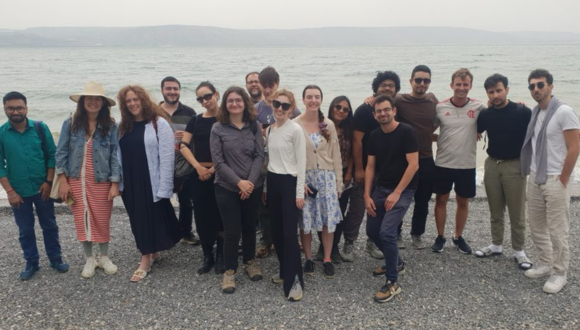
International students on a field trip

Tamar is keen to encourage everyone to explore Israel beyond Tel Aviv, recommending places like the Israeli Valley, Beit Govrin, Lachish, and the Dead Sea for those seeking a deeper connection with the country’s rich landscapes. 

For an authentic Israeli culinary experience, Tamar suggests trying local foods, especially the iconic Israeli breakfast, which she describes as “the most quintessential part of Israeli cuisine, filled with fresh vegetables, spreads, and cheeses.”

Usu Baraka: Community Leader for Graduate Students
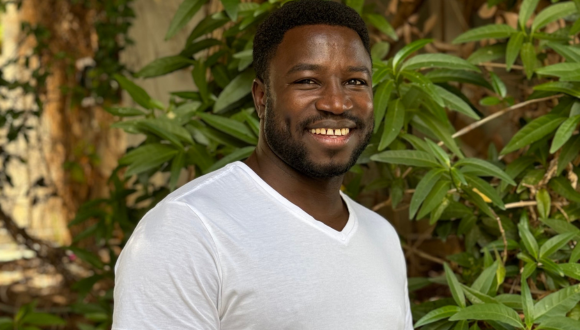
Originally from Darfur, Usu’s journey to Israel has been one of resilience and perseverance. After arriving as a minor and completing high school in Israel, Usu pursued a BA in Government, Diplomacy, and Strategy and an MA in Public Policy. With a strong entrepreneurial spirit and a love for learning (he speaks eight languages!), Usu is dedicated to helping graduate students feel at home in Israel.

“I love interacting with people, hearing their stories, and building communities from the ground up.” 

He is passionate about creating social opportunities that mix academic life with cultural experiences. From tours of South Tel Aviv to trips to the Dead Sea, Usu’s focus is on exposing students to the rich diversity of Israel while building meaningful friendships.

Another aspect Usu is going to actively work on is integrating international students with their Israeli peers and building bridges across cultural lines. 

“I want to create opportunities for students to connect with each other, learn from each other, and form lasting bonds.”

Whether through cultural exchanges or casual meetups at the local market, Usu is always seeking new ways to enrich the student experience. “In Israel, you have to try falafel,” he recommends, adding that knafeh from Jaffa is also a must: “It’s amazing, perfect, and delicious.” For those interested in something more unique, he suggests trying injera, a traditional Ethiopian flatbread popular in Israel.

At the Levinsky market

Usu’s favorite spots in Tel Aviv for hanging out and meeting new people are the Abraham Hostels, which have “a bar where you can enjoy live performances”, and Teder.fm, a venue that’s “open 24/7 and always full of people and events.” Be sure to check them out after classes!

As you prepare for your flight to Tel Aviv, Usu has one important tip to share: if you’ve never been to Israel before, take some time to learn a bit about the country and pick up a few Hebrew words.

“Shalom” [Hello] is known to open the hearts of Israelis in an instant!

Whether you’re exploring Tel Aviv’s streets, learning about Israeli culture, or simply needing a supportive ear, our community leaders are here to ensure you feel welcome, supported, and ready to move forward.

Why Do We Tip? TAU Study Challenges Common Assumptions

New research reveals that tipping is driven more by social conformity than genuine appreciation, offering only weak motivation for better service, yet pushing tipping rates ever higher.

What makes us tip?  A new study explores two main motives: genuine appreciation for the service and conformity with social norms. Those who truly value the service tend to tip above the standard rate, while conformists usually align with them — leading to a gradual rise in average tipping rates over time.

The study, published in Management Science, was conducted by Dr. Ran Snitkovsky of the Coller School of Management at Tel Aviv University, together with Prof. Laurens Debo of the Tuck School of Business at Dartmouth College. Their theoretical model sheds light on the complexity of tipping and its economic and social implications.

“Tipping is a phenomenon that is difficult to explain using classical economic tools,” explains Dr. Snitkovsky. “The ‘homo economicus’, who is only interested in their own material wealth, has no reason to tip once the service has been provided.”

He adds that earlier research suggested tipping ensures better service in the future — but this doesn’t explain why people tip even when they are unlikely to meet the same service provider again, such as a taxi driver abroad. “Another common argument is that tipping provides an incentive for servers to give better service. Whether this is true or not, a self-interested customer would prefer others to tip and maintain good service quality while avoiding the expense himself. The conclusion is that to understand this phenomenon in depth, we must examine psychological and behavioral considerations.”

A recent study reported by USA Today revealed that the average American spends nearly $500 annually on tips in restaurants and bars, and that the tipping system in the U.S. generates over $50 billion each year, providing a primary source of income for millions of servers.

“We used a mathematical model and tools from game theory and behavioral economics to understand the motivations behind tipping,” says Dr. Snitkovsky. “Into this model we fed the two main reasons people report for tipping: the first is to express gratitude to the service provider, and the second is conformity —doing what everybody else does.”

“The first reason relates to my personal valuation of the service I received or the server-customer interaction, and can stem from wanting to reward the server for doing their job or showing empathy towards them,” he continues. “The second reason is tied to how I perceive myself in society — my interaction with other customers. In other words, we can distinguish between ‘appreciators’ and ‘conformists’.”

Why Tipping Rates Keep Rising

The researchers found that in societies with stronger social pressure, where people feel a greater need to comply with the norm, average tip amounts tend to rise over time.

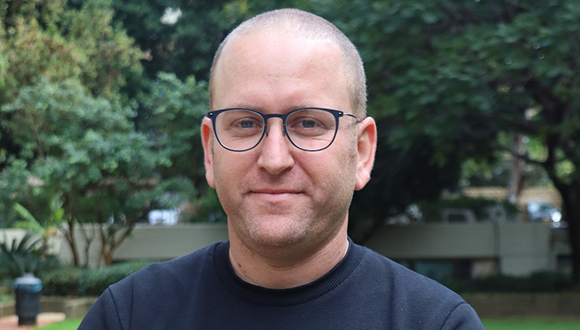
Dr. Ran Snitkovsky, Photo credit:  Israel Hadari, Tel Aviv University

“The process is inherently driven by appreciators pulling the conformists upward, but not the other way around,” says Dr. Snitkovsky. “This might explain why tipping rates in the U.S. few decades ago were around 10% and are now closer to 20%. Those who appreciate the service are willing to tip well above the average, while those who wish to comply with the customary practice ‘chase’ the average. Additionally, rising tipping rates may also reflect growing economic inequality — a hypothesis proposed by another researcher from Tel Aviv University, Prof. Yoram Margalioth of the Buchmann Faculty of Law, and supported by our model.”

A Weak Incentive for Better Service

The study also explored whether tipping provides an effective incentive for servers to improve their performance. The model shows that while tips can encourage servers to exert effort, it is a relatively weak motivator, since many customers are conformists who will tip the standard amount in any case.

“If a server knows most customers are conformists, there’s little reason to put in extra effort since they will tip the customary amount anyway,” explains Dr. Snitkovsky. “This is indeed the situation in countries like the U.S.”

 “In an imaginary world where all customers are appreciators, unaffected by each other’s tipping rates, tipping would serve as a much stronger incentive. On the other hand, in such a world where tips only reflect appreciation, businesses might conclude that customers are willing to pay more for the service experience and charge higher prices upfront. This may trigger customers to adjust their expectations and reduce the tip percentage accordingly.”

The ‘Tip Credit’ System

The researchers also examined the ‘tip credit’ regulation applied in most U.S. states. This law allows employers to pay less than the minimum wage for tipped professions, covering the difference with tips. For instance, if the minimum wage is $8 per hour and the state has set the sub-minimum wage at $3, employers may pay servers only $3 and use tips to cover the $5 difference. Only if tips fall short of the minimum wage are employers required to make up the gap. If a server makes more than $8 after tips, they can keep the difference.

“We see that a higher tip credit allows businesses to reduce prices — because they rely more on tips to finance labor,” says Dr. Snitkovsky. “Consequently, they can increase supply and serve more customers. This suggests an element of economic efficiency, but the efficiency in this case comes at the expense of the individual server’s earnings. So essentially, tip credit is a mechanism allowing employers to cut into tips that ostensibly belong to servers, using them to pay wages.”

A Complex Social Phenomenon

As for his personal view, Dr. Snitkovsky admits he dislikes tipping. “I came to this study with a bias. Personally, I don’t like this practice, and I wanted to understand what drives it. First of all, tipping puts customers in an uncomfortable position. Studies have shown that tipping can encourage sexist behavior toward female servers – who may refrain from setting boundaries to avoid losing tips. Other studies demonstrate that people tend to tip more generously when a server is of their own ethnicity, introducing an element of racism. It’s easy to find good reasons to do away tipping, but the custom also has some positive effects, making it a complex phenomenon.”

He adds: “Ultimately, tipping allows those willing to pay more for the service to do so, thereby subsidizing the service for others. That’s a positive aspect. Additionally, tips do seem to encourage servers to provide better service, even though this effect is very limited. In my opinion, in the 21st century business owners have better tools to assess server performance, such as online reviews and even in-house cameras.”

From Hostage Square to the Doctorate: TAU to Award Einav Zangauker an Honorary Doctorate

In recognition of her courageous and inspiring struggle for the return of all hostages held in Gaza to Israel

 
Tel Aviv University has announced that it will confer an Honorary Doctorate upon Ms. Einav Zangauker, honoring her courageous and inspiring fight—led over nearly two years together with the Hostages and Missing Persons Families Forum and the wider public—for the return to Israel of all hostages, living and deceased.

Just weeks ago, on October 13, with the return of 20 living hostages to Israel, Einav was finally reunited with her son, Matan—one of the most emotional days Israel has known in recent years. Yet her struggle did not end there. Like many others, she continues to dedicate her efforts to ensuring the return of all remaining hostages and the recovery of those who were killed in captivity.

A Symbol of Solidarity, Unity, and the Sanctity of Life

Tel Aviv University emphasized that the decision to award the honorary degree also reflects the deep national yearning for the return of all hostages, including Hadar Goldin, the son of Leah and Prof. Simcha Goldin, a faculty member at TAU.

“Einav Zangauker represents the social movement calling for the return of the hostages and has been one of its most prominent leaders,” the University said in its statement. “Since October 7, she has become for many a symbol of social solidarity, the sanctity of life, unity, and parenthood.”

The honorary degree ceremony will take place in May 2026 on the University’s campus during the annual Board of Governors meeting, attended by more than a thousand guests from Israel and abroad.

At the same event, Steve Witkoff, U.S. Special Envoy to the Middle East, will receive the George S. Wise Medal for his efforts to secure the return of the hostages.

From Hostage Square to the Doctorate: TAU to Award Einav Zangauker an Honorary Doctorate

In recognition of her courageous and inspiring struggle for the return of all hostages held in Gaza to Israel

 
Tel Aviv University has announced that it will confer an Honorary Doctorate upon Ms. Einav Zangauker, honoring her courageous and inspiring fight—led over nearly two years together with the Hostages and Missing Persons Families Forum and the wider public—for the return to Israel of all hostages, living and deceased.

Just weeks ago, on October 13, with the return of 20 living hostages to Israel, Einav was finally reunited with her son, Matan—one of the most emotional days Israel has known in recent years. Yet her struggle did not end there. Like many others, she continues to dedicate her efforts to ensuring the return of all remaining hostages and the recovery of those who were killed in captivity.

A Symbol of Solidarity, Unity, and the Sanctity of Life

Tel Aviv University emphasized that the decision to award the honorary degree also reflects the deep national yearning for the return of all hostages, including Hadar Goldin, the son of Leah and Prof. Simcha Goldin, a faculty member at TAU.

“Einav Zangauker represents the social movement calling for the return of the hostages and has been one of its most prominent leaders,” the University said in its statement. “Since October 7, she has become for many a symbol of social solidarity, the sanctity of life, unity, and parenthood.”

The honorary degree ceremony will take place in May 2026 on the University’s campus during the annual Board of Governors meeting, attended by more than a thousand guests from Israel and abroad.

At the same event, Steve Witkoff, U.S. Special Envoy to the Middle East, will receive the George S. Wise Medal for his efforts to secure the return of the hostages.

When archaeology meets physics, new depths are revealed

Cosmic Particles Help Archaeologists Detect Hidden Underground Spaces

TAU study demonstrates how muon detectors can be used to map subterranean voids before excavation, offering archaeologists a powerful new tool.

A technological breakthrough at Tel Aviv University offers archaeologists a way to identify underground spaces before digging. The system detects muons — elementary particles generated when cosmic rays hit Earth’s atmosphere — which can penetrate rock and soil up to 100 meters deep. By tracking their paths, researchers can locate hidden voids such as tunnels and cisterns.

The method was successfully demonstrated at the City of David archaeological site in Jerusalem, where the system mapped Jeremiah’s Cistern by identifying changes in soil permeability to muons.

Combining Physics and Archaeology

The study was led by Prof. Erez Etzion from TAU’s Raymond and Beverly Sackler School of Physics and Astronomy, and Prof. Oded Lipschits from TAU’s Jacob M. Alkow Department of Archaeology and Ancient Near Eastern Cultures. Other participants included: Prof. Yuval Gadot from the Department of Archaeology and Ancient Near Eastern Cultures; Prof. Yan Benhammou, Dr. Igor Zolkin, and doctoral student Gilad Mizrachi from the School of Physics and Astronomy; Dr. Yiftah Silver and Dr. Amir Weissbein of Rafael Advanced Defense Systems; and Dr. Yiftah Shalev of the Israel Antiquities Authority. The study’s results were published in the Journal of Applied Physics.

“From the pyramids in Egypt, through the Maya cities in South America, to ancient sites in Israel, archaeologists struggle to discover underground spaces,” explains  Prof. Lipschits. “Above-ground structures are relatively easy to excavate, and there are also various methods for identifying walls and structures below the surface. However, there are no effective methods for conducting comprehensive surveys of subterranean spaces beneath the rock on which the ancient site is situated. In the Judean Foothills, for example, the top layer of hard limestone overlies soft chalk, in which the ancients easily carved out vast spaces for water reservoirs, agricultural uses, storage, or even dwellings. Clearly, in such regions, most above-ground archaeological sites resemble Swiss cheese beneath the rock, but we have no way of knowing this. If by chance we excavate above ground, reach the rock, and identify an entrance to a cavity, we could excavate it, but we have no way of locating the subterranean spaces in advance. In the current study, we propose for the first time an innovative method that has been proven very effective in detecting underground spaces with detectors of cosmic radiation, specifically muons.”

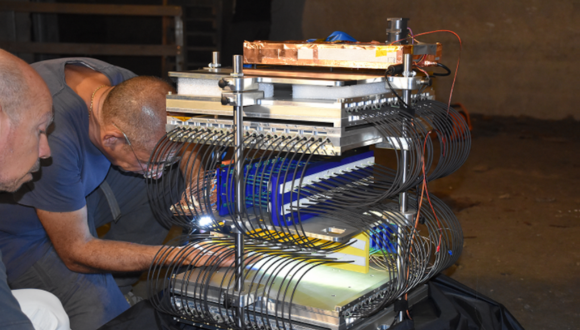
A team from TAU is installing the muon detectors in Jeremiah’s Cave beneath the City of David site

How Muon Imaging Works

The researchers explain that a muon is an elementary particle similar to an electron but 207 times more massive. Muons are created in the atmosphere when energetic particles, mainly protons, collide with the nuclei of molecules in the air. This collision generates unstable particles called pions, which decay very quickly into muons. Muons also have a very short lifetime, decaying after 2.2 microseconds, but they move at speeds close to the speed of light, and thanks to Einstein’s special relativity theory, many of them manage to reach and penetrate the ground.

“The muon shower hits the ground at a fixed and known rate,” explains Prof. Etzion. “Unlike electrons, which are stopped by the ground at just a few centimeters deep, muons lose energy slowly as they pass through the ground, and some can penetrate much deeper – even up to 100 meters for highly energetic particles. Therefore, by placing muon detectors underground and monitoring the environment, we can identify empty cavities where energy loss is minimal. This process is similar to X-ray imaging: the X-ray beam is stopped by bones but passes through soft tissue like flesh or fat, and a camera on the other side captures the resulting image. In our case, the muons act as the X-ray beam, our detector is the camera, and the underground features are the human body.”

Next Steps

As noted, the researchers conducted an impressive demonstration in a rock-hewn installation known as Jeremiah’s Cistern at the archaeological site of the City of David. Combining a high-resolution LiDAR scan of the interior cavity with simulations of the muon flux, they were able to map structural anomalies. Detecting changes in soil penetrability to muons, the system demonstrated the feasibility of using muon tomography for archaeological imaging.

“This article is a first milestone,” says Prof. Lipschits. “We ask physicists to respond to the archaeological need and develop smaller, simpler, cheaper, more durable, more accurate, and more power-efficient detectors. In the next stage, we intend to combine physics and archaeology with AI to produce a 3D image of the subsurface from the vast data generated by the detectors. Our test site will be Tel Azekah in the heart of the Judean Foothills, overlooking the Elah Valley.”

“This is not our invention,” adds Prof. Etzion. “Already in the 1960s, muons were used to search for hidden chambers in the pyramids in Egypt, and recently the technology was revived. Our innovation lies in developing small and mobile detectors and learning how to operate them at archaeological sites. After all, there is a difference between a detector in laboratory conditions and a detector that must be taken to a cave or excavation, where practical problems of electricity, temperature, and humidity inevitably arise. Detection ranges depend on measuring time; the farther the detector’s location, the fewer particles reach it, but realistically, it is possible to analyze images from a distance of up to 30 meters within a reasonable timespan. Therefore, our goal is to place several detectors or move one detector from place to place to produce a 3D image of the entire site eventually. And we have just begun. The next stage involves sophisticated analysis, which will allow us to map everything beneath our feet – even before the excavation begins.”

Dr. Gilad Levy (seated) & Prof. Boaz Barak.

New Biological Mechanism Boosts Myelin Production in the Brain

AU researchers discover how to increase myelin production — a finding that could aid treatments for Alzheimer’s and multiple sclerosis.

The study was conducted in the laboratory of Prof. Boaz Barak of the Sagol School of Neuroscience and the School of Psychological Sciences at Tel Aviv University and led by Dr. Gilad Levy. The lab collaborated with researchers from the Hebrew University of Jerusalem, the Weizmann Institute of Science, Tel Aviv University, and Germany’s Max Planck Institute. The findings were published in Nature Communications.

Releasing the Brain’s “Biological Brakes”

Prof. Barak explains: “Damage to myelin is associated with a variety of neurodegenerative diseases such as Alzheimer’s disease and multiple sclerosis (an autoimmune disease in which the body itself attacks the myelin), as well as neurodevelopmental syndromes like Williams syndrome and autism spectrum disorders. In this study we focused on the cells that produce myelin in both the central and peripheral nervous systems. Specifically in these cells, we investigated the role of a protein called Tfii-i, known for its ability to increase or decrease the expression of many genes crucial for cell function. While Tfii-i has long been linked to abnormal brain development and neurodevelopmental syndromes, its role in myelin production had not been studied until now.”

Prof. Barak’s team discovered that the Tfii-i acts as a ‘biological brake’ that inhibits myelin production in the relevant cells. Based on this finding, the researchers hypothesized that reducing Tfii-i activity in myelinating cells might increase myelin output.

Prof. Boaz Barak

Testing the Hypothesis

To test this, the team  used advanced genetic engineering in model mice: Tfii-i expression was selectively eliminated only in myelin-producing cells, while remaining unchanged in all other cells. These genetically modified mice were compared to normal mice in a wide variety of measures, including levels of myelin proteins, structure and thickness of the myelin sheath surrounding axons, speed of nerve signal conduction, and even motor and behavioral performance.

Dr. Gilad Levy explains: “We found that in the absence of Tfii-i, the myelin-producing cells generated higher amounts of myelin proteins. This resulted in abnormally thick myelin sheaths, which enhanced the conduction speed of electrical signals along the neural axons. These improvements resulted in a significant enhancement of the mice’s motor abilities, including better coordination and mobility, along with other behavioral benefits.”

Prof. Barak concludes: “In this study we demonstrated for the first time that it is possible to ‘release the brakes’ on myelin production in the brain and peripheral nervous system by regulating the expression of Tfii-i. This study is among the few to identify a mechanism for increasing myelin levels in the brain. Its results may enable the development of future therapies that suppress Tfii-i activity in myelin-producing cells, to restore myelin in a wide variety of degenerative and developmental diseases in which myelin is impaired — including Alzheimer’s disease, multiple sclerosis, Williams syndrome, and autism spectrum disorders. We believe this fundamentally new approach holds great therapeutic potential.”

Important Campus Updates

“We Stand Strong and Keep Our Sights on a Better Future”

 
Letter from TAU President Welcoming the 2025–26 Academic Year

To the University Community,

Wishing a successful and fruitful academic year to our thousands of students and to our academic and administrative staff!

A special greeting goes out to the students beginning their first year at Tel Aviv University. The University management, academic staff, and administrative staff will do everything in their power to make your study experience both beneficial and enjoyable. You are invited, beyond class attendance, to spend time on the lawns and in the cafeterias, and to enjoy everything our campus has to offer.

You will find here a microcosm of Israeli society, where people of all religions and nationalities, from Israel and from around the world, study, teach, research, and meet. This rich human tapestry is what creates the unique community of our University.

Finally, I would like to update you about changes in the University’s leadership. A few weeks ago, our Rector, Professor Mark Shtaif, completed a very successful five-year term, during which he led a dramatic transformation in teaching and learning methods. At the same time, Vice Rector Professor Eyal Zisser also concluded his term, after having made an immense contribution to the University’s academic management.

Professor Noga Kronfeld-Schor of the Faculty of Life Sciences, who until recently headed the New Environmental School, has succeeded Professor Shtaif as Rector. I wish to express my deep gratitude to Mark and to Eyal for their devoted service to the University, and to extend my best wishes to Noga for much success in her important new role.

The full letter

A Letter from TAU President Welcoming the 2025–26 Academic Year

Wishing a successful and fruitful academic year to our thousands of students and to our academic and administrative staff!

 
To the University Community,

Wishing a successful and fruitful academic year to our thousands of students and to our academic and administrative staff!

A special greeting goes out to the students beginning their first year at Tel Aviv University. The University management, academic staff, and administrative staff will do everything in their power to make your study experience both beneficial and enjoyable. You are invited, beyond class attendance, to spend time on the lawns and in the cafeterias, and to enjoy everything our campus has to offer. You will find here a microcosm of Israeli society, where people of all religions and nationalities, from Israel and from around the world, study, teach, research, and meet. This rich human tapestry is what creates the unique community of our University.

The academic year opens after two years of war, which appears to have ended about two weeks ago. The living hostages returned home, and we all experienced a few days of collective uplift. We pray for the swift return of all the fallen hostages and for better and quieter days ahead. The end of the war leaves us with many challenges, first and foremost, providing support for bereaved families and assistance to those who have been physically or emotionally wounded. During the past two years, Tel Aviv University has granted numerous scholarships to support our students who served in the reserves, or whose family members did so, in addition to broad academic assistance. This year, too, we will continue to offer such scholarships. Our debt to the reservists is immense, and the least we can do is help them complete their studies successfully.

Unfortunately, the end of the war does not also end the deep internal rift that has been tearing Israeli society apart since the beginning of the judicial overhaul. This division threatens us to no lesser degree than the external dangers we face. I am sure that each of you holds your own opinions about its causes and about the ways we might overcome this grave social crisis – the most severe one our country has faced since its founding. We expect all members of our University community, including our students, not to hesitate to express their views on this crucial matter, which is vital to our continued existence. We encourage active citizenship, value social engagement in all its forms, and are committed to maintaining a safe and democratic campus where everyone’s freedom of expression is protected.

Finally, I would like to update you about changes in the University’s leadership. A few weeks ago, our Rector, Professor Mark Shtaif, completed a very successful five-year term, during which he led a dramatic transformation in teaching and learning methods. At the same time, Vice Rector Professor Eyal Zisser also concluded his term, after having made an immense contribution to the University’s academic management. Professor Noga Kronfeld-Schor of the Faculty of Life Sciences, who until recently headed the New Environmental School, has succeeded Professor Shtaif as Rector. I wish to express my deep gratitude to Mark and to Eyal for their devoted service to the University, and to extend my best wishes to Noga for much success in her important new role.

Wishing you all a productive academic year and better days ahead,

Yours,

Ariel Porat
President of the University

From left to right: Prof. Elshan Gurbanov, Head of International Programs (AzTU); Prof. Milette Shamir, Vice President International (TAU); Prof. Fariz Mammadov, AzTU Vice-Rector, Head of the delegation; Mr. Konstantin Platonov, Director for Asia Engagement (TAU); Prof. Lev Eppelbaum, Department of Geophysics, Faculty of Exact Sciences (TAU); Dr. Rahid Alekberli, Founding Director and Researcher of the Institute of Defense Technologies and Cybersecurity (AzTU)

Azerbaijan and Israel Strengthen Academic Ties Through TAU–AzTU Collaboration

Azerbaijan Technical University visits TAU to explore joint research, innovation, and exchange opportunities

On October 22, 2025, Tel Aviv University (TAU) welcomed a high-level delegation from Azerbaijan Technical University (AzTU), marking an important step in strengthening academic cooperation between the two institutions.

Led by Vice-Rector Prof. Fariz Mammadov, the Azerbaijani delegation visited TAU to explore new opportunities for collaboration in areas such as cybersecurity and innovation management. The guests expressed particular interest in TAU’s leadership in entrepreneurship education and its expertise in technology transfer and research commercialization. 

During their visit, the delegation met with Prof. Milette Shamir, TAU Vice President for International Academic Collaboration, and Konstantin Platonov, Director for Asia Engagement, for in-depth discussions on expanding joint initiatives in various fields. 

They also held talks with TAU’s Faculty of Engineering, which has an impressive record of patenting innovations and supporting faculty-led startups, resulting in an agreement to launch student and faculty exchange programs.

“The visit of the AzTU delegation marks another step in the steady development of TAU’s ties with Azerbaijan.”—Konstantin Platonov, Director for Asia Engagement

The opening of the Azerbaijani Embassy in Israel in 2023 has significantly promoted university-level connections. Konstantin Platonov emphasized the growing potential for joint academic and research projects, particularly in advanced engineering and technology fields. “Collaboration with Azerbaijan holds great potential, especially in joint PhD training,” Platonov noted. 

“We’re glad to strengthen these ties and look forward to seeing more students and researchers move between our universities in the coming years.”

Cotler fellows 2024/25 on the Terrace Lookout in Mitzpe Ramon during one of the program's field trips

TAU’s Irwin Cotler Fellowship Welcomes Its Most Diverse Cohort Yet

24 international students from 21 countries explore democracy, human rights, and Israel’s story at Tel Aviv University

 
Quick Facts:

Irwin Cotler Fellowship

Who can participate: International students enrolled at TAU
Program focus: Israeli society & history
Program includes:
Lectures and discussions
Field trips across Israel
Public speaking workshops
Leadership and advocacy training


In a time when questions of justice, democracy, and human rights resonate louder than ever, Tel Aviv University’s Irwin Cotler Fellowship Program continues to bring together exceptional international students committed to understanding Israel and the global pursuit of freedom.

Now entering its fourth year, this flagship initiative of the Irwin Cotler Institute for Democracy, Justice and Human Rights has selected 24 fellows from 21 countries for the 2025–2026 academic year, making it its largest and most diverse cohort to date.

Participants hail from India, Turkey, Spain, the United States, New Zealand, Switzerland, the Netherlands, Brazil, and Australia, alongside first-time representatives from South Korea, Kenya, Haiti, China, Liberia, Ghana, and Malta.

Who Are the Cotler Fellows? 

The Cotler Fellowship brings together TAU’s international graduate, PhD, and postdoctoral students from multiple disciplines, including law, political science, medicine, biology, sustainable development, diplomacy, and disaster management.  

Fellows participate in academic lectures, practical training workshops, and field studies that expose them to Israel’s history, society, and ongoing democratic debates.

They engage directly with leading intellectuals, scholars, and activists who shape public conversation on human rights and justice.  

Cotler fellows 2024/25 on one of the field trips

Beyond campus, the program emphasizes experiential learning through visits to sites such as Yad Vashem, Israel’s Holocaust memorial and museum. 

What Makes This Year’s Cohort Stand Out? 

According to Irwin Cotler, Canada’s former Minister of Justice and Attorney General — after whom the Institute is named — the expanded cohort reflects the program’s unique role in shaping global human rights ambassadors. 

“Tel Aviv University’s Cotler Institute Fellowship Program has welcomed exemplary students from all over the world to engage in a unique exploration of today’s most critical human rights challenges, and to be shaped as ambassadors of human rights, carrying a deep understanding and appreciation of Jewish history and of Israel as a Jewish and democratic state.”—Irwin Cotler 

He added that this year’s cohort is “the largest and most diverse to date, which is particularly inspiring given the difficult times we are experiencing.” 

For Ariela Cotler, who founded the Institute with her husband, the fellows’ choice to study in Israel at this moment carries special meaning. “It is not a simple time in the lives of Israelis, or Jews world over,” she reflected.  

“Their interest in deepening their knowledge about Israel’s and the Jewish people’s story, and their choice of studying at Tel Aviv University during these challenging times, makes them all the more special to me.”—Ariela Cotler 

How Do Fellows Describe Their Experience? 

Alumni of the program refer to it as a turning point in their academic and personal development.  “Participating in the fellowship was a meaningful addition to my education,” said Amarah Friedman, an American fellow from the 2024-2025 cohort.  

“Traveling with the group allowed me to visit places I would not otherwise get to see and provided insight into a range of perspectives and opinions different from my own. I value the understanding I have gained about democracy as well as the challenges it faces.”—Amarah Friedman, USA 

Lindsay MacKinnon, a Canadian, called the fellowship “a valuable and eye-opening experience,” adding: “The in-class meetings and discussions were thought-provoking, and the field trips were varied and engaging.”  

“The field trips to Yad Vashem and Ben-Gurion’s house at Sde Boker were particular highlights for me.”—Lindsay MacKinnon, Canada

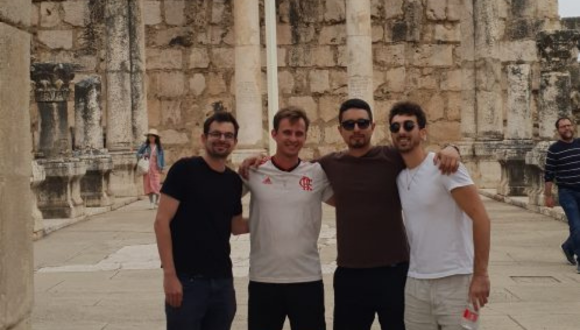
Antonio Peña (second from the right) with other Cotler fellows on a field trip

Antonio Peña from Colombia emphasized the program’s international diversity: “Being able to learn from engaging lectures by people who play different roles in society and visiting historically significant sites across Israel has provided insights that go beyond traditional study methods.  

“But what went beyond my expectations was the presence of a diverse group of participants from various cultural and professional backgrounds, which made my experience even more engaging and unique.”—Antonio Peña, Colombia  

How Does the Cotler Institute Extend Its Impact? 

Beyond the fellowship, the Irwin Cotler Institute for Democracy, Justice and Human Rights has established itself as a global hub for dialogue on antisemitism, justice, and human rights. 

The Institute co-publishes the Annual Antisemitism Worldwide Report, organizes international conferences, and leads workshops for diplomats, policymakers, and civil society leaders in Israel and abroad.  

Programs have taken place in countries as diverse as Brazil, Japan, Rwanda, Finland, Latvia, Bulgaria, Portugal, and Cyprus, extending the Institute’s reach far beyond Tel Aviv. 

Why Does It Matter? 

The record-breaking size and diversity of this year’s fellowship class highlight not only the Institute’s expanding international recognition, but also the enduring relevance of Israel as a place to confront today’s most pressing questions of justice and democracy. 

Victoria

Phone: +61 3 9296 2065
Email: office@aftau.asn.au

New South Wales

Phone: +61 02 7241 8711
Email: admin@aftau.org.au

Western Australia

Phone: :+61 0418 46 5556
Email: davidsolomon@aftau.org.au