Author: Raphael

Research in Resilience: TAU’s Summer That Almost Wasn’t

Eight weeks, two tracks, dozens of projects, and one extraordinary summer

 
Quick Facts:

Summer Research Internships

  • Duration: 8 weeks in Tel Aviv|
  • Work one-on-one with a TAU faculty mentor
  • Humanities, Social Sciences, and Sciences tracks
  • Hands-on research and skill development
  • Final symposium to present your findings
 
Tel Aviv University’s 2025 Summer Research Programs in Sciences and Humanities was unlike any before it. Even as unexpected challenges disrupted plans and reshaped the season, students and faculty pressed forward with curiosity, creativity, and an unshakable commitment to their work.

This year’s participants came from universities across the globe to join TAU’s world-class labs and research groups. Their projects spanned medical history, nanostructures, the aerodynamics of swimming ducks, the Dead Sea scrolls, and more.

When the crisis hit, some international students stayed in Tel Aviv, others returned home in June, only to come back as soon as the situation stabilized. Either way, the determination to see research through became the defining feature of the summer.

Learning by Doing at the Highest Level

For Menachem Guttmann, an undergraduate from Toronto, the summer was a chance to immerse himself in optomechanics, an area rarely covered in undergraduate studies. Working in Professor Tal Carmon’s lab, he found himself not just observing but actively running experiments.

“The PhD students have really taken me under their wing,” Menachem shared.

“They’ve given me the opportunity to run with experiments, learn from mistakes, and gain confidence. I’m taking an optomechanics course next year, and I feel like I’m going to ace it because of this experience.”—Menachem Guttmann, Summer Research Program in Sciences (Photonic Enhancement Lab)

From Theory to Measured Reality

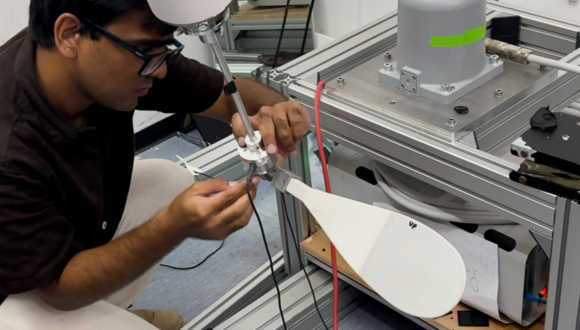
In Professor Gal Ribak’s lab, Ayan Mayank Patel from India was deep into a project on whitefly aerodynamics. Past studies had relied solely on video analysis; this summer’s work added acceleration data for greater precision.

Patel working on the whitefly aerodynamics project in the Biomechanics of Animal Locomotion Laboratory

“The hope,” Patel explained, “is that by adding this extra layer of measurement, we can make the calculations significantly more accurate. It’s exciting to know our contribution could refine the understanding of something so specific yet important.”

Similar stories unfolded across the university’s 400 labs where participants engaged in diverse research projects: TNF-α concentration studies comparing naive and activated cells, new desalination technologiesplastic decomposition under different conditions, infant gaze behavioral research requiring consistent observation, history of medicine, and many more.

Support That Went the Distance

Behind the scenes, TAU’s staff worked tirelessly to keep the program running in difficult circumstances, adapting schedules and ensuring research could continue. For many students, that dedication was as memorable as the research itself.

“It would have been so much easier to cancel everything,” said Maureen Adiri Meyer, Director of the Lowy International School, at the closing ceremony. “Anywhere else in the world, that’s what they might have done.”

“Here, we found ways to keep going. In these times, to still run a program and make all the efforts for it to be successful takes courage and hard work.”—Maureen Adiri Meyer, Director of the Lowy International School

Short-Term Programs Director Ros Roucher emphasized the unity that emerged: “We understand these programs as one community with shared goals. I’m grateful to all our partners and supervisors for working closely with us to make placements happen and keep the program strong.”

More Than Research

At the final symposium, undergraduate and graduate students presented findings on everything from methylation entropy to the Warren Court’s influence on Israel. Maureen Adiri Meyer, fresh from speaking at the closing ceremony of the Yiddish summer program, joked, “I understood more there than I understand what you’re saying. You’re doing really complicated and amazing stuff.”

Neve Eilam, from Vancouver, worked with Dr. Nir Ben-Tal at the Computational Structural Biology Lab on a project investigating the evolutionary relationships between different proteins of different families.

Her words carried an important message: the pursuit of knowledge has a value that transcends circumstances. As Professor Milette Shamir, head of the Humanities program, had said earlier, “In a crisis, turmoil, and change, the value of social sciences research begins to surface even more than usual, as access to credible information becomes exceptionally valuable.” That truth played out in real time this summer.

Menachem summed it up simply: 

 “It’s really important to get this type of research experience, especially with people who let you learn and explore. TAU, and the professors here, have helped me take that next step.”


Hands-On Research Internships for International Students in Israel

Learn more about how you can join TAU’s Summer Research Programs in Sciences and Humanities and gain hands-on experience through undergraduate or graduate research opportunities, working alongside leading researchers in the heart of Tel Aviv.

Visit the Summer Programs page and watch for the Summer 2026 application announcement.

Breakthrough at TAU: Blocking One Protein Could Prevent Food Allergy Disease

TAU researchers found that blocking the protein TSLP may prevent a painful, food allergy–driven disease on the rise worldwide.


In this study, researchers identified the protein TSLP as a trigger for the disease’s development, and found that neutralizing it may significantly ease symptoms.

The study, led by Prof. Ariel Munitz and doctoral student Anish Dsilva from the Gray Faculty of Medical and Health Sciences, was conducted in collaboration with Dr. Chen Varol of Ichilov Hospital, Prof. Marc Rothenberg of Cincinnati Children’s Hospital, and the pharmaceutical company AstraZeneca.  It was supported by grants from the Israel Science Foundation, the US-Israel Binational Science Foundation, and the Azrieli Foundation Canada–Israel. The article was published in Allergy, the leading journal in clinical immunology.

Understanding the Disease

Prof. Munitz explains: “Eosinophilic Esophagitis, or EoE, is a type of food allergy. It is a chronic inflammation of the esophagus caused by an abnormal immune response to food — mainly milk, eggs, wheat, nuts, fish, and more. The disease is characterized by an accumulation of eosinophils, a type of white blood cell that is not typically present in a healthy esophagus. EoE is often associated with other allergic conditions such as asthma and atopic dermatitis. It causes difficulty swallowing, food getting stuck in the esophagus, chest and abdominal pain, and growth delays in children. Current treatments require restrictive diets, and in severe cases, patients rely on essential amino acid formulas. Over the past decade, there has been a concerning rise in the prevalence of EoE worldwide, including in Israel. We are studying the disease in depth to understand the involvement of various immune system components in its progression. These components may serve as targets for future treatment for this disease, and for other allergic disorders as well.”

A previous study from Prof. Munitz’s lab, also published in Allergy, presented an experimental model that closely mimics the course and symptoms of EoE in humans. As a direct continuation of that study, the researchers now focused on a specific aspect of the disease, aiming to understand the role of epithelial cells. Prof. Munitz elaborates: “Epithelial cells form a protective outer layer that prevents foreign bodies from entering organs, including the digestive and respiratory systems. In allergic conditions, epithelial cells release various substances in response to encountering an allergen, and these substances trigger the chain of events that initiate the inflammatory process we experience as an allergy attack.”

TSLP: The Central Player

The researchers found that epithelial cells in the esophagus of the EoE experimental model secreted high levels of two proteins: IL-33 and TSLP. They also discovered that the esophageal tissue contained immune cells with receptors for both proteins, indicating  that these are active proteins capable of initiating the disease.

They then examined whether each protein had a distinct role or acted together. Using genetic engineering, they created models lacking one of the proteins.

The results were clear: removing IL-33 did not change the disease course, but removing TSLP led to a dramatic improvement — in some cases preventing the disease entirely. Similarly, neutralizing TSLP with an antibody caused a significant reduction in symptoms. Sequencing and bioinformatic analyses confirmed that TSLP acts as a master regulator of EoE, making it a promising therapeutic target.

Prof. Munitz concludes: “In this study, we found that the TSLP protein is a central player in EoE — a disease that causes significant suffering and is becoming increasingly prevalent worldwide. We know that pharmaceutical companies are currently developing a variety of antibodies targeting disease-causing proteins, under the broad category of biological therapies, including antibodies against TSLP. We believe these antibodies could serve as an effective treatment for EoE.”

Rare Genetic Disease Decoded by TAU’s All-Women Research Team

A new model developed at TAU following a family’s request is helping researchers study a rare brain disorder known to affect only 40 people worldwide.

The study was led by Prof. Moran Rubinstein and Prof. Karen Avraham, Dean of the Faculty. Other participants included students Mor Yam, Julan Nasir, Daniel Gelber, Shir Kavin, Roni Gal, Mor Ovadia, Mor Bordinik-Cohen, and Eden Peled — all from the Gray Faculty of Medical and Health Sciences at Tel Aviv University or the Sagol School of Neuroscience — as well as Dr. Moran Heusman-Kedem and Prof. Aviva Fattal-Valevski from the Pediatric Neurology Institute at Dana-Dwek Children’s Hospital, Tel Aviv Medical Center, and Prof. Christopher McKinnon and Prof. Wayne Frankel from Columbia University in the United States.

Prof. Avraham explains: “We were approached by the parents of an Israeli child named Adam, now 8 years old, who is one of approximately 40 people worldwide suffering from an extremely rare genetic disease. It’s a mutation in a gene called GRIN2D, which causes developmental epilepsy, severe delays in motor and cognitive development, and sometimes even premature death.”

Eden Maimon Benet, Adam’s mother, adds: “At Tel Aviv University, we met a remarkable all-women team that took on the mission: to find a cure for our son. I believe the fact that they got to know Adam and our family personally only deepened their dedication and commitment. When Adam was two years old, we embarked on this long journey together — and today, we can already see real light at the end of the tunnel.”

How Do You Study a Disease No One Understands?

In the first stage, the researchers aimed to better understand the disease’s characteristics. To do so, they created a mouse model with a mutation similar to that found in human patients. However, due to the severity of the disease, most of the mice did not survive their first weeks of life — before any meaningful research observations could be made. This led the team to conclude that while the model mimics the human disease, it poses a major challenge: too few mice could be generated for scientific study.

To overcome this, they used genetic engineering tools to create a strain of mice that carry the mutation but do not develop symptoms. These serve as carriers, with half of the offspring born healthy and the other half born with the disease. The affected mice exhibited symptoms similar to those seen in children with the disease. Most lived only a few weeks, and only a few survived up to three months. The researchers observed their behaviour and development at four key stages: at two weeks old (infancy), three weeks (when mice transition to solid food — roughly equivalent to a one-year-old child), four weeks (roughly age six in children), and five weeks (the onset of sexual maturity).

“Because the disease is so rare, we don’t yet fully understand how it progresses with age,” Prof. Rubinstein says. “The mouse model helped us characterize symptoms at various stages. The tests we conducted revealed interesting findings: neurological symptoms — including epilepsy, hyperactivity, and severe motor impairments — appeared as early as infancy. Cognitive impairments, on the other hand, showed up later and worsened gradually. In addition, their lifespan was short — most of the affected mice did not survive to sexual maturity.”

What Happens in the Brain?

In a follow-up experiment, the researchers monitored communication between neurons in the brains of the model mice, focusing on the cerebellum — the brain region responsible for motor control. The tests showed that by just two weeks of age, pathological changes were already present, expressed as reduced neuronal activity. Later in life, activity levels returned to normal; however, the communication between neurons became impaired. Finally, the researchers identified structural changes in the neurons themselves. All these findings help shed light on the mechanism driving the disease.

EEG recordings conducted on the affected mice revealed a unique brain activity pattern that also characterizes the disease in humans. “In most types of epilepsy, seizures are caused by disruptions in brain activity, but between seizures, brain activity is relatively normal,” explains Prof. Rubinstein. “In this disease — in both children and mice — brain activity is consistently disrupted. Moreover, using specific markers we developed, we identified the same abnormal parameters in both mice and humans — a finding that most clearly demonstrates the validity of the model.”

From Testing to Treatment

After confirming that the mouse model accurately mimics the human disease, the researchers began testing the effects of various drugs on the progression of symptoms. They found that ketamine — a drug previously proposed for treating this condition — actually worsened the seizures. In contrast, memantine, another drug currently used for this disease, led to partial improvement in brain function. The same was true for phenytoin, an anti-seizure medication, which also improved some markers of brain activity.

New Hope for Rare Disease Patients

“Modeling the disease using a mouse model is a key tool in making clinical decisions for treating rare diseases,” explains Dr. Heusman-Kedem, who adds: “The model allows us to test the efficacy of known drugs, as well as the safety and effectiveness of innovative treatments — before administering them to patients. For example, the results found in the mouse model helped clarify that memantine may help prevent seizures. Using a mouse model provides critical insights for developing new treatment strategies for rare diseases, where the number of patients is too small to establish broad statistical conclusions. In such cases, animal studies can offer major breakthroughs and support the development of personalized medicine.”

“In this study, we created a mouse model of a rare genetic disease caused by a mutation in the GRIN2D gene,” concludes Prof. Rubinstein. “The model allowed us to better understand how the disease progresses and to test the effectiveness of several existing drugs. We’re now continuing the research and exploring additional therapies — both pharmaceutical and genetic — and we’ve reached promising results, including improvements in cognition and motor function and increased lifespan in the affected mice. We sincerely hope our work brings hope and real progress to families and children battling this rare and devastating disease — and to those affected by other brain conditions with similar mechanisms.”

Kidney in a Dish: TAU and Sheba’s Six-Month Breakthrough

A lab-grown kidney model is giving researchers a rare view into human development, birth defects, and potential new therapies.

The kidney grew and developed over months, allowing researchers to see the development of the organ in real time, isolate genes that lead to birth defects, develop new treatments in the field of regenerative medicine, and test the toxicity of drugs during pregnancy on fetal kidneys.

The current model has matured and stayed stable for over half a year. Previous kidney organoids mimicking development broke down within four weeks. This allows long-term research and medical testing on kidney models.

It is also the purest kidney organoid ever developed, with no cross contamination from stem cell development. Previous models using pluripotent stem cells would develop other cellular structures due to the unstable nature of the stem cells. The new organoid only expresses kidney cells, allowing for clear cause-and-effect experiments.

Behind the Breakthrough

The groundbreaking study was led by Prof. Benjamin Dekel, Director of the Sagol Center for Regenerative Medicine at Tel Aviv University and  Director of the Pediatric Nephrology Unit and the Stem Cell Research Institute at the Safra Children’s Hospital at Sheba Medical Center. Also participating in the study were doctoral student Dr. Michael Namestannikov, a graduate of the Physician-Researcher track at the Gray Faculty of Medical and Health Sciences at Tel Aviv University, and Dr. Osnat Cohen-Sontag, a research associate at Sheba Medical Center, as part of Prof. Dekel’s research group. The study was published in the prestigious medical publication The EMBO Journal.

“Life begins with pluripotent stem cells, which can differentiate into any cell in the body,” explains Prof. Dekel. “In the past, they were able to grow organoids – 3D organ-like cultures – by producing such general stem cells and sorting them into kidneys, but after about a month the kidney in culture died, and the process had to be started again. About a decade ago, my research group was able to isolate for the first time the human kidney tissue stem cells that are responsible for the growth of the developing organ. Now we have succeeded for the first time in growing a human kidney in the form of an organoid from the specific stem cells of the kidney, and this in parallel with the maturation process in the uterus that occurs until the 34th week of pregnancy.”

Human fetal kidney cells

Opening Doors to Future Therapies

Researchers grow organoids in laboratory conditions to study organs in ways that are not possible in humans, but organoids derived from pluripotent stem cells often contain unwanted cells unrelated to the organ being studied that contaminate experiment data. Prof. Dekel’s organoid grew from kidney tissue stem cells in a “clean” manner, since these stem cells differentiate exclusively into kidney tissue. These cells developed into different types of kidney cells, and over half a year formed different tissues of the kidney, such as blood filter cells and kidney and urinary ducts, a process known as tubulogenesis.

“Growing the fetal kidney structures can shed new light on biological processes in general, and in particular on processes that lead to kidney diseases,” says Prof. Dekel. “And indeed, when we selectively blocked a certain signaling pathways [in the organoid], we saw how it lead to a birth defect. We are actually seeing live how a developmental problem leads to kidney diseases that are seen in the clinic, which will enable the development of innovative treatments.”

The implications that go far beyond research. “The fact that we can grow kidney tissue stem cells outside the body over time opens the door to regenerative medicine, that is, transplanting kidney tissue grown in the laboratory – inside the body or alternatively harnessing signals the organoid secrets for repair and rejuvenation of a damaged kidney ,” said Prof. Dekel. “We now have an essentially inexhaustible source of different kidney cells, and a better understanding of their different roles in kidney development and function.”

Breakthroughs like this represent Israel’s unique place in the world, says Prof. Dror Harats, Chairman of the Sheba Research Authority. “In recent years, we have witnessed attempts to distance Israel from international centers of influence, and scientific successes of this kind are a reminder that our contribution to medical and scientific research is significant and unquestionable.”

Jewish Studies MA in Israel: Why Study Jewish Civilization in Tel Aviv?

Now accepting applications: a new international MA program in Jewish Studies at Tel Aviv University brings together global perspectives, top faculty, and a flexible study path

Quick Facts:

Partnership:
Tel Aviv University + Goethe University + Koret Center 

Study options:
Online, hybrid, and on-campus

Language:
English

Duration:
3–4 semesters 

Tuition:
$11,100

Application Requirements:
BA with 3.0 GPA, English proficiency, $150 application fee 

Application Deadline:
October 16, 2026

Imagine studying one of the world’s most enduring and dynamic civilizations in the vibrant heart of the Middle East, where ancient culture meets cutting-edge scholarship.

A new graduate degree in Jewish Studies at Tel Aviv University offers exactly this opportunity through a partnership between Tel Aviv University, Goethe University Frankfurt, and the Koret Center for Jewish Civilization that’s redefining how we understand Jewish history, civilization and culture.

What Sets TAU’s Jewish Studies MA Apart?

“We are bringing a multidisciplinarian approach, combining Jewish history with biblical studies, Jewish literature and culture, and Jewish philosophy,” says Prof Youval Rotman, the program’s founder, speaking about the thinking that shaped its development.

It’s a comprehensive exploration that connects the dots across centuries of Jewish thought and experience.

This collaborative master’s program approaches the history and development of Jewish civilization as “a key phenomenon in world history that has significantly contributed to the development of neighboring civilizations through ongoing patterns of interaction and moments of reciprocal influence,” adds Prof Scott Ury, from the TAU’s Department of Jewish History and the Academic Head of the new program.

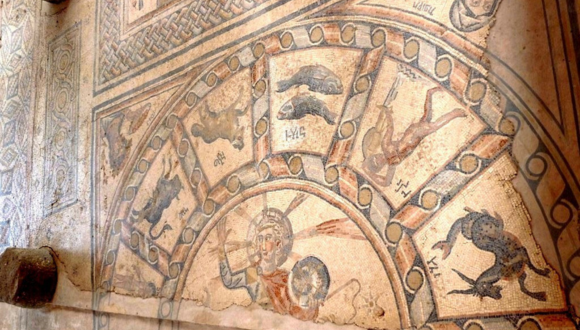
Hammat Tiberias synagogue, Helios and zodiac floor mosaic

Hammat Tiberias synagogue, Helios and zodiac floor mosaic (Photo by Praisethelorne, CC BY-SA 3.0, via Wikimedia Commons)

Rather than viewing Jewish society and culture in isolation, students will explore its global impact and interconnections with a range of different peoples and cultures.

The program includes courses developed specifically for this MA, presenting current research in Jewish Studies and History, including topics such as:

  • The Dialogical Turn in Modern Jewish Philosophy, 
  • Jews and Cities: Between Communal Histories and Urban Studies, 
  • Sephardi and Mizrahi Jews in Cross-Cultural Settings: Past and Present, 
  • Poetry and Theology in the Medieval Synagogue, 
  • Jewish Magical Tradition, 
  • Reading Tannaitic Midrash.

“We study traditional Jewish texts in historical context, from an academic and scientific point of view.”—Prof Youval Rotman

“We see them as part of the ongoing dynamic of Jewish culture that sustained and helped create a vibrant socio-cultural framework,” explains Prof. Scott Ury.

Study Across Borders, Online and On Campus

The program ensures a truly international academic experience through its partnership with Goethe University Frankfurt. Many of the courses are co-taught by Israeli and German faculty, and students will have the option to spend a semester in Germany. 

The study format is flexible: you can begin online in Spring 2026 and continue on campus in Tel Aviv in Fall 2026. You are required to spend at least one semester at Tel Aviv University, and you won’t want to miss the chance to experience campus life in Israel.

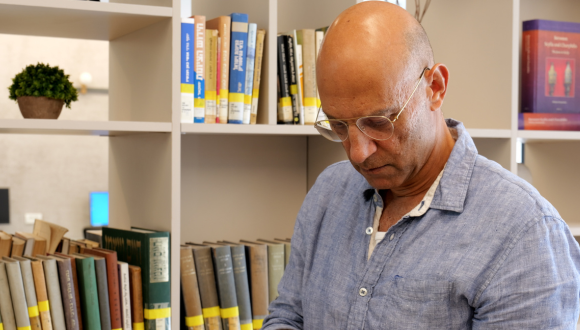
Prof Youval Rotman in the Mehlman Library at TAU, standing in front of bookshelves

Prof. Youval Rotman

The curriculum spans five main areas: 

  • Jewish Philosophy, 
  • Biblical Studies, 
  • Jewish History, 
  • Hebrew Language and Semitic Linguistics,
  • Jewish Literature and Culture. 

All courses are part of the graduate curriculum of both Tel Aviv University and Goethe University in Frankfurt. You will be able to complete your credits in about 1.5 to 2 years, through a mix of in-person and hybrid learning.


Applications are now open for this tri-institutional collaborative MA that’s reshaping Jewish Studies for the 21st century. 

Visit the Jewish Studies master’s program page to learn more.

Contact the program coordinator Debora Menahem for details of the application requirements and apply online for Fall 2025 or Spring 2026.


Why Is Jewish Civilization Particularly Relevant Today?

Think of Jewish Studies as studying one of the most original social networks in human history and one of the most antique world wide webs that spans continents and millenia. 

“Studying Jewish civilization will give students a strong background for understanding and contextualizing developments in Israeli society and Jewish communities today, whether you’re in San Francisco, Berlin or Shanghai.”—Prof Scott Ury

Jewish civilization also presents a particular kind of paradigm that’s incredibly useful in the study of dfferent societies and cultures.

The interior of the Central Synagogue in New York

The interior of the Central Synagogue on Lexington Avenue in New York (Photo by Walters-Storyk Design Group (WSDG), CC BY 4.0, via Wikimedia Commons)

“Studying Jewish civilization teaches us about our world today, especially about those communities that exist beyond the nation-state format, like minorities and diaspora communities in Europe, North America, Latin America, and the Far East,” adds Prof. Rotman.

TAU’s Jewish Studies curriculum addresses pressing contemporary topics including relations between Israel and the Jewish Diaspora, antisemitism and racism, religiosity and secularity, tradition and modernity, and various forms of connectivity, all through both historical and present-day lenses.

Recent global events have made these conversations more relevant than ever.

Where Will Your Career Take You After Graduation?

TAU’s Jewish Studies collaborative master’s degree is designed to prepare professionals across multiple sectors: “Program graduates can move on to academia, journalism, politics, civic society or non-governmental organizations, public history, educational programs, archives, museums, charitable and philanthropic bodies, and Jewish associations,” explains Prof. Rotman.

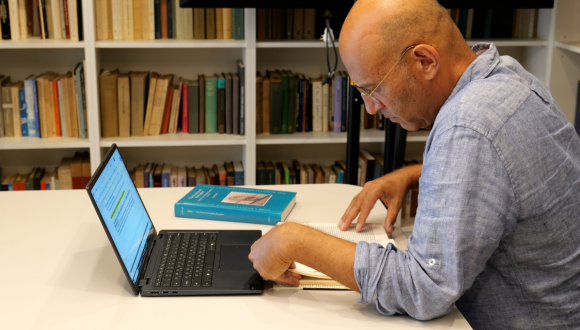
Prof Youval Rotman, the founder of the Jewish Studies international graduate program

“All of the courses taught in the program, although deeply steeped in the academic discourse, will have clear contemporary ramifications, certainly to students working and living in Tel Aviv,” adds Prof. Ury.

Who Will Be Teaching on the Program?

Quality matters, and this graduate degree program delivers exceptional scholarship. “All of the teachers in this program are full-time faculty, either at Goethe University in Frankfurt or Tel Aviv University, who’ve been teaching in Israel and other countries for many years and are leading scholars in their field,” says Prof. Ury.

And beyond their academic credentials, TAU faculty are genuinely approachable. They are known for being supportive, easy to talk to, and always up for a coffee chat.

The program features more than 15 faculty members from both universities, including renowned scholars like Prof. Dr Christian Wiese, Prof. Eshbal Ratzon, Prof. Maoz Kahana, Prof. Scott Ury, Prof. Dr Elizabeth Hollender, Prof. Rebekka Voss, Prof. Ishay Rozen-Zvi, Prof. Gideon Bohak, and Prof. Dalit Rom-Shiloni.

Can You Study Here Without Knowing Hebrew?

Absolutely. “All the courses are taught in English. All the faculty members are fluent in English. All the materials are available in English,” confirms Debora Menahem, the program coordinator. The program welcomes both Israeli and international students, Jewish and non-Jewish alike.

Walking the ancient streets

But you will be living in Tel Aviv, one of the world’s most dynamic cities, so you’ll probably want to study Hebrew at TAU to fully experience everything the city offers. Plus, once you do, you will be able to take whatever graduate courses you want from the School of Jewish Studies and Archaeology, expanding your academic horizons even further.

Finally, Why Tel Aviv University?

As Prof. Rotman sums it up, “Most importantly, the program is set within the city of Tel Aviv. So in all its aspects it’s very pluralistic and very varied.” 

In addition to having access to world-class library resources, including the Mehlman Library and the Sourasky Central Library, you will be able to join excursions to archaeological sites throughout Israel and cultural events and internships through the program’s partnership with the ANU Museum of the Jewish People located on TAU’s campus.

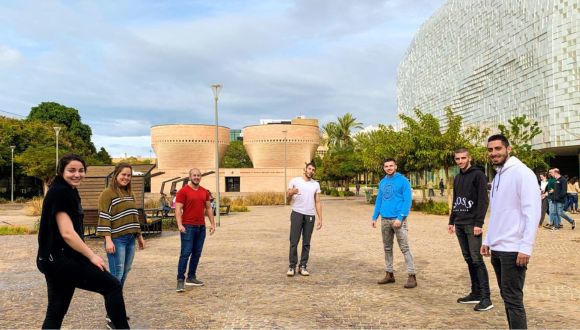
Seven students standing in a semi-circle on Tel Aviv University's campus, with the Cymbalista synagogue behind them and the Checkpoint building on the right

On Tel Aviv University campus

Importantly, the program is open both to Israeli and international students, giving you the chance to study, collaborate, and connect with classmates from across Israel and around the world. 

If you’re ready to study a civilization that has influenced world history and continues to renew itself, the Jewish Studies MA at Tel Aviv University offers the perfect setting. You’ll learn in one of the most dynamic cities in the world, with world-class faculty, international credentials, and career flexibility that traditional programs can’t match.


Applications are now open for this tri-institutional collaborative MA that’s reshaping Jewish Studies for the 21st century. 

Visit the Jewish Studies master’s program page to learn more.

Contact the program coordinator for details of the application process and apply online for Fall 2025 or Spring 2026.

Class of 2025: A Year We’ll Never Forget

At this year’s end-of-year ceremony, TAU’s international students celebrated a journey shaped by challenge, growth, and community spirit.

 
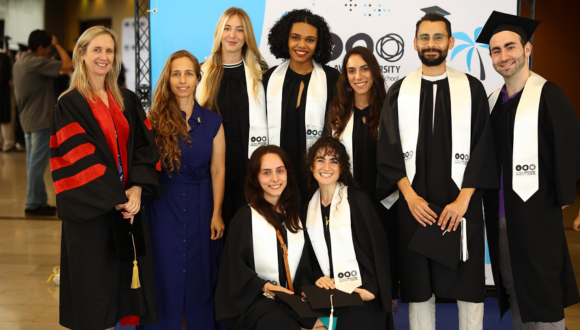
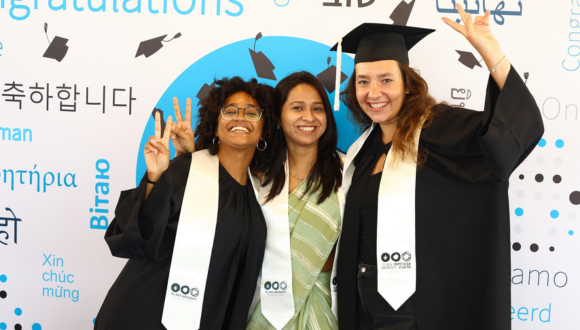
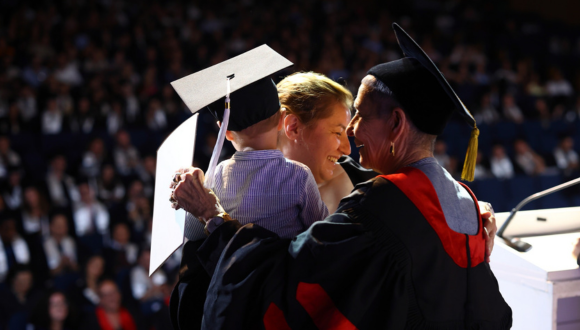
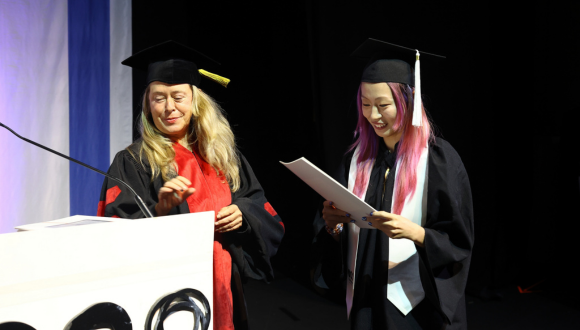
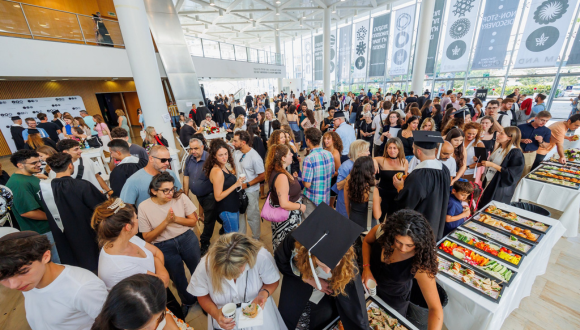
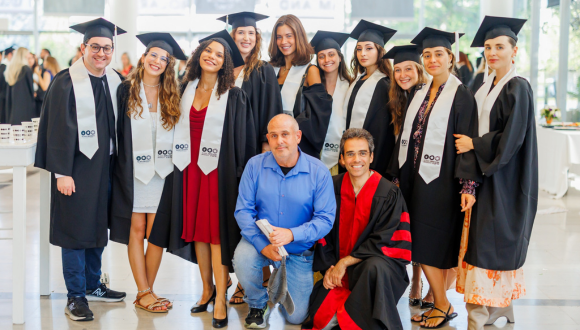
On a warm evening of July 24, friends, families, faculty, and graduates gathered at Tel Aviv University (and tuned in from around the globe) to honor the Class of 2025. They came from over 50 countries. They studied through sirens, adapted to the unexpected, and supported each other through a year that tested everyone. And despite the challenges, they finished stronger than ever.

“Even in absurd moments, life here refuses to stay on the surface,” said MC Orit Coty, Marketing Director of the Lowy International School, opening the ceremony with a smile. “It pushes us to go deeper. And you’ve all embraced that challenge.”

What This Year Taught Us

If there’s one thing the Class of 2025 learned beyond their coursework, it’s how to adapt, show up, and support one another in uncertain times.

Graduates of the Neuroscience MSc with Prof. Dinorah Friedmann-Morvinski, Academic Head of the program (on the left), and Orly Segev, Program Coordinator (second from the left). Photo credit: Shlomi Mizrahi

For some, the academic year began just as the war broke out. Rivka Ohayon, a Neuroscience MSc graduate from Canada who made aliyah just four days before October 7, reflected on what it meant to persevere:

“It’s been intense, but my cohort has been amazing. The program gave me a lot of experience and helped me see what the neuroscience field is like in Israel.”—Rivka Ohayon, Neuroscience MSc

Others reflected on the shift in pace over the year. Neha Nidhi, from India, a graduate of the Sofaer Global MBA, described the contrast between semesters:

“The first semester was so hectic, and then the second was really light and relaxed because we were doing internships. This gave me real work experience in Israel.”—Neha Nidhi, Sofaer Global MBA

Neha Nidhi (in the center) with her classmates. Photo credit: Shlomi Mizrahi

In a year marked by disruption, students leaned into learning from professors and one another. They stayed for the conversations, the camaraderie, and the sense of purpose that carried them through.

From Digs to Diplomacy: A Year of Learning in Action

Academic life at TAU is never limited to the classroom alone. Across programs, students gained hands-on experience that brought theory to life, whether by attending Tel Aviv’s CyberTech Expo in the Cyber Politics & Government MA, participating in Earth Day events through the Social and Policy Aspects of Climate Change MA, or developing clean water access projects in the Sustainable Development program.

Others explored sustainable agriculture in Environmental Studies or led classroom instruction in TESOL as part of their teaching practicum.

Prof. Elana Shohamy, Academic Chair of the International MA TESOL program, congratulating Yulia Ioffe who has finished the first year of the recently introduced academic integration track for new olim. Photo credit: Shlomi Mizrahi

And for MA in Archaeology and Near Eastern Cultures graduate Mara Cara Melodias from the Philippines, that hands-on learning meant literally rolling up her sleeves at the summer excavation course:

“We wake up at 4 am to dig by 5, work until midday, then have classes until dinner. But honestly, it’s been great. The professors are excellent, and the community is so supportive. I even brought my toddler to the excavation site. She loves it!”—Mara Cara Melodias, MA in Archaeology and Near Eastern Cultures

Meanwhile, MBA students in the Sofaer Global MBA pitched startups, interned with Israeli companies, and some even launched an award-winning AI music venture. “I didn’t come to Israel to build a startup,” said Liu Liu, a member of the team that won a $10,000 award at the Sofaer Pitch Competition. “But here we are now.”

Prof. Jackie Goren (left), Head of the Sofaer Global MBA, with program graduate Liu Liu. Photo credit: Shlomi Mizrahi

Conflict Resolution and Security & Diplomacy students discussed theory one day and watched it play out in real life the next. “It was life-changing,” said Micaela Pelenur, an MA in Conflict Resolution and Mediation graduate from Argentina, who is now planning to go into humanitarian aid and strategic communications. 

“Being in Israel during a time of war and learning about conflict, it all just integrated perfectly.”—Micaela Pelenur, Conflict Resolution and Mediation MA

Undergraduates in the BA in Management & Liberal Arts wrapped up their final year as the program’s first graduating cohort.

“What’s unique about this degree is how it lets you mix the arts and the business side. It gives you a broad background to go into the world with real perspective.”—Tyla Shur

Moments That Made a Community

And beyond the books, student life was active as ever. There were trips across the country, from the north to the south. Students gathered at the Lowy International School’s Green House for holiday celebrations, paint nights, pizza nights, and community support events. There were career workshops, volunteering outings, and language and dance club meetups. Along the way, they built a community that will stay with them long after graduation.

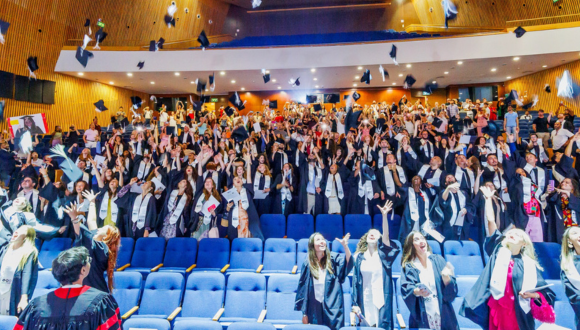
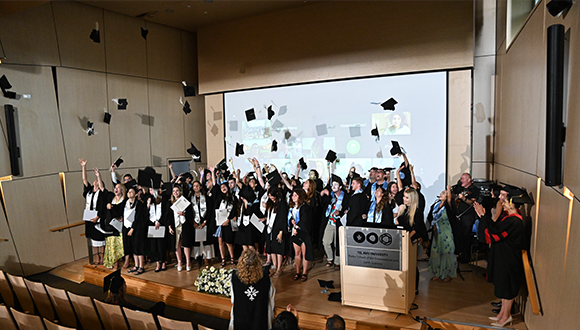
End of year ceremony 2025. Photo credit: Shlomi Mizrahi

Throughout the year, JLIC offered another layer of connection, organizing Shabbat dinners, learning circles, and events like the Healing the Rifts conference that brought students together around shared values and reflection. 

A Ceremony to Remember

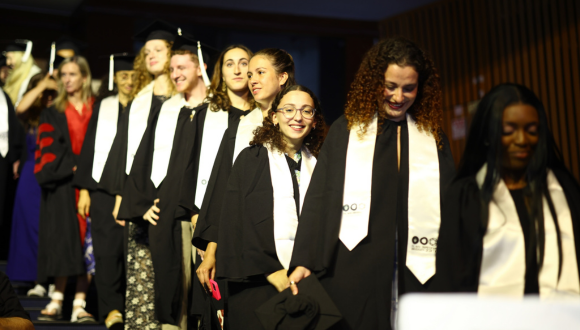
As each program was announced, the graduates of the Class of 2025 made their way into the auditorium, representing disciplines as diverse as neuroscience, diplomacy, disaster management, and archaeology. The moment was electric, filled with applause, cameras, and proud smiles.

MDM graduating entereing the auditorium. Photo credit: Shlomi Mizrahi

Among the audience was Lisa Impey, from Germany, who has decided to continue with the thesis track in the Master’s in Disaster Management alongside an internship.

“It’s amazing to be here. The course, the university, and Israel itself is great.”—Lisa Impey, MDM

MC Orit Coty welcomed the audience with warmth and humor, reminding graduates that they now officially belonged to the local tribe, complete with the right to argue with taxi drivers and never wait quietly in line again.

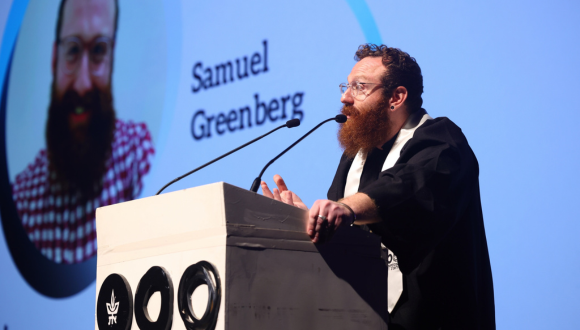
The evening included a soulful performance by the Dawn Ensemble, opening remarks by TAU VP International Professor Milette Shamir, and a stirring speech by valedictorian Samuel Greenberg, who shared words of wisdom from his grandfathers:

Samuel Greenberg delivers the Valedictorian address to the Class of 2025. Photo credit: Shlomi Mizrahi 

“One told me to make mistakes. The other said his greatest regret was doing nothing. I took both lessons to heart. Doing something, anything, is better than letting life pass you by.”— Samuel Greenberg, Security & Diplomacy MA

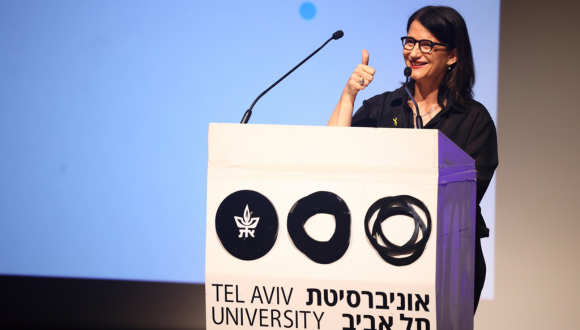
Keynote speaker Professor Merav Roth, a psychoanalyst and expert on trauma, invited graduates to find strength through challenge:

“Every crisis is a door. You just have to be brave enough to open it.”

Professor Merav Roth at the 2025 End of Year ceremony. Photo credit: Shlomi Mizrahi

With Hatikvah echoing and caps in the air, the ceremony wrapped up, opening the door to new beginnings.

What Comes Next

For many, plans are already in motion. Shaina Leykin, from the Sofaer Global MBA, summed it up:

“Now it’s career mode. I’m finishing my fellowship, then looking for a job. But first, maybe a short vacation.”—Shaina Leykin, Sofaer Global MBA

Mara Cara Melodias hopes to continue to a PhD after completing her master’s thesis. Rivka Ohayon, who explored sleep and physical performance in defense training, is now eyeing the health tech industry: “I’d love to work with cognitive testing or sleep tech. It’s where neuroscience meets real-world impact.” And for Neha Nidhi, the next destination is Paris, where she is going to spend her exchange semester.

Conflict Resolution MA graduates with Dr. Nimrod Rosler, Academic Head of Program, and Program Director Corey Gil-Shuster. Photo credit: Shlomi Mizrahi

This year also saw a graduate give back. Alexandra Seaman, a Conflict Resolution alumna, launched a scholarship fund for future women leaders in peacebuilding:

“Understanding human nature and the mechanisms of conflict is more crucial than ever. I want others to access what I had the privilege to learn.”—Alexandra Seaman, Conflict Resolution MA

Be the Ambassadors of TAU

“There’s a big world out there waiting for you to make a difference,” said MC Orit Coty in her closing message. “And today is just the beginning.”

A joyful finale. Photo credit: Shlomi Mizrahi

To the Class of 2025, thank you for your courage, your curiosity, and your commitment. You’ve left a mark on Tel Aviv University. Now it’s your turn to leave one on the world.


Ready to be part of the next chapter? Find the program that fits your goals, apply now, and help shape the Class of 2026.

Unexpected Founders, Unlikely Team, Unstoppable Idea

How the Sofaer Global MBA turned doubts into drive and launched a multicultural music-tech startup in Tel Aviv

 
At Tel Aviv University’s Sofaer Global MBA, innovation happens in the classroom, on the beach, over hummus, and between classmates from opposite ends of the globe. The 3rd annual Sofaer Startup Competition was proof of that, awarding first place and the Arlette Sofaer Prize to LalaScript, a groundbreaking AI music platform created by Ohad Gev (USA), Liu Liu (China), and Ilya Kolin (Belarus).

Beyond the prize, there’s a deeper story: the story of how an MBA in Tel Aviv brought together a classical pianist, a fashion marketer, and a seasoned entrepreneur to build something they never expected.


Join the Sofaer Global MBA infosession on July 27 at 5 pm


No Business Background? No Problem

“I came to Israel for personal reasons. I left my job, brought my dog, and promised my family I’d finish my degree,” says Liu Liu, who previously worked in Shanghai’s fashion and trade show scene. 

“I didn’t come to Israel to build a startup. I just wanted to enjoy life for a while.”—Liu Liu

Her expectations shifted fast. The Sofaer MBA’s hands-on approach pushed Liu to explore ideas beyond her comfort zone. “I’d done a startup before in street dance. But this was different. We had to pitch, research markets, and work in teams. I was so confused at first. My English wasn’t strong. I have hearing difficulties. And everyone around me looked so… professional.”

Then came Ohad.

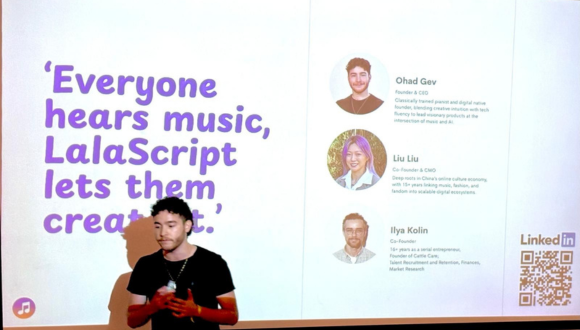
Ohad Gev presenting LalaScript’s pitch

“He didn’t seem like a typical business student either,” she laughs. “We clicked right away.” A classical pianist from New York who had arrived several weeks late to the program, he was equally uncomfortable with the business school environment.

“I remember when I got to the program, it was my first non-music school. What am I doing? There’s a lot of collaborating. There’s a lot of presenting. I hate presenting,” Gev recalls.

Nine months later, this unlikely duo along with their teammate Ilya Kolin would win the $10,000 Arlette Sofaer Prize for LalaScript, an AI-powered platform that transforms any audio into tailored, playable sheet music.

Homework That Turned Into a Startup

LalaScript was born in Dr. Leslie Broudo-Mitts’s New Venture Creation class, where homework assignments included building actual startups. Choosing the concept to develop was not easy.

“It was really funny how it started when Liu Liu couldn’t do the idea she wanted,” Gev recalls. But once she looked through his list, one idea jumped out: the music transcription concept that eventually became LalaScript.

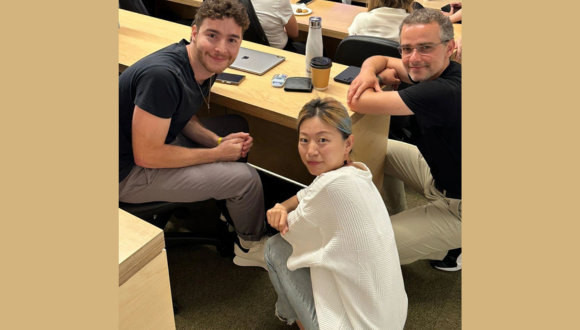
Ohad Gev, Liu Liu, and Ilya Kolin: The winning team

Their initial market research revealed surprising opportunities. “We found that our product pitch is very unique in terms of the solution we’re offering,” says Gev. “But there’s a lot of existing music creation apps, which we consider competition.”

“We’re Really Building Something Human.”

The human aspect is what got Liu Liu really excited about the idea. “Everyone back home talked about finance, AI, robotics, medicine. I didn’t care about that,” she says. “I just wanted to build something for real people. And that’s what this is.”

“Our project isn’t just about music. It’s about making creativity more accessible. You hear a song, you want to play it, so LalaScript helps you do that, even if you’re not a pro.”—Liu Liu

What began as a class project turned into something much more after the team won the startup competition. “Suddenly, professors took us seriously. They told us, ‘Now you have something real. Let’s go.’ And that changed how I saw myself too,” says Liu.

Since then, the team has been meeting with investors, planning next steps, and even getting scouted by The Sharks of Israel (Israel’s version of Shark Tank).

“We didn’t expect any of this,” Liu says. “But here we are now.”

From Missed Deadlines to Center Stage

The path to victory at the Sofaer Startup Competition was nearly derailed by the team almost missing the first deadline. But when the deadline was extended, they had no more excuses. 

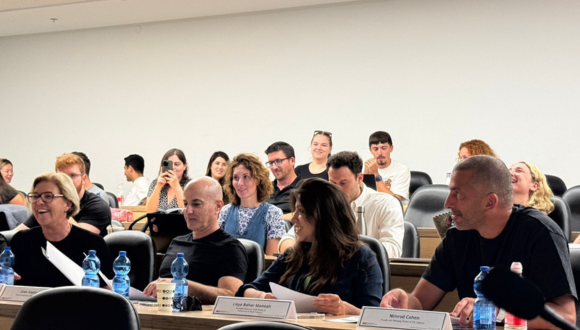
The jury of the 3rd Sofaer Pitch Competition included Nimrod Cohen (on the right), the Managing Partner of TAU Ventures; Lisya Bahar Manoah (second from the right), Managing Partner at Arieli Group; Fiona Darmon, Founder & Managing Partner at Sunset Ventures, and Oren Kaplan, Fintech entrepreneur, investor, mentor

Their professors recognized the team’s potential and provided crucial support in preparing the pitch. There was also Gev’s anxiety about public speaking to contend with: “I’m not a public speaker. I like to perform when I’m behind the piano,” he says.

So, the competition itself was a transformative experience. Team members trained to speak loudly and clearly, citing numbers to make their pitch more impactful. And the hard work paid off.

“The jury saw how serious we were about the pitch competition. And they believed in us.”—Liu Liu

“We’re So Different, and That’s What Works.”

Reflecting on their team, Liu Liu says it best: “Ohad’s a pianist. I’m from fashion. Ilya’s data-driven. We don’t think the same, we don’t even speak the same first language, but we trust each other. That’s what the program gave us.”

The Sofaer Global MBA is truly a bridge between worlds, and a launchpad for innovation, creativity, and surprising transformations.

Sofaer Global MBA Class of 2025

As Liu Liu puts it, “I didn’t come here to be a founder. But that’s exactly what happened.”

“It’s such a unique space. You’re thrown into a startup ecosystem that’s fast, scrappy, supportive. And you’re learning with people from everywhere, Europe, Asia, North America, South America. You learn just as much from each other as from the professors.”—Ohad Gev

Investor calls, pitch competitions, maybe even prime time, LalaScript is heading places. But for its founders, the real turning point was the Sofaer MBA: a fast-paced mix of challenging coursework, practical startup experience, and faculty who had their back from day one.


Ready to make your next move in Tel Aviv’s startup scene? 

Join the program infosession on July 27 at 5 pm to learn more about the Sofaer Global MBA.

Applications are now open, and you can apply online.

World’s First mRNA Vaccine Against a Deadly Bacterium

Groundbreaking collaborative research leads to a novel mRNA-based vaccine targeting a lethal bacterial infection


The study was led by Tel Aviv University’s Vice President for Research and Development Prof. Dan Peer, a global pioneer in mRNA drug development and director of the Laboratory of Precision NanoMedicine at the Shmunis School of Biomedicine and Cancer Research. He worked alongside researchers from the Israel Institute for Biological Research — Dr. Uri Elia, Dr. Yinon Levy, Dr. Emmy Mamroud, and Dr. Ofer Cohen — as well as members of his own laboratory team: Dr. Edo Kon, Dr. Inbal Hazan-Halevy, and doctoral student Shani Benarroch. The study was featured on the cover of the prestigious journal Advanced Science. 

The vaccine developed by the team from the Institute for Biological Research and Tel Aviv University is an mRNA-based vaccine delivered via lipid nanoparticles, similar to the COVID-19 vaccine. However, mRNA vaccines are typically effective against viruses like COVID-19 — not against bacteria like the plague.  

Dr. Uri Elia explains: “Viruses rely on a host cell to survive and replicate. They infect the cell with an RNA molecule (mRNA) that contains instructions for making viral proteins. The virus uses the cell as a factory to replicate itself. In an mRNA vaccine, this molecule is synthesized and encased in a lipid nanoparticle that resembles human cell membranes. The nanoparticle fuses with the cell, the cell produces the viral proteins, and the immune system learns to recognize and defend against the actual virus upon exposure. Bacteria, however, are a different story: they produce their own proteins and do not rely on human cells. Moreover, due to the different evolutionary paths of humans and bacteria, their proteins are very different from ours.” 

In 2023, the researchers developed a unique method for producing the bacterial protein within a human cell in a way that prompts the immune system to recognize it as a genuine bacterial protein and thus learn to defend against it. The researchers from Tel Aviv University and the Institute for Biological Research proved, for the first time, that it is possible to develop an effective mRNA vaccine against bacteria. They chose Yersinia pestis, the bacterium that causes bubonic plague — a disease responsible for deadly pandemics throughout human history. In animal models, the researchers demonstrated that it is possible to effectively vaccinate against the disease with a single dose. 

Prof. Dan Peer: “In the previous study, we developed a vaccine for a form of plague transmitted through the skin — for example, via flea bites. In the current study, we chose a much more ambitious target: pneumonic plague, which spreads from person to person and causes respiratory illness — making it particularly difficult to develop a vaccine against. For this reason, we used two proteins — two antigens — to create the vaccine. We tested it on several animal model strains and found that, after two vaccine doses, we achieved 100% protection against pneumonic plague: the animals infected with the plague did not get sick at all. The success of the current study paves the way for a whole world of mRNA-based vaccines against other deadly bacteria.” 

“The plague — a disease that killed about two-thirds of Europe’s population in the Middle Ages (‘The Black Death’) still resurfaces occasionally today, for example in Madagascar. So the potential for a pandemic still exists,” says Dr Uri Elia. “The disease is caused by a bacterium called Yersinia pestis, for which there is no approved vaccine in Western countries. This bacterium is highly contagious and extremely lethal, making it a serious threat. Moreover, this bacterium concerns us as a potential agent of bioterrorism. If one of our enemies tries to use it against us, we want to be prepared with a vaccine.” 

Why Pursue an Undergraduate Degree at Tel Aviv University?

It’s your launchpad to a truly global career

Considering an international education for your undergraduate degree? If you’re exploring university degrees abroad and looking into undergraduate programs in Israel, Tel Aviv University (TAU) offers an exciting, accessible and academically rigorous alternative to traditional US options. From affordable tuition to a globally recognized degree and exclusive opportunities for early-career experience, here’s why studying at TAU should be on your radar.

World-Class Education Recognized in the US and Beyond

A degree from TAU is not just globally recognized, it’s also a respected credential for students planning to pursue graduate studies or a career in the US. Many of our alumni have gone on to top graduate programs in the US and around the world, and we count among our academic partners universities like Columbia and Northwestern.

“At TAU, you have the opportunity to be part of something so meaningful and still get the education that you’re looking for—with all of the aspects of the American-style education of having so many classes to choose from and a great community.”—Kayla Goldberger, BA in Management and Liberal Arts

TAU alumni are also thriving at Google, Meta, Alphabet and other industry leaders. This university isn’t just a stepping-stone; it’s a launchpad for a truly international career. 

“Tel Aviv University is very well recognized. I’m glad to have this degree behind me.”—Tyla Shur, BA in Management and Liberal Arts

Affordable Education and Federal Aid Options

One of the most attractive aspects of studying at TAU is the significantly lower tuition. Compared to US-based universities, TAU’s tuition offers savings without sacrificing quality, making it an ideal choice for American students seeking to study for their bachelor’s in Israel.

Plus, in addition to the many scholarships you can apply for, students from the US can use their 529 college savings plans, federal loans or even Veterans’ benefits to pay tuition at TAU, making it even easier to fund an international bachelor’s degree in Israel.

Shorter Program Duration = Faster Career Launch

Why wait four years when you can complete a bachelor’s degree in Israel in three? TAU’s accelerated program structure allows you to complete your English-language undergraduate studies in Israel in less time than most US universities, while at the same time being fully equivalent (i.e., a three-year program at TAU = a four-year program in the US).

The graduation ceremony of the Liberal Arts BA program

And if you’re ambitious, TAU offers options to transition directly into a graduate program, meaning you could potentially complete both degrees in only four years. 

Real-World Experience in a Thriving Tech Hub

Israel is known for its tech innovation, and Tel Aviv is at the center of this exciting scene. TAU’s unique position in one of the world’s leading tech hubs opens doors to internships and networking opportunities.

“I was equipped through various university courses to be able to build my connections, improve my LinkedIn profile, and find internships.”—Kayla Goldberger, BA in Management and Liberal Arts

The university’s close ties with industry leaders mean that students benefit from a smaller, more intimate academic ecosystem while still gaining access to world-class opportunities. With direct pathways to internships and a strong presence in the tech and business sectors, studying at TAU gives you a competitive edge in the global job market and unlocks academic opportunities in Israel that extend far beyond the classroom.

A Vibrant, Coastal Place to Discover

Nestled along the beautiful Mediterranean coast, Tel Aviv offers a unique blend of rich history and lively and inclusive cultures (New York Times called us the “capital of Mediterranean Cool”). No matter your interests and background, there’s a place here for you if you want to live in Israel and study in English.

TAU students enjoying a day at the beach not far from the TAU campus

At TAU, moreover, you’ll quickly find a community of like-minded people, world-class facilities (like our Olympic-sized swimming pool and spa amenities) as well as a team of community leaders dedicated to supporting you during your time with us.

Unique Program Flexibility and Admission Pathways

At TAU, you’re not limited to a single program when applying. The university allows students to apply to multiple programs simultaneously, including our dual degree programs with Columbia University or Yeshiva University and our International BA in Liberal Arts or International BA in Management and Liberal Arts

Our dual degree programs also mean you spend half your time in Israel and half your time in the US, resulting in a diverse academic background with global experiences. 

“The dual degree program is a perfect combination—starting at Tel Aviv University and continuing at Columbia gives an excellent international academic experience. I learn so much from other students in the classroom.”—Chloe Katz, Dual Degree with Columbia University

Need a little extra time before diving into your studies? TAU also offers a one-year deferral option for accepted students, giving you the flexibility to plan your educational journey.

Curious About TAU? 

TAU offers more than just an undergraduate degree—it provides top undergraduate programs in Israel and an experience that combines global recognition, affordability and unrivaled opportunities in a vibrant, high-tech city. Plus, by doing an international degree in English at TAU through The Lowy International School, you’ll find a community of global, like-minded people here to support you and cheer you on, every step of the way.

“When I decided to go to college in Israel I definitely expected it to be at a different level than what an American University experience would be like both academically and just socially but I’ve been so pleasantly surprised from my first day arriving on campus—it’s just blown away my expectations of what an Israeli college experience could be like.”—Joe Block, Dual Degree BA with Columbia

If you’re exploring the best degrees to study abroad for your bachelor’s, Tel Aviv University may be the perfect fit.


Explore program websites for more information and send your application online.

Dramatic Discovery at Tel Aviv University: 15th-Century Holy Books of Ethiopian Jewry—the Oldest Found to Date

Two Orit books (the Torah of Beta Israel – Ethiopian Jewry) from the 15th century were discovered by the Orit Guardians program of TAU’s Department of Biblical Studies.

A Rare Discovery:  A traveling workshop of TAU’s Orit Guardians program discovered two 15th-century Orit books – the oldest found to date in the possession of Beta Israel. The Orit Guardians Master’s program was established about five years ago, with the primary goal of studying, preserving, and carrying on the Biblical heritage of Ethiopian Jewry. The workshop was held in collaboration with the Ethiopian Jewry Heritage Center and the National Library of Israel, which documented the books and established the Digital Archive of Beta Israel’s Scriptures. Recently, these books were exposed at a special event held at ANU – Museum of the Jewish People, led by the Koret Center for Jewish Civilization (a collaboration between ANU and TAU), which supports and advances the Orit Guardians program.

The program’s initiator, Prof. Dalit Rom-Shiloni from the Department of Biblical Studies, Chaim Rosenberg School of Jewish Studies and Archaeology, explains: “The Orit of Beta Israel includes the Five Books of the Torah, as well as the Books of Joshua, Judges, and Ruth. So far, we have documented four Orit books, including the two from the 15th century, as well as 13 other sacred books. All the sacred books of Ethiopian Jewry are written in Ge’ez, a language known only to the Kessim, and each manuscript has its own fascinating story. They have been passed down through generations from father to son, and some were given to Kessim by their teachers — Jewish monks who taught the sacred traditions in Ethiopia. The books were carefully guarded and preserved, with some of their owners even risking their lives to bring them to Israel. Today, most of these books are privately owned by Kessim and their families and used as “living books” in the prayer houses of Ethiopian Jewish communities across Israel. Until now, they were inaccessible to interested individuals of the general public, nor to the research world, and we intend to locate as many books as possible for preservation, digitization, and academic study.”

To this end, a unique traveling workshop was held in June 2024, with participants including: Prof. Rom-Shiloni, anthropologist Prof. Erica Weiss, linguist Dr. Anbessa Teferra, and students from the Orit Guardians program — all from Tel Aviv University, alongside representatives of the Ethiopian Jewry Heritage Center and the National Library, as well as three international experts in ancient Ethiopian sacred texts: Prof. Loren Stuckenbruck (Ludwig Maximilian University of Münich), Dr. Sophia Dege-Müller and Ted Erho (University of Hamburg). The international experts examined and dated the books using palaeography — based on script forms. To their astonishment, they found that two of the Orit books were written as early as the 15th century — the oldest discovered so far in the hands of Beta Israel. Prof. Rom-Shiloni explains: “Our discovery is causing a stir among experts in the field worldwide. While we are familiar with similar Ethiopian texts from this period or even earlier, all of those are Christian texts, not Jewish. Now, for the first time, it has been revealed that Kessim from Beta Israel possess Orit books that are over 600 years old.”

In total, the workshop yielded four Orit books — two from the 15th century and two from the 18th century, as well as 13 other sacred books from the 17th to 20th centuries. All the discovered books were documented with their owners’ consent and remain in their possession — so they can continue to serve as “living books” in their communities. The documentation now enables academic research and the establishment of a digital archive at the National Library.

Prof. Youval Rotman, Academic Director of the Koret Center and faculty member in the Department of Jewish History at Tel Aviv University, added: “This is an extraordinary finding. Discovering ancient manuscripts is rare, and when they are the oldest of their kind in existence, the find is all the more exceptional. This discovery was made thanks to the Orit Guardians’ emphasis on studying the textual knowledge and interpretive tradition preserved and orally transmitted over centuries within the various Beta Israel communities. The uniqueness of the program lies not only in mapping manuscripts and training students for their research but also in doing so as an integral part of the knowledge preserved within the community — thereby continuing and expanding it. The young researchers form personal connections and earn the trust of the Kessim as successors to the tradition and oral interpretation. In doing so, they connect communal-social knowledge to academic knowledge — and this is our great pride. The program unearths hidden treasures that have so far dwelt within the four walls of local synagogues, then documents and studies them and makes them accessible. Imagine a situation in which the great Bible commentaries were passed down orally through generations.”

Prof. Rom-Shiloni concludes: “Through the traveling workshop of the Orit Guardians program we discovered 17 sacred books of Beta Israel held by Kessim across Israel and still used as “living books” in the prayer houses of Ethiopian Jewry. Among them, we discovered two Orit books — the Torah of Beta Israel — written in the 15th century, the earliest found so far in the hands of Jewish Kessim.
Alongside the excitement, we believe our discovery is only the tip of the iceberg. It is likely that many more sacred books of Beta Israel are held by families and Kessim around the country, and we will continue searching for them. It is important to emphasize that all manuscripts located (like those found through the workshop) will remain in the possession of their owners, while being photographed and documented to make them accessible to interested members of the community, the broader public, and researchers in Israel and around the world. Another, especially urgent task of the Orit Guardians is documenting the scholarly oral traditions of the Kessim in Ethiopia, which includes translation from Ge’ez to Amharic and interpretation of the Orit and other holy books. This heritage, transmitted only orally from generation to generation, has never been set down in writing. Today, only 18 senior Kessim, who were trained in Ethiopia and hold this knowledge, remain active in Israel, and they are aging. If we do not act quickly, we might lose this precious cultural treasure.”

Victoria

Phone: +61 3 9296 2065
Email: office@aftau.asn.au

New South Wales

Phone: +61 02 7241 8711
Email: admin@aftau.org.au

Western Australia

Phone: :+61 0418 46 5556
Email: davidsolomon@aftau.org.au