Author: Hilary

Tel Aviv University Ranked No. 1 in Israel and No. 213 Worldwide in the Taiwan Ranking 2025

A significant research achievement in the NTU ranking, which evaluates scientific excellence and the quality of academic publications

The prestigious Taiwan Ranking (NTU Ranking) for 2025 places Tel Aviv University first in Israel and 213th worldwide.

Based entirely on scientific publications, the Taiwan Ranking evaluates the top 1,000 universities in the world. The top five institutions in the ranking are Harvard University (USA), Stanford University (USA), University College London (UK), the University of Oxford (UK), and Johns Hopkins University (USA).

The ranking is considered one of the most reliable indicators for measuring research productivity, as it relies solely on objective data without reputation surveys. It is based on eight criteria that assess research productivity (number of publications), research impact (number of citations), and research excellence (the volume of papers published in leading journals).

Research Excellence and Scientific Quality

Tel Aviv University’s achievement this year is driven by the quality of its research and its impact on the international scientific community. The University received an overall score of 55.7, reflecting the strength of its researchers’ publications across disciplines.

In field-based rankings, the University recorded particularly notable achievements:

  • Life Sciences: Ranked 123rd worldwide
  • Clinical Medicine: Ranked 99th worldwide
  • Social Sciences: Ranked 301–350 worldwide

At the Forefront of Science in Israel

Tel Aviv University’s placement as No. 1 in Israel in the NTU ranking — ahead of the Hebrew University (256th), the Weizmann Institute (278th), and the Technion (374th) — highlights its role as a central scientific hub in the country.

This achievement joins the University’s other international rankings this year, including 216th place in the Times Higher Education ranking and 223rd place in the QS ranking, presenting a consistent picture of an institution that combines groundbreaking research with broad global recognition.


Tel Aviv University Ranked 199th in the U.S. News Rankings for 2025

The ranking is based on both quantitative and qualitative academic indicators, as well as global and regional peer assessments

Tel Aviv University continues to strengthen its standing as one of the world’s leading research institutions. In the latest U.S. News ranking for 2025–2026, the University is ranked 199th worldwide, 43rd in Asia, and 2nd in Israel.

This prestigious ranking, based on 13 indicators of academic quality and excellence, places the University at the forefront of global scientific activity, demonstrating impressive stability and a strong international research reputation among the global and regional academic community. Quantitative indicators include the number of publications, books, and conferences — accounting for 15% of the overall score — as well as 10% allocated to internationally co-authored publications.

The remaining 50% is based on qualitative indicators, including citation volume and impact, the number and share of publications ranked in the top 10% of most-cited papers, and those in the top 1% worldwide. Tel Aviv University performs particularly well in publication output (129th), citations (149th), citations among the top 1% (151st), and citations among the top 10% (165th).

Alongside the overall ranking, subject rankings were also published across 38 disciplines. Tel Aviv University is ranked in 35 fields — more than any other Israeli university. It ranks first among Israeli institutions in 17 fields and second in an additional 13. Notable positions include:

Humanities: 109

Exact Sciences: Computer Science (149), Mathematics (152), Physics (110)

Space Sciences: 119

Medical Fields: Gastroenterology (46), Infectious Diseases (75), Oncology (96)

Biomedical Sciences: Immunology (45), Neuroscience (134), Biology & Biochemistry (176), Optics (109)

Psychology & Psychiatry: 121

Full ranking >

Tel Aviv University Ranked No. 1 in Israel and No. 223 Worldwide in the 2026 QS Rankings

Continues to lead Israeli academia and maintain its position at the forefront of research and teaching on the international stage

Tel Aviv University maintains its standing as Israel’s leading academic institution. In the prestigious QS World University Rankings for 2026, the University was ranked 223rd worldwide. This year’s ranking is the most comprehensive ever published by QS, including more than 1,500 leading academic institutions from around 100 countries.

The QS Index is one of the world’s leading ranking systems for academic institutions. Each year, it reviews around 1,500 of the best universities globally, evaluating them based on teaching and research indicators such as citations, academic reputation, graduate employability, and international outlook. The ranking draws on approximately 17.5 million academic papers and around 240,000 interviews with academics and employers.

Leading Israeli Academia

Once again, Tel Aviv University reinforces its position as the most prominent and highest-quality academic institution in Israel. Its placement at 223rd worldwide puts it ahead of the Hebrew University (240th), the Technion (350th), and Ben-Gurion University (469th).

This leadership is especially evident in research quality indicators, where the gap between Tel Aviv University and other Israeli institutions is particularly striking — positioning the University at the forefront of Israeli research on the global stage.

Excellence in Research and Core Indicators

The ranking is based on nine key performance indicators, including academic reputation, employer reputation, faculty-student ratio, and research impact. Tel Aviv University’s achievements stand out in several areas:

  • Research Impact (Citations per Faculty): The University’s strongest achievement in the current ranking is reflected in its citations-per-faculty score, which measures the research impact and scientific contribution of academic staff. Tel Aviv University received an impressive score of 99.7, placing it among the leading research universities worldwide and highlighting the exceptional quality of research conducted on campus.
  • Employment Outcomes: A high score of 94.2, reflecting strong demand for the University’s graduates in both the global and local job markets.
  • Sustainability: A score of 77, expressing the institution’s commitment to social and environmental goals and its influence on the future of the planet.

The QS ranking joins the University’s recent achievement in the Times Higher Education (THE) Rankings for 2026, where it was ranked 216th worldwide, completing a picture of steady growth and leadership across the most important international indices.

Israeli universities ranking >

Full ranking >


On the Rise: Tel Aviv University Climbs to 216th Place Worldwide in the 2026 TIMES Ranking

Ranked the top academic institution in Israel out of 2,191 universities included in the prestigious index

Tel Aviv University continues to strengthen its position at the forefront of global academia. In the Times Higher Education World University Rankings for 2026, the University recorded a significant rise, ranking 216th worldwide — an improvement of 12 places compared to last year’s ranking of 228. In addition, the University retains its position as Israel’s top-ranked institution for another consecutive year.

This achievement is particularly notable given that this year’s ranking is the most comprehensive in its history, encompassing 2,191 research institutions from 115 countries. The rise in ranking — placing Tel Aviv University within the top decile of ranked institutions worldwide — reflects its strong research and academic performance amid intensifying global competition.

Excellence in Research and Core Indicators

The ranking is based on 18 performance indicators that evaluate institutions across five key areas: teaching, research environment, research quality, industry engagement, and international outlook.

This year’s improved global standing is driven by strong performance across core metrics. Tel Aviv University stands out especially in Research Quality, which measures the scientific impact of researchers’ publications and citation volume, as well as in Research Environment. In both indicators, the University ranked first in Israel.

Achievements by Subject (Subject Rankings)

Alongside the overall ranking, Tel Aviv University recorded impressive achievements across a range of disciplines. Among the leading fields ranked at the global forefront for 2026:

Computer Science and Law: continue to lead globally, ranked 101–125

Psychology: ranked 126–150

Medicine & Health Sciences and Education: ranked 151–175

Arts & Humanities: ranked 176–200

Innovation and Industry Engagement

In the area of industry engagement, the University demonstrates significant strength, reflecting its international reputation among employers and its ability to translate academic research into applied innovation. This complements additional international rankings that position Tel Aviv University among the world’s leading universities (outside the United States) in producing entrepreneurs and founders of unicorn companies.

The rise to 216th place marks another milestone in a series of recent international achievements for the University and further reinforces its standing as a leading force in research and teaching in Israel.

What Makes a Bat Bold?

A new TAU study shows that early-life experiences — more than innate personality — shape how bats behave in the wild.

A new study from Tel Aviv University’s School of Zoology reveals that the environment in which a bat is raised during the first months of its life largely determines how it will behave in the wild,  sometimes even more than its innate personality.

The study, led by doctoral student Adi Rachum from the laboratory of Prof. Yossi Yovel at the School of Zoology, Wise Faculty of Life Sciences, and the Sagol School of Neuroscience, was published in the journal eLife.

Growing Up in Two Different Worlds

The research investigated for the first time how early exposure to a variable and challenging environment affects the behavior of Egyptian fruit bats after they are released into the wild. The researchers raised 40 young bats in two completely different environments: one enriched and dynamic, in which the bats had to cope with new challenges every day in order to obtain food; and the other stable and unchanging. After a period of several months, their behavior in the wild was monitored using GPS devices that tracked their every flight.

The findings were clear and consistent: bats raised in the enriched environment exhibited much bolder and more exploratory behavior in the wild. They flew farther away from “home,” spent more time out foraging at night, and explored areas almost twice as large as those explored by the control group.

For example, bats raised in the enriched environment explored average foraging areas of approximately eight square kilometers, compared to only about three square kilometers among bats raised in the impoverished environment. The maximum distance they ventured from the colony was also notably greater — an average of about 1.3 kilometers versus only 0.8 kilometers in the comparison group. In addition, they spent an average of roughly four hours outside the colony each night, compared with less than three hours among bats in the control group.

Not Personality — Experience

To ensure that the differences did not stem from variations in the bats’ innate personality, the researchers assessed the young bats’ personality traits in the laboratory before they were exposed to the different environments. They found that these traits did not predict the bats’ behavior in the wild as adults. In other words, the bats’ innate disposition did not account for their later differences in behavior in the wild. Instead, the environment in which they were raised during their early life proved to be the decisive factor shaping how they behaved as adults.

Adi Rachum explains: “Fruit bats are animals with remarkable behavioral flexibility and learning capacity. We found that the early environment to which bats are exposed influences the way they explore the world.”

Prof. Yossi Yovel adds: “In previous studies, we identified behavioral differences between exploratory urban bats and more ‘conservative’ rural bats. The current findings may explain how these differences between the groups are formed.”

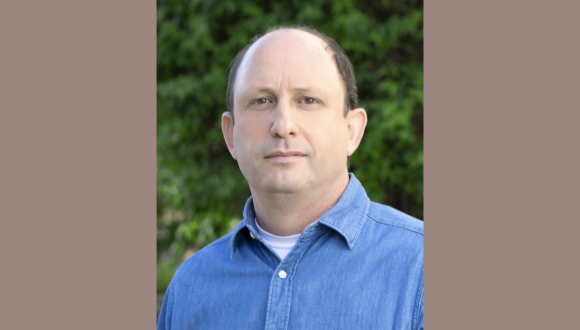
Prof. Yossi Yovel

*Prof. Yossi Yovel is a world-renowned Israeli researcher and a senior faculty member at the School of Zoology and the Sagol School of Neuroscience. He leads the field of neuroecology, which combines brain research and ecology to understand how animals make decisions and navigate in their natural environment. Considered a leading expert on bats, he studies their sonar system (echolocation), social communication, and remarkable navigation abilities.

TAU Doctoral Students on the Global Scientific Stage at GYSS 2026

Connecting with Nobel and Turing Laureates at the Global Young Scientists Summit in Singapore

Each year, Tel Aviv University sends outstanding doctoral students to the Global Young Scientists Summit (GYSS) in Singapore, an interdisciplinary forum for emerging researchers worldwide. In 2026, Arielle Kaim from the Gray Faculty of Medical Sciences and Alon Itzkovitch from the Faculty of Life Sciences represented TAU.

Coming from very different research backgrounds — disaster response (Kaim) and neurobiological decision-making (Itzkovitch) — both found the Summit took them beyond their usual academic frameworks: explaining complex research to unfamiliar audiences, drawing unexpected links across disciplines, and engaging directly with award-winning scholars in candid, informal settings.

A Summit Built on Dialogue

Hosted by Singapore’s National Research Foundation, GYSS gives outstanding early-career scientists an opportunity to meet recipients of the Nobel Prize, Fields Medal, Millennium Technology Prize, and Turing Award. The programme combines plenary lectures, research seminars, panel discussions, and smaller interactive sessions that encourage direct dialogue between laureates and participants. 

For both TAU students, the most meaningful moments often happened outside of the formal programme, echoing the summit’s theme of Excite, Engage, Enable.

“I think that the element that was most interactive and nice was sitting down at dinner and having just normal conversations with the Nobel Prize or Turing award winners.”—Arielle Kaim

“At the end of the day, the Nobel Prize winner is a person that undergoes the same challenges that we do as young researchers,” she reflects.

The Israeli delegation at the Global Young Scientitsts Summit 2026

The Israeli delegation at the Global Young Scientitsts Summit 2026

For Itzkovitch, who had previously attended virtually in 2023, the in-person format highlighted what makes GYSS unique.

“The topics are very broad, which is very different from a regular scientific conference. But if you want to collaborate, if you want to communicate, if you want to hear new ideas, this is the place.”—Alon Itzkovitch

Alon Itzkovitch: How to Explain Your Research in Simple Terms

Itzkovitch also participated in the Summit’s poster session, presenting his work to audiences far from his usual academic circle.

A PhD candidate in Professor Tom Schonberg’s lab, Itzkovitch conducts multidisciplinary research at the intersection of biology, neuroscience, and decision science.

His work combines laboratory experiments, physiological signals, and computational analysis to better understand how subjective thermal perception conditions cognitive choices.

At GYSS, he had to translate these complex ideas for engineers, computer scientists, and researchers from entirely different fields.

“In regular conferences, I’m used to diving in and being much more specific than I had to be in the GYSS. It was like trying to explain to my father what I am doing.”

“Talking to the first person was a bit difficult, but then I understood that this is not the audience I’m used to and adapted,” Itzkovitch comments.

Arielle Kaim: How to Find Connections with Other Disciplines

Arielle is a PhD candidate in the Department of Emergency and Disaster Management of the School of Public Health, and her research is connected to real-world humanitarian response. She works with World Health Organization teams that deploy field hospitals during disasters and public health emergencies.

Her doctoral research focuses on developing a real-time evaluation tool to assess how effectively these field hospitals function in environments with limited infrastructure and unstable resources. She examines how teams adapt and how emergency response systems can be strengthened.

“It’s not research for the sake of theory, but research for the sake of enhancing disaster response.”

The tool has already been applied in real-time across multiple disaster medical full-scale simulations and deployments, including most recently in a field hospital setup in Israel during an ongoing war, and an upcoming mission related to flooding and cholera outbreaks in Mozambique.

The Israeli delegation at the Global Young Scientitsts Summit 2026

The Israeli delegation at the Global Young Scientitsts Summit 2026

At GYSS, Kaim found connections between her field and others, from water quality research to emerging technologies.

“It’s very interesting to engage with colleagues from different disciplines. I always find that no matter what anyone is working on, there are always linkages to emergency and disaster management.”

Kaim deliberately chose sessions outside her immediate field, such as panels on quantum computing and artificial intelligence, where Turing award recipient Prof Adi Shamir of the Weizmann Institute took part. 

“They spoke about supercomputing versus the quantum era, how things are going to change going forward and where computing is taking us. It’s not my field, but interesting to expose yourself to.”

She also attended the session on Geopolitics to Genomics: Concurring Minds in a Multipolar World, where Professor Aaron Ciechanover, the Nobel laureate in Chemistry from the Technion Institute of Technology was among the panelists. The session explored the potential for collaborative science and shared innovation in the environment of rising complexity and competition.

Another Summit highlight was the session Breaking Barriers, Leading Change: Challenges in STEM, which focused on leadership, inclusion, and the evolving responsibilities of researchers.

Stronger Community Ties

Both students emphasize the value of the human connections they formed with international peers and in particular with fellow Israeli researchers. 

“What I enjoyed the most was connecting with Israeli colleagues. We’re still in touch and we find how we can help each other and connect other colleagues with the ones that we met at GYSS.”—Arielle Kaim

Every evening, the Israeli participants went out to have dinner and explore the city together. They also visited the Israeli embassy in Singapore and will meet the Ambassador of Singapore to Israel.

Why Is the Summit Worth Participating in? 

Kaim’s advice is to fully engage with the Israeli colleagues and with international researchers you might never meet otherwise

“Try to find points of connection, whether personal or professional, and just enjoy and take time to explore also.”—Arielle Kaim

Itzkovitch emphasizes the value of meeting leading scientists from different fields, and communicating with very different people.

“Participating in the summit is a great idea if you want to communicate and hear some new ideas that are far from what you do in your daily lab work.”—Alon Itzkovitch

And then, there is the city of Singapore itself, beautiful, modern, and very green.

Alon Itzkovitch and  Arielle Kaim at the GYSS-2026 in Singapore

Alon Itzkovitch and  Arielle Kaim at the GYSS-2026 in Singapore

“I was most shocked by the greenery of the city and how in such a vibrant city you can actually create something so green. It’s a city that’s living and breathing. It has a lot to offer,” says Kaim.

Both described Singapore as innovative and forward-looking, drawing parallels to Israel’s own culture of research and development.

With the support of the Lowy International School, Tel Aviv University’s doctoral researchers were able to represent TAU on a global stage and return with new insights and professional connections.

Turtles and the Origins of the Visual Brain

TAU Study Reveals Advanced Visual Processing Evolved Hundreds of Millions of Years Ago

A new study from the School of Neurobiology, Biochemistry, and Biophysics reveals a surprising insight into the operation of the ancestral brain: the visual cortex of turtles is capable of detecting unexpected visual stimuli in a way that is independent of their position on the retina, a property that, until now, was thought to exist only in the highly developed cortices of mammals, including humans. In light of these findings, the research team assesses that advanced brain mechanisms previously thought to be unique to mammals were already present hundreds of millions of years ago.

The study was led by Milan Becker, Nimrod Leberstein, and Dr. Mark Shein-Idelson, researchers in the Department of Neurobiology and the Sagol School of Neuroscience at Tel Aviv University. The study was published in the prestigious journal Science Advances.

A Shared Ancestry

The researchers explain that reptiles and mammals diverged from a common ancestor approximately 320 million years ago. Since that time, the mammalian brain and the cerebral cortex in particular — has undergone dramatic development, becoming complex, large, and folded. The reptile brain, by contrast, is regarded as simpler and more like the common ancestor of reptiles and mammals. Therefore, when a sophisticated computational mechanism in mammals is discovered also in the brain of a turtle, it suggests that this mechanism already existed in the brains of the ancestral amniotes – the first animals that completed the move onto land.

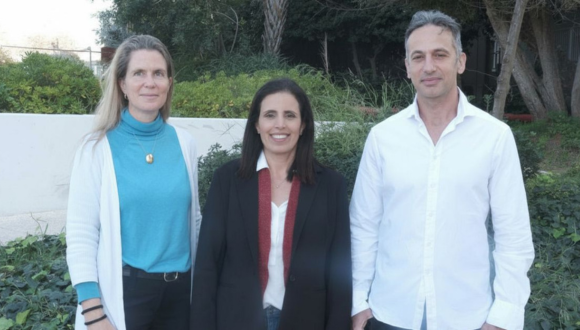
Research team (Left to right): Milan Becker, Nimrod Leberstein & Dr. Mark Shein-Idelson.

How the Turtle Brain Sees

In the study, the researchers focused on the turtle’s dorsal cortex, a region considered an evolutionary homolog of the mammalian cerebral cortex. Using neural recordings in awake animals, along with eye-movement tracking, the researchers examined how the turtle brain responds to repeatedly presented visual stimuli compared with “deviant” stimuli that appear in unexpected locations in the visual field.

Dr. Shein-Idelson: “The truly surprising result emerged when we examined what happens when the turtle moved its head or eyes. Such movements shift the image on the retina and can create ‘confusion’ in the visual system. Yet in turtles, the response to both the deviant and the regular stimulus remained consistent, despite frequent changes in the viewing angle. In simple terms, the turtle’s brain ‘understands’ that something new has occurred in the environment, even if the image is seen from a different angle and no longer falls on the exact same spot on the eye.”

The researchers also found that the turtle’s self-generated movements, such as shifts of the head or eyes, hardly elicit any brain response, even though they substantially alter the image received by the eye. In contrast, a small but unexpected change in the external environment strongly activates the brain. This indicates an ability to distinguish between stimuli resulting from self-motion and new information that requires attention.

Rethinking Brain Evolution

According to the researchers, these findings change the way we understand brain evolution. Until now, it was believed that view invariance is hierarchically computed as information travels from low to high visual areas as observed in monkeys and humans. The new study presents a different picture: even in the brain of early terrestrial vertebrates with a simple cortex, like those of the turtle’s ancestors, there already existed an ability to detect important events in the environment invariantly of viewing angle.

The researchers believe that this ability helped animals understand their spatial environment, learn, and survive complex terrestrial environments. Remarkably, even without a large and folded cerebral cortex, turtles possess a smart system capable of recognizing when something truly important is happening around them.

Dr. Shein-Idelson concludes: “This study demonstrates how the brains of turtles offer a unique window into the evolutionary past. Because turtles and mammals diverged from a common ancestor hundreds of millions of years ago, the discovery of advanced brain mechanisms in turtles suggests that these abilities either evolved hundreds of millions of years ago or convergently evolved due to similar environmental pressures in both lineages. The findings suggest that the ability to detect new and important occurrences in the environment, without being influenced by self-generated head and eye movements, is one of the cornerstones upon which the cortex evolved and points to the importance of this essential computation.”


Meeting the Needs of Every Student

The TAU Student Success Center is ensuring that students of all abilities have access to higher education

Each student has unique needs on their path to success. This is a simple principle, but meeting different needs of thousands of students requires a deep commitment to educational equity. At Tel Aviv University, the Student Success Center (SSC) is growing its resources for one of the most underrepresented populations in higher education: disabled students. 

Easing the Individual Burden 

About 35% of Israelis hold academic degrees, compared to just 16% among people with disabilities. This is largely due to a lack of accessibility resources, or to a lack of awareness about available assistance. Even before applying to university, potential students may have no way of knowing what accommodations are available, and often must spend time and energy advocating for services to which they are entitled. Upon beginning their studies, this problem does not go away as they must now self-advocate before professors and administrative staff. 

In recent years, however, there has been a welcome increase in the number of students with disabilities enrolled in higher education in Israel. At TAU, to ensure equal access to success, the SSC has made accessibility a top priority. This includes physical accessibility of campus spaces, digital accessibility of learning materials and online platforms, and faculty and staff training for disability inclusion.  

Current initiatives include:  

  • Tzavta, an alternative admissions pathway for students with disabilities, which also helps them integrate into the University  
  • An employment-oriented college program for young adults with disabilities, designed to support academic learning alongside vocational preparation  
  • Yahalom, which provides a tailored admissions route and ongoing support for students on the autism spectrum 
  • The Mia and Mile Pinkas Accessible Learning Center at the Sourasky Central Library, which provides a space for disabled students to meet and get academic support, as well as equipment such as reading assistors for the visually impaired 
  • Personalized tutoring and peer support for those with impairments and disabilities of all kinds 
     

The University is also in the process of establishing a student-led activist group which brings together students with and without disabilities, aimed at advancing awareness, advocacy, and inclusive change on campus. The group is established in partnership with Link20, an organization advocating for disability inclusion.  

TAU Diversity VP Prof. Neta Ziv presents on the many accessibility efforts on campus, present and future.

Gathering to Learn 

As part of this partnership, a conference was held recently on the TAU campus. Representatives from several academic institutions all committed to a shared objective: gaining a deeper understanding of the needs of students with disabilities and using those insights to create a more organized, accessible University experience. Importantly, disabled students themselves presented at the conference on their own unique challenges and barriers.  

The conference was also initiated in collaboration with Academi-Link, a student-led network of students with disabilities in higher education; the National Union of Israeli Students; Rothschild Partnerships; and Tel Aviv University’s Office for Equality, Diversity, and Community. 

Says Prof. Neta Ziv, Vice President for Diversity, Equality and Community: “In the wake of the war, we are already seeing, and expect to continue seeing, an increase in the number of students with disabilities entering higher education. This reality underscores the urgent need to strengthen accessibility, support structures, and inclusive policies across the university. Our commitment is not only to respond to individual needs, but to ensure that the academic environment as a whole is prepared to enable these students to thrive and succeed.” 

Spotlight on a Student: 

Tova is a second-degree law (LLM) student at the Buchmann Faculty of Law. She is already working full-time as a lawyer in a boutique firm and is pursuing this advanced degree in her very limited free time. “I felt a calling to law,” she says. “I have needed lawyers to help me advocate for myself in the past, and those experiences made me want to help others in the same way.” 

Tova’s impairment is physical, and she is able to participate in classes thanks to the accommodations offered by the Student Success Center through the Pinkas Center and the Faculty. “I need a footrest and a pillow for my back during my studies, which help me physically sit in class with all the other students.” 

Read other success stories here and here

Want to lose weight? Start strength training

A new TAU study shows that strength training is the most effective way to lose weight while preserving muscle mass for both women and men.

A new study conducted at the Gray Faculty of Medical and Health Sciences and the Sylvan Adams Sports Science Institute at Tel Aviv University reveals a clear conclusion: strength (resistance) training is the most effective tool for achieving “high-quality” weight loss, reducing body fat while preserving, and even increasing, muscle mass.

Comparing Weight Loss Methods

The study was led by Prof. Yftach Gepner, together with Yair Lahav and Roi Yavetz, and was published in the scientific journal Frontiers in Endocrinology. The researchers analyzed data from hundreds of women and men aged 20–75 who participated in a structured weight-loss program. All participants adhered to a low-calorie diet with a controlled energy deficit, but were divided into three groups based on their chosen activity: no physical exercise, aerobic exercise, or resistance training.

Why Muscle Matters

The findings show that while total weight loss was similar across all groups, a significant difference was found in the composition of the weight loss. Participants who performed strength training lost more fat than those in the other groups, and at the same time were the only ones who succeeded in preserving  and even increasing their muscle mass. In contrast, participants who did not exercise, as well as those who engaged in aerobic activity alone, lost a substantial portion of their muscle mass as part of the weight-loss process.

The research team explains: “Although total weight loss was similar among all participants, the key difference lay in the composition and quality of that loss. While weight loss without strength training, and even with aerobic activity alone, was accompanied by loss of muscle mass, strength training led to weight loss based primarily on loss of fat, while preserving and even increasing muscle mass. This means that weight loss achieved through strength training is not just a decrease on the scale, but a healthier, more stable, and more effective long-term process.”

The research team (Left to right): Yair Lahav, Roy Yavetz & Prof. Yftach Gepner.

The Metabolic Advantage

Muscle mass plays a central role in health and metabolism. Muscle constitutes about 40% of body weight and is responsible for a significant portion of daily energy expenditure, even at rest. When muscle mass declines, metabolic rate decreases, weight loss becomes more difficult, and the likelihood of regaining weight after dieting increases. Therefore, weight loss that does not preserve muscle may be less sustainable and potentially harmful in the long term.

Beyond that, maintaining muscle mass is essential for everyday functioning, strength, stability, and balance. Loss of muscle can impair physical ability, increase the risk of injuries and falls, and may even accelerate the development of sarcopenia age-related muscle degeneration that can also affect relatively young individuals during unbalanced dieting.

The study also demonstrated a clear advantage of strength training in reducing waist circumference  a key indicator of abdominal obesity and cardiometabolic risk. The greatest reductions in waist circumference were observed among the participants who engaged in strength training and were found to be strongly associated with fat loss, highlighting this type of exercise’s contribution to heart and metabolic health.

A Shift in How We Measure Weight Loss

According to the researchers, the findings underscore that not all weight loss is equal in quality. “Good” weight loss reduces body fat, preserves muscle, and supports health and long-term weight maintenance. The study’s conclusion is clear: incorporating strength training into weight-loss programs is not a luxury, but an essential component of healthy, effective, and sustainable weight loss for both women and men.

Prof. Gepner concludes: “Our study shows that weight loss should not be measured only by how many kilograms we lose, but by the quality of that loss. When appropriate nutrition is combined with strength training, it is possible to reduce fat effectively while preserving and even improving muscle mass, a critical factor for metabolic health, daily functioning, and long-term weight maintenance. Our findings make it clear that strength training is not just for athletes, but a vital tool for anyone who wants to lose weight in a healthy, safe, and sustainable way, women and men alike.”

Rising Stars in Cancer Research: Meet Three Inspiring Women Scientists at Tel Aviv University

Groundbreaking discoveries, big dreams, and the joy of life in the lab from TAU’s next generation of cancer experts.

On the International Day of Women and Girls in Science, we spoke with three outstanding female cancer researchers at Tel Aviv University’s Gray School of Medical Sciences. They shared insights into their groundbreaking work, what they love most about scientific discovery, and how they balance ambitious careers with family life and other priorities. Their answers were honest, motivating, and full of passion. One thing was especially clear: these women don’t just do science — they genuinely love it.

A Female Powerhouse in Medical Science

The Gray Faculty of Medical and Health Sciences at Tel Aviv University is a true hub of female leadership in medicine and research. Led by Dean Prof. Karen Avraham, the Faculty is committed to fostering an inclusive and welcoming home for scientists and students of all backgrounds.

The Gray School of Medical Sciences is headed by Prof. Ronit Satchi-Fainaro, a TAU cancer research “superstar” and a leading figure in the field for over a decade. The Faculty is also home to prominent researchers such as Prof. Carmit Levy, who studies skin cancer, Prof. Lihi Adler-Abramovich, who investigates novel bio-inspired materials, and many more.

And now, a new generation of trailblazing women scientists is making its mark.

Dr. Yaara Oren: Targeting Cancer’s “Persister” Cells

Dr. Yaara Oren studies one of the most challenging mysteries in cancer treatment: why some cancer cells survive therapy unharmed.

After earning her Ph.D. at TAU and completing postdoctoral training at Harvard University and the Broad Institute, she now leads a lab focused on rare “persister” cells — cancer cells that withstand treatment and may later cause the disease to return.

Her research aims to understand these stubborn survivors better and develop new strategies to eliminate them.

“I love what I do because I get to travel all over the world, meet scientists with brilliant minds, and brainstorm about how to make the world a better place,” she says.

A mother of three, Dr. Oren also speaks candidly about balancing science and family: “Do not give up on your hopes. You can be an amazing scientist and a wonderful mother!”

Dr. Inbal Wortzel: Decoding Cancer Metastasis and Immune Defense

Next is Dr. Inbal Wortzel, a new faculty recruit at the Gray School of Medical Sciences and a mother of four.

Dr. Wortzel studies metastasis, the process by which cancer spreads throughout the body. Her work focuses on the hidden communication systems that influence how tumors travel and how the immune system responds.

“By understanding this communication, we hope to learn how the body naturally protects itself from cancer — and how we can boost that protection,” she explains.

Her research could lead to new approaches to strengthen immune-based therapies and prevent cancer from spreading.

Dr. Wortzel describes science as a thrilling race to discovery: “Never lose hope in yourself. Always believe in yourself, even when somebody tells you that you cannot. You probably can, and you will.”

Dr. Merav Cohen: Mapping Cell Communication Inside Tumors

Our third rising star is Dr. Merav Cohen, whose lab explores how immune cells “talk” with the cells inside tumors.

This cellular communication plays a major role in how tumors grow, and how the body fights back. “The goal is to uncover molecular signals that could become new targets for immunotherapy, disrupting harmful cell-to-cell interactions in cancer,” Cohen explains.

Also a mother of four, Dr. Cohen finds joy in the creativity of research: “You can dream about something during the night and then come to the lab the next day and actually do it.”

Her advice to young women: “Just do the best that you can at any stage of your life. Even if you don’t know today what you’ll be in the future, be the best you can.”

Celebrating Women and Girls in Science

These three scientists and their peers at the Gray Faculty represent the future of cancer research, and the growing impact of women in STEM at Tel Aviv University and beyond.

Their work is advancing the fight against cancer, while their stories are inspiring the next generation of girls to believe in their potential and pursue scientific discovery.

Dr. Wortzel’s lab: all-female!

Happy International Day of Women and Girls in Science!


Victoria

Phone: +61 3 9296 2065
Email: office@aftau.asn.au

New South Wales

Phone: +61 02 7241 8711
Email: admin@aftau.org.au

Western Australia

Phone: :+61 0418 46 5556
Email: davidsolomon@aftau.org.au