Tag: General

You Revealed the Galaxy to Me!

Graduate TAU Student Develops System for Detecting Galaxies

From the very beginning of his undergraduate studies, Daniel Pakula entered the world of astrophysics research, and today, as a Master’s student in physics at TAU’s Faculty of Exact Sciences, he is developing systems that help identify faint galaxies that previous surveys failed to detect.    
Dwarf galaxies, dark matter, and highly sensitive telescopes—while most of us encounter these concepts in science fiction films —are part of everyday life for Daniel Pakula, a master’s student at the Faculty’s School of Physics and Astronomy.

At the start of his second undergraduate year, Daniel took a very unusual step: he decided to engage in active research. “The best way was simply to try,” he says. PhD students advised him that he should just “go door to door around the faculty, knock on offices, and ask supervisors,” even though he still felt he lacked the necessary background and experience.

Now, still at the beginning of his academic journey, Daniel uses the highly sensitive Dragonfly telescope to identify galaxies and test the ΛCDM cosmological model. To do so, he developed an automated galaxy-detection system that has already succeeded in identifying faint galaxies that previous surveys appear to have missed.

The Dragonfly Telescope, or “Dragonfly” (photographed by Dr. Shany Danieli and the Dragonfly team).

Mysterious, Beautiful, and Romantic: The Hidden Side of Astrophysics

Daniel says he has always been passionate about the field.

“There’s something mysterious and incredibly beautiful about astrophysics, and it’s very easy to romanticize,” he explains.

He notes that much of his inspiration came from science fiction films such as Interstellar, which revealed the beauty of the field beyond mathematics and equations. These films presented a world in which “science tries to predict what things would actually look like in reality, and that fascinated me.”

Before university, Daniel worked in cybersecurity research in both the military and industry, but he always wanted to continue learning and broaden his horizons. When he arrived at TAU, he chose a unique academic track combining physics with East Asian studies.

“I simply wanted to study what attracted me. I’ve been learning Japanese for six or seven years in a pretty hardcore way, and that developed a deep interest in the culture alongside physics.”

Daniel connected with his supervisor, Dr. Shany Danieli, after responding to an email she had published. His technological background proved crucial to their collaboration.

“She let me lead a broad project they had wanted to do for a long time with data from their Dragonfly telescope—a project that combined a significant technological challenge alongside the physics.”

He describes his work with Dr. Danieli as highly independent, though they meet once a week for an hour or two.

“She’s very hands-on, gives advice, and explains a lot about the physics behind everything,” he says. She also supports him with the logistical and bureaucratic aspects of working with the international research group.

What Is Daniel Searching for in the Universe?

arf galaxies are extremely small and faint galaxies, making them difficult to detect with ordinary telescopes. Precisely because of this, they are of great interest to researchers: they may provide clues about galaxy formation, dark matter, and the structure of the early universe.

To detect them, Daniel uses the Dragonfly telescope, which is capable of identifying exceptionally faint objects, along with an automated system he developed himself.

Daniel’s research is based on a major cosmological model known as ΛCDM, which describes how galaxies and dark matter evolve throughout the universe over billions of years.

By comparing the model’s predictions with galaxies that are actually observed, researchers can test how well we truly understand the structure of the universe.

Finding the Galaxies Nobody Sees

This is where Daniel’s research comes in. First, he aims to discover as many dwarf galaxies as possible using the Dragonfly telescope. By analyzing telescope images, his system automatically flags objects suspected of being galaxies. Ultimately, Daniel’s goal is to build a census of dwarf galaxies and statistically assess their completeness.

After identifying galaxies, Daniel analyzes their properties and compares them to the predictions of theoretical models. During this process, he developed a system that automatically identifies and highlights galaxy-like objects. So far, the system has already succeeded in detecting faint galaxies that likely escaped previous surveys—another step toward a more accurate mapping of the universe’s structure.

While some of the algorithms Daniel uses were originally developed within the Dragonfly research group, he is the first researcher to combine them on such a large scale and apply them to extremely large datasets, while also improving and correcting existing issues.

“Get Involved as Early as Possible”

For younger students who are hesitant to take their first step into the world of research, Daniel stands by the advice he himself received:

“My advice is just do it. It’s worth getting involved in research as early as possible, without pressure, because it’s simply fun to be exposed to cutting-edge fields.”

At the same time, he acknowledges that rejection is part of the process: “Most supervisors will say ‘no’ at an early stage, but usually they’re not saying you’re not good enough—they’re simply saying, ‘Come back in another year.’ You only gain from those meetings: you learn about research fields and begin to understand what truly interests you.”

Responsible, Renewable, Remilk

TAU-launched startup Remilk’s cow-free dairy is poised to change milk production forever

Can we build a dairy industry that does not rely on cows? This is the ultimate goal of Remilk, a company producing real “cow” milk–not on a farm, but in a lab. The product is truly innovative: it uses real milk proteins as its foundation, meaning that at the microscopic level it is genuinely milk—but produced at a fraction of the environmental and industrial cost. After getting its start at Tel Aviv University’s Entrepreneurship Center, the milk hit supermarket shelves in Israel this year. It offers higher nutritional value than regular milk, with lower sugar content, no lactose, and full kosher pareve certification.  

“We are not trying to become another alternative milk,” says founder Aviv Wolff. “We are reimagining the dairy industry in a kinder, more responsible way.” 

Since its inception in 2019, Remilk has raised over $150 million from international backers including the US, UAE, Japan, Europe, and Australia, and it operates production plants across multiple countries.  

Remilk hit shelves this year partnering with Gad Dairy.

Back to the Farm 

Before Remilk, Wolff spent eight years in an IDF special forces unit as an officer. After his release, he chose to forgo college and jump straight into entrepreneurship, where he found success in the cybersecurity sector. Yet something was missing. 

“After two years, I realized that I needed to do something more impactful than just building a big company,” he says. “I needed to make a positive impact on society, on the planet. So, I went back to the drawing board to figure out where I could make a difference, and I landed on the dairy industry.” 

To Wolff, the dairy industry is familiar ground: his grandfather was a dairy farmer and much of his family grew up in Israel’s agricultural north. His insider’s perspective has allowed him to understand where and why there is need for innovation.  

Dr. Ori Cohavi: “My degree at TAU trained me to think critically, approach complex problems methodically, and connect theory with real-world application.”

To pursue his plan to liberate milk from the udder, Wolff partnered with biochemist Dr. Ori Cohavi, who is a graduate of TAU’s Wise Faculty of Life Sciences. Of his time at TAU, Dr. Cohavi adds: “My bachelor’s degree in biology at Tel Aviv University gave me a strong scientific foundation and, more importantly, trained me to think critically, approach complex problems methodically, and connect theory with real-world applications–skills that have been essential in my role as CTO and co-founder of Remilk.”

The two knew they needed guidance to bring a product to market, and at just the right moment, they discovered the JumpTAU startup accelerator program at TAU’s Entrepreneurship Center

Jumping into Action 

JumpTAU is one of several startup accelerators at the Center, with a coexistence mission built in: Jewish and Arab students work together on each team. The intense collaborative atmosphere breeds solidarity in addition to innovation and business acumen. Each team has a mentor from the business world to guide them, and successful industry speakers and experts give lectures and offer advice to participants. 

Wolff and Cohavi were part of the very first cohort in 2019. Seven years later, they are still in touch with the mentors they met at the Entrepreneurship Center and the connections they made there continue to be a valuable resource. 

Aviv Wolff: “The diverse feedback from the mentors at the Entrepreneurship Center made a huge difference, and we’re still in touch with them even now.”

“The most important lesson for me was to not be afraid to ask questions,” says Wolff. “The diverse feedback from the perspective of those with experience made a huge difference, and we still see those people as a resource even now.” 

The founders’ time at JumpTAU showed them that bringing their product to market would require throwing everything they had into development. With that goal in mind, the two raised over $150 million in only a year and a half of fundraising. They then hired as many scientists as they could and put together state-of-the-art labs to develop their milk as quickly as possible.  

Wolff and Cohavi were part of the first JumpTAU cohort.

More than Milk 

Remilk’s investment paid off: their milk is now on Israeli shelves and in cafes, and a whole line of dairy products are already in the works. In Israel, they are partnering with dairy giant Gad Dairies, but they aren’t stopping there: launch in the US and abroad is imminent, and they already have FDA approval. Thanks to international investments and partnerships, the company is showing that even in uncertain times Israel’s innovation continues to bring immense value to the world. 

Indeed, Remilk’s social contributions too are felt both in Israel and abroad. “After October 7, I was called up to reserve duty along with over a third of our employees,” says Wolff. “But those who weren’t called up came back to work very quickly, as we all supported each other. We also looked for ways to help soldiers and families who had been displaced after the attack, including sending food and care packages.” 

Aviv Wolff: “We are working toward a future where Remilk becomes the obvious choice—more nutritious, better tasting, more affordable, and far more responsible to produce.”

More broadly, Remilk has the potential to meaningfully improve food security for a number of countries worldwide, such as those still developing and those with climates that do not allow them to produce their own dairy. “Food isn’t a privilege, it’s a right and a need. Countries looking to improve their food systems and become self-sufficient are already showing interest in what we offer,” Wolff says. This is especially pertinent in the wake of current geopolitical circumstances, which have disrupted global trade and affected the agriculture industry. 

“We are working toward a future where Remilk becomes the obvious choice—more nutritious, better tasting, more affordable, and far more responsible to produce,” says Wolff. “I know that day is coming, because unlike cows, our milk is getting better every single day. When it does, the question will no longer be whether milk can be made without cows, but whether it still makes sense to rely on cows at all.” 


Tel Aviv Conference 2026: Leading Voices Discuss the Future of Israeli Democracy and the Middle East

Among the conference participants were public leaders, policymakers shaping the Israeli agenda, and U.S. Ambassador to Israel Mike Huckabee.

Against the backdrop of a dramatic year in which the boundaries of conflict, power, and democracy are being redefined — and with one of the most consequential elections in Israel’s history already on the horizon — Tel Aviv University hosted today (May 12, 2026) the Tel Aviv Conference: The Future of Israel, in collaboration with the Kadar Foundation.

The conference, which examined the geopolitical transformations taking place across the Middle East alongside the current state and future of Israeli democracy, drew a large and diverse audience. Participants came to engage in open public discourse and explore the research-based insights and multidisciplinary perspectives offered by Tel Aviv University scholars and experts.

Among the speakers were former President of the Supreme Court Prof. Aharon Barak, U.S. Ambassador to Israel Mike Huckabee, TAU President Prof. Ariel Porat, Tel Aviv–Jaffa Mayor Ron Huldai, former Foreign Minister Tzipi Livni, Minister of Diaspora Affairs and Combating Antisemitism Amichai Chikli, former Israeli Air Force Commander Amikam Norkin, former Deputy Head of the Mossad Udi Levy, Chairman of the National Economic Council Prof. Avi Simhon, Democrats Party Chairman Yair Golan, Ra’am Chairman MK Mansour Abbas, Dr. Shaul Arieli, and many others.

“The law must remain a place where truth is simply truth” – Prof. Ariel Porat

TAU President Prof. Ariel Porat opened the 2026 Tel Aviv Conference with remarks on the role of Israel’s Supreme Court at a time of growing political and social polarization.

Porat argued that the Court must rule solely according to the law, even in highly sensitive cases and despite public pressure or threats of noncompliance from government officials.

“Blackmail is blackmail is blackmail,” Porat said, referring to suggestions that Supreme Court rulings could be ignored. “If you surrender to it once, more threats will follow.”

He warned that avoiding legal decisions out of fear of political consequences or constitutional crises could ultimately damage both the judicial system and Israeli democracy itself.

Porat also cautioned against allowing strategic considerations to replace the principles of the rule of law, emphasizing that public trust in democratic institutions depends on the Court’s independence.

“We all, regardless of our political views, should have an interest in a court that rules according to the law and according to the law alone,” he said.

He concluded with a broader reflection on the role of the legal system in an increasingly polarized public sphere:

“In a reality where everything becomes strategy, the law must remain a place where truth is simply truth. Only this way can we build trust. Only this way can we build a future.”

Prof. Ariel Porat, Photo credit: Israel Hadari

“This is a city where children learn not only how to solve an equation, but also why the equation exists in the first place”- Ron Huldai

Ron Huldai, Mayor of Tel Aviv–Jaffa, rejected attempts in his conference remarks to portray the city as privileged or disconnected, arguing that “Tel Aviv–Jaffa is an asset. Perhaps it is the greatest achievement of Herzlian Zionism.”

Huldai claimed that the gaps exposed during the war between the functioning of the municipality and that of the government stem from a deeper value system — one in which critical thinking is seen as essential rather than threatening.

“This is a city where children learn not only how to solve an equation, but also why the equation exists in the first place,” he said, directly linking the city’s liberal education system to its economic resilience and ability to function under extreme circumstances.

According to Huldai, Tel Aviv demonstrates that freedom is a source of strength, and that the city’s power lies in a community “that is not afraid of complexity.”

Ron Huldai, Photo credit: Israel Hadari

 “The world should thank Israel, not condemn it”- Mike Huckabee

U.S. Ambassador to Israel Mike Huckabee received enthusiastic applause from the audience as he framed the regional conflict through the lens of Iran’s influence across the Middle East.

Referring to U.S. policy on Iran, Huckabee stressed that the American position remains firm and unchanged.

“The President was very explicitly clear from the beginning and throughout. He hasn’t changed even to this moment, and that is that Iran will never have a nuclear weapon,” Huckabee said.

The ambassador described Iran as the driving force behind multiple fronts of conflict facing Israel today.

“Keep in mind that every front of conflict that Israel faces, whether it’s Hamas, the Houthis, or Hezbollah — all of those ‘dishes’ of hatred and terrorism came out of the same kitchen, from Tehran.”

He also warned that Iran’s ambitions extend far beyond Israel.

“Israel is the appetizer, but America has always been the entrée,” Huckabee said. “It was always a matter of, if we can get past Israel, then ultimately we’ll set our sights on America.”

Alongside his security analysis, Huckabee expressed hope for a different future for the Iranian people after the current regime.

“I would hope that someday all that they were could be restored again,” he said, describing pre-1979 Iran as “a world leader in medicine, education, fashion, music, art, architecture — an amazing culture and an amazing people.”

Addressing the possibility of renewed fighting in the region, Huckabee remained cautious.

“We’d all love to see the war come to an end. I think it’s safe to say we’re in a ceasefire, but it’s hard to declare that it’s all over.”

U.S. Ambassador to Israel Mike Huckabee,  Photo credit: Chen Galili and Israel Hadari

“One thing gives me hope — the elections”- Prof. Aharon Barak

Former President of Israel’s Supreme Court, Prof. Aharon Barak, addressed a series of pressing legal and public issues currently at the center of Israeli discourse, including the proceedings against Israel in The Hague, Prime Minister Benjamin Netanyahu’s trial, the role of the Attorney General, and the future of the judicial system.

Barak emphasized that his decision to represent Israel in The Hague stemmed from a profound moral obligation, making a clear distinction between defending the government and defending the state itself.

“I went there not to defend the government or the Prime Minister, but to defend the State of Israel,” he said. “What Israel did in Gaza is not genocide. As a Holocaust survivor, who was himself a victim of genocide, I wanted to defend my country, which is accused of this.”

In his remarks, Barak also addressed the Prime Minister’s criticism of the judicial system, arguing that Netanyahu’s shift in attitude stems directly from his ongoing trial.

“He always supported the court system, and the change in his attitude stems from the trial against him,” Barak stated.

At the same time, Barak acknowledged the need for reforms within Israel’s judicial system, while warning against growing polarization and the collapse of dialogue within Israeli society.

“What characterizes the polarization today is the absence of dialogue; every group has its own monologue,” he said.

Asked what still gives him hope in light of Israel’s internal and external challenges, Barak concluded with a brief but pointed answer:

“One thing gives me hope — the elections.”


Prof. Aharon Barak, Photo credit: Israel Hadari

“We must choose between separation and annexation”- Yair Golan

Chairman of The Democrats party, Major General (res.) Yair Golan, delivered sharp criticism of the government’s conduct, focusing on the proposed appointment of Roman Gofman as Head of the Mossad, the future of the Israeli opposition, the campaign against Iran, and the Israeli-Palestinian conflict.

Referring to the reported appointment of Roman Gofman as Head of the Mossad, Golan claimed the decision was politically motivated.

“We all understand that the only reason for Gofman’s appointment is that Netanyahu wants the Mossad to be headed by someone who will conceal evidence in the Qatari affair,” Golan said.

While emphasizing that Gofman is “an excellent combat commander” and “a worthy military officer,” Golan argued that “the main problem is not Roman Gofman, but the person who appointed him – Benjamin Netanyahu.”

Addressing the upcoming elections, Golan framed the political struggle as a clash between democratic and anti-democratic values.

“These elections are between honest and corrupt people, between those who serve and those who evade service,” he stated. “We must rebuild the bloc that once had 56 seats in the Knesset and instill a winning mindset in our constituents.”

Golan also criticized what he described as the misuse of the concept of unity in Israeli politics.

“The word ‘unity’ has been abused,” he said. “Before talking about unity, we need to talk about values and liberal ideology.”

Turning to the Israeli-Palestinian conflict, Golan warned that Israel would ultimately have to make a historic decision.

“Sooner or later we will have to choose between separation and annexation,” he said. “We must ask ourselves a critical question: are we headed toward annexing 5 million Palestinians into our midst, which would mean the destruction of the State of Israel?”


Yair Golan, Photo credit: Israel Hadari

“A leader is measured by the way they end a war — and here, the threat has not yet been removed”- Gadi Eisenkot

Chairman of the “Yashar!” party and former IDF Chief of Staff Gadi Eisenkot sharply criticized Israel’s political leadership, arguing that Prime Minister Benjamin Netanyahu failed the ultimate test of leadership — the ability to translate military achievements into strategic victory.

Eisenkot explained that his resignation from the government stemmed from the realization that he and Benny Gantz had become “fig leaves” for decisions that were later reversed under extremist political pressure.

“The cabinet failed to capitalize on the outcomes of the war in order to achieve its objectives, and that is a complete failure,” he said.

Referring to the Iranian threat, Eisenkot acknowledged Israel’s military achievements but stressed that the central goals — foremost among them dismantling Iran’s nuclear program and removing the missile threat — have not yet been achieved.

“A leader is measured by the way they end a war — and here, the threat has not yet been removed,” he stated.

On domestic Israeli issues, Eisenkot presented a firm position calling for full adoption of the values outlined in Israel’s Declaration of Independence and mandatory national service across all sectors of society as conditions for any future coalition.

He warned against the collapse of the “people’s army” model and called on the centrist camp to unite in order to secure a decisive electoral victory.

In emotional personal remarks, Eisenkot spoke about his late son Gal, who was killed in combat in Gaza and whom he described as representing an entire generation of sacrifice and service.

“We must prove ourselves worthy of the more than 2,000 fallen soldiers who gave their lives so there could be a better country here,” he said, adding that this commitment is the central driving force behind his public activity and his calls for deep reforms regarding Arab society and the fight against rising crime.


Gadi Eisenkot, Photo credit: Israel Hadari

Polarization, Social Cohesion, and Arab Citizens’ Support for Civil Service

Researchers from Tel Aviv University also presented findings from several new studies examining social cohesion, political polarization, and changing attitudes within Arab society in Israel.

Dr. Nimrod Nir, CEO of the Agam Institute, and Asa Shapira, Head of the Marketing and Advertising Track at TAU’s Department of Communication and researcher at the Agam Institute, presented findings from the Social Cohesion Trends Study and the National Polarization Index. According to their research, Israel’s political and social polarization has reached a severe level and is approaching a point that could potentially lead to civil conflict.

As part of the study, conducted ahead of the elections, 6% of respondents said they support the use of violence to achieve an important goal, while 11% stated they would support any action — including violence — if it were intended to “save democracy.”

The researchers warned: “Israel is no longer just a divided society. It is approaching a zone in which socio-political polarization could evolve into civil conflict.”

Dr. Arik Rudnitzky of the Konrad Adenauer Program for Jewish-Arab Cooperation at the Moshe Dayan Center at Tel Aviv University presented findings indicating a significant shift in attitudes within Arab society in Israel.

According to the study, approximately 75% of respondents support non-military civil service, alongside a strong desire for political integration: more than 77% support the inclusion of an Arab party in the government.


Dr. Nimrod Nir, Photo credit: Israel Hadari

While only 8% of respondents ranked the Palestinian issue as their top concern, an overwhelming majority (71%) identified crime and violence within Arab society as the most urgent issue on their agenda.

“Arab citizens are presenting a roadmap for rebuilding Israeli society through integration and influence,” explained Dr. Rudnitzky.

The study also points to unprecedented political potential ahead of the elections: if a united Arab joint list is established, voter turnout in Arab society could rise to 67%, potentially translating into 16 Knesset seats.

At the same time, the findings indicate a strengthening Israeli civic identity, with more than half of respondents (53%) reporting a strong sense of belonging to the state. However, the researchers emphasized that feelings of personal security remain extremely low due to internal violence and fears related to war.

“Support for integration did not decline after the war,” Rudnitzky concluded, “but Arab society expects an urgent governmental response to issues of crime and protection.”


Dr. Arik Rudnitzky, Photo credit: Israel Hadari

“We are not in a position of saying ‘no and no,’ but rather ‘yes — and what can be done’.- Mansour Abbas

Following the presentation of the research findings, Ra’am Chairman MK Mansour Abbas outlined a pragmatic approach aimed at translating the Arab public’s desire for political and civic influence into concrete action.

Abbas revealed that his party is advancing a dedicated framework for civil service intended to support tens of thousands of young Arab citizens entering the workforce.

“We are not in a position of saying ‘no and no,’ but rather ‘yes — and what can be done,’” Abbas said, emphasizing that civil service serves the interests of individuals, communities, and Israeli society as a whole.

On the political level, Abbas made clear that Ra’am seeks to replace the current government and views Arab-Jewish partnership as a central issue in the upcoming elections. He also expressed support for establishing a pluralistic joint list aimed at maximizing Arab political influence, while stressing the importance of responsibility and partnership.

Referring to tensions following October 7, Abbas said that Arab society had demonstrated restraint and maturity despite experiencing “double pain” during the war.

“The proper process, one that aligns with Israel’s democratic identity, is that the presence of an Arab party in the coalition can only contribute,” Abbas said.


Mansour Abbas, Photo credit: Israel Hadari


A Remarkable Achievement: 10 TAU Researchers Named Senior Members of the U.S. National Academy of Inventors

Research includes the use of cannabis oil for treating autism, identifying casualties in war, and predicting cancer cells.

Tel Aviv University celebrates an exceptional milestone: ten of its researchers have been selected as Senior Members of the United States National Academy of Inventors (NAI) for 2026, one of the most prestigious recognitions for academic innovation with real-world impact.

Recognition for turning ideas into impact

The Senior Member title is awarded to active researchers who have led significant innovations that benefit society through breakthrough research, patented technologies, and the translation of scientific ideas into practical applications.

Members of the program are part of an international community of leading researchers whose work combines academic excellence with applied innovation, technology transfer, and industry collaboration. Beyond recognizing past achievements, the NAI also serves as a source of inspiration for future generations of scientists and inventors working to advance science, technology, and public good.

A global community of innovation

Founded in 2010, the U.S. National Academy of Inventors includes more than 2,250 members worldwide, of whom 945 are Senior Members. This year, 82 researchers were selected globally — including ten from Tel Aviv University.

Meet the researchers

  Prof. Daniel Offen | Gray Faculty of Medical and Health Sciences | Felsenstein Medical Research Center

A leading neuroscientist developing cell- and gene-based therapies for neurological diseases. His patented technologies have contributed to the establishment of biotech companies such as BrainStorm Cell Therapeutics, NurExone Biologic, and ExoNavis

Prof. Daniel Offen

 Prof. Noam Shomron | Gray Faculty of Medical and Health Sciences

Head of the Applied Genomics and Digital Health Lab, focusing on genetic analysis of human diseases. His work integrates artificial intelligence and machine learning with genomic mapping, leading to numerous applied ventures including Variantyx, Identifai Genetics, EVerly Bio, MariposAI, Gotsho, and 4nZOK

 Prof. Adi Barzel | School of Neurobiology, Biochemistry and Biophysics | Faculty of Life Sciences

A leading researcher in molecular biology and genetic engineering, focusing on gene therapy using viral vectors. His work on precise genome editing is advancing treatments for HIV, cancer (via immunotherapy), and autoimmune diseases

Prof. Adi Barzel

 Prof. Vered Padler-Karavani | Shmunis School of Biomedicine and Cancer Research | Faculty of Life Sciences

A pioneering researcher in glycobiology and Vice President of the Israeli Society for Immunology. Her work explores how the immune system recognizes diseases through sugar structures on cells, leading to new diagnostics and treatments for cancer, inflammatory, autoimmune, and cardiovascular diseases

Prof. Vered Padler-Karavani

 Prof. Nadav Cohen Blavatnik School of Computer Science and AI | TAD Center for AI and Data Science

A leading researcher in the theoretical foundations of artificial intelligence. His work develops mathematical frameworks and algorithms for neural networks, contributing to safer, more robust, and reliable AI systems in the physical world.

Prof. Nadav Cohen

 Prof. Nahum Kiryati | Fleishman Faculty of Engineering

A senior researcher in electrical engineering specializing in AI-based medical image processing, computer vision, and 3D sensing. His work supports clinical applications such as early lung cancer detection, improved MRI/CT analysis, advanced dental imaging, and non-contact measurement of infant growth.

Prof. Nahum Kiryati

 Prof. Zohar Yosibash | Fleishman Faculty of Engineering

Chair of Computational Mechanics and Experimental Biomechanics and head of the Bone Health Innovation Lab at Ichilov Hospital. His research integrates engineering and clinical applications to predict fracture risks in cancer patients, with technologies further developed through the company Paximio

Prof. Zohar Yosibash

 Prof. Tamir Tuller Fleishman Faculty of Engineering

A leading researcher in intracellular engineering and computational synthetic biology, and founder of TAU’s iGEM program. His work combines biophysical modeling, bioinformatics, machine learning, and algorithms to develop vaccines, cancer treatments, biosensors, and biotechnological production strategies. His lab’s technologies contributed to Imagindairy, which received FDA approval in 2024

Prof. Tamir Tuller

 Dr. Yehezkel Resheff | Fleishman Faculty of Engineering and the Steinhardt Museum of Natural History

A leading researcher in AI and data science in ecology and environmental systems. His work also focuses on fairness, privacy, and reliability in AI. He holds dozens of patents in financial AI applications, some of which are used by products serving around 100 million users worldwide.

Dr. Yehezkel Resheff

 Dr. Edward Vitkin| Fleishman Faculty of Engineering

A leading researcher in applied bioinformatics, computational biology, and medical informatics. His patents include diagnostic technologies such as molecular biomarker-based cancer detection (E-biopsy) and advanced analysis of physiological, behavioral, and environmental signals

Dr. Edward Vitkin

From discovery to real-world innovation

This recognition reflects Tel Aviv University’s ongoing commitment to turning research into real-world impact — advancing technologies that shape industries, improve lives, and push the boundaries of what we know

Gender @ TAU: Promoting Women’s Equality

TAU held a conference this week to promote women’s equality through learning and community building

Women’s equality benefits everyone. At Tel Aviv University, this understanding drives action. This week, TAU held a conference for its community to learn about women’s studies research and the practical steps that still must be taken to advance gender equality. Over 200 participants heard from academic and on-the-ground experts in fields from humanities to medicine. The conference was run in partnership with The National Council of Jewish Women, whose support has enabled the TAU’s Women and Gender Studies Program to grow and develop for over two decades. Established in 2001 at The Shirley and Leslie Porter School of Cultural Studies, at the Entin Faculty of Humanities, it was the first such program in Israel. 

Highlighting the necessity of this topic, the conference began with remarks from University leadership including President Prof. Ariel Porat, second female Rector Prof. Noga Kronfeld-Schor, Vice President of Equity, Diversity and Inclusion Prof. Neta Ziv, Gender and Law Prof. Daphna Hacker, and Board of Governors Chairwoman Dafna Meitar-Nechmad.  

Ms. Meitar-Nechmad: “At Tel Aviv University, we are proud to have a woman as rector, and women as vice presidents and deans. But women are still not represented equally in centers of power and decision-making circles. In academia, this is more than a matter of justice–it also affects the quality of knowledge. When perspectives are missing, the knowledge we produce is also partial. Equality, like any profound change, is the result of choices. TAU’s choices show how academia can shape reality: female alumni make up more than half of Globes’ 2025 List of Influential Women and fill key positions across fields. We’re here today to learn where our investments are still needed to continue working toward a more equitable, advanced society whether in industry, medicine, academia, policymaking, and beyond.” 

Prof. Neta Ziv: “I’m so pleased to say that registration for this event was quite high and encompassed people from all over campus: students, faculty, associate faculty, and administrative staff—both women and men. The feminist worldview is one from which all people can learn and benefit, and we can see that our Tel Aviv University community stands behind that worldview. Together, I am confident that we will position Tel Aviv University as a leader in research, teaching, activism and the growth of feminist leadership.” 

Second female Rector of TAU, Prof. Noga Kronfeld-Schor, spoke about the importance of dispelling implicit bias for the next generation of women. (Photo: Shauli Landner)

What We Learned 

Participants were treated to many fascinating speakers and panelists, from in and out of the University. The first set of speakers focused on women and the world of work. Research was presented on the many reasons it is more difficult for women to get ahead financially and in their careers, including: 

  • Women present themselves differently from men in online profiles and on resumes. For example, men are much more likely to claim a skill in which they are only partially proficient, meaning recruiters and resume-checking AI is more likely to find male candidates for any given role. Similarly, women may use slightly different language from men which AI is not trained to look for, representing one of many examples of how sexism affects even technology and algorithms. (Prof. Neta Rabin)  

  • Research found that when searching for jobs, men are more likely than women to look further from home and even more willing to move for a job. This widens the net men can cast to further their careers, while women are often expected to stay close to home in order to take care of children and domestic tasks—regardless of how good they are at their jobs. (Prof. Oren Danieli)  

  • Similarly, men are more likely to look for new jobs and switch jobs—and in 2026, nearly the only way to get a meaningful pay raise is to find a new role at a different organization. This means men are able to keep earning more as they move from job to job, while women must prioritize stability and so usually stay in the same role for much longer without any financial advancement. (PhD candidate Noa Barnir) 

Participants also heard from medical experts on gendered topics such as: 

  • Some, even many, diseases present differently in men and women—but because research tends to focus on treatment of men as the “default human”, women and other minorities suffer worse health outcomes. For example, Prof. Illana Gozes presented on Alzheimer’s: “Women’s and men’s brains are different. So brain diseases are gendered diseases.” This is yet another gender gap: In the US, twice as many women suffer from Alzheimer’s as men. Prof. Gozes’s team found that one contributing factor is a difference in how a protective protein presents in women’s brains, and used that discovery to advance women-specific treatments which improved focus and visual memory.  

  • Trauma from abuse disproportionately affects women, but can affect all people. Clinical psychologist Prof. Yael Lahav found in her practice that abuse survivors hit a unique roadblock: they often denied to themselves how severe their trauma was, making recovery even more difficult. Prof. Lahav and her research team delved into this phenomenon and collected evidence that will make for more effective, targeted trauma treatment. 

The conference featured many more impactful presentations, including on women’s history, gender diversity, and the unique challenges faced by women in conflict zones and authoritarian societies.  

Participants also heard from the delightful founder of the TAU Women’s and Gender Studies Program, Prof. Hannah Naveh. She told the long saga of the Program’s humble roots as a women’s forum running only on the determination of driven female faculty with not so much as a room to meet in, to its funding by NCJW and eventual growth into a full academic degree program with nearly 1,000 alumni.  (Photos: Shauli Landner)


A New Global Hub for Sustainability Studies at Tel Aviv University

TAU launches a renewed international master’s program in environmental studies

Tel Aviv University’s New Environment School (NES) and the Faculty of Social Sciences are unveiling an interdisciplinary curriculum for international students. By joining forces with the School of Social and Policy Studies, the NES has introduced a renewed, one-year English-taught master’s in environmental studies – designed as a singular academic home for those driven to understand and shape the interaction between human society and our planet.

Reflecting on the vision behind this initiative, Prof. Noga Kronfeld-Schor, Rector of Tel Aviv University and former Head of the New Environment School, stated:

“The environmental field is deeply complex and demands a multidisciplinary approach. Our vision is to harness Tel Aviv University’s diverse expertise to address these challenges head-on. We are at a critical juncture where academic knowledge is essential to building a better future. This new master’s program will serve as a global hub, translating scientific research into tangible policy and action for decision-makers, educators, and the public.”

From classroom to real-world impact

The curriculum features core courses in sustainability science, the circular economy, and environmental policy, taught by internationally renowned experts. Students can choose from electives that draw on Israeli and regional expertise to provide unique, localized insights, and engage in project-based courses that allow them to tackle environmental challenges on the ground. Building on a strong track record of field-based learning, the program offers students opportunities in Israel and at global sustainability hotspots rarely available to master’s students at other institutions.

Prof. Ram Fishman, Head of the New Environment School, emphasizes this commitment to real-world application:

“At our school, tackling the world’s most urgent environmental challenges doesn’t wait until graduation – it starts the moment you join us. We provide the hands-on experience and expertise currently in high demand, both in Israel and globally. As the environmental landscape evolves, our program equips the next generation with the tools to lead and drive meaningful impact for decades to come.”

The goal of this restructuring is to provide the next generation of sustainability leaders with a sophisticated toolkit for a rapidly changing world. By navigating the complex intersection of innovation and governance, graduates – whether specializing in climate policy or green entrepreneurship – are immersed in a professional network that ensures a seamless, immediate transition from academic research to real-world impact.

Applications are currently open for the 2026-2027 academic year.

For more information about the curriculum, admission requirements, and upcoming information sessions, please visit our website

Leading the Nation in Academic Sustainability

Through many new initiatives, TAU is creating a completely green campus and a better climate future

Climate change is already here, and it affects everyone. In addition to the impactful research at Tel Aviv University’s New Environmental School, TAU is doing its part to combat global warming with a recent commitment to drastically reduce greenhouse gas emissions on campus. To do this, every detail of emissions across TAU was mapped out to create a multi-pronged plan for a more environmental campus. That plan is already in motion, led by recently-appointed Head of Sustainability and experienced climate researcher and activist, Dr. Judi Lax. Last year, TAU’s efforts earned it a 150-place jump in the prestigious QS World University Ranking of Sustainability, and the top spot in Israel.  

Read about TAU’s many sustainability initiatives below: 

The Energy Revolution: Transitioning to 100% Clean Electricity 

Tel Aviv University is excited to announce that it will be moving to 100% renewable energy use on campus: 

  • Solar electricity on rooftops: As part of the move, the University is parting ways with natural gas and switching to solar electricity production. Solar energy already powers several main buildings; since the beginning of the year, solar panels have already been installed on the roofs of eight more large buildings on campus. These installations will continue with solar panel-lined roofs to shade parking lots; an outdoor solar field; and even an energy storage facility. 

  • Reducing and saving: The cleanest electricity is what’s never used in the first place. TAU’s Fleischman Faculty of Engineering ran a campaign for energy efficiency with the slogan “Think Light!”, encouraging its members to be mindful and reduce their energy consumption wherever they could. The project showed great results and is expanding to other faculties this year. 

Smart Mobility: Green and Accessible Transportation 

Transportation is the second-largest source of emissions on campus. After carefully mapping the routes most people take to campus, public and green transportation options are being promoted: 

  • Upgrading the shuttle system: For many years, a free shuttle service has helped students navigate campus and access public transit. Now, that service is expanding with longer hours, more shuttles at “rush hours”, location tracking and year-round service. 

  • Infrastructure for riders and drivers: For those who have their own means of transport, TAU is encouraging greener options. Public bicycle-repair stations and charging stations for electric vehicles have been installed throughout the campus.  

  • Greener campus vehicles: Energy efficiency is not limited to buildings—it also applies to everything in between. For cleaner deliveries and campus operations, TAU is gradually transitioning to a fully electric fleet of operational vehicles.  
     

Cooling Campus: Urban Nature and Creating Shade 

Nature is an integral part of the solution to climate challenges, and the physical design of the campus must function accordingly.

]

  • Cooling the environment: In the hot Israeli summer, shade is a valuable commodity. Since trees are able to significantly reduce the temperature in their environment, dozens of new shade and fruit trees have been planted on campus in recent years. This is in addition to the establishment of artificial and solar shading solutions. 
  • Surveying the urban forest: In order to understand and plan correctly, a group of volunteers mapped each and every tree on campus—so far, the number is 1,800! This data may serve as a scientific basis for combatting urban heat, encouraging pollinators and nurturing biodiversity. 

  • Sustainable construction: Proper planning is the most effective way to reduce emissions for decades to come. Today, every new construction on campus is built according to the Ministry of Environmental Protection’s Green Building Standard. 

  • Involving the community: On Tu B’Shvat, the campus community was invited to participate in planting new shade trees, cultivating the campus herb garden, and setting up a pollinator garden.  

  • Campus Nature Competition: TAU’s campus is alive, breathing, and spectacularly beautiful. To capture this magic, the sustainability office held the “Campus Nature” photography competition which brought in thousands of photos. The competition winners will be featured in a special exhibition. 
     

Reduce, Reuse, Recycle: Waste as a Resource 

Behavioral change and the right infrastructure can help waste become an opportunity: 

  • “Let it stay on campus”: Furniture that is given up doesn’t have to be thrown in the trash. A new project helps University workers find new homes for old equipment, and in just the past year dozens of items were saved from landfills or from becoming further sources of pollution. 

  • Recycling right: A waste separation project led by the Faculty of Exact Sciences is making possible the correct disposal of plastic containers, paper waste, packaging waste, and more across campus. The project led to an impressive 30% increase in recycling on campus. 

  • Difficult disposals: Some waste is harder to dispose of safely. To help curb improper disposal of materials that can cause disproportionate harm to people and the environment, TAU set up special collection stations. These include electronic waste depositories and even laboratory waste disposal and recycling.  

National Pride: Sustainability and Community 

The shared purpose of a greener University environment has brought together many passionate partners and gained recognition for TAU.

  • Rising in the ranks: The many projects on campus were recognized by the prestigious QS Global University Sustainability Rankings for 2026. TAU rose a whopping 150 places in the list, launching to the top spot in Israel last year!  These efforts also received recognition from the Tel Aviv Municipality. 

  • Collaboration is key: Real change happens thanks to the combined efforts of many individual people, and this is incredibly clear in the dedicated cooperation of numerous campus groups. Strategic partners such as the Student Union, the TAU Student and Faculty Green Cell, the TAU Climate Initiative, the New Environmental School, the Steinhardt Museum of Natural History, the Yehuda Naftali Botanical Garden, and the Dean of Students – all worked together to advance this vision. 

  • A place to come together: A broad community of changemakers needs a physical space to meet, learn, brainstorm, plan, and advance their vision. For this purpose, a new Sustainability Center was established on campus where students, faculty, staff, and other partners can gather to work towards a greener future together. 


Most Cited: Tel Aviv University Ranked No. 1 in Israel in the International Webometrics Ranking

In citations per faculty publications, Tel Aviv University ranks among the global top ten out of 12,000 institutions worldwide

Tel Aviv University was ranked 152nd worldwide and first in Israel in the Webometrics Ranking, which evaluates the web presence of more than 32,000 higher education institutions across 263 countries.

The ranking is published twice a year and was created to promote the online dissemination of academic research and support open access to knowledge. Unlike other university rankings that focus solely on academic publications, Webometrics incorporates additional indicators reflecting the online activity of faculty members and researchers, such as impact (content quality), accessibility of research files, and excellence (the number of publications included in the top 10% of most-cited studies in their respective fields).

According to the January 2026 edition, Tel Aviv University ranked No. 1 in Israel and 152nd worldwide. The University’s position is strongly influenced by its high performance in quality indicators — including citations per faculty member ranking among the global top ten, as well as the number of citations received by leading researchers.

Key Highlights from the Ranking (January 2026 Edition)

  • National Leadership: Tel Aviv University ranks first in Israel, ahead of all other research universities in the country.
  • Asia Ranking: The University is ranked 49th in Asia.
  • Research Stability: Despite increasing competition and the growing number of ranked institutions, the University maintains a stable presence among the global top universities, with a strong emphasis on excellence indicators and research transparency.

The Hebrew University is ranked 285th, followed by the Technion at 378th, and the University of Haifa at 645th worldwide.

Major Achievement: Tel Aviv Climbs to 4th Place Worldwide in the Global Startup Ecosystem Ranking for 2025

According to the Global Startup Ecosystem Report (GSER) 2025 by Startup Genome

Tel Aviv University’s technology ecosystem has reached a historic milestone. According to the Global Startup Ecosystem Report (GSER) 2025 by Startup Genome, Tel Aviv has climbed to 4th place worldwide among the best startup ecosystems. This marks a one-place rise compared to last year, positioning the University and the city at the forefront of global innovation — ahead of major hubs such as Boston, Beijing, and Seoul.

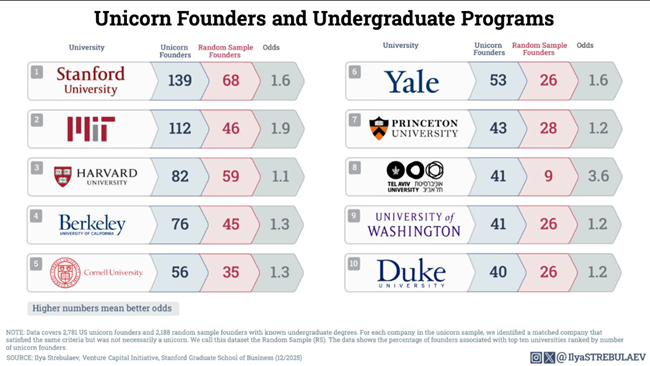
Tel Aviv University, consistently ranked among the world’s leading institutions in producing entrepreneurs and founders of unicorn companies, continues to serve as a central engine behind this achievement. The report highlights that the University’s research strength and academic human capital are key factors enabling Tel Aviv’s ecosystem to maintain resilience and growth, even during challenging periods.

Key Findings from the GSER 2025 Report

  • Ecosystem Value: Tel Aviv’s ecosystem generated an impressive $198 billion in economic value (between July 2022 and December 2024), driven by company valuations and successful exits.
  • Performance Leadership: Tel Aviv ranked 4th globally in the Performance indicator, which measures the value creation of technology companies.
  • Top 10 Worldwide in Knowledge & Talent: The city ranked among the global top 10 in the Knowledge indicator (measuring innovation and patents), as well as in Talent & Experience.

Scientific Drivers: AI, Cyber, and Life Sciences

The report emphasizes that Tel Aviv’s growth is fueled by three major sectors in which Tel Aviv University is considered a global research leader:

  • Artificial Intelligence (AI): The leading sector in both number of startups and funding rounds.
  • Cybersecurity: A field where Tel Aviv maintains an undisputed global leadership position.
  • Life Sciences: Recorded a 25% increase in total ecosystem value, reaching $2.7 billion.

“The Highest-Quality Entrepreneurs in the World”

Senior figures in the venture capital industry also praised the quality of Israeli entrepreneurship in the report. Jeff Horing, Co-Founder of Insight Partners, was quoted as saying:

“I have no doubt that Israel is home to the highest-quality entrepreneurs in the world, period. The combination of intelligence, diligence, and determination is among the strongest you can find.”

Tel Aviv University — ranked 7th worldwide (and first outside the United States) in the PitchBook ranking for producing entrepreneurs — continues to demonstrate that the close connection between advanced academic research and the high-tech industry is the true secret behind Tel Aviv’s success.

Read the full report >

Main Tel Aviv University Ranked in the Global Top 300 in the Shanghai Ranking 2025

The Department of Nursing Maintains Its Position as No. 1 in Israel

Tel Aviv University continues to strengthen its standing as one of the world’s leading research universities. In the Academic Ranking of World Universities (ARWU) — widely known as the Shanghai Ranking — for 2025, the University was ranked in the 201–300 range worldwide. This achievement places Tel Aviv University within the global elite of academic institutions, among thousands of universities evaluated each year.

National and Global Leadership Across Academic Fields

Alongside the overall institutional ranking, Tel Aviv University recorded particularly impressive achievements in the Global Ranking of Academic Subjects. Most notably, the Department of Nursing maintains its status as the leading and highest-quality program in Israel, ranking among the top 101–150 worldwide.

In addition, the University achieved top positions in the Shanghai Ranking in the following disciplines:

  • Law and Mathematics: ranked 76–100 worldwide
  • Business Administration and Economics: ranked 101–150 worldwide
  • Computer Science and Psychology: ranked 151–200 worldwide

A Benchmark for Research Quality

The Shanghai Ranking is considered one of the most objective and rigorous rankings in the academic world, as it focuses on clear indicators of research output. The ranking incorporates data such as the number of Highly Cited Researchers, publications in the most prestigious scientific journals, and overall research quality relative to institutional size.

Tel Aviv University’s placement within the global top 300, along with its leadership in key academic disciplines, further reinforces its position at the forefront of Israeli research on the international stage. This achievement complements the University’s strong performance in other major global rankings this year, including 216th place in the Times Higher Education ranking and 223rd place in the QS ranking.

Victoria

Phone: +61 3 9296 2065
Email: office@aftau.asn.au

New South Wales

Phone: +61 02 7241 8711
Email: admin@aftau.org.au

Western Australia

Phone: :+61 0418 46 5556
Email: davidsolomon@aftau.org.au