Tag: General

Most Cited: Tel Aviv University Ranked No. 1 in Israel in the International Webometrics Ranking

In citations per faculty publications, Tel Aviv University ranks among the global top ten out of 12,000 institutions worldwide

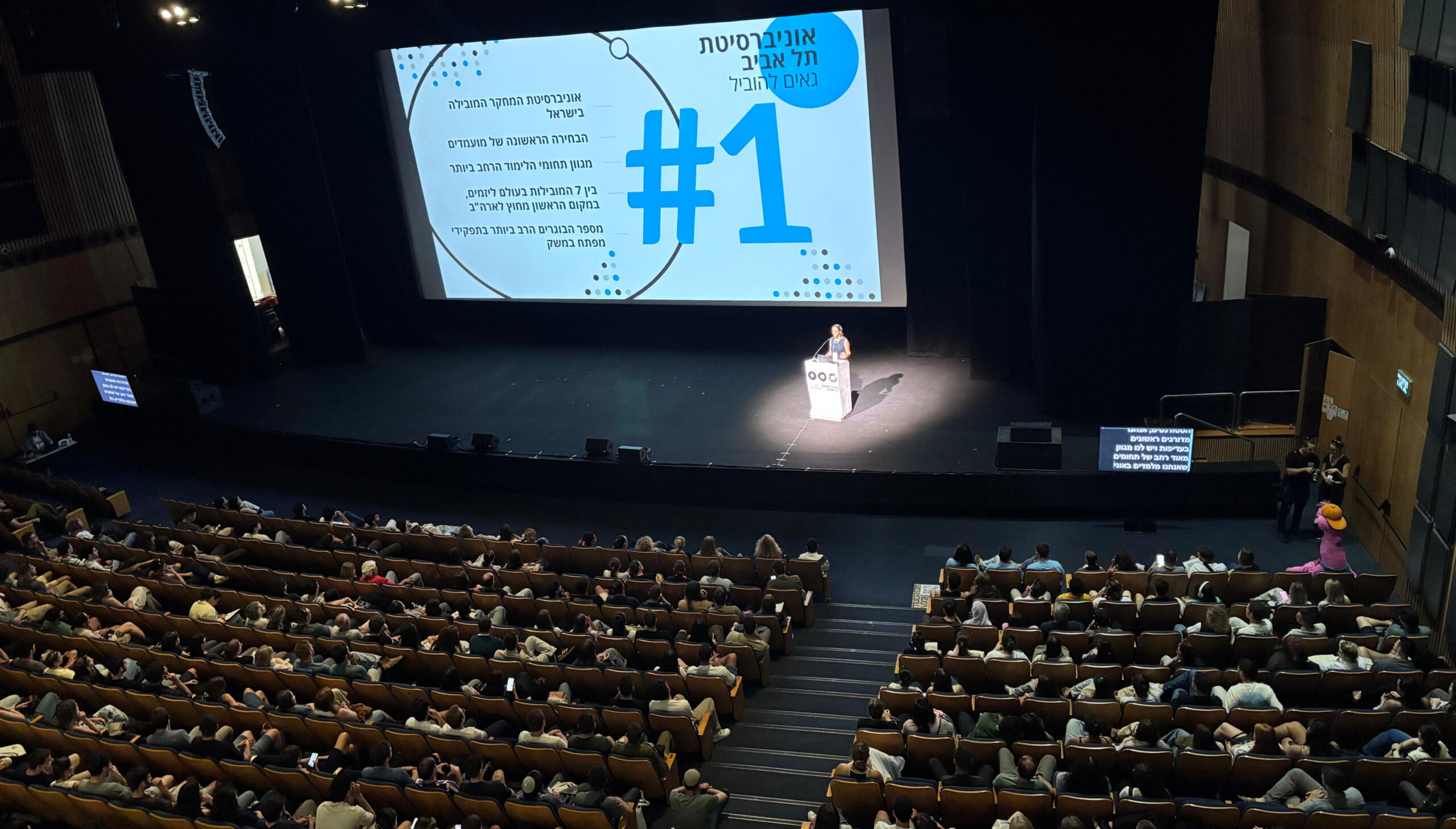
Tel Aviv University was ranked 152nd worldwide and first in Israel in the Webometrics Ranking, which evaluates the web presence of more than 32,000 higher education institutions across 263 countries.

The ranking is published twice a year and was created to promote the online dissemination of academic research and support open access to knowledge. Unlike other university rankings that focus solely on academic publications, Webometrics incorporates additional indicators reflecting the online activity of faculty members and researchers, such as impact (content quality), accessibility of research files, and excellence (the number of publications included in the top 10% of most-cited studies in their respective fields).

According to the January 2026 edition, Tel Aviv University ranked No. 1 in Israel and 152nd worldwide. The University’s position is strongly influenced by its high performance in quality indicators — including citations per faculty member ranking among the global top ten, as well as the number of citations received by leading researchers.

Key Highlights from the Ranking (January 2026 Edition)

  • National Leadership: Tel Aviv University ranks first in Israel, ahead of all other research universities in the country.
  • Asia Ranking: The University is ranked 49th in Asia.
  • Research Stability: Despite increasing competition and the growing number of ranked institutions, the University maintains a stable presence among the global top universities, with a strong emphasis on excellence indicators and research transparency.

The Hebrew University is ranked 285th, followed by the Technion at 378th, and the University of Haifa at 645th worldwide.

Major Achievement: Tel Aviv Climbs to 4th Place Worldwide in the Global Startup Ecosystem Ranking for 2025

According to the Global Startup Ecosystem Report (GSER) 2025 by Startup Genome

Tel Aviv University’s technology ecosystem has reached a historic milestone. According to the Global Startup Ecosystem Report (GSER) 2025 by Startup Genome, Tel Aviv has climbed to 4th place worldwide among the best startup ecosystems. This marks a one-place rise compared to last year, positioning the University and the city at the forefront of global innovation — ahead of major hubs such as Boston, Beijing, and Seoul.

Tel Aviv University, consistently ranked among the world’s leading institutions in producing entrepreneurs and founders of unicorn companies, continues to serve as a central engine behind this achievement. The report highlights that the University’s research strength and academic human capital are key factors enabling Tel Aviv’s ecosystem to maintain resilience and growth, even during challenging periods.

Key Findings from the GSER 2025 Report

  • Ecosystem Value: Tel Aviv’s ecosystem generated an impressive $198 billion in economic value (between July 2022 and December 2024), driven by company valuations and successful exits.
  • Performance Leadership: Tel Aviv ranked 4th globally in the Performance indicator, which measures the value creation of technology companies.
  • Top 10 Worldwide in Knowledge & Talent: The city ranked among the global top 10 in the Knowledge indicator (measuring innovation and patents), as well as in Talent & Experience.

Scientific Drivers: AI, Cyber, and Life Sciences

The report emphasizes that Tel Aviv’s growth is fueled by three major sectors in which Tel Aviv University is considered a global research leader:

  • Artificial Intelligence (AI): The leading sector in both number of startups and funding rounds.
  • Cybersecurity: A field where Tel Aviv maintains an undisputed global leadership position.
  • Life Sciences: Recorded a 25% increase in total ecosystem value, reaching $2.7 billion.

“The Highest-Quality Entrepreneurs in the World”

Senior figures in the venture capital industry also praised the quality of Israeli entrepreneurship in the report. Jeff Horing, Co-Founder of Insight Partners, was quoted as saying:

“I have no doubt that Israel is home to the highest-quality entrepreneurs in the world, period. The combination of intelligence, diligence, and determination is among the strongest you can find.”

Tel Aviv University — ranked 7th worldwide (and first outside the United States) in the PitchBook ranking for producing entrepreneurs — continues to demonstrate that the close connection between advanced academic research and the high-tech industry is the true secret behind Tel Aviv’s success.

Read the full report >

Main Tel Aviv University Ranked in the Global Top 300 in the Shanghai Ranking 2025

The Department of Nursing Maintains Its Position as No. 1 in Israel

Tel Aviv University continues to strengthen its standing as one of the world’s leading research universities. In the Academic Ranking of World Universities (ARWU) — widely known as the Shanghai Ranking — for 2025, the University was ranked in the 201–300 range worldwide. This achievement places Tel Aviv University within the global elite of academic institutions, among thousands of universities evaluated each year.

National and Global Leadership Across Academic Fields

Alongside the overall institutional ranking, Tel Aviv University recorded particularly impressive achievements in the Global Ranking of Academic Subjects. Most notably, the Department of Nursing maintains its status as the leading and highest-quality program in Israel, ranking among the top 101–150 worldwide.

In addition, the University achieved top positions in the Shanghai Ranking in the following disciplines:

  • Law and Mathematics: ranked 76–100 worldwide
  • Business Administration and Economics: ranked 101–150 worldwide
  • Computer Science and Psychology: ranked 151–200 worldwide

A Benchmark for Research Quality

The Shanghai Ranking is considered one of the most objective and rigorous rankings in the academic world, as it focuses on clear indicators of research output. The ranking incorporates data such as the number of Highly Cited Researchers, publications in the most prestigious scientific journals, and overall research quality relative to institutional size.

Tel Aviv University’s placement within the global top 300, along with its leadership in key academic disciplines, further reinforces its position at the forefront of Israeli research on the international stage. This achievement complements the University’s strong performance in other major global rankings this year, including 216th place in the Times Higher Education ranking and 223rd place in the QS ranking.

Tel Aviv University Ranked No. 1 in Israel and No. 213 Worldwide in the Taiwan Ranking 2025

A significant research achievement in the NTU ranking, which evaluates scientific excellence and the quality of academic publications

The prestigious Taiwan Ranking (NTU Ranking) for 2025 places Tel Aviv University first in Israel and 213th worldwide.

Based entirely on scientific publications, the Taiwan Ranking evaluates the top 1,000 universities in the world. The top five institutions in the ranking are Harvard University (USA), Stanford University (USA), University College London (UK), the University of Oxford (UK), and Johns Hopkins University (USA).

The ranking is considered one of the most reliable indicators for measuring research productivity, as it relies solely on objective data without reputation surveys. It is based on eight criteria that assess research productivity (number of publications), research impact (number of citations), and research excellence (the volume of papers published in leading journals).

Research Excellence and Scientific Quality

Tel Aviv University’s achievement this year is driven by the quality of its research and its impact on the international scientific community. The University received an overall score of 55.7, reflecting the strength of its researchers’ publications across disciplines.

In field-based rankings, the University recorded particularly notable achievements:

  • Life Sciences: Ranked 123rd worldwide
  • Clinical Medicine: Ranked 99th worldwide
  • Social Sciences: Ranked 301–350 worldwide

At the Forefront of Science in Israel

Tel Aviv University’s placement as No. 1 in Israel in the NTU ranking — ahead of the Hebrew University (256th), the Weizmann Institute (278th), and the Technion (374th) — highlights its role as a central scientific hub in the country.

This achievement joins the University’s other international rankings this year, including 216th place in the Times Higher Education ranking and 223rd place in the QS ranking, presenting a consistent picture of an institution that combines groundbreaking research with broad global recognition.


Tel Aviv University Ranked 199th in the U.S. News Rankings for 2025

The ranking is based on both quantitative and qualitative academic indicators, as well as global and regional peer assessments

Tel Aviv University continues to strengthen its standing as one of the world’s leading research institutions. In the latest U.S. News ranking for 2025–2026, the University is ranked 199th worldwide, 43rd in Asia, and 2nd in Israel.

This prestigious ranking, based on 13 indicators of academic quality and excellence, places the University at the forefront of global scientific activity, demonstrating impressive stability and a strong international research reputation among the global and regional academic community. Quantitative indicators include the number of publications, books, and conferences — accounting for 15% of the overall score — as well as 10% allocated to internationally co-authored publications.

The remaining 50% is based on qualitative indicators, including citation volume and impact, the number and share of publications ranked in the top 10% of most-cited papers, and those in the top 1% worldwide. Tel Aviv University performs particularly well in publication output (129th), citations (149th), citations among the top 1% (151st), and citations among the top 10% (165th).

Alongside the overall ranking, subject rankings were also published across 38 disciplines. Tel Aviv University is ranked in 35 fields — more than any other Israeli university. It ranks first among Israeli institutions in 17 fields and second in an additional 13. Notable positions include:

Humanities: 109

Exact Sciences: Computer Science (149), Mathematics (152), Physics (110)

Space Sciences: 119

Medical Fields: Gastroenterology (46), Infectious Diseases (75), Oncology (96)

Biomedical Sciences: Immunology (45), Neuroscience (134), Biology & Biochemistry (176), Optics (109)

Psychology & Psychiatry: 121

Full ranking >

Tel Aviv University Ranked No. 1 in Israel and No. 223 Worldwide in the 2026 QS Rankings

Continues to lead Israeli academia and maintain its position at the forefront of research and teaching on the international stage

Tel Aviv University maintains its standing as Israel’s leading academic institution. In the prestigious QS World University Rankings for 2026, the University was ranked 223rd worldwide. This year’s ranking is the most comprehensive ever published by QS, including more than 1,500 leading academic institutions from around 100 countries.

The QS Index is one of the world’s leading ranking systems for academic institutions. Each year, it reviews around 1,500 of the best universities globally, evaluating them based on teaching and research indicators such as citations, academic reputation, graduate employability, and international outlook. The ranking draws on approximately 17.5 million academic papers and around 240,000 interviews with academics and employers.

Leading Israeli Academia

Once again, Tel Aviv University reinforces its position as the most prominent and highest-quality academic institution in Israel. Its placement at 223rd worldwide puts it ahead of the Hebrew University (240th), the Technion (350th), and Ben-Gurion University (469th).

This leadership is especially evident in research quality indicators, where the gap between Tel Aviv University and other Israeli institutions is particularly striking — positioning the University at the forefront of Israeli research on the global stage.

Excellence in Research and Core Indicators

The ranking is based on nine key performance indicators, including academic reputation, employer reputation, faculty-student ratio, and research impact. Tel Aviv University’s achievements stand out in several areas:

  • Research Impact (Citations per Faculty): The University’s strongest achievement in the current ranking is reflected in its citations-per-faculty score, which measures the research impact and scientific contribution of academic staff. Tel Aviv University received an impressive score of 99.7, placing it among the leading research universities worldwide and highlighting the exceptional quality of research conducted on campus.
  • Employment Outcomes: A high score of 94.2, reflecting strong demand for the University’s graduates in both the global and local job markets.
  • Sustainability: A score of 77, expressing the institution’s commitment to social and environmental goals and its influence on the future of the planet.

The QS ranking joins the University’s recent achievement in the Times Higher Education (THE) Rankings for 2026, where it was ranked 216th worldwide, completing a picture of steady growth and leadership across the most important international indices.

Israeli universities ranking >

Full ranking >


On the Rise: Tel Aviv University Climbs to 216th Place Worldwide in the 2026 TIMES Ranking

Ranked the top academic institution in Israel out of 2,191 universities included in the prestigious index

Tel Aviv University continues to strengthen its position at the forefront of global academia. In the Times Higher Education World University Rankings for 2026, the University recorded a significant rise, ranking 216th worldwide — an improvement of 12 places compared to last year’s ranking of 228. In addition, the University retains its position as Israel’s top-ranked institution for another consecutive year.

This achievement is particularly notable given that this year’s ranking is the most comprehensive in its history, encompassing 2,191 research institutions from 115 countries. The rise in ranking — placing Tel Aviv University within the top decile of ranked institutions worldwide — reflects its strong research and academic performance amid intensifying global competition.

Excellence in Research and Core Indicators

The ranking is based on 18 performance indicators that evaluate institutions across five key areas: teaching, research environment, research quality, industry engagement, and international outlook.

This year’s improved global standing is driven by strong performance across core metrics. Tel Aviv University stands out especially in Research Quality, which measures the scientific impact of researchers’ publications and citation volume, as well as in Research Environment. In both indicators, the University ranked first in Israel.

Achievements by Subject (Subject Rankings)

Alongside the overall ranking, Tel Aviv University recorded impressive achievements across a range of disciplines. Among the leading fields ranked at the global forefront for 2026:

Computer Science and Law: continue to lead globally, ranked 101–125

Psychology: ranked 126–150

Medicine & Health Sciences and Education: ranked 151–175

Arts & Humanities: ranked 176–200

Innovation and Industry Engagement

In the area of industry engagement, the University demonstrates significant strength, reflecting its international reputation among employers and its ability to translate academic research into applied innovation. This complements additional international rankings that position Tel Aviv University among the world’s leading universities (outside the United States) in producing entrepreneurs and founders of unicorn companies.

The rise to 216th place marks another milestone in a series of recent international achievements for the University and further reinforces its standing as a leading force in research and teaching in Israel.

Tel Aviv University Launches an International MA in Jewish Studies

An English-taught, interdisciplinary program exploring Jewish civilization from antiquity to the present

Tel Aviv University (TAU) invites students from around the world to apply to its International MA in Jewish Studies, a dynamic program in English offering an in-depth exploration of Jewish civilization from antiquity to the present.

Hosted within the framework of TAU’s Faculty of Humanities and in collaboration with the Lowy International School and the Koret Center for Jewish Civilization the program offers a broad, interdisciplinary curriculum encompassing Biblical studies, Jewish and Semitic languages, and Jewish history as well as Jewish culture, literature and thought.

Classes are taught in English by internationally renowned scholars and are offered on TAU’s vibrant campus, with select hybrid and Zoom-based options.

A distinctive feature of the program is its academic partnership with Goethe University Frankfurt, one of Europe’s leading centers for religious studies and Jewish history, culture, and thought. Through this collaborative partnership, students can enroll in English-language courses offered by the Jewish Studies program and the religious studies program at Goethe University, further enhancing the program’s international scope.

Current courses include:

The Dialogical Turn in Modern Jewish Philosophy — Prof. Christian Wiese & Prof. Menachem Fisch

The Theology of the Hebrew Bible — Prof. Dalit Rom-Shiloni

The Dead Sea Scrolls and the Hebrew Bible: Transmission, Interpretation, and Ideology — Prof. Eshbal Ratzon

The Jewish Magical Tradition: An Introduction — Prof. Gideon Bohak

Early Modern Ashkenaz: Jewish Thought and Culture in the German Lands – Prof. Maoz Kahana & Prof. Rebekka Voss

Modern Jewish Politics: Between Power and Powerlessness — Prof. Scott Ury

Sephardi and Mizrahi Jews in Cross-Cultural Settings: Past and Present — Dr. Noah Gerber

“Through a wide range of courses on various aspects of Jewish studies, TAU’s MA program in Jewish Studies offers students the opportunity to study with leading scholars from TAU and Goethe University Frankfurt alongside a dynamic cohort of international students from Israel, Germany, and a number of other countries.”

Prof. Scott Ury, Academic Director, International MA in Jewish Studies, Dept. of Jewish History, TAU.

In addition to academic studies, students may enroll in intensive Hebrew language courses, participate in TAU’s Yiddish Summer Program, and take a wide range of additional courses on TAU’s campus offered in English and, for those with sufficient proficiency, in Hebrew.

TAU’s International MA in Jewish Studies provides students with a unique opportunity to engage directly with Israeli society, gaining critical insight into the historical, cultural, and political background of Israel as well as the crises currently facing the broader region.

As Alena R., a visiting MA Student from Goethe University notes:

“Studying in Tel Aviv is a great opportunity, because it allows for multiple ways of personal and academic growth: Experiencing living Israeli and Jewish culture, learning Hebrew, attending English seminars and getting research insights to current research by attending colloquia. The classes are diverse and interesting, and the teachers are dedicated, open, and supportive.

The program is open to students holding a BA in the Humanities, and in certain cases BA degrees in the Social Sciences or other fields. It is well-suited for those planning to pursue doctoral studies in related fields, careers in education, journalism or politics, or those who wish to work in non-profit or cultural organizations.

The MA can be completed in three to four semesters. Students can integrate some Zoom-based courses and intensive summer courses at TAU as well as several Zoom courses through Goethe University Frankfurt into their program of study. TAU also offers opportunities for student exchange with Goethe University that allow students to spend a semester at our partner university in Frankfurt.

A limited number of scholarships are available for students enrolling in the Spring Semester, March 15, 2026-June 30, 2026.

For more information about the program, admissions and the application process, please visit the Jewish Studies program website or contact: majs@tauex.tau.ac.il.


Undergraduate Studies at Tel Aviv University Boost Unicorn Founder Odds by 260%

New Stanford research places TAU among the world’s leading universities for entrepreneurial impact and the only one outside the U.S.

A study published by Prof. Ilya Strebulaev of Stanford University’s Graduate School of Business finds that undergraduate studies at Tel Aviv University increase the likelihood of becoming a founder of a unicorn company by 260% – the highest rate among all universities included in the study, which also examined leading U.S. institutions.

As part of the study published last week, Prof. Strebulaev, entrepreneurship researcher from Stanford University’s examined the impact of leading academic institutions on the success prospects of entrepreneurs who founded venture capital–backed companies.

The study is based on data from 2,781 founders of U.S. based unicorn companies, alongside 2,188 founders of venture capital–backed companies, randomly selected for comparison. The comparison group was matched by the year of the company’s first venture capital round, to enable an accurate comparison between the groups.

Alongside Tel Aviv University, the top tier of the index includes leading American universities. Undergraduate studies at the Massachusetts Institute of Technology (MIT) increase the odds of becoming a unicorn founder by 90%, while Stanford University and Yale University show an increase of 60%, and the University of California, Berkeley, and Cornell University show an increase of 30%. In terms of the absolute number of unicorn founders, Stanford University ranks first, with 139 founders, representing 5.0% of the total sample.

Tel Aviv University, the only institution outside the United States included in this index, ranks eighth among the world’s top ten universities in producing unicorn founders, immediately after Princeton University and ahead of the University of Washington, and stands out with the highest relative advantage of a 260% increase in its graduates’ likelihood of founding a successful unicorn.

The accompanying chart presents the top ten universities, ranked by the number of unicorn founders who earned their undergraduate degree at each institution.

Credit: Stanford University Graduate School of Business, Venture Capital Initiative

Prof. Moshe Zviran, TAU’s Chief Entrepreneurship and Innovation Officer at Tel Aviv University and former dean of the  Coller School of Management, said: “The new Stanford University study reinforces Tel Aviv University’s unique position as a leading institution that provides its graduates with a significant advantage in the world of entrepreneurship. The high increase in the likelihood of our students becoming unicorn founders reflects a combination of academic excellence, entrepreneurial spirit, and the strengthening connection between education, research, and innovation.”

The index was conducted with the support of the Venture Capital Initiative of Stanford University’s Graduate School of Business.

How Tel Aviv University’s Psychedelic Research is Revolutionizing Trauma Care

Inside Israel’s first center dedicated to psychoactive medicine and brain-informed therapy

As Israel grapples with the aftermath of October 7th and the ensuing war, it is facing a mental health crisis of unprecedented proportions. The demand for treatment has quickly outpaced what traditional therapy can deliver and the need for innovation is urgent. At Tel Aviv University’s Institute for Psychedelic Research (IPR), scientists and clinicians are developing a bold alternative grounded in a simple premise: healing depends on restoring the connections that trauma erodes. 

“The loss of connection is the silent wound that lies at the core of trauma, depression and addiction. It is the feeling of being cut off from yourself, from others, from the world,” says Prof. Talma Hendler, Director of the Institute and a member jointly of TAU’s Gray Faculty of Medical & Health Sciences and the School of Psychological Sciences. “Our work is about helping people reconnect in a real, lasting way.”

Founded two years ago under the auspices of TAU’s Sagol School of Neuroscience, and embedded within Ichilov Hospital, the IPR is the first in Israel to explore the use of psychoactive medicine for treating post-traumatic stress disorder (PTSD), depression, chronic pain and other conditions at the intersection of neurology and psychiatry. The launch of the project was made possible by the generous contributions of TAU supporters Jeremy Coller, Dr. David B. Katzin, and Dr. Dmitry Repin. Moreover, a dedicated laboratory is being built for psychedelic research at the Miriam and Moshe Shuster Building for the Center for Traumatic Stress and Resilience, now nearing completion.

Closing the Gap Between Neuroscience and Therapy

Despite decades of research on how trauma affects the brain, most therapy still relies entirely on conversation and assessments based on subjective report and impressions. After two decades of neurobiological research on human stress and trauma, Prof. Talma Hendler’s team is trying to bridge the translation gap between neuroscience and therapy with an approach they call Brain-Informed Psychotherapy.

Using technologies such as Prism*, pioneered by Hendler’s lab, patients learn to regulate the deep emotional circuits involved in fear and stress. These sessions are paired with psychotherapy that helps them reinterpret traumatic memories, rebuild trust, and restore agency.

“There’s a moment when a patient realizes, ‘I can actually influence my own brain state,’” says Hendler. “That moment can change everything.”

Providing a Window for Change

Psychedelic compounds like psilocybin (hallucinogenic mushrooms), MDMA and ketamine are gaining attention worldwide because they can temporarily make the brain incredibly flexible, a state scientists call a “window for change.” 
“Think of the brain as a complex traffic system with multiple hubs. Each hub is a network of regions with its own role: one helps with control and regulation, another detects threat, yet another provides memory and context. In a healthy brain, traffic moves flexibly, and there are many open routes between the hubs.

In PTSD, these routes become rigid. When the alarm network activates as a response to a trauma trigger, the control and memory networks are blocked from sending information that the person is actually safe, so the alarm keeps escalating,” Hendler explains.
Psychedelic substances temporarily change this maladaptive flow. Over one to three weeks, new routes open and blocked networks begin exchanging information again. 
“In that window of renewed plasticity, psychotherapy can gently redirect the system — helping the brain relearn safety, rebuild balance, and reconnect with oneself and others in reality,” Hendler says. “The goal is to use that brief period of biological malleability to create a lasting, positive change in the neural underpins of mental health.”

To achieve this mission, the IPR team — an interdisciplinary mix of clinicians, neuroscientists, and psychologists — is developing a new model of mental health care, one that combines cutting-edge brain science with individual-centered, brain-informed psychotherapy. “The drug opens the door,” Hendler notes, “but lasting recovery depends on the steps that follow: patient involvement, brain-informed clinical approach and the supportive community that lead toward wholesome healing.” 

Early Results: Hope Returning 

One of the Institute’s first major successes came from a seven-day ketamine-assisted protocol for chronic PTSD, developed in partnership with Yale University. The early results were groundbreaking: out of 35 participants, 80 percent experienced a meaningful reduction in PTSD symptoms. “Out of the group that received Ketamine (vs control drugs), 40 percent no longer met diagnostic criteria for PTSD three months after the treatment”, says Dr Jacob Nimrod Keynan, the scientific manager of IPR. 

“For the first time in years, I felt like I could get better,” one participant said. “It gave me energy to keep fighting for myself.”

Psilocybin appears to offer an even longer and more powerful window for therapeutic change. IPR is the first research center in Israel to administer synthetic psilocybin to humans, and the Institute is now running Israel’s first clinical and imaging study of psilocybin-assisted short-term psychotherapy for PTSD. According to Dr Keynan, the first two patients — both combat veterans— experienced substantial symptom relief and no longer met PTSD diagnosis criteria following the 3-week treatment. Importantly, they further reported meaningful improvements in depression, emotional openness and day-to-day functioning, even after three months. 

One described a shift he didn’t expect: “The treatment helped me understand how to reconnect with my daughter — and why I hadn’t been able to before.”

Where Trauma Care Is Heading

The next frontier, IPR researchers say, is combining psilocybin therapy with other brain-informed therapies such as neurofeedback or magnetic stimulation to strengthen the brain circuits that sustain recovery. In the long term, the IPR team is exploring AI-supported tools, as well as music and virtual reality, to help patients track insights, organize their emotional work, and carry therapeutic momentum into daily life.

Professor Talma Hendler, speaking at the IPR inauguration during the 2023 TAU Board of Governors meeting. 

“We aim to redesign trauma care from the ground up,” says Hendler. “Precise, measurable, deeply personal, and focused on restoring neural and psychological connections.”

As Israel continues to confront profound psychological wounds, IRP’s work offers a rare mix of scientific rigor and hope. It suggests that even in times of immense pain, the brain can reopen, the mind can reorient, and people can find their way back to themselves.
“Trauma disconnects,” Hendler reflects. “Our job is to help people feel connected again — to their emotions, their relationships, their lives.”

—————————————————————————————————————–

*Prism is a brain-training therapy. It uses brain scans to help people see what’s happening in their brain in real time and learn how to change it.
The therapy focuses on different areas of the brain, such as the amygdala, a part of the brain that controls emotions like fear and stress. By getting live feedback from brain signals, people can practice calming or adjusting this brain activity. Over time, this can help improve emotional control.

This approach is being explored for treating conditions like PTSD and major depressive disorder. In 2023, the Hendler lab’s spinoff company, GrayMatters Health, received FDA approval for the technique.

Victoria

Phone: +61 3 9296 2065
Email: office@aftau.asn.au

New South Wales

Phone: +61 02 7241 8711
Email: admin@aftau.org.au

Western Australia

Phone: :+61 0418 46 5556
Email: davidsolomon@aftau.org.au