Tag: Archeology

Unravelling Recycling Practices from 500,000 Years Ago

The urge to collect in the prehistoric world: preserving memory of ancestors and connectedness with place and time.

What drove prehistoric humans to collect and recycle flint tools that had been made, used, and discarded by their predecessors? In a first-of-its-kind study at Tel Aviv University, researchers examined flint tools from one layer at the 500,000-year-old prehistoric site of Revadim in the south of Israel’s Coastal Plain, and propose a novel explanation: prehistoric humans, just like us, were collectors by nature and culture. The study suggests that they had an emotional urge to collect old human-made artefacts, mostly as a means for preserving the memory of their ancestors and maintaining their connectedness with place and time.

The study was led by PhD student Bar Efrati and Prof. Ran Barkai of the Jacob M. Alkow Department of Archaeology and Ancient Near Eastern Cultures at TAU’s The Lester and Sally Entin Faculty of Humanities, in collaboration with Dr. Flavia Venditti from the University of Tubingen in Germany and Prof. Stella Nunziante Cesaro from the Sapienza University of Rome, Italy. The paper appeared in the prestigious scientific journal Scientific Reports, published by Nature.

Prehistoric Vintage Tools

Bar Efrati explains that stone tools with two lifecycles have been found at prehistoric sites all over the world, but the phenomenon has never been thoroughly investigated. In the current study, the researchers focused on a specific layer at Revadim – a large, open-air, multi-layered site in the south of Israel’s Coastal Plain, dated to about 500,000 years ago. The rich findings at Revadim suggest that this was a popular spot in the prehistoric landscape, revisited over and over again by early humans drawn by an abundance of wildlife, including elephants. Moreover, the area is rich with good-quality flint, and most tools found at Revadim were in fact made of fresh flint. 

“The big question is: Why did they do it?” says Bar Efrati. “Why did prehistoric humans collect and recycle actual tools originally produced, used, and discarded by their predecessors, many years earlier? Scarcity of raw materials was clearly not the reason at Revadim, where good-quality flint is easy to come by. Nor was the motivation merely functional, since the recycled tools were neither unusual in form nor uniquely suitable for any specific use.”

Scars that Reveal the Past

The key to identifying the recycled tools and understanding their history is the patina – a chemical coating which forms on flint when it is exposed to the elements for a long period of time. Thus, a discarded flint tool that lay on the ground for decades or centuries accumulated an easily identifiable layer of patina, which is different in both color and texture from the scars of a second cycle of processing that exposed the original color and texture of flint.

In the current study, 49 flint tools with two lifecycles were examined. Produced and used in their first lifecycle, these tools were abandoned, and years later, after accumulating a layer of patina, they were collected, reworked, and used again. The individuals who recycled each tool removed the patina, exposing fresh flint, and shaped a new active edge. Both edges, the old and the new, were examined by the researchers under two kinds of microscopes, and via various chemical analyses, in search of use-wear marks and/or organic residues. In the case of 28 tools, use-wear marks were found on the old and/or new edges, and in 13 tools, organic residues were detected, evidence of contact with animal bones or fat.

Surprisingly, the tools had been used for very different purposes in their two lifecycles – the older edges primarily for cutting, and the newer edges for scraping (processing soft materials like leather and bone). Another baffling discovery: in their second lifecycle the tools were reshaped in a very specific and minimal manner, preserving the original form of the tool, including its patina, and only slightly modifying the active edge.

Recycled Tools as Keepsakes

Prof. Ran Barkai: “Based on our findings, we propose that prehistoric humans collected and recycled old tools because they attached significance to items made by their predecessors.”

“Imagine a prehistoric human walking through the landscape 500,000 years ago, when an old stone tool catches his eye. The tool means something to him – it carries the memory of his ancestors or evokes a connection to a certain place. He picks it up and weighs it in his hands. The artifact pleases him, so he decides to take it ‘home’. Understanding that daily use can preserve and even enhance the memory, he retouches the edge for his own use, but takes care not to alter the overall shape – in honor of the first manufacturer. In a modern analogy, the prehistoric human may be likened to a young farmer still plowing his fields with his great-grandfather’s rusty old tractor, replacing parts now and then, but preserving the good old machine as is, because it symbolizes his family’s bond with the land.”

“In fact,” says Barkai, “the more we study early humans, we learn to appreciate them, their intelligence, and their capabilities. Moreover, we discover that they were not so different from us. This study suggests that collectors and the urge to collect may be as old as humankind. Just like us, our early ancestors attached great importance to old artifacts, preserving them as significant memory objects – a bond with older worlds and important places in the landscape.”

Featured image: From Left to Right: Prof. Ran Barkai & Bar Efrati

Finding the Optimal Location for the Tribal Bonfire

Early humans’ placement of cave hearths ensured maximum benefit and minimum smoke exposure.

In a first-of-its kind study, the researchers developed a software-based smoke dispersal simulation model and applied it to a known prehistoric site. They discovered that the early humans who occupied the cave had placed their hearth at the optimal location – enabling maximum utilization of the fire for their activities and needs while exposing them to a minimal amount of smoke. The groundbreaking study provides evidence for high cognitive abilities in early humans who lived 170,000 years ago.

The study was led by PhD student Yafit Kedar, and Prof. Ran Barkai from the Jacob M. Alkow Department of Archaeology and Ancient Near Eastern Cultures at The Lester and Sally Entin Faculty of Humanities, together with Dr. Gil Kedar. The paper was published in Scientific Reports.

In the Back of the Cave? Or towards the front?

The use of fire by early humans has been widely debated by researchers for many years, regarding questions such as: At what point in their evolution did humans learn how to control fire and ignite it at will? When did they begin to use it on a daily basis? Did they use the inner space of the cave efficiently in relation to the fire? While all researchers agree that modern humans were capable of all these things, the dispute continues about the skills and abilities of earlier types of humans. One focal issue in the debate is the location of hearths in caves occupied by early humans for long periods of time.

“Multilayered hearths have been found in many caves, indicating that fires had been lit at the same spot over many years,” says Yafit Kedar. “In previous studies, using a software-based model of air circulation in caves, along with a simulator of smoke dispersal in a closed space, we found that the optimal location for minimal smoke exposure in the winter was at the back of the cave. The least favorable location was the cave’s entrance.”

Humans Need Balance

In the current study, the researchers applied their smoke dispersal model to an extensively studied prehistoric site – the Lazaret Cave in southeastern France, inhabited by early humans around 170-150 thousand years ago. “According to our model, based on previous studies, placing the hearth at the back of the cave would have reduced smoke density to a minimum, allowing the smoke to circulate out of the cave right next to the ceiling,” explains Kedar. “However, in the archaeological layers we examined, the hearth was located at the center of the cave.”

The team tried to understand why the occupants had chosen this spot, and whether smoke dispersal had been a significant consideration in the cave’s spatial division into activity areas. The researchers performed a range of smoke dispersal simulations for 16 hypothetical hearth locations inside the 290sqm cave. To understand the health implications of smoke exposure, measurements were compared with the average smoke exposure recommendations of the World Health Organization.

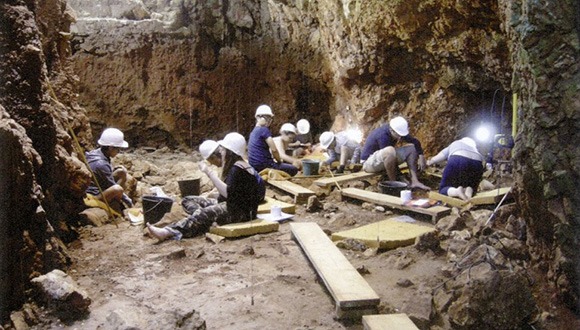
Excavations at the Lazaret Cave, France (photo: De Lumley, M. A. néandertalisation (pp. 664-p). CNRS éditions. (2018Les restes humains fossiles de la grotte du Lazaret. Nice, Alpes-Maritimes, France. Des Homo erectus européens évolués en voie de)

The researchers found that the average smoke density, based on measuring the number of particles per spatial unit, is in fact minimal when the hearth is located at the back of the cave – just as their model had predicted. However, Yafit Kedar and Dr. Gil Kedar explain that they also discovered that “In this situation, the area with low smoke density, most suitable for prolonged activity, is relatively distant from the hearth itself. Early humans needed a balance – a hearth close to which they could work, cook, eat, sleep, get together, warm themselves, etc. while exposed to a minimum amount of smoke. Ultimately, when all needs are taken into consideration – daily activities vs. the damages of smoke exposure – the occupants placed their hearth at the optimal spot in the cave.”

Our Ancestors Nailed It

The study identified a 25sqm area in the cave which would be optimal for locating the hearth in order to enjoy its benefits while avoiding too much exposure to smoke. Astonishingly, in the several strata examined in this study, the early humans actually did place their hearth within this area. 

“Our study shows that early humans were able, with no sensors or simulators, to choose the perfect location for their hearth and manage the cave’s space as early as 170,000 years ago – long before the advent of modern humans in Europe. This ability reflects ingenuity, experience, and planned action, as well as awareness of the health damage caused by smoke exposure. In addition, the simulation model we developed can assist archaeologists excavating new sites, enabling them to look for hearths and activity areas at their optimal locations,” concludes Prof. Barkai.

In upcoming studies, the researchers intend to use their model to investigate the influence of different fuels on smoke dispersal, use of the cave with an active hearth at different times of year, use of several hearths simultaneously, and more.

Start Up Nation in Ancient Canaan

Thanks to advanced management skills, the Arava became the copper power of the ancient world.

A new Tel Aviv University study has determined that thanks to advanced management methods and impressive technological creativity, about three thousand years ago, the Arava Valley’s [located deep in the Southern Negev desert in Israel, along the Jordanian border] copper industry managed to thrive and become the largest and most advanced smelting center in the ancient world. The study was conducted by graduate student David Luria of TAU’s Jacob M. Alkow Department of Archaeology and Ancient Near Eastern Cultures and The Sonia & Marco Nadler Institute of Archaeology, and is being published in the prestigious journal PLOS ONE.

Ancient Practice of “Trial and Error”

According to Luria, the copper industry in Canaan at that time was concentrated in two large mining areas – one in Timna (north of Eilat) and the other in Faynan (in the northern Arava, in Jordan). Previous research on the subject has claimed that the high level of technology employed there was made possible thanks to Egyptian technologies brought to the region during the voyage of the Egyptian Pharoah Shishak in 925 BC. This theory was strengthened in 2014 following the discovery of a scarab bearing the figure of Shishak in Faynan, and again later in 2019, following the development of a new scientific model that claimed that a sudden technological leap had taken place around the time of Shishak’s journey.

Luria, on the other hand, argues that the great economic and technological success of the copper industry in the Arava was not related to Egyptian capabilities, but rather to the talent of the Arava people, who learned to use the two advanced methods we know today as “trial and error” and “scaling up.” “Obviously these terms were not in use in ancient times, but the application of their practical principles was made possible due to a basic understanding of engineering and common sense, which were seen in other places in the ancient world as well,” says Luria.

Luria explains that the “trial and error” method allowed the Arava metalworkers to slowly improve technological processes, as well as to increase the volume and quality of production. In addition, “scaling up” made it possible to increase the dimensions of the existing means of production using materials and processes that were common at the time, thereby developing advanced production equipment within a short amount of time and with minimum cost and technological risk.

The Secret Behind the Technological Success

“Shishak’s expedition was not intended to physically take over the copper mines in the Arava, but rather to formulate a long-term agreement with the Arava people in order to bolster local production and thus increase copper exports to Egypt, which was suffering from local production difficulties at the time,” Luria says.

“It appears that the secret of the success of the ancient copper industry in the Arava lies in the skills and abilities of efficient managers, who were assisted at every stage of their decision-making by talented technological experts. Archeology today can’t identify who these executives were, but a careful analysis of the deposits left in the area can tell us an accurate story. These findings are the residues of copper production that have accumulated as heaps of waste that can be dated, and whose size allows us to assess the volume of production at any given time. Moreover, by conducting a chemical analysis of the copper content remaining in the waste, we can determine the quality of the production; when the amount of copper in the waste diminishes, we can conclude that the process had become more efficient.”

Luria also says that traces detected at these sites show that throughout the production period, the management team was able to close inefficient mines and open more efficient ones. Moreover, at certain points a decision was taken to reuse waste from earlier periods, which was produced in less efficient processes in which a lot of copper remained, rather than use the pure mineral. These decisions could not have been made without an excellent technical team that backed management decisions with regular technological testing. The management also engaged in extensive marketing of the copper throughout the ancient world.

“The important lesson to take away from this technological success is that the high-tech savvy of individuals – educated and energetic people who lived here in the first millennium BCE – succeeded, just like it does today, in bringing about a huge revolution in the local economy,” Luria concludes. “As they say, there is nothing new under the sun.”

Featured image: David Luria

Health Revelations from Ancient Jerusalem

Relic provides “window into the lives of people in ancient times”.

‘Who is wealthy?… Rabbi Yosef says: Anyone who has a bathroom close to his table.’ (The Talmud, Bavli Shabbat 25: 2).

Having a toilet was indeed an indicator of wealth in Jerusalem 2,700 years ago. The wealth was, however, no guarantee for good health, as a joint study by Tel Aviv University and the Israel Antiquities Authority (IAA) shows that even the wealthy residents of Jerusalem at that time suffered from diseases and epidemics. This became evident as an ancient toilet was uncovered in the garden of a luxury estate uncovered at the Armon Hanatziv Promenade in Jerusalem, and the researchers concluded that while the owners were undoubtable wealthy they also suffered from a range of intestinal parasites.

Rich, Yet in Poor Health

The study was led by Dr. Dafna Langgut of Tel Aviv University’s Jacob M. Alkow Department of Archaeology and Ancient Near Eastern Cultures, director of The Laboratory of Archaeobotany and Ancient Environments at The Sonia & Marco Nadler Institute of Archaeology and The Steinhardt Museum of Natural History. The research was published in the recent edition of the International Journal of Paleopathology.

Ya’akov Billig, who directed the excavation of the villa on behalf of the Israel Antiques Authority, dated the villa to the Late Iron Age of the 7th century BC. Aside from the toilet, magnificent stone artifacts of extraordinary workmanship were found at the site, such as decorated stone capitals of a quantity and quality never before observed in ancient Israel.

Langgut and Billig were not surprised by the recovery of a toilet in the garden of the estate, explaining that toilet facilities were extremely rare at that time and were a status symbol – a luxury facility that only the rich and high-ranking could afford.

Dr. Langgut collected sediment samples from underneath the stone toilet, chemically extracted the parasite eggs, scrutinized them under a light microscope, and identified them. The egg remains were discovered as part of a salvage excavation by the Israel Antiquities Authority, recently carried out at the Armon Hanatziv and funded by the Ir David Foundation. “The findings of this study are among the earliest observed in Israel to date,” she says. “These are durable eggs, and under the special conditions provided by the cesspit, they survived for nearly 2,700 years.”

She says the parasites that were found cause symptoms like abdominal pain, nausea, diarrhea, and itching. Some of them are especially dangerous for children and can lead to malnutrition, developmental delays, nervous system damage, and, in extreme cases, even death. 


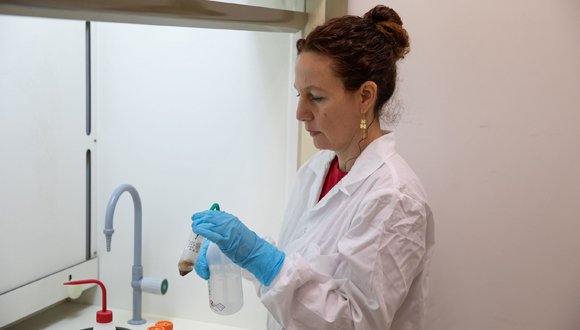
Dr. Dafna Langgut at the Laboratory of Archaeobotany and Ancient Environments

Intestinal disease at the time, she explains may have been the result of either poor sanitary conditions, the use of human feces to fertilize field crops or the consumption of improperly cooked beef or pork. In the absence of medicine, its recovery was difficult to impossible, and those infected could suffer from the parasites for the rest of their lives. Therefore, it is quite possible that the findings of the study indicate a bothersome and long-lasting infectious that affected the entire population. Langgut points out that these parasites still exist today, but the modern Western world has developed effective diagnostic means and medications, so they don’t turn into an epidemic.  

The examination of the toilet samples came as Dr. Langgut was developing a new field of research called ‘archeoparasitology’, whereby researchers identify microscopic remains of intestinal worm eggs to learn about the history of diseases and epidemics. This area provides new information regarding human hygiene, lifestyle, and sanitary conditions.

“Studies like this one help us document the history of infectious diseases in our area and provide us with a window into the lives of people in ancient times,” Dr. Langgut concludes.


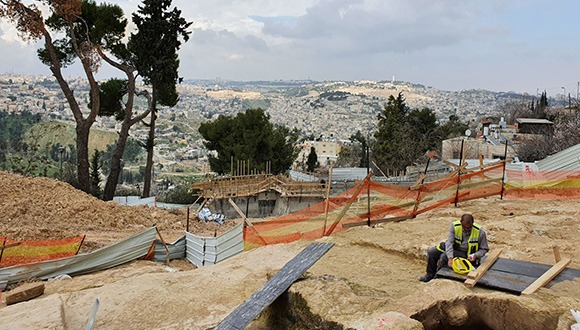
The excavation site at the Armon Hanatziv Promenade in the Jerusalem where the toilet was found (Photo: Yuli Schwartz, Israel Antiquities Authority)

Featured image: The stone toilet seat found during the 2019 excavation at Armon Hanatziv.

Victoria

Phone: +61 3 9296 2065
Email: office@aftau.asn.au

New South Wales

Phone: +61 02 7241 8711
Email: admin@aftau.org.au

Western Australia

Phone: :+61 0418 46 5556
Email: davidsolomon@aftau.org.au