

Tel Aviv University Urgently Launches a National PTSD Clinic for Civilians and Soldiers
Responding to the massive incidence of PTSD following the war.
Tel Aviv University is launching a National PTSD Clinic in response to urgent needs. The Clinic serves as the therapeutic arm of TAU’s National Center for Traumatic Stress and Resilience, which combines research, training, and intervention in the field of post-trauma and related mental health disorders. In the coming year, the Clinic is expected to treat large numbers of civilians and reserve soldiers suffering from PTSD as a result of the war or other causes. The Clinic will receive patients referred by the Ministry of Defense and the National Insurance Institute, as well as private citizens seeking treatment. Therapists are top PTSD clinicians, whose cumulative experience adds up to hundreds of years.
Officials at TAU stress that the construction of the Miriam and Moshe Shuster Building for the Center for Traumatic Stress and Resilience, including a Treatment Clinic, cutting-edge laboratories and the Sam and Agi Moss Wing, commenced a year ago, with the intention of opening it in 2025. However, due to the war, TAU decided to make the necessary adaptations and open the Clinic immediately in specially allocated temporary premises. The goal is to enable an immediate therapeutic response to as many patients as possible, thereby bolstering Israel’s depleted mental health system which, even before the war, was unable to meet the population’s real needs. Civilians privately seeking therapy will pay a nominal fee. The generosity of many donors in Israel and worldwide, with special thanks to Peter and Elaine Smaller, has enabled the Clinic’s establishment.
Prof. Yair Bar-Haim, Head of the Center: “Cautious estimates speak of 30,000 new cases of PTSD and related pathologies resulting from the war. We have harnessed TAU’s academic and therapeutic resources to provide an immediate response to as many sufferers as possible.”
In the first stage, the Clinic will provide treatments with proven efficacy for adults. Reserve soldiers referred by the Rehabilitation Department of the Ministry of Defense will also be treated. Later on, as the program for adults is consolidated, additional programs for children, teens, and families will be offered as well. The Clinic will be led by Dr. Ofir Levi, formerly Commander of the IDF’s Unit for PTSD, and currently teaching at TAU’s Bob Shapell School of Social Work. The National Center for Traumatic Stress and Resilience is headed by Prof. Yair Bar Haim of TAU’s School of Psychological Sciences.
TAU President Prof. Ariel Porat: “Until Oct. 6th, our plan was to open the Clinic of our National Center for Traumatic Stress and Resilience about two years from now. However, the events of Oct. 7 convinced us that the Clinic must be launched as soon as possible. Unfortunately, PTSD has become a nationwide affliction in Israel, and we as a university are aware of the needs of Israeli society, especially now, at one of the most difficult times we have known as a country and as a people. We intend to bring relief and new hope to thousands of soldiers and civilians emotionally impacted by the massacre and the war. I am certain that the Clinic will expand its activities in the coming years and make an important contribution to the State of Israel – thanks in great part to our bighearted and committed donors, and especially Peter and Elaine Smaller.
Prof. Yair Bar-Haim, Head of the Center: “Right after Oct. 7, when information about the extent of the trauma began to accumulate, we realized there would be large numbers of PTSD sufferers who require long-term professional treatment. Estimates speak of 30,000 new cases of PTSD and related pathologies resulting from the current war. So, we decided to undertake this national mission, harnessing TAU’s academic resources and vast professional knowledge on treating PTSD to provide reliable treatment for large numbers of people. Israel’s best PTSD therapists responded to our call and joined the Clinic’s permanent staff. The Clinic is expected to be the leading facility of its kind in Israel, focusing on the treatment of emotional trauma and related morbidity. The therapeutic team will support sufferers from initial diagnosis to the successful completion of treatments offered at the Clinic.”
Dr. Ofir Levi, Head of the Clinic: “I served in the IDF for 25 years, including almost a decade as Commander of the Unit for PTSD – during and after the Second Lebanon War and the ensuing operations Cast Lead, Pillar of Defense, and Protective Edge. Based on my experience, I know that a great professional challenge awaits us at the new Clinic. Our mission is founded upon our will and ability to provide the best and most effective care to those who seek our help. To this end we have recruited therapists specializing in PTSD with many years of experience in treating various kinds of trauma and implementing diverse methods of therapy. Together with senior clinicians from TAU’s Schools of Psychological Sciences and Social Work, we have formulated a treatment policy adapted to the various stages of trauma, to enable a response to different populations.”

 Nir Komem (left) and Amitai Mintzer present their idea on day one HackTAU. (Photo: Yael Tzur)
The first step was identifying the challenges that needed addressing, so the two contacted as many people from around the country as they could find to ask what problems were most pressing. Six main challenges arose:
Housing and Community: Finding a solution for the hundreds of thousands of displaced citizens from the north and south of Israel, and the urgent need to restore the social ties in these communities.
Education: Adapting educational institutions to the new needs of students and creating a safe space for children and youth.
Agriculture: Leveraging the acute need to rehabilitate the agricultural sector in Israel as an opportunity to integrate innovative solutions in the industry.
Mental health: Developing various programs addressing national trauma and engaging in mental health from a collective perspective.
Jewish-Arab Relations: Creating a vision and plan for a sustainable Jewish-Arab partnership and peaceful co-existence on academic campuses.
Humanities: Focusing on the moral and human crises developing during these times within the region and worldwide.
Komem and Mintzer’s next step was to recruit students to head up each challenge along with academic and professional mentors to help bring ideas to fruition. “It’s like we had six hackathons at once,” says Mintzer.
Thinking Together
One of the exceptional features of the event was the large diversity of thinkers it brought together to innovate for Israel’s future. Students of all disciplines, communities, and backgrounds came from all over the country to form 50 teams. There was even a group of eighth graders who came to observe but in the end were welcomed to participate.
Nir Komem (left) and Amitai Mintzer present their idea on day one HackTAU. (Photo: Yael Tzur)
The first step was identifying the challenges that needed addressing, so the two contacted as many people from around the country as they could find to ask what problems were most pressing. Six main challenges arose:
Housing and Community: Finding a solution for the hundreds of thousands of displaced citizens from the north and south of Israel, and the urgent need to restore the social ties in these communities.
Education: Adapting educational institutions to the new needs of students and creating a safe space for children and youth.
Agriculture: Leveraging the acute need to rehabilitate the agricultural sector in Israel as an opportunity to integrate innovative solutions in the industry.
Mental health: Developing various programs addressing national trauma and engaging in mental health from a collective perspective.
Jewish-Arab Relations: Creating a vision and plan for a sustainable Jewish-Arab partnership and peaceful co-existence on academic campuses.
Humanities: Focusing on the moral and human crises developing during these times within the region and worldwide.
Komem and Mintzer’s next step was to recruit students to head up each challenge along with academic and professional mentors to help bring ideas to fruition. “It’s like we had six hackathons at once,” says Mintzer.
Thinking Together
One of the exceptional features of the event was the large diversity of thinkers it brought together to innovate for Israel’s future. Students of all disciplines, communities, and backgrounds came from all over the country to form 50 teams. There was even a group of eighth graders who came to observe but in the end were welcomed to participate.
 One team develops their solution by listening to each other’s thoughts. (Photo: Yael Tzur)
Each challenge had two or more teams cooking up different ideas and working in different ways. For example, in the Jewish-Arab Relations Challenge, one group focused on the urgent creation of solidarity in this time of division while the other attempted a more long-term program that could continue during calmer times for years to come.
Said Elinor Shechter, the Hebrew University student head of the Jewish-Arab Relations Challenge, “it’s not uncommon to be a Jewish or Arab student and not talk to each other for the whole year. We wanted to try to mitigate that separation.”
Entrepreneurial Support
When Komem and Mintzer approached the TAU administration with their idea, they were connected with the University’s
One team develops their solution by listening to each other’s thoughts. (Photo: Yael Tzur)
Each challenge had two or more teams cooking up different ideas and working in different ways. For example, in the Jewish-Arab Relations Challenge, one group focused on the urgent creation of solidarity in this time of division while the other attempted a more long-term program that could continue during calmer times for years to come.
Said Elinor Shechter, the Hebrew University student head of the Jewish-Arab Relations Challenge, “it’s not uncommon to be a Jewish or Arab student and not talk to each other for the whole year. We wanted to try to mitigate that separation.”
Entrepreneurial Support
When Komem and Mintzer approached the TAU administration with their idea, they were connected with the University’s  Yair Sakov speak at the HackTAU final presentation. (Photo: Yael Tzur)
Another integral supporter of the event was Allon Ventures, founded by Dr. Ori Allon. Dr. Allon, who has founded and successfully sold multiple software-based businesses, strongly believes in the positive impact technology has on our world. He is thrilled to support the upcoming generation of innovators who are using their talents to address critical issues.
Unique Solutions
At the end of three intensive days, students from each challenge got up in front of their peers and presented fully-formed projects complete with goals, expected difficulties, and resource needs. “We’re hoping these projects will continue beyond the hackathon, and we’ll be setting up a website for the purpose of connecting professionals in the field as well as possible supporters to the student project creators,” said Komem.
Added Mintzer, “as a humanities student I feel that academia is where we grapple with tough questions, and where we learn and think about value and meaning. Many people are interested in what will happen after the hackathon, but for me what’s important is that we’re making an academic space where students can take control of their lives and the future of their country. Even though we are all different, we can work together to create the country we want to see.”
You can read about each project in Hebrew
Yair Sakov speak at the HackTAU final presentation. (Photo: Yael Tzur)
Another integral supporter of the event was Allon Ventures, founded by Dr. Ori Allon. Dr. Allon, who has founded and successfully sold multiple software-based businesses, strongly believes in the positive impact technology has on our world. He is thrilled to support the upcoming generation of innovators who are using their talents to address critical issues.
Unique Solutions
At the end of three intensive days, students from each challenge got up in front of their peers and presented fully-formed projects complete with goals, expected difficulties, and resource needs. “We’re hoping these projects will continue beyond the hackathon, and we’ll be setting up a website for the purpose of connecting professionals in the field as well as possible supporters to the student project creators,” said Komem.
Added Mintzer, “as a humanities student I feel that academia is where we grapple with tough questions, and where we learn and think about value and meaning. Many people are interested in what will happen after the hackathon, but for me what’s important is that we’re making an academic space where students can take control of their lives and the future of their country. Even though we are all different, we can work together to create the country we want to see.”
You can read about each project in Hebrew 
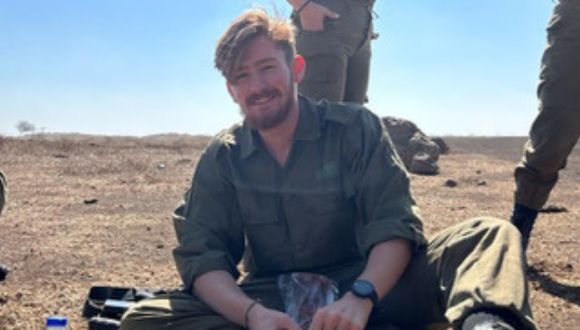 Yishai Stern (Photo courtesy of Yishai Stern)
Yishai explains, “Now that some time has passed since the start of the war, soldiers mostly have everything they need, so our care packages are more about extras—to show extra love.
Yishai Stern (Photo courtesy of Yishai Stern)
Yishai explains, “Now that some time has passed since the start of the war, soldiers mostly have everything they need, so our care packages are more about extras—to show extra love.


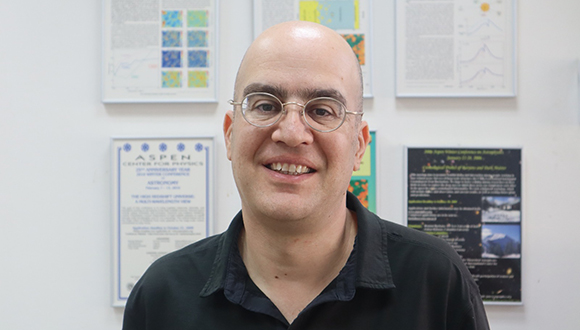 Prof. Rennan Barkana from TAU’s Sackler School of Physics and Astronomy

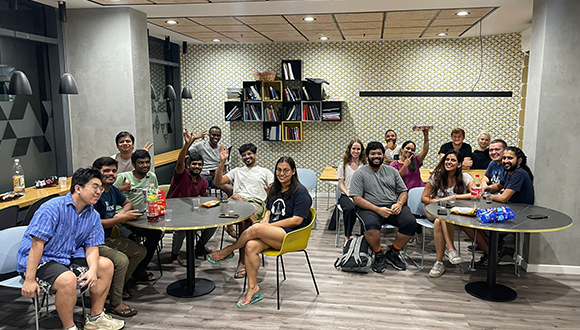 We’re still in reaction mode today, and we’re really focusing on ensuring wellbeing and safety. I’m more in touch personally with students than I usually am because I want to make sure they know who to call and come to if they need help. At the same time, we’re holding activities on campus as much as we can to provide that sense of belonging and community for our students.
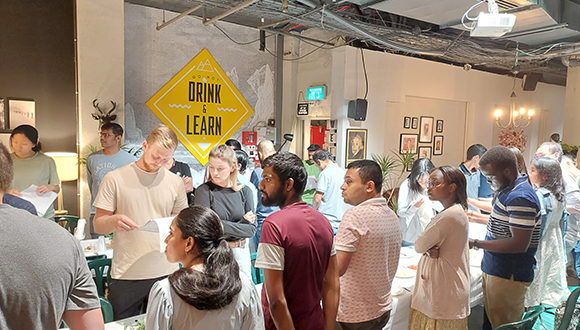


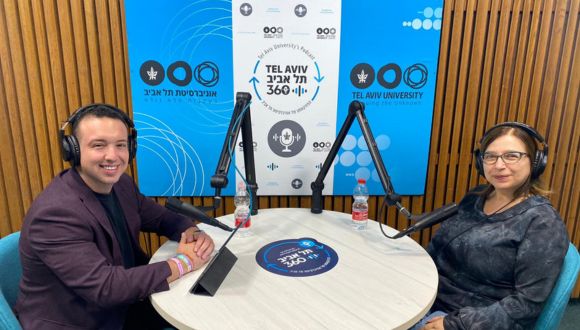 The podcast guest host Ben Bright, an international master’s student at TAU, with Dr. Carmel Vaisman, a digital culture researcher and associate lecturer at TAU’s Cohn Institute for the History and Philosophy of Science and Ideas
As Prof. Ronen Avraham, Head of the Lowy School’s
The podcast guest host Ben Bright, an international master’s student at TAU, with Dr. Carmel Vaisman, a digital culture researcher and associate lecturer at TAU’s Cohn Institute for the History and Philosophy of Science and Ideas
As Prof. Ronen Avraham, Head of the Lowy School’s 

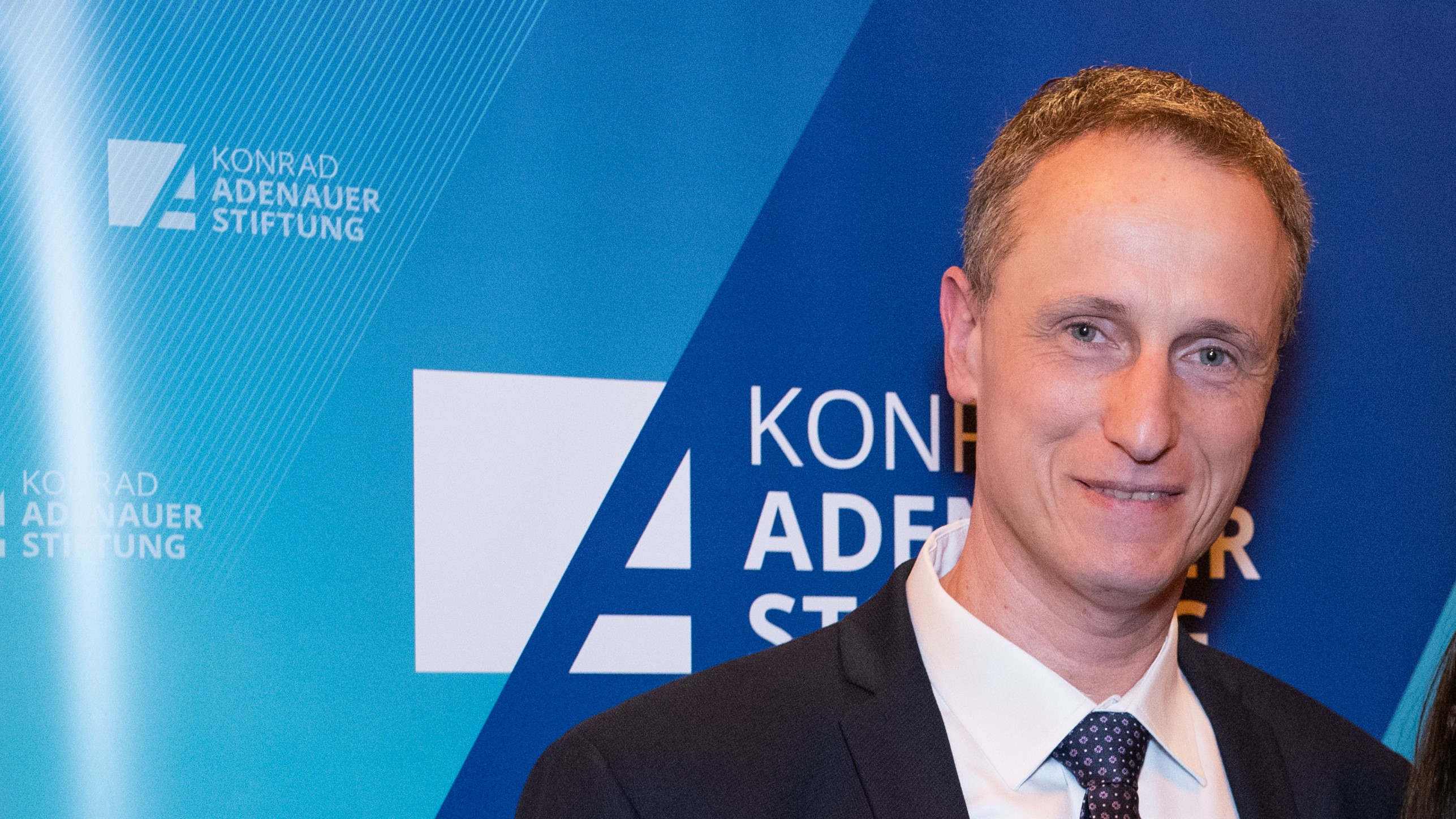 Dr. Arik Rudnitzky (Photo: The Konrad Adenauer Foundation)
“At the same time, there is anxiety among Arab Israelis who fear harassment by Jewish Israelis because of the war. Clearly, the violent events of May 2021 resonate in the minds of many, Jews and Arabs alike, but it is important to understand that the war in October 2023 is an entirely different story from the events in May 2021. We should bear this in mind following the conclusion of the war.”
Dr. Arik Rudnitzky (Photo: The Konrad Adenauer Foundation)
“At the same time, there is anxiety among Arab Israelis who fear harassment by Jewish Israelis because of the war. Clearly, the violent events of May 2021 resonate in the minds of many, Jews and Arabs alike, but it is important to understand that the war in October 2023 is an entirely different story from the events in May 2021. We should bear this in mind following the conclusion of the war.”