Tag: Earth Sciences

Outstanding Navigators, both Night and Day

Researchers find that bats navigate well, also during the day, thanks to their unique sensory integration.

It is time to bust a myth about bats – bats actually see well during the day and they know how to navigate the space during daylight hours. A new Tel Aviv University study has found that fruit bats use their biological sonar during the day, even though their vision is excellent and would ostensibly eliminate the need for the bats to emit calls to the environment and use their echoes to locate objects (echolocation). The researchers believe that due to the high accuracy of the bats’ bio-sonar system in estimating how far objects are, echolocation offers an additional tool – on top of vision – to help ensure that the bats are navigating as effectively as possible. This is similar to a person crossing the street using their sense of hearing as well as sight to make sure the road is clear.

Enjoying the Tel Aviv Sun

The study was conducted under the supervision of Prof. Yossi Yovel, head of Tel Aviv University’s Sagol School of Neuroscience and a researcher at the School of Zoology in The George S. Wise Faculty of Life Sciences and the Steinhardt Museum of Natural History. The study was led by Ph.D. student Ofri Eitan in cooperation with Dr. Maya Weinberg, Dr. Sasha Danilovich, and Reut Assa, all from Tel Aviv University, and Yuval Barkai, an urban nature photographer. The study will be published in the journal Current Biology.

The researchers explain that in general, bats are active mainly at night, and echolocation is the tool they use to navigate their way in the dark. They also say, however, that in recent years a growing phenomenon has been witnessed in Israel, particularly in Tel Aviv but also in other cities, in which Egyptian fruit bats roam around even during the day. In the current study, the researchers sought to examine what happens when the bats are active during the day, and whether they are aided by their unique bio-sonar even in conditions of good visibility.

For the first time, the researchers studied the activity and sensory behavior of the fruit bat during the day. The research was conducted with the help of photography and audio recordings of the bats’ activities throughout the day, in three different situations: in the morning, as they went out to explore in Tel Aviv; later in the day, when they visited Tel Aviv’s sycamore trees; and while they were drinking water from an artificial pool. In each of these situations, the bats used echolocation.

Daytime Integration of Senses

Ofri Eitan explains: “We compared the bats’ landings and flights between the trees, and found that prior to landing, the bats increased the sounds they emitted in order to use the echoes to help estimate the distance to the ground. In addition, we found that even in the pools of water, bats increased the rate of their calls before coming into contact with the water and reduced it (and sometimes even ceased the calls completely) after ascending from the water to fly to an open area. On the other hand, there were cases in which the bats emerged from the pool and had a wall placed in front of them, and once again returned to the use of echolocation. So, all our results show that the fruit bats make functional use of echolocation.”

Prof. Yossi Yuval concludes: “Our results are unequivocal and show that fruit bats make frequent use of echolocation even during the day when visibility is good. We hypothesize that this is due to the fact that echolocation helps the bats to measure the distances of objects in the environment more accurately, and that their brains combine the visual information along with the auditory information. This study shows how important integration between different senses is, just as we humans integrate visual and auditory information when we cross a street, for example.”

Big Brains Helped Large Animals Survive Extinction

TAU researchers: more brain power helped animals adapt to changing conditions and increased chances of survival.

What do an elephant, a rhino and a hippopotamus all have in common? All three, along with other large animals, survived the mass extinction that took place for a period of about 120,000 years, starting from the time the last Ice Age began. In contrast, other huge animals, such as giant armadillos (weighing a ton), giant kangaroos and mammoths went extinct.

Researchers at Tel Aviv University and the University of Naples have examined the mass extinction of large animals over the past tens of thousands of years, and found that those species who survived extinction had, on average, much larger brains than those who did not. The researchers conclude that having a large brain (relative to body size) indicates relatively high intelligence and helped the surviving species adapt to changing conditions and cope with potential causes of extinction, such as human hunting.

The study was led by doctoral student Jacob Dembitzer of the University of Naples in Italy, Prof. Shai Meiri of Tel Aviv University’s School of Zoology and The Steinhardt Museum of Natural History, and Prof. Pasquale Raia and doctoral student Silvia Castiglione of the University of Naples. The study was published in the journal Scientific Reports.

Heavy Weight – No Guarantee

The researchers explain that the last Ice Age was characterized by the widespread extinction of large and giant animals on all continents on earth (except Antarctica). Among these:

  • America: Giant ground sloths weighing 4 tons, a giant armadillo weighing a ton, and mastodons
  • Australia: Marsupial diprotodon weighing a ton, giant kangaroos, and a marsupial ‘lion’
  • Eurasia: Giant deer, woolly rhinoceros, mammoth, and giant elephants weighing up to 11 tons

Other large animals, however, such as elephants, rhinos, and hippos, survived this extinction event and exist to this day.

The researchers also note that in some places, the extinction was particularly widespread:

  • Australia: The red and grey kangaroos are today the largest native animals
  • South America: The largest survivors are the guanaco and vicuña (similar to the llama, which is a domesticated animal) and the tapir, while many of the species weighing half a ton or more have become extinct

Brains over Body

Jacob Dembitzer: “We know that most of the extinctions were of large animals, and yet it is not clear what distinguishes the large extant species from those that went extinct. We hypothesized that behavioral flexibility, made possible by a large brain in relation to body size, gave the surviving species an evolutionary advantage – it has allowed them to adapt to the changes that have taken place over the last tens of thousands of years, including climate change and the appearance of humans. Previous studies have shown that many species, especially large species, went extinct due to over-hunting by humans that have entered their habitats. In this study, we tested our hypothesis for mammals over a period of about 120,000 years, from the time the last Ice Age began, and the time that modern man began to spread all over the world with lethal weapons, to 500 years before our time. This hypothesis even helps us explain the large number of extinctions in South America and Australia, since the large mammals living on these continents had relatively small brains.”

The researchers collected data from the paleontological literature on 50 extinct species of mammal from all continents, weighing from 11 kg (an extinct giant echidna) up to 11 tons (the straight-tusked elephant, which was also found in the Land of Israel), and compared the size of their cranial cavity to that of 291 evolutionarily close mammal species that survived and exist today, weighing from 1.4 kg (the platypus) up to 4 tons (the African elephant). They fed the data into statistical models that included the weighting of body size and phylogeny between different species.

Prof. Meiri: “We found that the surviving animals had brains 53% larger, on average than evolutionarily closely related, extinct species of a similar body size. We hypothesize that mammals with larger brains have been able to adapt their behavior and cope better with the changing conditions – mainly human hunting and possibly climate changes that occurred during that period – compared to mammals with relatively small brains.”

How are the Birds Coping with Climate Change?

Researchers detect changes in birds’ bodies, probably caused by global warming.

Researchers at Tel Aviv University have found changes in the morphology of many birds in Israel over the past 70 years, which they interpret to be a response to climate change. The body mass of some species decreased, while in others body length increased – in both cases increasing the ratio between surface area and volume. The researchers contend that these are strategies to facilitate heat loss to the environment: “The birds evidently changed in response to the changing climate. However, this solution may not be fully adequate, especially as temperatures continue to rise.”

Relying on the vast bird collection preserved by The Steinhardt Museum of Natural History at TAU, the researchers looked for changes in bird morphology over the past 70 years in Israel. They examined approximately 8,000 adult specimens of 106 different species – including migratory birds that annually pass through Israel (such as the common chiffchaff, white stork, and black buzzard), resident wild birds (like the Eurasian jay, Eurasian eagle-owl, and rock partridge), and commensal birds, that live near humans. They built a complex statistical model consisting of various parameters to assess morphological changes – in the birds’ body mass, body length and wing length – during the relevant period.

The study was led by Prof. Shai Meiri and PhD student Shahar Dubiner of the School of Zoology, The George S. Wise Faculty of Life Sciences, and the Steinhardt Museum of Natural History at Tel Aviv University. The paper was published in the scientific journal Global Ecology and Biogeography.

Cooling Down

Prof. Meiri explains that according to Bergmann’s rule, formulated in the 19th century, members of bird and mammal species living in a cold climate tend to be larger than members of the same species living in a warmer climate. This is because the ratio of surface area to volume is higher in smaller animals, permitting more heat loss (an advantage in warm regions), and lower in larger bodies, minimizing heat loss (a benefit in colder climates). Based on this rule, scientists have recently predicted that global warming will lead to a reduction in animal size, with a possible exception: birds living in the human environment (such as pigeons, house sparrows, and the hooded crow) may gain size due to increased food availability, a phenomenon already witnessed in mammals such as jackals and wolves.

Either Long or Slender

Shahar Dubiner: “Our findings revealed a complicated picture. We identified two different types of morphological changes: some species had become lighter – their mass had decreased while their body length remained unchanged; while others had become longer – their body length had increased, while their mass remained unchanged. These together represent more than half of the species examined, but there was practically no overlap between the two groups – almost none of the birds had become both lighter and longer. We think that these are two different strategies for coping with the same problem, namely the rising temperatures. In both cases, the surface area to volume ratio is increased (by either increasing the numerator or reducing the denominator) – which helps the body lose heat to its environment. The opposite, namely a decrease in this ratio, was not observed in any of the species.”


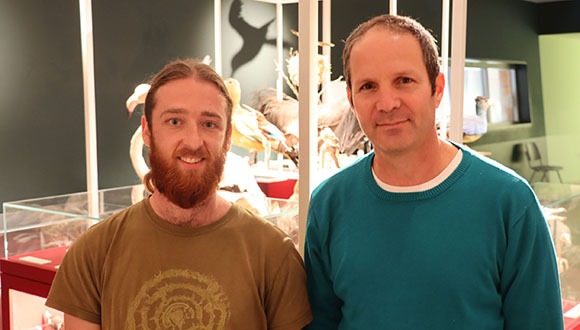
The researchers (from left to right): Shahar Dubiner and Prof. Shai Meiri

Global Phenomenon

Sadly, flying away from global warming is not an option. These findings were observed across the country, regardless of nutrition, and in all types of species: resident birds; commensal species living in the human environment – which, contrary to predictions, exhibited changes similar to those of other birds; and migrants.

A difference was identified, however, between the two strategies: changes in body length tended to occur more in migrants, while changes in body mass were more typical of non-migratory birds. The very fact that such changes were found in migratory birds coming from Asia, Europe, and Africa, suggests that we are witnessing a global phenomenon.

The study also found that the impact of climate change over time on bird morphology (the birds’ change in either weight or length over time, relative to the actual temperature change during that time) is ten times greater than the impact of similar differences in temperature between geographical areas (the birds’ differences in weight or length in different geographical areas, relative to the temperature differences between those areas).

What is the Limit of Evolutionary Flexibility?

Shahar Dubiner: “Our findings indicate that global warming causes fast and significant changes in bird morphology. But what are the implications of these changes? Should we be concerned? Is this a problem, or rather an encouraging ability to adapt to a changing environment? Such morphological changes over a few decades probably do not represent an evolutionary adaptation, but rather certain phenotypic flexibility exhibited by the birds. We are concerned that over such a short period of time, there is a limit to the flexibility or evolutionary potential of these traits, and the birds might run out of effective solutions as temperatures continue to rise.”

Featured image: Israeli birds have become either longer or slenderer over the past 70 years

Microplastics Increase Toxicity of Organic Pollutants by a Factor of 10

May cause severe damage to our health.

Microplastics are tiny fragments of plastic that are found almost everywhere: in wells, soil, food products, water bottles, and even in glaciers at the North Pole. A new study by Tel Aviv University researchers found that in a marine environment, microplastics encounter environmental pollutants that attach to their surface and increase their toxicity by a factor of 10, which may cause severe harm to the environment and human health.

The study was conducted by Dr. Ines Zucker of the School of Mechanical Engineering and the Porter School of the Environment and Earth Sciences at Tel Aviv University, together with Ph. D. student Andrey Eitan Rubin. The study was recently published in the prestigious journal Chemosphere.

‘Magnets’ for Environmental Pollutants

In the study, the researchers examined the entire process that the microplastic undergoes, from the interactions it has with environmental pollutants to the release of the pollutants and the creation of increased toxicity.

The researchers found that adsorption of those organic pollutants to the microplastics increases toxicity by a factor of 10 and may also cause severe impact on humans who are exposed to contaminated food and drink.

“In this study we showed that even very low concentrations of environmental pollutants, which are non-toxic to humans, once adsorb to the microplastic result in significant increase in toxicity,” says Dr. Zucker. “This is because microplastics are a kind of ‘magnet’ for environmental pollutants, concentrating them on its surfaces, ‘ferrying’ them through our digestive tract, and releasing them in a concentrated form in certain areas – thus causing increased toxicity.”


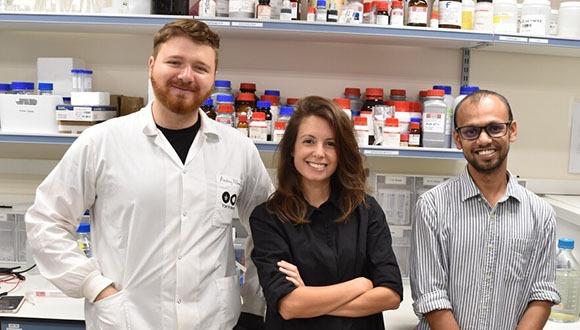
From left to right: Ph. D. student Andrey Eitan Rubin, Dr. Ines Zucker and Dr. Amit Kumar Sarkar

Not Just a Remote Problem

Ph. D. student Andrey Eitan Rubin adds: “For the first time we are presenting a complete ‘life cycle’ of microplastics: from the moment of their release into the environment, through the adsorption of environmental pollutants and up to their joint toxicity in humans.”

“The amount of waste dumped into the ocean every year is enormous – the best known example is the plastic island in the Pacific Ocean, which has an area 80 times larger than the State of Israel.”

This is not just a remote problem. The researchers’ preliminary monitoring data show that Israel’s shores are among the most polluted with microplastic waste. “Each of the microplastic particles secreted in these areas has tremendous potential for harm, as they serve as an effective and stable platform for any pollutant that they may encounter on their way to the human body,” warns Rubin.

                                                                                                                   “This is another painful reminder of the dire consequences of polluting the marine and terrestrial environment with hazardous industrial waste, which has unfortunately been saturated with plastic in recent decades. The dangers are not theoretical but are more tangible than ever. Although there is a great deal of awareness of this problem, the preventive measures in the field are still far from imprinting a significant mark,” concludes Dr. Zucker.

Why do Locusts Form Destructive Swarms?

TAU researchers may have the answer.

Locust swarms that ruin all crops in their path have been a major cause of famine from Biblical times to the present. Over the last three years, large parts of Africa, India and Pakistan have been hard-hit by locust outbreaks, and climate change is expected to exacerbate the problem even further.

A new multidisciplinary study by experts in fields as varied as insect behavior and physiology, microbiology, and computational models of evolution, has led to valuable insights concerning locust swarming: “Locust swarms form when individual locusts, usually solitary and harmless, aggregate and begin to migrate. However, the causes for this behavior remain largely unknown, and an effective solution is yet to be found,” explains Prof. Amir Ayali from the School of Zoology at TAU’s George S. Wise Faculty of Life Sciences.

Following recent studies, indicating that microbiomes can influence their hosts’ social behavior, the researchers hypothesized that locusts’ microbiomes may play a role in changing the behavior of their hosts to become more ‘sociable’. The study was published in Environmental Microbiology.

The Bacteria that Fly with Borrowed Wings 

To test their hypothesis, the researchers examined the gut microbiomes of locusts reared in the laboratory, and found a profound change when individuals reared in solitary conditions joined a large group of about 200 locusts.

Omer Lavy: “The most significant change was observed in bacteria called Weissella, almost completely absent from the microbiome of solitary locusts, which became dominant soon after their hosts joined the group.”

The researchers then developed a mathematical model that was used for analyzing the conditions under which induction of locust aggregation produces significant evolutionary advantages for Weissella, allowing these bacteria to spread to numerous other hosts. Based on these results, the researchers hypothesize that Weissella bacteria may play an important role in the locust aggregation behavior. In other words, the bacteria may in some way encourage their hosts to change their behavior and become more ‘sociable’.

Prof. Ayali concludes:  “Our study contributes to the understanding of locust swarming – a leading cause of famine from antiquity to the present. Our findings do not prove unequivocally that the Weissella bacteria are responsible for the swarming and migration of locusts. The results do, however, suggest a high probability that the bacteria play an important role in inducing this behavior – a new hypothesis never previously proposed. We hope that this new understanding will drive the development of new means for combating locust outbreaks – still a major threat to countless people, animals, and plants all over the globe.”

The new study was based on a multidisciplinary collaboration of experts in fields as varied as insect behavior and physiology, microbiology, and computational models of evolution. The project was led by Prof. Amir Ayali and PhD student Omer Lavy from the School of Zoology at TAU’s George S. Wise Faculty of Life Sciences. Participants included Prof. Lilach Hadany, Ohad Lewin-Epstein and Yonatan Bendett from the School of Plant Sciences and Food Security and Prof. Uri Gophna from The Shmunis School of Biomedicine and Cancer Research, all of the Wise Faculty. They were joined by Dr. Eran Gefen from the University of Haifa-Oranim. 

How Can We Boost Our Fight Against Marine Plastic Pollution?

TAU researchers say global standardization must be established.

Plastic wastes endanger marine life in many ways: animals get entangled in large plastic items or swallow small particles and chemicals, consequently dying of suffocation, starvation or poisoning. Awareness is growing, and research is expanding, but the effort to monitor and prevent plastic pollution encounters many obstacles, first of all due to the enormous complexity and diversity of plastic debris.

A new review from Tel Aviv University has determined that global standardization of methodologies for monitoring and measuring marine plastic pollution can significantly boost international efforts to mitigate this troubling phenomenon. In a comprehensive survey of all methods described in existing literature, the researchers charted the great complexity and diversity of marine plastic pollution, which makes unified measurement and accurate evaluation very difficult. According to the researchers, this is precisely why a standardized system is urgently needed, enabling comparisons, exchange of information, and effective tools for decisionmakers.

Grave and Immediate Threat

The study was led by Gal Vered and Prof. Noa Shenkar of the School of Zoology at The George S. Wise Faculty of Life Sciences and The Steinhardt Museum of Natural History at Tel Aviv University. Gal Vered is also a researcher at the Interuniversity Institute for Marine Sciences in Eilat. The review was published in Current Opinion in Toxicology.

According to Prof. Shenkar, plastic pollution, which is all human-made, poses a grave and immediate threat to the marine environment, with constantly rising amounts of plastic entering the oceans. Thus, for example, a 2013 survey conducted by Israel’s Ministry of Environmental Protection found that plastic accounts for about 41% of the volume of waste produced annually by Israelis. The Covid-19 pandemic, which has generated extreme demands for personal protective and single-use products, has further exacerbated the problem.

Comes in Different Shapes and Forms

The researchers explain that marine plastic pollution comprises many different types of plastic and plastic products of various shapes and sizes – from huge ghost nets to nanoparticles, as well as a vast range of chemical additives. Different methods for monitoring, sampling, and identifying plastic pollution relate to different properties of the sampled material: from size, source, and original use, through shape and color, to chemical composition and physical properties. Sampling is usually conducted with a towed net, with the size of collected pollutants dependent on the net’s mesh size, and tiny particles are identified in the lab using various spectroscopic and chemical methods. In addition to the diversity in sampling and identification methods, units used for reporting measured concentrations of pollutants also vary: from the number of plastic objects per area, to the weight of particles per organism, and more.

“These differences generate confusion and lack of communication among researchers in different parts of the world, hampering our efforts to work together toward our common goal: providing decision makers with reliable data in order to promote the efforts to reduce plastic pollution and its many hazards,” explains Prof. Shenkar. “We are in urgent need of standardized methods and comparable measures for monitoring, sampling, identifying, classifying, and quantifying marine plastic pollution and its impact.”

International Collaboration Needed

“This study is a response to problems encountered in my research, which deals with the impact of plastic and its chemical additives on marine life in the Eilat coral reef (presenting Israel’s largest marine biodiversity),” says Gal Vered and explains: “The differences in methodology make it difficult to use the findings of other researchers – as either a source of information or for comparing results. Thus, for example, most measurements worldwide relate to samples obtained with a towed net from the surface of the water, while I wish to discover which materials reach the seafloor and reef organisms.”

“Standardization will enable accurate evaluations and valid comparisons between plastic pollutions in different places on the globe. This will maximize the power of scientific research, enhance our understanding of the impact of plastic pollution on ecosystems and marine life, and help us develop effective tools for decisionmakers facing this crucial issue.”

Prof. Shenkar concludes: “Marine plastic pollution is a global problem, which requires extensive international collaboration. At the bottom line, we all wish to focus our efforts and obtain the best results. Like many others, we believe that efforts should begin close to the shoreline, in areas directly impacted by plastic pollution. However, a great deal of research is still required in order to establish this assumption and build effective strategies for managing plastic pollution. But first of all, we urgently need standardization that will enable all of us, all over the world, to work together.”

Featured image: Prof. Noa Shenkar 

Learning from The Fastest Growing Alga in The World

In scientific first, researchers successfully map photosynthetic properties of the Chlorella ohadii.

Sustainable food are grown, produced, distributed and consumed whilst keeping the environment in mind, and thus believed to help combat climate change. In a recent study, researchers set out to reveal the secret behind the rapid growth of “the fastest growing plant cell in the world,” the green alga Chlorella ohadii. Why? A better understanding of Chlorella ohadii, they assessed, might possibly help improve the efficiency of photosynthesis in other plants as well, and in turn help develop new engineering tools that could provide a solution for sustainable food. 

Can We Boost the Photosynthesis in Plants?

The study’s findings indicate that the main factors behind the plant’s rapid photosynthesis rate lie in its efficient metabolic processes. The researchers found that this alga has a unique ability to elicit a chemical reaction in which it is able to efficiently and quickly recycle one of the components used by an enzyme called RuBisCO, in a manner that significantly speeds up the photosynthetic processes.

The study was led by researchers from the Max-Planck Institute for Molecular Plant Physiology in Germany, Participating in the study was Dr. Haim Treves, a member of the School of Plant Sciences and Food Security at Tel Aviv University, together with colleagues at the Max-Planck Institute for Molecular Plant Physiology in Germany. The study was published in the prestigious journal Nature Plants.

In the framework of the study, the researchers sought to examine whether it is possible to improve the efficiency of photosynthesis in plants, an energetic process that has been occurring in nature for about 3.5 billion years. To try to answer this question, the researchers decided to focus on green algae, particularly the Chlorella ohadii variety. This alga is known for its ability to survive in extreme conditions of heat and cold, which forces it to exhibit resilience and grow very quickly.

The researchers assessed that a better understanding of Chlorella ohadii (named after the late botanist Prof. Itzhak Ohad) would make it possible to improve the efficiency of photosynthesis in other plants as well, and in turn to develop new engineering tools that could provide a solution for sustainable food.

Online Monitoring of Photosynthesis

In the process of photosynthesis, plants and algae convert water, light and carbon dioxide into the sugar and oxygen essential for their functioning. The researchers used innovative microfluidic methods based on complex physical, chemical and biotechnological principles in order to provide the algae with carbon dioxide in a measured and controlled manner and monitor the photosynthesis “online.”

By using a comparative analysis, the researchers identified that there was a fundamental difference in the photosynthetic processes carried out in in green algae compared to the model plants. They assess that the difference lies in variations in the metabolic networks, a deeper understanding of which will help in developing innovative engineering solutions in the field of plant metabolism, as well as the optimal engineering of future agricultural products.

“Past empirical studies have shown that photosynthetic efficiency is higher in microalgae than in C3 or C4 crops, both types of plants that have transport systems but which are completely different in terms of their anatomy and the way they carry out photosynthesis,” Dr. Treves explains. “The problem is that the scientific community does not yet know how to explain these differences accurately enough.”

Dr. Treves adds, “In our current study we mapped the patterns of energy production and photosynthetic metabolism in green algae and compared them to existing and new data collected from model plants. We were able to clearly identify the factors that influence the difference in these patterns. Our research reinforces previous assessments that the metabolic pathway responsible for recycling is one of the major bottlenecks in photosynthesis in plants. The next step, is to export the genes involved in this pathway and in other pathways in which we have detected differences from algae, and to test whether their insertion into other plants via metabolic engineering will increase their rate of growth or photosynthetic efficiency.

“The toolbox we have assembled will enable us to harness the conclusions from the study to accelerate future developments in engineering in the field of algae-based sustainable food as a genetic reservoir for plant improvement; monitoring the photosynthesis is a quantitative and high-resolution process, and algae offer an infinite source of possibilities for improving photosynthetic efficiency.”

Featured image: Dr. Haim Treves

Victoria

Phone: +61 3 9296 2065
Email: office@aftau.asn.au

New South Wales

Phone: +61 02 7241 8711
Email: admin@aftau.org.au

Western Australia

Phone: :+61 0418 46 5556
Email: davidsolomon@aftau.org.au