Tag: Collaborations

TAU and Goethe University Establish a Joint Center for the Study of Religious and Interreligious Dynamics

First-of-its-kind academic collaboration between Israel and Germany.

Academic collaboration between Israel and Germany is growing, and for the first time, Tel Aviv University in Israel and Goethe University in Frankfurt will establish a joint center for with a focus on interfaith studies. The center will promote research on religion, in particular the monotheistic faiths – a field in which both institutions specialize – with special attention to their mutual interactions at all levels of religious life. The two universities will conduct joint research, hold academic conferences, and train students and researchers in this field.

The agreement for launching the new center was signed in December 2021, during a dedicated “Germany Week” organized at TAU by TAU International and the Student Union of Tel Aviv University. The signing was attended by the German Ambassador to Israel Susanne Wasum-Rainer, TAU President Prof. Ariel Porat, and the President of Goethe University, Prof. Enrico Schleiff.

Twelve months later, the full agreement was signed during an inaugurating two-day international conference at TAU entitled “Thinking Interreligiously.”


“This collaboration includes hundreds of joint research projects as well as hundreds of German students who come to our campus each year. The joint center expands this collaboration in an important new direction and tightens our existing partnership with Goethe University Frankfurt, one of the leading universities in Germany.” Prof. Milette Shamir


Thinking Interreligiously, Together

The conference comprises six working sessions in which six leading scholars in the emerging field of interreligious dynamics will present papers outlining their specific approach to the subject. Each paper will be responded to by pre-assigned expert commentators, followed by an additional hour-long discussion. World-renowned classicist and long standing partner to the interreligious studies initiative, Prof. Simon Goldhill of Cambridge University will deliver a keynote lecture on “The Christian Invention of Time.” The conference concludes with a forward looking round-table discussion on how interreligious studies might impact the study of religion in general. 

“Tel Aviv university has a wide network of collaboration with German universities, more than with any other country in Europe,” says Prof. Milette Shamir, TAU’s VP in charge of international academic collaboration. “This collaboration includes hundreds of joint research projects as well as hundreds of German students who come to our campus each year. The joint center expands this collaboration in an important new direction and tightens our existing partnership with Goethe University Frankfurt, one of the leading universities in Germany. We hope that in the near future the two universities will expand collaboration to several other areas of common strength.”
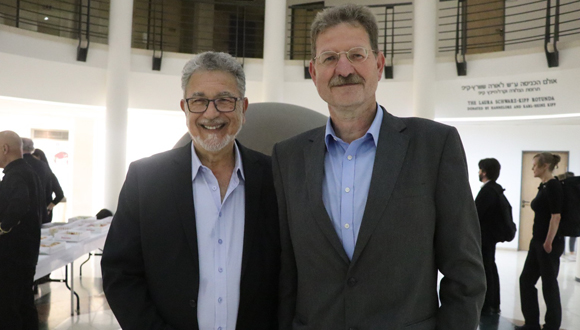
 

Prof. Menachem Fisch and Prof. Christian Wiese (Photo: Tel Aviv University)


“What we are agreeing upon today is, as far as I am aware, unprecedented – at least in the humanities in Germany. It is not merely a formal cooperation between a German and an Israeli university, but rather the development of a highly visible, joint institutionalized international research center.” Prof. Enrico Schleiff


Even Closer Cooperation

Prof. Menachem Fisch, who heads the initiative at TAU says, “I am thrilled to be part of the establishment of a unique, first-of-its-kind center for the study of the monotheistic faiths and their mutual development. This is a worthy initiative, and one more building block in the academic collaboration between the two countries.”

Prof. Enrico Schleiff, President of Goethe University remarked at the initial signing of the agreement in December 2021: ”What we are agreeing upon today is, as far as I am aware, unprecedented – at least in the humanities in Germany. It is not merely a formal cooperation between a German and an Israeli university, but rather the development of a highly visible, joint institutionalized international research center.”

“The center is cross-departmental on both sides and working in an area of study that is most relevant to the German and the Israeli society alike: the history of and the present challenges in religious diversity, difference and conflict in pluralistic societies. It will focus on questions regarding inter-religious dialogue, religious fundamentalism and conflict, but also on the rich cultural heritage and the potential inherent in religious traditions. This center is the start of an even closer cooperation.”

Prof. Christian Wiese, who leads the initiative at Goethe University concludes, “In the framework of German-Israeli academic relations and the close connection between the cities of Frankfurt and Tel Aviv, we’re creating something very special here – an international research hub in the field of interreligious studies that looks at topics both from historical and contemporary perspectives that challenge both of our societies, German and Israeli, each in different ways.”

Featured image:

Prof. Ariel Porat, President of Tel Aviv University and Prof. Enrico Schleiff, the President of Goethe University (photo: Tel Aviv University)

TAU Students Continue to Work on Solving the Water Crisis in Northern Tanzania

The delegation “Africa Group, Engineers Without Borders Israel – Tel Aviv” went to Tanzania during the country’s worst droughts in history

Tel Aviv University students from The Iby and Aladar Fleischman Faculty of Engineering and the Raymond & Beverly Sackler Faculty of Exact Sciences recently returned from the Babati district in northern Tanzania,  where they worked to supply safe drinking water to the local rural population. The students are part of a team of 20 volunteers from various fields and degree levels, called “Africa Group, Engineers Without Borders Israel – Tel Aviv”.

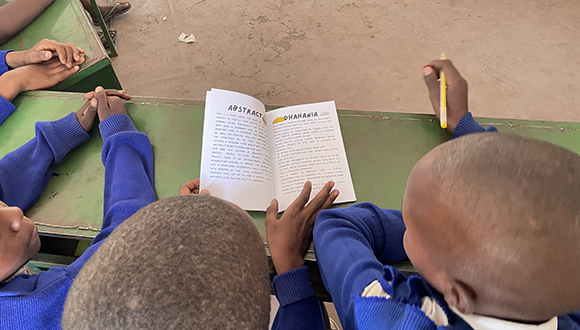
The solution TAU students bring to Tanzania’s water shortage problem is simple and sustainable: through hefty use of the roofs of the regional schools, water can be stored in low-cost rainwater harvesting containers to meet the needs of the children throughout the dry season. The team uses several simple filters and chlorine tablets for storage.

Throughout the year, when TAU volunteers are in Israel and busy with their studies, they still find time to manage all the different aspects of the project, including its fundraising and marketing needs as well as the systems’ construction and implementation. This time around, the students were in Tanzania while the country experienced a severe drought, which resulted in a water crisis and severe hunger.

“During the expedition, we preserved and upgraded our water systems, which at this point provide water to 5,000 children in six schools. We also conducted several pilots for water purification systems; cultivated relationships with organizations that operate in the Babati district; and delivered an extensive educational program on water and sanitation issues together with our local partners. We also visited the area’s new water laboratory (together with the local water authorities). The new lab will be carrying out water tests for us, including in new areas where we are looking to operate in,” say delegation members Aviv Avinoam, Yaeli Benovich, Dan Komiserchick, Sharon Berkovich and Offir Inbar.


Children who get to drink clean water and participate in an extensive educational program on water and sanitation issues


A New Meteorological Station and Empowering School Management

According to Dan Komiserchick, more accurate meteorological data is needed in the Babati district. The team, therefore, together with the local community, installed the first automatic meteorological station in the region, which will be helpful for the planning of future water systems. The station measures parameters such as rain, wind, humidity, and temperature, and the information gathered is transmitted to the water authorities and local farmers and organizations.

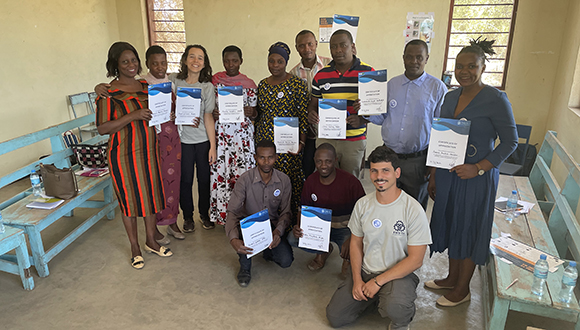
One of the highlights of the delegation was organizing a first-of-its-kind executive seminar for all school principals in Babati. “Investing time and resources in training and empowering school principals is critical for the success of the project, as the school principals are very involved in all aspects of the operation of the water purification systems,” explains Aviv Avinoam. “The main topics discussed were maintenance of the systems; insights and suggestions for improvements; educating the students about water safety and training the teachers. The discussions were very enlightening and productive, and it was decided (in agreement with the regional director of education) that the seminar will be held on an annual basis going forward.”

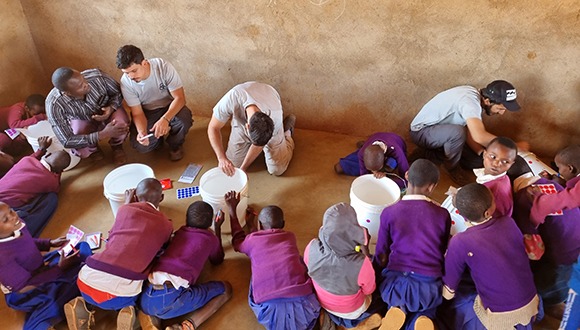
“We also expanded the existing educational program by collaborating with local organizations and creating instructive content on topics like ‘How is rain created?’, ‘Seasons of the year’, ‘How to build water systems’, ‘What pollutants are present in water?’ and more.”


Principals’ Seminar, October 2022

No Room for White Elephants

The team is also conducting a comprehensive academic study to examine the impact of the water systems on the local communities throughout the years, in terms of health, nutrition, entrepreneurship, and more.

The research is led by Yaeli Benovich, who is writing a thesis on the subject with the guidance of Prof. Dror Avisar, Head of the Water Research Center at Tel Aviv University, and Dr. Shira Bookchin from the Hebrew University of Jerusalem, who researches interdisciplinary aspects of sustainability in the developing world.

As part of the research, hundreds of students and educators answered questionnaires aiming to ensure that the activities of Engineers Without Borders are not causing any harm, and making sure that the water project does, in fact, benefit the community. The research adds a professional and academic dimension to the ongoing project and examines the impact of the systems in a broad perspective.

“Visiting the schools and building the water purification systems is only half of the job,” emphasizes Yaeli Benovich. “A lot of projects initiated in Africa quickly turn into so-called ‘white elephants.’ Typically, some foreign organization arrives, pours some money out and leaves the country. Shortly thereafter, the project is abandoned and terminated. We seek to avoid such a situation, by involving the local authorities and the communities as part of the planning and construction of the systems already from an early stage. We are very clear from the start that the local community is responsible for the project.”

Over the years, the Engineers Without Borders delegations have conducted dozens of meetings with the local authorities, including village leaders, heads of the districts and members of parliament. Additionally, they’ve cultivated a close relationship with the local water authorities.

“We signed a contract this year, a memorandum of understanding (MOU), which clearly outlines the role each party has for the success of the project. This contract guides our cooperation with the local representatives,” explains Yael. “The document lists all the responsibilities of our team, as well as those of the local authorities and community – before, during and following the construction of any water purification system. Introducing these written agreements has had a very positive impacted on the contributions by the local authorities and community. There’s no doubt that this is the right way to work. It is a necessary step that will help the community to maintain the project over the years.”

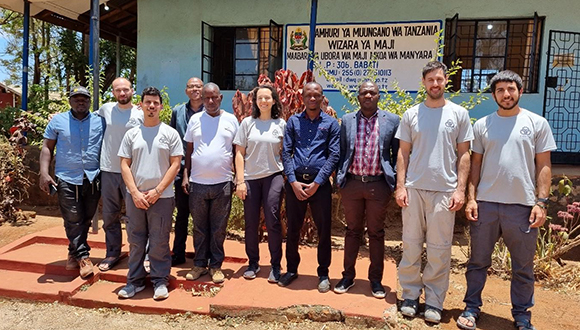
Members of the delegation during a tour of the new water laboratory of Babati district

Offir Inbar shares that in this type of projects, the team’s presence on the ground is critical: “It is only when you physically present and meet with people face to face that you fully understand the situation, the people involved, the challenges at play and in what direction one should be heading.”

“It is hard to bridge various gaps over Zoom conversations or messages. Close relationships are formed by sitting down and talking together at eye level. When you sit down and talk everything seems much simpler – opportunities emerge, you meet with organizations and key people who may lead you to form new connections. It is the only way to fully grasp the challenges facing the local community. Sometimes the challenges on ground are different from what we imagine from afar.”


Close relationships are formed by sitting down and talking together at eye level. An educational activity with school children on the importance of hygiene

Help Ensure the Supply of Water to an Additional 1,000 Children

The drought that hit Africa during the past nine months has emphasized the importance of creating a variety of water solutions. “On our next expedition to Tanzania, planned for April 2023, we will install two new water purification systems to provide clean water to a thousand more children,” says Sharon Berkovich.

“One of the systems will be based on rainwater and the other on the use of filters. The filter system will provide a solution for areas where groundwater or surface water sources exist, but where these are contaminated by bacteria that harm the health of the local community.”

The project is funded mainly by donations from Tel Aviv University, private companies and individual businessmen, philanthropic foundations, and the Embassy of Israel in Kenya. A significant fundraising operation is currently taking place for the upcoming expeditions.

Featured image: Local women collecting water from a polluted water source, drying up in Tanzania

TAU Launches Manufacturing Research Center in India

Initiative will promote cutting-edge research with applications in biomedicine, space, defense, and more.

Tel Aviv University and Thapar Institute of Engineering & Technology (TIET) in India have agreed to jointly build a collaborative research establishment to explore advanced production technologies.

The Future of Cutting-Edge Production

The new Thapar-Tel Aviv University Center of Excellence in Advanced Manufacturing will draw knowledge from multidisciplinary teams from TAU and TIET with expertise in all fields of engineering and sciences. As such, it aims to promote cutting-edge research with industry applications in disciplines including biomedicine, automotives, space and defense.

TAU Vice President for International Collaboration Prof. Milette Shamir and Prof. Prakash Gopalan, Director of TIET, on April 4 signed a five-year Memorandum of Understanding at TIET’s main campus in Patiala, India, in the presence of Mr R R Vederah, Chairman of TIET’s Board of Governors.

Speaking at the signing, Prof. Shamir said “TIET is an important partner for TAU in India and the new Center will bring cooperation between our two universities to a new level.” Noting that 2022 marks 30 years of diplomatic relations between Israel and India, she added that “academia plays a special role in the bilateral relationship. Through the advancement of knowledge, bridges are built between students and researchers that can generate substantial benefits for both countries.”

Expanding Existing Partnership

As part of the agreement, TIET has committed to establish a TAU Chair Professorship who will lead the Center. Prof. Noam Eliaz, the founding Chair of TAU’s Department of Materials Science and Engineering at the Iby and Aladar Fleischman Faculty of Engineering is due to serve as the new Center’s inaugural chair professor.

“I’m excited and proud to be chosen by Thapar University as TAU’s representative to serve as the new chair professor and take part in establishing one of six centers of excellence for advanced production technologies, including 3D printing and unprecedented resource investment,” he said. He added that he aims to turn the Center into a leader in its field in India and in the world.

The new Center expands the existing partnership between TAU and TIET, which includes initiatives such as the TAU-TIET Food Security Center of Excellence headed by Prof. Yossi Shacham, along with joint degree programs in life sciences and engineering, and other forms of academic cooperation.

Featured image: TAU Vice President of International Collaboration Prof. Milette Shamir (front left) and Prof. Prakash Gopalanat (front right), Director of the Thapar Institute of Engineering & Technology, at the April 4 signing ceremony in Patiala, India

First Israeli Research Book Published in Abu Dhabi

The work was issued by the UAE’s largest public research institute.

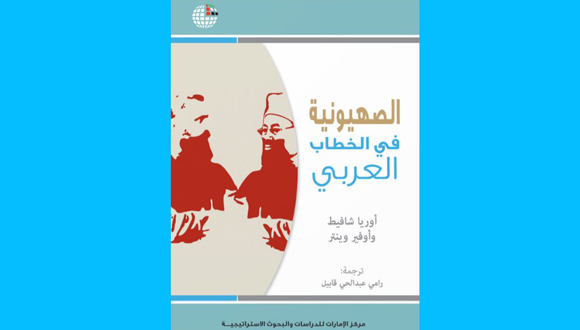
For the first time since the signing of the Abraham Accords, an Israeli research book was published in Abu Dhabi. The UAE’s largest public research institute, the Emirates Center for Strategic Studies and Research, has published Zionism in Arab Discourse by TAU’s Prof. Uriya Shavit and Dr. Ofir Winter from the Institute for National Security Studies, INSS. Translated into Arabic at the initiative of Dr. Rami Abd el-Hai Kabil, a lecturer of modern Hebrew literature in Sohag University, Egypt, this is the first Israeli research book to be published in the UAE.

Prof. Uriya Shavit is Head of the Religious Studies Program and The Center for the Study of Contemporary European Jewry, both at The Lester and Sally Entin Faculty of Humanities at Tel Aviv University. Dr. Ofir Winter is a researcher at the INSS. 

Models for Inspiration

Initially published in Hebrew in 2013 by HaKibbutz HaMeuchad Publishing House and in English in 2016 by the Manchester University Press, the book has aroused considerable interest. Its main thesis is that, alongside animosity towards Zionism and Israel, quite a number of Arab thinkers since the end of the 19th century, including members of the Muslim Brothers, have regarded various aspects of the Zionist enterprise as models which the Arab world should also adopt. 

Arab texts that are mentioned in the book value a range of Zionist qualities, such as Israeli democracy, the figures of Herzl and Ben Gurion, the status of women in Israeli society, the revival of the Hebrew language, relations between Israel and the Jewish diaspora, and the achievements of Israeli science and academia.

Prof. Shavit and Dr. Winter: “In the book’s final chapter we wrote that Israelis can and should note the strengths identified by Arab thinkers – for example, the widely accepted notion that Israel’s democracy and rule of law can serve as a commendable model. We are very glad and proud that readers of Arabic will now be exposed to our book. In one sense, the very fact that it has been translated, under the auspices of the Abraham Accords, confirms our thesis – that the Arab world’s stance toward Israel is more multidimensional than what is commonly assumed.” 


The book’s cover. Its webpage on the website of the Emirates Center for Strategic Studies and Research can be viewed here

Victoria

Phone: +61 3 9296 2065
Email: office@aftau.asn.au

New South Wales

Phone: +61 02 7241 8711
Email: admin@aftau.org.au

Western Australia

Phone: :+61 0418 46 5556
Email: davidsolomon@aftau.org.au