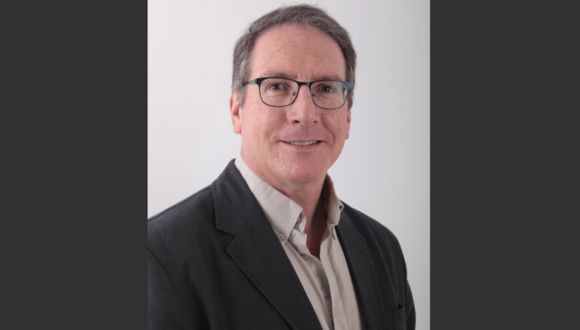
Author: Hilary

Is the Heaviest Black Hole in Our Galaxy Closer Than We Think?

Gaia Spacecraft Reveals Massive Black Hole in Milky Way

An international team of researchers, with the participation of researchers from Tel Aviv University (TAU) led by Prof. Tsevi Mazeh, discovered a star which orbits a black hole 33 times heavier than the sun’s mass, and lies 1500 light-years away from Earth. The black hole, discovered using data from the European Gaia spacecraft, is more than three times heavier than the other known black holes in our galaxy.

The Gaia spacecraft was launched by the European Space Agency in 2013 and has since then been regularly measuring the position and brightness of over a billion stars in our galaxy – the Milky Way galaxy – with unprecedented precision, equivalent to accurately determining the position of a single grain of sand on the moon to the millimeter.

An organization of hundreds of scientists across Europe processes the data coming in from the spacecraft and makes it accessible to the entire scientific community. The research group was led by Prof. (emeritus) Tsevi Mazeh, from TAU’s Raymond and Beverly Sackler School of Physics and Astronomy, recently awarded the Israel Prize in Physics for the year 2024. Prof. Mazeh participates in the study of binary star systems discovered using spacecraft data. The research was published in the prestigious journal Astronomy & Astrophysics.

Credit: ESA/Gaia/DPAC

Cosmic Odyssey: Exploring the Depths of the Universe

The large sample of binary stars should also include systems which include a black hole – one of the rarest celestial objects in the universe. The existence of a black hole is one of the most amazing phenomena in the universe, the existence of which was predicted by Einstein’s theory of general relativity back in 1939.

According to the accepted theory, when the fuel for the nuclear combustion process that takes place in the core of a star runs out, it collapses in on itself, towards its center. If the star is massive enough, all the remaining matter collapses into a single point of infinite density. It is possible, therefore, to see the black hole as the “corpse” of a star that has ended its life cycle and collapsed in on itself. Astrophysicists are still trying to understand the extreme conditions that lead to the collapse of matter into the central point, and therefore every discovery of a black hole is accompanied by enormous excitement among astronomers.

Into the Abyss of the Black Hole

It is very difficult to discover black holes since light cannot overcome the strong gravitational force in its vicinity. When a black hole is in a binary system with a normal star, the motion of the visible star is used to measure the mass of its invisible partner and thus prove that it is indeed a black hole. Indeed, in a matter of just a few years, the Gaia spacecraft has already discovered two black holes.

With the expectation that the data that continues to be collected by the spacecraft will lead to the discovery of more black holes, Prof. Mazeh together with Prof. Laurent Eyer from the University of Geneva established a small team to find black holes using the spacecraft’s data, including scientists from France, Germany, Spain, Belgium, Poland and Switzerland. While examining the new data, the team came across a binary system containing a special black hole, the likes of which has never been found before, with a mass of 33 solar masses, around 1,500 light years away from us.

The new black hole is more than three times heavier than any other known black hole in the Milky Way galaxy. The binary system, named Gaia BH3, contains an ordinary star that seems to have formed more than ten billion years ago when our galaxy was still very young. The star orbits the black hole in an 11-year cycle.

Prof. Tsevi Mazeh – 2024 Israel Prize Winner in Physics

At the suggestion of Prof. Mazeh, it was decided to publish the sensational disclosure right now and not wait until the orderly publication of all the systems that were discovered. The entire spacecraft team, including researchers from TAU – Prof. Shay Zucker, head of the Porter School of Environment and Earth Sciences, Dr. Simchon Faigler, Dr. Sahar Shahaf (now at the Weizmann Institute), Dr. Dolev Bashi (now at the University of Cambridge), Avraham Binnenfeld (research student) and Oded Orenstein (second-year undergraduate student) – are listed as contributors to the scientific article published today which reports on the discovery.

Prof. Tsevi Mazeh: “This is an exciting discovery of the heaviest black hole in a binary system known today in the galaxy. About thirty years passed from the first hypothesis of the existence of a black hole until the discovery of the first black hole, and more than fifty years passed before we were able to discover Gaia BH3 – the binary system with the longest cycle known today. It is amazing how humankind manages to navigate the vast expanses of the universe and discover such mysterious objects. I am convinced that the discovery will lead to a new mode of thinking regarding the presence and prevalence of the black holes that cruise through the expanses of our galaxy.”

Heart Disease’s Cancer Link Unveiled

A Recent TAU Study Exposes the Connection Between Heart Disease and Cancer

Researchers at Tel Aviv University and the Leviev Cardiothoracic and Vascular Center at the Sheba Medical Center have found a mechanism that is responsible for increasing the risk of developing cancer among patients with heart disease: those small extracellular bubbles, or vesicles (sEVs), that are secreted from the sick heart to heal itself are released into the bloodstream – and promote the growth of cancer cells throughout the body. The researchers estimate that the important discovery may improve the protocols for treating heart disease so that clinicians also consider the increased risk of cancer. The study was funded by the Israel Cancer Association and the Israel Science Foundation.

The research was conducted under the leadership of Prof. Jonathan Leor from the Neufeld Cardiac Research Institute, Faculty of Medical & Health Sciences at Tel Aviv University and the Taman Institute at Sheba’s Leviev Center and his student Tal Caller, a medical and research student at Tel Aviv University’s School of Medicine. The research was published in the important medical journal Circulation.

Heart Disease’s Silent Hand in Cancer’s Rise

Caller explains: “In 2013, the Israeli cardiologist Tal Hasin showed for the first time that there is a connection between heart failure and cancer. Patients with heart disease are at a higher risk of developing cancer, and since heart disease is already a leading cause of death–first place in the US and second place in Israel – that means that many people are at risk. Our research revealed that the diseased heart secretes cancer-promoting factors, which we identified as small extracellular vesicles (sEVs). These are tiny particles wrapped in a simple membrane, which all cells secrete, However, due to heart damage, these vesicles are released in greater quantities and contain factors related to inflammation, healing, growth, creation of new blood vessels, and changes in the immune system. These vesicles move through the circulatory system and eventually reach the tumor or the pre-cancerous tissue”.

Caller adds, “Following an injury in the heart muscle and deterioration to heart failure, sEVs containing growth factors and small nucleic acid molecules that promote cell division are released. These sEVs contribute to the healing of the injured cardiac tissue. However, released from the injured heart, those vesicles move within the body’s circulatory system, eventually targeting cancerous growths”.

Prof. Jonathan Leor: “Many theories have been proposed to explain the increased risk of cancer in heart patients. They started with shared risk factors such as smoking, diabetes, and obesity and ended with a single protein or molecule. We showed for the first time that the diseased heart secretes sEVs that contain thousands of different growth factors. These bubbles directly promote the growth of certain tumors and also modulate the immune system, making the body more vulnerable to tumor growth”.

To test their hypothesis, the researchers at TAU inhibited the formation of sEVs in animal models with heart disease and found that the risk of cancer decreases along with the inhibition of vesicle production. However, this is not a viable therapeutic option since inhibiting the production of the vesicles causes severe undesired side effects.

Disrupting Cancer’s Path

Prof. Leor: “When you systemically inhibit the formation of sEVs, you get less cancer – but you cause collateral damage along the way. That is why we tried a different strategy: treat the patient’s heart to reduce the damage to the cardiac tissue so that it secretes fewer sEVs. We used spironolactone, which is a well-known, old, and effective drug used to treat heart failure. We treated the animals with spironolactone at a very early stage of the disease and found that the heart secreted 30% fewer sEVs– and the cancerous tumors grew more slowly. Our experiment shows that it is possible to intervene in heart disease in a way that reduces the risk of cancer among heart patients”.

As for the clinical implications of the study, Caller is careful in his words: “It may be necessary to adjust the existing treatments for the heart so that they also consider the risk of cancer. In addition, it is possible to find biomarkers among heart patients that will indicate an increased risk of cancer since not all patients are at an increased risk. This is basic research, and much work is still required to unravel the connection between the two”.

Moshe Bar-Haim, CEO of the Israel Cancer Association, adds: “Thanks to public donations and designated funds, the research committee of the Israel Cancer Association examines and selects dozens of studies every year and funds researchers and doctors from research and treatment centers across Israel. From these studies, new methods were developed for the diagnosis, treatment, and rehabilitation of cancer patients. Research has no territorial boundaries, so every achievement in research here in Israel is an achievement for the entire world. We hope that the new research – that reveals that because of heart diseases, extracellular bubbles are secreted and increase the risk of cancer – will allow for immediate application in Israel and around the world for the benefit of accurate treatment for patients”.

Berlin Architecture Workshop Unites Jewish and Arab TAU Students

Fourth-year students explore architecture together

Every year, Eran Neuman, professor of architecture at Tel Aviv University (TAU), takes the fourth-year students in his design studio to a different world city for an architecture and urban design workshop. This year, the trip almost didn’t happen, however the students had different plans. “I thought the students wouldn’t want to go, especially with everything going on, but it really came from the students,” reflects Neuman. “They said, we want to go – it’s tough times, but it’s important for us and we want to go.”

A Week in Berlin

And so, at the beginning of March, and with the support of The Lowy International School, Neuman took 14 of his students with him on a one-week trip to Berlin, where they toured some of the most well-known architecturally designed buildings, went to museum and art exhibits, and met with local architects and architecture offices – including the office of Diébédo Francis Kéré, the famed Burkinabé-German architect and winner of the Pritzker Architecture Prize (often referred to as the Nobel prize for architecture).
 

Neuman in Berlin with two of the students from the TAU design studio.

However, the trip was also special for an entirely other reason: Neuman’s design studio at TAU is made up of approximately half Arab students and half Jewish students. “For the most part, they work perfectly together; all-in-all they are students who want to come and study,” says Neuman.
“They care about getting a good education and they leave politics and what’s going on in the region outside the classroom.”
At the same time, with all the heightened tension in the region since October 7, Neuman was still a bit anxious about whether there would be any strain during the Berlin workshop. “You can’t totally avoid the politics, because this is part of our reality,” says Neuman.

A Platform for Coming Together

However, instead of tension, Neuman says he found a group of students – half Arab, half Jewish – who were keen to listen to one another and be open with one another, especially as they grew more relaxed as the trip went on. “When they did talk about politics, they were open and respectful and they acknowledged each other and each other’s suffering,” he says.
“We told them, it’s in your hands to make this place livable and they completely accepted it – that there are two nations living here and that we have to learn to live together and next to one another.”
On the final day, after dinner at a Vietnamese restaurant, the students even decided to go to a club together, where they asked the DJ to put on Arab and Israeli music.
“They went together with each other, Jewish and Arab, accepting each other’s culture and being together … I came back really optimistic from the workshop.”—Eran Neuman.
Gal Wiesman, a fourth-year student who attended the Berlin workshop, agrees. “It was a great trip,” she says.
“I think it was extremely refreshing to go … and during the trip we created a special bond, and it’s made us all closer since then.”—Gal Wiesman.


Victoria

Phone: +61 3 9296 2065
Email: office@aftau.asn.au

New South Wales

Phone: +61 02 7241 8711
Email: admin@aftau.org.au

Western Australia

Phone: :+61 0418 46 5556
Email: davidsolomon@aftau.org.au