Tel Aviv University Marks 100 Days Since the Hamas Attack
TAU aimed to reflect on the impact the last 100 days of war on various fields of research, express our support families of the hostages, and to rally together in the cry to bring all hostages home.
On January 14, the Tel Aviv University community marked 100 days since the Hamas attack on Israel. In various events across campus, TAU aimed to reflect on the impact the last 100 days of war on various fields of research, express our support families of the hostages, and to rally together in the cry to bring all hostages home.
100 Minutes for 100 Days: Examining the Impact of War
The inaugural event, ‘100 Minutes for 100 Days,’ brought together researchers from diverse fields such as psychology, ecology, and information technology. Adopting a TED-style format, the researchers presented the impact the war has had on their various fields. The event concluded with a panel discussion moderated by Dr. Jeremy Fogel from the Department of Jewish Philosophy in the TAU Faculty of Humanities.
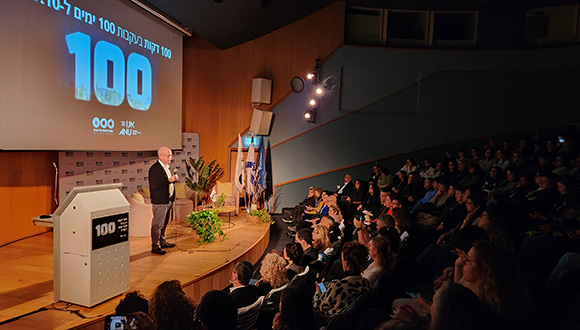
Prof Ariel Porat speaking at the ‘100 minutes for 100 days’ ceremony
“Tel Aviv University is an ark which will save us from the flood and allow us to build a new world that will come afterwards” (Dr. Jeremy Fogel)”
The event opened with an address from Prof. Ariel Porat, President of Tel Aviv University. In his speech, he rallied the university community, urging both faculty and students to unite and fortify national resilience. He remarked, “Our open wound does not cease to bleed. Since October 7, 15 of our students have lost their lives, and over 60 families within the university community have experienced the profound pain of losing their loved ones. We collectively mourn their tragic deaths and yearn for the safe return of the soldiers and all the hostages.”
Prof. Porat then spoke about the decision to start the fall semester. “We realized that if we don’t do this, everyone will be hurt. We created a support network to help our students who are currently serving in the IDF, so as not to let them fall behind in their studies.We all feel that we owe them a lot; that is a debt that will never be fully repaid. And now it’s our turn to protect them, their careers, and give back to them even a little in return for what they’re doing for all of us.”
For our national resilience it is important to try and maintain some kind of routine in the time of the war. This is crucial for the future of the State of Israel. “We cannot afford the luxury of putting the economy or higher education on hold, hoping that everything will somehow turn out fine. We mustn’t cease the production of doctors for the health system, engineers, tech professionals, psychologists, and more. It is imperative that we rise to the task of the national importance that lies before us,” he concluded.
Dr. Lior Zalmanson, a senior lecturer and assistant professor at the Technology and Information Management Program, Coller School of Management, specializes in studying human behavior in virtual environments. In his discussion, he explored the role of AI in wartime communication and how technology companies influence narratives. Dr. Zalmanson also highlighted the potential dangers of AI in our daily digital interactions, pointing out its capacity to introduce biases in opinions, particularly through the presentation of specific verbal or visual content.
Prof. Marcelo Sternberg, a climate change scholar and the head of the Plant Ecology Lab in the George S. Wise Faculty of Life Sciences, addressed a less-discussed aspect of the war’s impact. “I am excited to talk to you about a subject that may not receive much attention in the media,” he began, diving into topics such as soil contamination with heavy metals and explosives, the destruction of various habitats for plants and animals, the severe disruption to Israel’s food security caused by the shutdown of numerous farms in proximity to Gaza, and more.
Dealing with Post-Trauma
Dr. Michal Kahn, a licensed clinical psychologist and the head of Sleep Research laboratory from the Gershon H. Gordon School of Psychological Sciences in the Faculty of Social Sciences, is part of the team of therapists working at the newly opened National Trauma and Resilience Center, which operates on TAU campus and provides PTSD treatment at a nominal cost to affected civilians and IDF soldiers.
“These moments, face-to-face with the terrorists and the shootings, have, of course, been with her ever since – there is no escaping from them, ‘and yet’, as she tells me, I’m a simple case'”
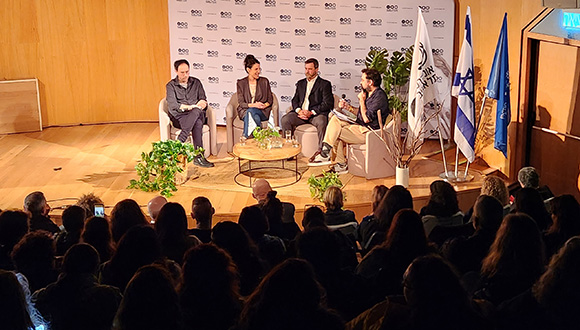
The panel of experts. From the left to right: Dr. Lior Zalmanson, Dr. Michal Kahn, Prof. Marcelo Sternberg, and Dr. Jeremy Fogel
Kahn talked about the psychological aspect of the war, highlighting the increased incidence of anxiety disorders and PTSD. She also offered insights into potential treatment methods and provided a glimpse into her volunteer work with survivors of the Nova party.
“While they were being led into Gaza, Rimon asked Yagav ‘what should we do? They took your guitar that you love so much,’ and he answered with the simplicity that is so characteristic of him: ‘If one child learns to play and is happy, at least one good thing has happened'” (Nofer Buchstab, PhD student in the Faculty of Life Sciences, about the moment of her brother’s kidnapping)”
Unity and Remembrance: TAU Campus Rally
“Hundreds of people, including hostage family members, Prof. Ariel Porat (the President of the university), and Daniel Zilber (the chairman of the Student Union), participated in the rally held on the TAU campus. Classes were suspended for an hour, and the entire university community gathered in the rain to call for the release of all the hostages, who have been held captive in Gaza for 100 days.
Among those speaking at the rally were:
- Nofer Buchstab, PhD student in the Faculty of Life Sciences, sister of Yagav Buchstab, kidnapped from Kibbutz Nirim together with his partner Rimon. Rimon was released from captivity, but Yagav is still held in Gaza.
- Gil Dickman, cousin of Carmel Gat, who was kidnapped from Kibbutz Be’eri. Carmel is a graduate of the TAU Faculty of Medicine with a bachelor’s in occupational therapy and a graduate student in therapy and occupational therapy at the Hebrew University. Gil is a graduate of the School of Psychological Sciences at Tel Aviv University.
- Merav Svirsky, sister of Itay Svirsky, who was kidnapped from Kibbutz Be’eri. Itay is a TAU graduate with degrees in psychology and economics. His cousin is Prof. Uri Ben-David from the Faculty of Medicine. Merav and Itay’s parents were murdered by Hamas on Black Sabbath on October 7.
- Yifat Calderon, cousin of Ofer Calderon, who was kidnapped from Kibbutz Nir Oz, along with his children Sahar and Erez. Sahar and Erez were released, but Ofer still remains in captivity. Yifat is one of the leaders of the Hostage Forum that brings together relatives of the hostages.
- Anat Shoshani, a student at the Faculty of Management, the granddaughter of Adina Moshe, who was kidnapped from the Nir Oz compound and released from captivity. Anat’s grandfather, Said Moshe, was murdered.
- Stav Levy, a student at the School of Architecture, the partner of Idan Shativ, who was kidnapped from the Nova festival.
At the end of the campus rally, faculty members and students marched to the Hostage Square in the center of Tel Aviv to join the remembrance ceremony there.
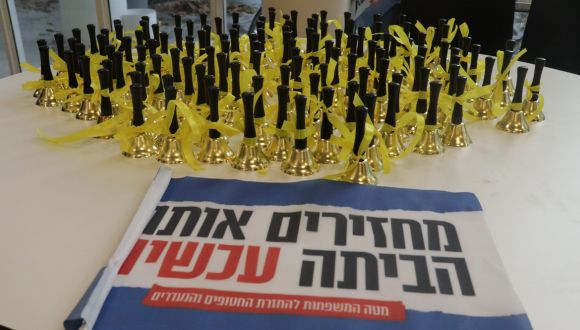
The day concluded with a One Million Bells event held at the Lowy International School where members of TAU community gathered to ring bells for one full minute to show solidarity with the hostages.
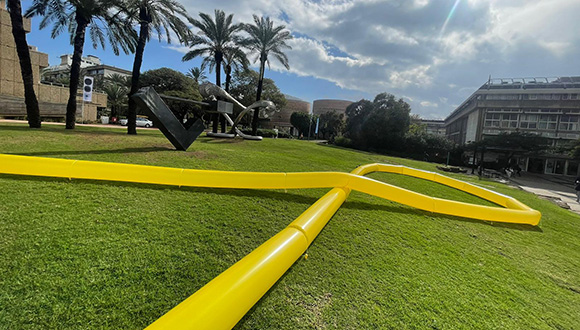
Artist Doron Gazit presented a display featuring yellow balloons made from recycled materials, shaped in the form of the iconic yellow ribbon associated with the ongoing effort for the return of the hostages.

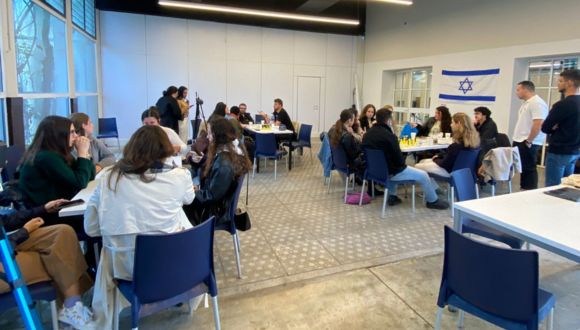
 As Dr. Inon Schenker, Initiative Creator, explains: “Bells have been a powerful tool for centuries. One bell can warn of danger and save a village; One million bells may shake the world, herald hope and mark a line between humanity and evil. October 7th, 2024 must be remembered globally as a defining moment against terror.”
 TAU Rector Prof. Mark Shtaif extended his heartfelt condolences to the families of all the war casualties and expressed sincere hope for the swift release of the hostages and a resolution to the conflict.
Tal, a representative from the Hostage Forum, underscored the urgency of advocating for the prompt liberation of hostages. American actress and performer Jade Taylor sang at the event, accompanied by Ido Montaniez.
TAU Rector Prof. Mark Shtaif extended his heartfelt condolences to the families of all the war casualties and expressed sincere hope for the swift release of the hostages and a resolution to the conflict.
Tal, a representative from the Hostage Forum, underscored the urgency of advocating for the prompt liberation of hostages. American actress and performer Jade Taylor sang at the event, accompanied by Ido Montaniez.
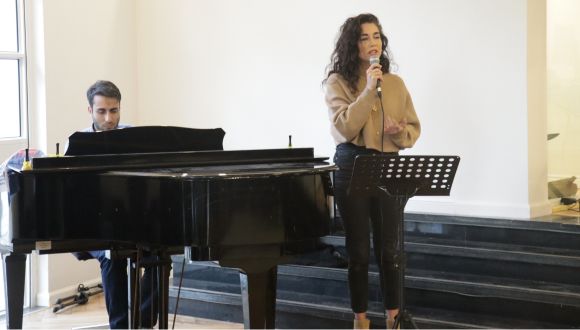 Ido Montaniez and Jade Taylor at the Lowy International School
Partners of the One Million Bells initiative included the Israeli Ministry of Foreign Affairs, World Zionist Organization, Center for Jewish Impact, major hotel chains, the Stock Exchange, United Nations for Israel, Impact for Healthy Future, NOVA, and global faith organizations.
Ido Montaniez and Jade Taylor at the Lowy International School
Partners of the One Million Bells initiative included the Israeli Ministry of Foreign Affairs, World Zionist Organization, Center for Jewish Impact, major hotel chains, the Stock Exchange, United Nations for Israel, Impact for Healthy Future, NOVA, and global faith organizations.

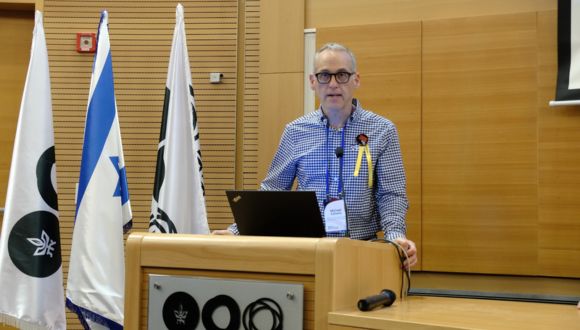 Michael Kahana, Edmund J. and Louise W. Kahn Term Professor of Psychology at the University of Pennsylvania
TAU President Ariel Porat thanked the UPenn delegation for their visit: “It’s important for us to have people like you come to us during these most difficult times ever because these days we need friends.
Michael Kahana, Edmund J. and Louise W. Kahn Term Professor of Psychology at the University of Pennsylvania
TAU President Ariel Porat thanked the UPenn delegation for their visit: “It’s important for us to have people like you come to us during these most difficult times ever because these days we need friends.
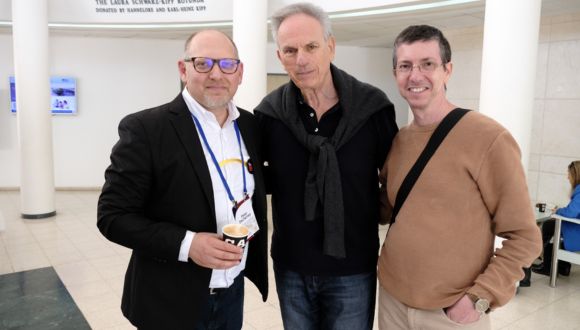 Professor Peter Decherney (UPenn), film director Avi Nesher, film scholar Dr Shmulik Duvdevani
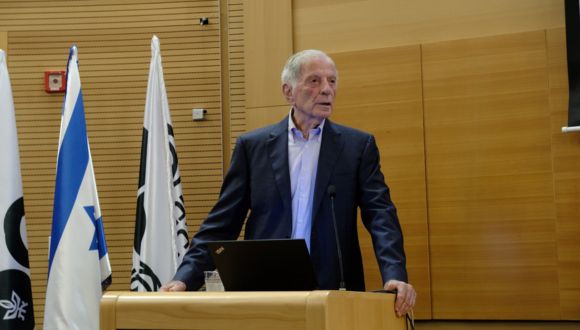 Prof Itamar Ravinovitch, former TAU President, ambassador to the US (1993-1996), and Visiting Professor at UPenn, Harvard, and Stanford
The internal divide in the country, exacerbated by attempts to weaken democracy, created an opportunity for adversaries. The policy to cultivate Hamas at the expense of the Palestinian Authority backfired, leading to a significant transfer of Qatari money into the hands of Hamas. Intelligence failures compounded the situation, resulting in a delayed response from the Israeli Defense Forces (IDF).
Prof Rabinovitch stressed that the current conflict is not merely a war with Gaza but represents the first war between Israel and Iran, with an uncertain resolution and future plans for Gaza.
Prof Itamar Ravinovitch, former TAU President, ambassador to the US (1993-1996), and Visiting Professor at UPenn, Harvard, and Stanford
The internal divide in the country, exacerbated by attempts to weaken democracy, created an opportunity for adversaries. The policy to cultivate Hamas at the expense of the Palestinian Authority backfired, leading to a significant transfer of Qatari money into the hands of Hamas. Intelligence failures compounded the situation, resulting in a delayed response from the Israeli Defense Forces (IDF).
Prof Rabinovitch stressed that the current conflict is not merely a war with Gaza but represents the first war between Israel and Iran, with an uncertain resolution and future plans for Gaza.
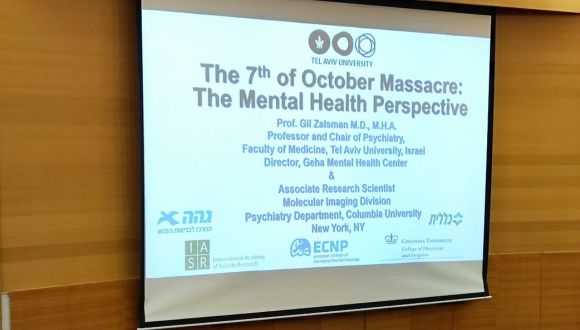 To counteract these effects, Israeli mental health professionals initiated various initiatives. Immediate victims were treated, and initiatives like the Regional Trauma Center, Daycare Unit for Sexual Victims, and Center for Children and Adolescents were established.
Additionally, Prof Yair Bar-Haim detailed the creation of the
To counteract these effects, Israeli mental health professionals initiated various initiatives. Immediate victims were treated, and initiatives like the Regional Trauma Center, Daycare Unit for Sexual Victims, and Center for Children and Adolescents were established.
Additionally, Prof Yair Bar-Haim detailed the creation of the 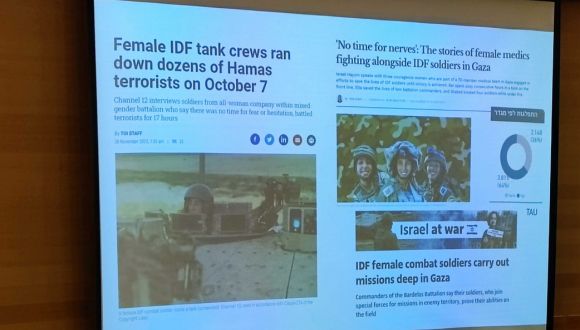 At the same time, many Israeli women and girls became victims of sexual violence on October 7. The shock over mass casualties initially prioritized victim identification and burial over forensic evidence collection, complicating international acknowledgment of the violence. To compound the issue, irresponsible domestic discourse about the scope of sexual violence has caused significant moral panic in Israel.
Another serious gender issue is the struggle to secure the release of hostages held by Hamas. The Red Cross has not been allowed to visit hostages, making it impossible to establish their health condition and to properly prioritize those who need to be released first.
At the same time, many Israeli women and girls became victims of sexual violence on October 7. The shock over mass casualties initially prioritized victim identification and burial over forensic evidence collection, complicating international acknowledgment of the violence. To compound the issue, irresponsible domestic discourse about the scope of sexual violence has caused significant moral panic in Israel.
Another serious gender issue is the struggle to secure the release of hostages held by Hamas. The Red Cross has not been allowed to visit hostages, making it impossible to establish their health condition and to properly prioritize those who need to be released first.
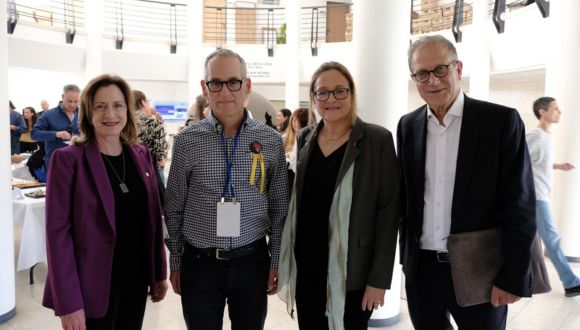 Prof Karen Avraham, Dean of the TAU Faculty of Medicine; Prof Michael Kahana, Edmund J. and Louise W. Kahn Term Professor of Psychology at the University of Pennsylvania; Prof Milette Shamir, TAU VP International; Prof Itzhak Fried, Professor-in-Residence, Neurosurgery, University of California Los Angeles



 Nir Komem (left) and Amitai Mintzer present their idea on day one HackTAU. (Photo: Yael Tzur)
The first step was identifying the challenges that needed addressing, so the two contacted as many people from around the country as they could find to ask what problems were most pressing. Six main challenges arose:
Housing and Community: Finding a solution for the hundreds of thousands of displaced citizens from the north and south of Israel, and the urgent need to restore the social ties in these communities.
Education: Adapting educational institutions to the new needs of students and creating a safe space for children and youth.
Agriculture: Leveraging the acute need to rehabilitate the agricultural sector in Israel as an opportunity to integrate innovative solutions in the industry.
Mental health: Developing various programs addressing national trauma and engaging in mental health from a collective perspective.
Jewish-Arab Relations: Creating a vision and plan for a sustainable Jewish-Arab partnership and peaceful co-existence on academic campuses.
Humanities: Focusing on the moral and human crises developing during these times within the region and worldwide.
Komem and Mintzer’s next step was to recruit students to head up each challenge along with academic and professional mentors to help bring ideas to fruition. “It’s like we had six hackathons at once,” says Mintzer.
Thinking Together
One of the exceptional features of the event was the large diversity of thinkers it brought together to innovate for Israel’s future. Students of all disciplines, communities, and backgrounds came from all over the country to form 50 teams. There was even a group of eighth graders who came to observe but in the end were welcomed to participate.
Nir Komem (left) and Amitai Mintzer present their idea on day one HackTAU. (Photo: Yael Tzur)
The first step was identifying the challenges that needed addressing, so the two contacted as many people from around the country as they could find to ask what problems were most pressing. Six main challenges arose:
Housing and Community: Finding a solution for the hundreds of thousands of displaced citizens from the north and south of Israel, and the urgent need to restore the social ties in these communities.
Education: Adapting educational institutions to the new needs of students and creating a safe space for children and youth.
Agriculture: Leveraging the acute need to rehabilitate the agricultural sector in Israel as an opportunity to integrate innovative solutions in the industry.
Mental health: Developing various programs addressing national trauma and engaging in mental health from a collective perspective.
Jewish-Arab Relations: Creating a vision and plan for a sustainable Jewish-Arab partnership and peaceful co-existence on academic campuses.
Humanities: Focusing on the moral and human crises developing during these times within the region and worldwide.
Komem and Mintzer’s next step was to recruit students to head up each challenge along with academic and professional mentors to help bring ideas to fruition. “It’s like we had six hackathons at once,” says Mintzer.
Thinking Together
One of the exceptional features of the event was the large diversity of thinkers it brought together to innovate for Israel’s future. Students of all disciplines, communities, and backgrounds came from all over the country to form 50 teams. There was even a group of eighth graders who came to observe but in the end were welcomed to participate.
 One team develops their solution by listening to each other’s thoughts. (Photo: Yael Tzur)
Each challenge had two or more teams cooking up different ideas and working in different ways. For example, in the Jewish-Arab Relations Challenge, one group focused on the urgent creation of solidarity in this time of division while the other attempted a more long-term program that could continue during calmer times for years to come.
Said Elinor Shechter, the Hebrew University student head of the Jewish-Arab Relations Challenge, “it’s not uncommon to be a Jewish or Arab student and not talk to each other for the whole year. We wanted to try to mitigate that separation.”
Entrepreneurial Support
When Komem and Mintzer approached the TAU administration with their idea, they were connected with the University’s
One team develops their solution by listening to each other’s thoughts. (Photo: Yael Tzur)
Each challenge had two or more teams cooking up different ideas and working in different ways. For example, in the Jewish-Arab Relations Challenge, one group focused on the urgent creation of solidarity in this time of division while the other attempted a more long-term program that could continue during calmer times for years to come.
Said Elinor Shechter, the Hebrew University student head of the Jewish-Arab Relations Challenge, “it’s not uncommon to be a Jewish or Arab student and not talk to each other for the whole year. We wanted to try to mitigate that separation.”
Entrepreneurial Support
When Komem and Mintzer approached the TAU administration with their idea, they were connected with the University’s  Yair Sakov speak at the HackTAU final presentation. (Photo: Yael Tzur)
Another integral supporter of the event was Allon Ventures, founded by Dr. Ori Allon. Dr. Allon, who has founded and successfully sold multiple software-based businesses, strongly believes in the positive impact technology has on our world. He is thrilled to support the upcoming generation of innovators who are using their talents to address critical issues.
Unique Solutions
At the end of three intensive days, students from each challenge got up in front of their peers and presented fully-formed projects complete with goals, expected difficulties, and resource needs. “We’re hoping these projects will continue beyond the hackathon, and we’ll be setting up a website for the purpose of connecting professionals in the field as well as possible supporters to the student project creators,” said Komem.
Added Mintzer, “as a humanities student I feel that academia is where we grapple with tough questions, and where we learn and think about value and meaning. Many people are interested in what will happen after the hackathon, but for me what’s important is that we’re making an academic space where students can take control of their lives and the future of their country. Even though we are all different, we can work together to create the country we want to see.”
You can read about each project in Hebrew
Yair Sakov speak at the HackTAU final presentation. (Photo: Yael Tzur)
Another integral supporter of the event was Allon Ventures, founded by Dr. Ori Allon. Dr. Allon, who has founded and successfully sold multiple software-based businesses, strongly believes in the positive impact technology has on our world. He is thrilled to support the upcoming generation of innovators who are using their talents to address critical issues.
Unique Solutions
At the end of three intensive days, students from each challenge got up in front of their peers and presented fully-formed projects complete with goals, expected difficulties, and resource needs. “We’re hoping these projects will continue beyond the hackathon, and we’ll be setting up a website for the purpose of connecting professionals in the field as well as possible supporters to the student project creators,” said Komem.
Added Mintzer, “as a humanities student I feel that academia is where we grapple with tough questions, and where we learn and think about value and meaning. Many people are interested in what will happen after the hackathon, but for me what’s important is that we’re making an academic space where students can take control of their lives and the future of their country. Even though we are all different, we can work together to create the country we want to see.”
You can read about each project in Hebrew 
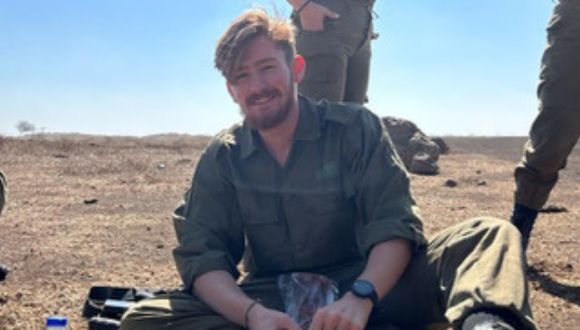 Yishai Stern (Photo courtesy of Yishai Stern)
Yishai explains, “Now that some time has passed since the start of the war, soldiers mostly have everything they need, so our care packages are more about extras—to show extra love.
Yishai Stern (Photo courtesy of Yishai Stern)
Yishai explains, “Now that some time has passed since the start of the war, soldiers mostly have everything they need, so our care packages are more about extras—to show extra love.


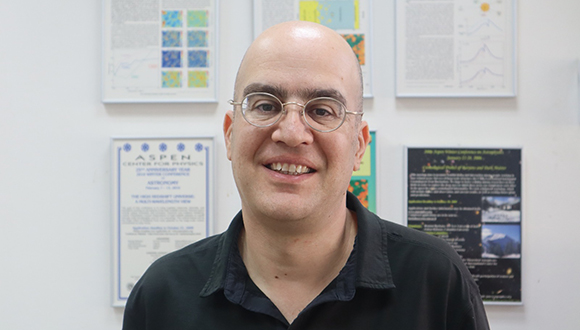 Prof. Rennan Barkana from TAU’s Sackler School of Physics and Astronomy

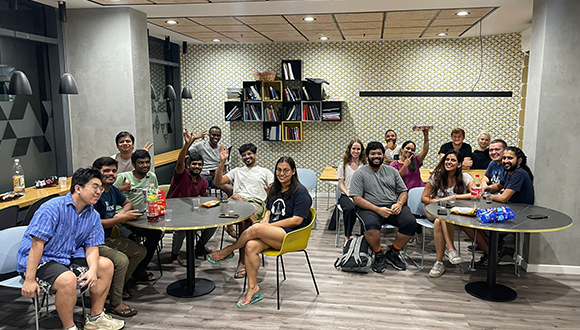 We’re still in reaction mode today, and we’re really focusing on ensuring wellbeing and safety. I’m more in touch personally with students than I usually am because I want to make sure they know who to call and come to if they need help. At the same time, we’re holding activities on campus as much as we can to provide that sense of belonging and community for our students.