Tag: Psychology

Measuring Memory Through Eye Movements

A new TAU–Ichilov study shows that tracking eye movements can assess memory more accurately than verbal reports, with potential use for infants, Alzheimer’s patients, and brain injury victims.

Researchers from Tel Aviv University and Tel Aviv Sourasky Medical Center (“Ichilov”) have measured subjects’ memory without asking whether they remembered something or not – -simply by tracking their eye movements as they watched animation videos. The study demonstrated that people actually remember more than they report. Moreover, this method can be used to measure memory in subjects who cannot speak— including infants, patients with brain injuries, and even animals.

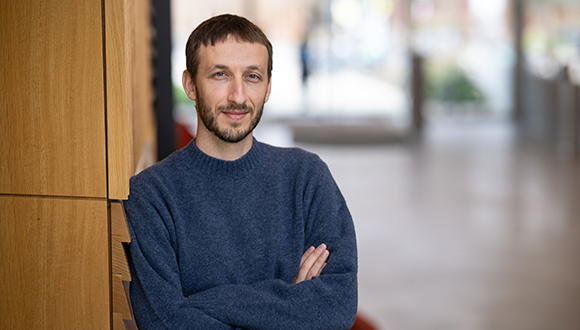
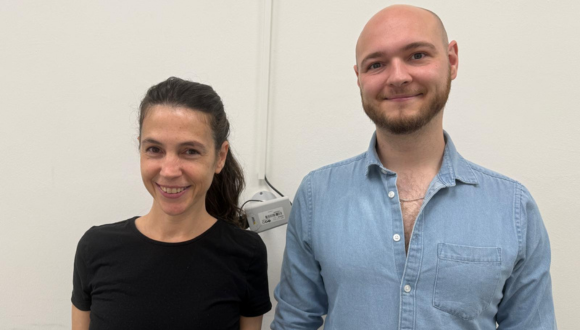
The groundbreaking study was led by Dr. Flavio Jean Schmidig, Daniel Yamin, Dr. Omer Sharon, and Prof. Yuval Nir from the Sagol School of Neurosciencethe Gray Faculty of Medical and Health Sciences, and the Fleischman Faculty of Engineering at Tel Aviv University, as well as the Sagol Brain Institute at the Tel Aviv Sourasky Medical Center (“Ichilov”). The paper was published in Communications Psychology.

Beyond Traditional Memory Tests

“Memory is usually tested through direct questioning, with subjects verbally reporting whether they remember a certain event,” explains Dr. Flavio Schmidig, currently completing his postdoctoral research in Prof. Yuval Nir’s lab at TAU. “For example, a subject might be shown a picture and asked if they remember having seen it before. However, this type of testing cannot be performed on animals, infants, patients with advanced Alzheimer’s, or people with head injuries who cannot speak. In this study we wanted to test memory in a more natural way, without asking people to remember.”

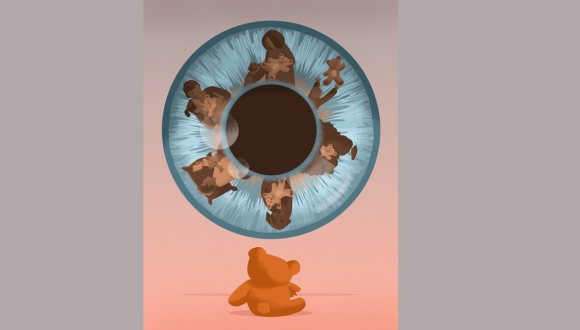
“Gaze Memory” Illustration by Ana Yael

Inside the Experiment

In the study, 145 healthy subjects watched specially created animation videos that included a surprising event –  for example, a mouse suddenly jumping out of the corner of the frame. Tracking the subjects’ eye movements  across two separate viewings of the same films, the researchers found that during the second viewing, subjects shifted their gaze toward the area where the surprising event was about to occur. A comparison of eye movement data with verbal memory reports indicated that gaze direction was in fact a more accurate measure.  In some cases, subjects said they did not remember the mouse, yet their gaze indicated that they did.

“The study proves that tracking eye movements can be an excellent alternative to verbal questions such as ‘Do you remember this?’,” says Daniel Yamin. “In a series of experiments, we demonstrated that gaze direction is a very sensitive gage of memory. Even when subjects said they didn’t remember, their gaze direction showed they did. This means that sometimes people remember, but can’t say that they remember. By using AI machine learning techniques, it is possible to infer automatically, from just a few seconds of eye tracking, whether someone has seen a video before and formed a memory of it.”

“When I ask you if you remember,” adds Dr. Sharon, “you might give any of several answers: yes, no, not sure, etc. But when you look to the left of the frame due to a vague memory that something is about to happen there, finer nuances can be discerned. Now we have a tool for testing to what extent memory is present. Our new method is also more natural than traditional memory tests.”

Looking Ahead

“The results of this study are especially relevant when verbal reports on memory cannot be obtained,” adds Prof. Yuval Nir, the study’s supervisor. “We believe that in the future this new method may be used for measuring memory functions in infants, Alzheimer’s patients, and people with brain injury whose speech ability has been impaired. Gaze direction can be simply detected by the camera of a laptop or smartphone as the subject views a video – with no need for large, sophisticated equipment. The method has the potential for identifying memories even in situations that have so far been out of reach for us as scientists and clinicians.”


Alleviating Nightmares of Israel’s War-Traumatized Children

Tel Aviv University to provide psychological relief for young victims of Hamas attacks.

The conflict that erupted in Israel on October 7, 2023, has wrought unimaginable devastation, leaving some of the most vulnerable victims children bereaved, homeless, or both. These young survivors, many of whom now find themselves in temporary accommodations across the country, sustained psychological injuries that require treatment both for immediate alleviation of suffering and for prevention of long-term post-traumatic stress and associated disorders.

A team of Tel Aviv University researchers, led by Dr. Michal Kahn from the School of Psychological Sciences, received funding from the TAU Emergency Fund to distribute 500 “DreamChanger” devices that Kahn helped develop during her postdoctoral fellowship. The device, which looks like a TV remote control, emits a calming blue light and has a button that kids can press when they want to “change their dreams.”

“We tell children that the DreamChanger can alter their dreams, akin to changing channels on a TV. The underlying therapeutic rationale is to foster their sense of agency, mastery and control, leveraging the children’s capacity forDr. Michal Kahn imagination by putting the power in their hands,” explains Kahn. “It could be an invaluable tool to help mitigate the impact of trauma-induced nightmares that many of these children may unfortunately experience.”

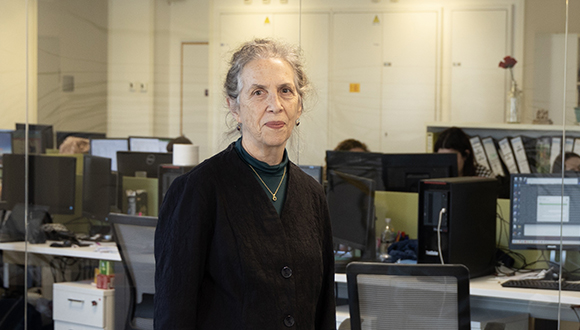
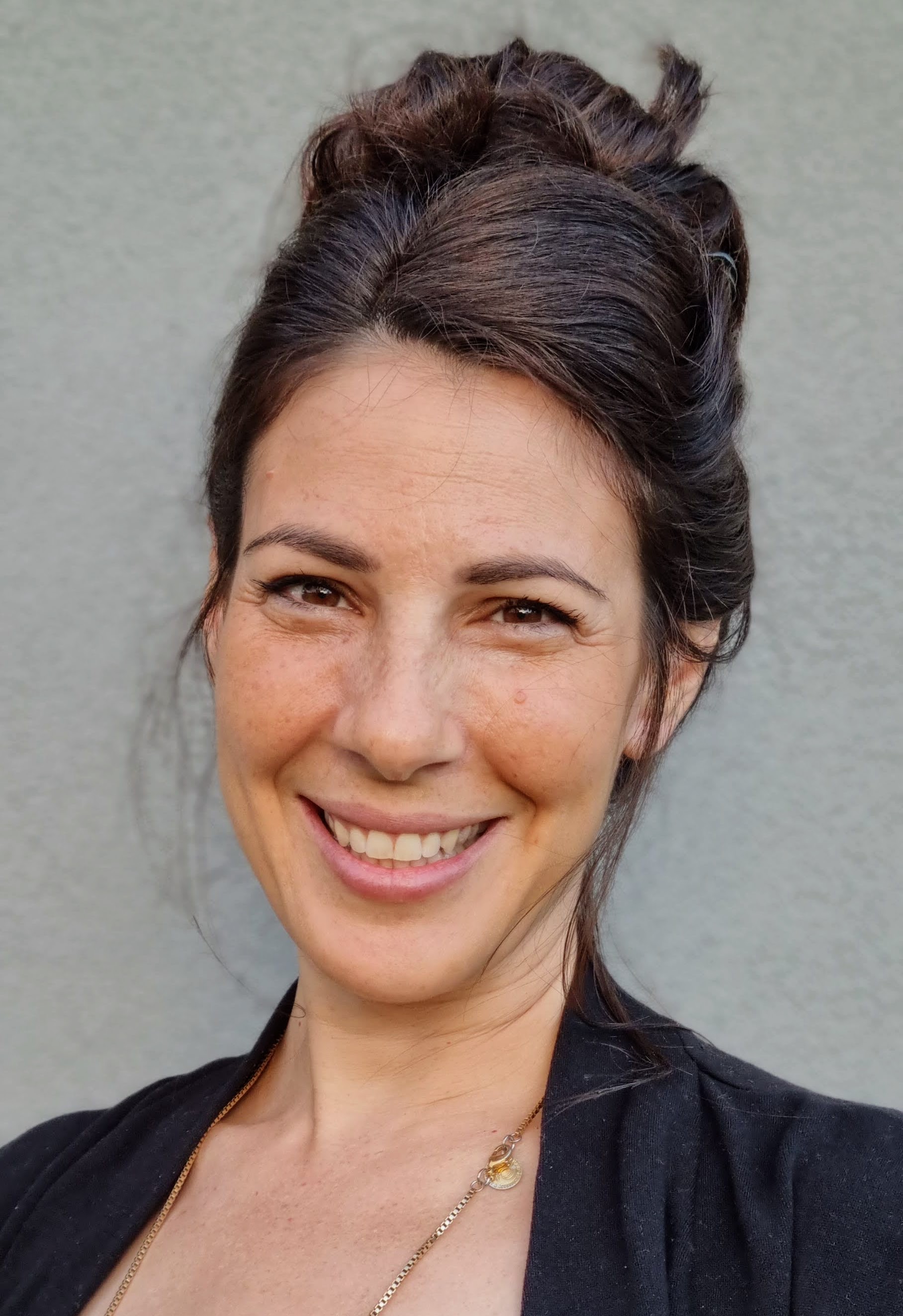
A recent randomized controlled trial has demonstrated the efficacy of the DreamChanger in reducing both the frequency of nightmares and nighttime anxiety. The promising results of this study, published in the scientific journal Sleep last year, underscore the device’s potential as a quick, accessible, and cost-effective intervention for children facing nighttime distress, Kahn says. (pictured at right)                                                                                                                                                                                                                                                                          Khan is a sleep researcher and licensed clinical psychologist, specializing in sleep development and insomnia. With her established connections to educational and mental health centers across Israel, she’s well-positioned to facilitate the distribution and implementation of the DreamChanger intervention. Numerous centers have already expressed interest in this approach, recognizing its potential to support children during these challenging times. A team of trained psychologists is prepared to administer the DreamChanger intervention. “Our current focus is on obtaining the necessary funds to deliver them to all of Israel’s children in need,” Kahn says.

Drug-Free Alternative for People with Social Anxiety

Technology-driven treatment found to be as effective as psychiatric medications.

A new clinical trial conducted at Tel Aviv University has demonstrated an effective technology-driven alternative to psychiatric medications for people with social anxiety. The groundbreaking study found that Gaze-Contingent Music Reward Therapy (GC-MART) is as effective in treating social anxiety disorder as drugs from the SSRI family. The innovative treatment developed at TAU relieved the symptoms of about 50% of the study participants. The researchers hope that this therapy will soon be available as an effective alternative to psychiatric medications.

Affecting 4-12% of the Population

The study was led by Prof. Yair Bar-Haim, Director of the Adler Center for Child Development and Psychopathology, and of the Center for Traumatic Stress and Resilience at Tel Aviv University, together with research students Gal Arad and Omer Azriel from The School of Psychological Sciences at the Gershon H. Gordon Faculty of Social Sciences at Tel Aviv University Other collaborators included the NIH, the Tel Aviv Sourasky (Ichilov) and Sheba Medical Centers, and Prof. Amit Lazarov of TAU. The paper was published in the prestigious American Journal of Psychiatry.


“About 4-12% of the population will develop social anxiety disorder at some stage of their lives. Quite often, people with this disorder avoid social situations – at a heavy interpersonal, professional, and economic price.” Prof. Yair Bar-Haim


Prof. Bar-Haim explains that “about 4-12% of the population will develop social anxiety disorder at some stage of their lives. Quite often, people with this disorder avoid social situations – at a heavy interpersonal, professional, and economic price. At present, psychiatry and psychology offer sufferers two types of treatment: SSRI (Selective Serotonin Reuptake Inhibitor) drugs, such as Cipralex, and CBT (Cognitive-Behavioral Therapy). CBT requires 12-20 sessions with a qualified clinical psychologist, in which symptoms are relieved through gradual exposure to the cause of anxiety. Thus, while effective, CBT is a complex treatment necessitating the presence of a highly skilled therapist and requiring patients to face their deepest fears, a requirement that often leads to treatment dropout.

“Because CBT is demanding, expensive, and not readily accessible, many patients turn to medication. However, psychiatric drugs like Cipralex have their own drawbacks: first, some patients prefer not to use psychiatric drugs; second, entire populations, such as young children, pregnant women, and individuals with specific diseases, cannot take SSRI drugs; and third, in some cases the drug has certain side effects.”


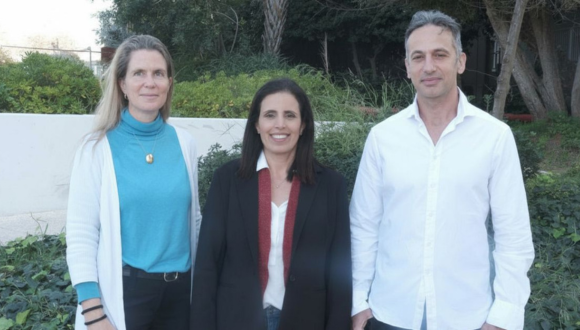
The research team (left to right): Prof. Yair Bar-Haim Gal Arad and Omer Azriel

Simple and Patient-friendly

Now, researchers from TAU have developed a third option, which is easy-to-use, quick and simple, and apparently no less effective than psychiatric drugs. Moreover, since the treatment is highly patient-friendly, a much lower dropout rate may be expected.

In the clinical trial, 105 Israeli adults with social anxiety disorder were assigned into three groups: one group was treated with SSRI drugs, in this case Cipralex; a second group was treated with GC-MART; and a control group. After ten 30-minute training sessions, about 50% of the patients provided with the new therapy demonstrated significant improvement in their symptoms – a result similar to the outcome reported for patients who took Cipralex.


“With efficacy similar to that of an existing first line drug treatment, the new treatment does not require the patient to take medications regularly. The new treatment is simple and patient friendly.” Prof. Yair Bar-Haim


“The therapy we developed is based on eye-tracking combined with a musical reward,” explains Prof. Bar-Haim. “The patients choose the music they would like to hear – Israeli, classical, hip hop, etc., and is shown a simulation of a crowd on a computer screen. Usually, individuals with social anxiety disorder tend to dwell on scowling or threatening facial expressions, quickly picking them out and unable to look away. Consequently, they often interpret the crowd or social situations as hostile, negative, or critical. People without social anxiety disorder, on the other hand, prefer to focus on positive or neutral faces in a crowd. In the new therapy, the music chosen by the patient provides positive feedback for a normal focus of attention on facial expressions in the crowd presented on the screen. Gradually, through training, patients’ biased attention is normalized, and symptoms recede. All participants in our trial underwent a comprehensive clinical assessment both before and after the treatment and were also asked to report on the symptoms and their severity. Results indicated that the new treatment significantly reduced symptoms of social anxiety, with an efficacy that is similar to that of SSRI drugs.”

“Our findings are encouraging for both therapists and patients. With efficacy similar to that of an existing first line drug treatment, the new treatment does not require the patient to take medications regularly. The new treatment is simple and patient friendly. It does not necessitate the prolonged intervention of a highly skilled psychologist, but rather interaction with social images on a screen, and therefore potentially offers accessible, effective, and convenient treatment for social anxiety disorder,” concludes Prof. Bar-Haim.

Victoria

Phone: +61 3 9296 2065
Email: office@aftau.asn.au

New South Wales

Phone: +61 02 7241 8711
Email: admin@aftau.org.au

Western Australia

Phone: :+61 0418 46 5556
Email: davidsolomon@aftau.org.au