Tag: Neuroscience

While You Were Sleeping

Could we be one step closer to verifying whether a seemingly unconscious person is truly unaware of his or her surroundings?

A new TAU discovery may provide a key to a great scientific enigma: How does the awake brain transform sensory input into a conscious experience? The researchers were surprised to discover that the brain’s response to sound remains powerful during sleep in all parameters but one: the level of alpha-beta waves associated with attention to the auditory input and related expectations. This means that during sleep, the brain analyzes the auditory input but is unable to focus on the sound or identify it, and therefore no conscious awareness ensues.

The study was led by Dr. Hanna Hayat and with major contribution from Dr. Amit Marmelshtein, at the lab of Prof. Yuval Nir from the School of Medicine of the Sackler Faculty of Medicine, the Sagol School of Neuroscience, and the Department of Biomedical Engineering, and co-supervised by Prof. Itzhak Fried from the UCLA Medical Center. Other participants included: Dr. Aaron Krom and Dr. Yaniv Sela from Prof. Nir’s group, and Dr. Ido Strauss and Dr. Firas Fahoum from the Tel Aviv Sourasky Medical Center (Ichilov). The paper was published in the prestigious journal Nature Neuroscience.

A Deep Dive into the Human Brain

Prof. Nir explains that this study is unique in that it builds upon rare data from electrodes implanted deep inside the human brain, enabling high-resolution monitoring, down to the level of individual neurons, of the brain’s electrical activity.

While electrodes cannot be implanted in the brain of living humans just for the sake of scientific research, in this case the researchers were able to utilize a special medical procedure in which electrodes were implanted in the brains of epilepsy patients, monitoring activity in different parts of their brain for purposes of diagnosis and treatment. The patients volunteered to help examine the brain’s response to auditory stimulation in wakefulness versus sleep.

The researchers placed speakers emitting various sounds at the patients’ bedside and compared data from the implanted electrodes – neural activity and electrical waves in different areas of the brain – during wakefulness and during various stages of sleep. Altogether, the team collected data from over 700 neurons (about 50 neurons in each patient) over the course of 8 years.

 

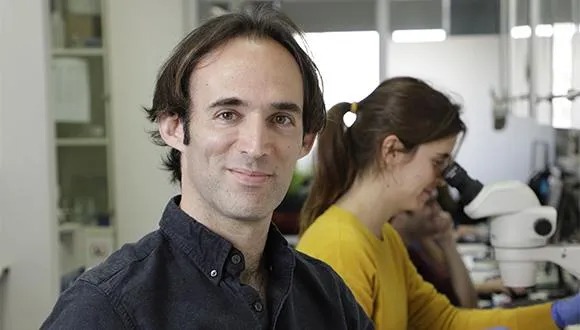
Dr. Hanna Hayat

Measuring the Strength of Alpha-beta Waves

“After sounds are received in the ear, the signals are relayed from one station to the next within the brain,” explains Dr. Hayat. “Until recently it was believed that during sleep these signals decay rapidly once they reach the cerebral cortex.  But looking at the data from the electrodes, we were surprised to discover that the brain’s response during sleep was much stronger and richer than we had expected. Moreover, this powerful response spread to many regions of the cerebral cortex. The strength of brain response during sleep was similar to the response observed during wakefulness, in all but one specific feature: the level of activity of alpha-beta waves.”

The researchers explain that alpha-beta waves (10-30Hz) are linked to processes of attention and expectation that are controlled by feedback from higher regions in the brain. As signals travel ‘bottom-up’ from the sensory organs to higher regions, a ‘top-down’ motion also occurs: the higher regions, relying on prior information that had accumulated in the brain, act as a guide, sending down signals to instruct the sensory regions as to which input to focus on, which should be ignored, etc. Thus, for example, when a certain sound is received in the ear, the higher regions can tell whether it is new or familiar, and whether it deserves attention or not.

“We hope that our findings will serve as a basis for developing effective new methods for measuring the level of awareness of individuals who are supposedly in various states of unconsciousness.”

This kind of brain activity is manifested in the suppression of alpha-beta waves, and indeed, previous studies have shown a high level of these waves in states of rest and anesthesia. According to the current study, the strength of alpha-beta waves is the main difference between the brain’s response to auditory inputs in states of wakefulness vs. sleep.

Decoding Consciousness

Prof Nir summarizes: “Our findings have wide implications beyond this specific experiment. First, they provide an important key to an ancient, fascinating enigma: What is the secret of consciousness? What is the ‘X-factor’, the brain activity that is unique to consciousness, allowing us to be aware of things happening around us when we are awake, and disappearing when we sleep? In this study we discovered a new lead, and in future research we intend to further explore the mechanisms responsible for this difference. 

“In addition, having identified a specific brain feature that is different between states of consciousness and unconsciousness, we now have a distinct quantitative measure – the first of its kind – for assessing an individual’s awareness of incoming sounds. We hope that in the future, with improved techniques for measuring alpha-beta brain waves, and non-invasive monitoring methods such as EEG, it will be possible to accurately assess a person’s state of consciousness in various situations: verifying that patients remain unconscious throughout a surgical procedure, monitoring the awareness of people with dementia, or determining whether an allegedly comatose individual, unable to communicate, is truly unaware of his/her surroundings. In such cases, low levels of alpha-beta waves in response to sound could suggest that a person considered unconscious may in fact perceive and understand the words being said around him. We hope that our findings will serve as a basis for developing effective new methods for measuring the level of awareness of individuals who are supposedly in various states of unconsciousness. “
 

Outstanding Navigators, both Night and Day

Researchers find that bats navigate well, also during the day, thanks to their unique sensory integration.

It is time to bust a myth about bats – bats actually see well during the day and they know how to navigate the space during daylight hours. A new Tel Aviv University study has found that fruit bats use their biological sonar during the day, even though their vision is excellent and would ostensibly eliminate the need for the bats to emit calls to the environment and use their echoes to locate objects (echolocation). The researchers believe that due to the high accuracy of the bats’ bio-sonar system in estimating how far objects are, echolocation offers an additional tool – on top of vision – to help ensure that the bats are navigating as effectively as possible. This is similar to a person crossing the street using their sense of hearing as well as sight to make sure the road is clear.

Enjoying the Tel Aviv Sun

The study was conducted under the supervision of Prof. Yossi Yovel, head of Tel Aviv University’s Sagol School of Neuroscience and a researcher at the School of Zoology in The George S. Wise Faculty of Life Sciences and the Steinhardt Museum of Natural History. The study was led by Ph.D. student Ofri Eitan in cooperation with Dr. Maya Weinberg, Dr. Sasha Danilovich, and Reut Assa, all from Tel Aviv University, and Yuval Barkai, an urban nature photographer. The study will be published in the journal Current Biology.

The researchers explain that in general, bats are active mainly at night, and echolocation is the tool they use to navigate their way in the dark. They also say, however, that in recent years a growing phenomenon has been witnessed in Israel, particularly in Tel Aviv but also in other cities, in which Egyptian fruit bats roam around even during the day. In the current study, the researchers sought to examine what happens when the bats are active during the day, and whether they are aided by their unique bio-sonar even in conditions of good visibility.

For the first time, the researchers studied the activity and sensory behavior of the fruit bat during the day. The research was conducted with the help of photography and audio recordings of the bats’ activities throughout the day, in three different situations: in the morning, as they went out to explore in Tel Aviv; later in the day, when they visited Tel Aviv’s sycamore trees; and while they were drinking water from an artificial pool. In each of these situations, the bats used echolocation.

Daytime Integration of Senses

Ofri Eitan explains: “We compared the bats’ landings and flights between the trees, and found that prior to landing, the bats increased the sounds they emitted in order to use the echoes to help estimate the distance to the ground. In addition, we found that even in the pools of water, bats increased the rate of their calls before coming into contact with the water and reduced it (and sometimes even ceased the calls completely) after ascending from the water to fly to an open area. On the other hand, there were cases in which the bats emerged from the pool and had a wall placed in front of them, and once again returned to the use of echolocation. So, all our results show that the fruit bats make functional use of echolocation.”

Prof. Yossi Yuval concludes: “Our results are unequivocal and show that fruit bats make frequent use of echolocation even during the day when visibility is good. We hypothesize that this is due to the fact that echolocation helps the bats to measure the distances of objects in the environment more accurately, and that their brains combine the visual information along with the auditory information. This study shows how important integration between different senses is, just as we humans integrate visual and auditory information when we cross a street, for example.”

TAU Researchers Find Gene Mechanism Linked to Autism and Alzheimer’s

Experimental drug has potential to treat rare syndromes that impair brain functions.

Researchers at Tel Aviv University, led by Prof. Illana Gozes from the Department of Human Molecular Genetics and Biochemistry at the Sackler Faculty of Medicine and the Sagol School of Neuroscience, have unraveled a mechanism shared by mutations in certain genes which cause autism, schizophrenia, and other conditions. The researchers also found that an experimental drug previously developed in Prof. Gozes’ lab is effective in lab models for these mutations, and believe the encouraging results may lead to effective treatments for a range of rare syndromes that impair brain functions and cause autism, schizophrenia, and neurodegenerative diseases like Alzheimer’s.

“Some cases of autism are caused by mutations in various genes,” explains Gozes. “Today, we know of more than 100 genetic syndromes associated with autism, 10 of which are considered relatively common (though still extremely rare). In our lab, we focus mainly on one of these, the ADNP syndrome. The ADNP syndrome is caused by mutations in the ADNP gene, which disrupt the function of the ADNP protein, leading to structural defects in the skeleton of neurons in the brain. In the current study, we identified a specific mechanism that causes this damage in mutations in two different genes: ADNP and SHANK3 – a gene associated with autism and schizophrenia. According to estimates, these two mutations are responsible for thousands of cases of autism around the world.”

To start with, the researchers obtained cells from patients with ADNP syndrome. They discovered that when the ADNP protein is defective, neurons with faulty skeletons (microtubules) are formed, impairing brain functions. They also found, however, that ADNP mutations take different forms, some of which cause less damage.

Gozes explains that in some mutations, a section added to the protein protects it and reduces the damage by connecting to a control site of the neuron’s skeletal system and that this same control site is found on SHANK3 – a much studied protein, with mutations that are associated with autism and schizophrenia. “We concluded that the ability to bond with SHANK3 and other similar proteins provides some protection against the mutation’s damaging effects,” she says.

At the next stage of the study, the researchers found additional sites on the ADNP protein that can bond with SHANK3 and similar proteins. One of these sites is located on NAP, a section of ADNP which was developed into an experimental drug, called Davunetide, by Prof. Gozes’ lab.

Moreover, the researchers demonstrated that extended treatment with Davunetide significantly improved the behavior of lab animals with autism caused by SHANK3.

“In previous studies we showed that Davunetide is effective for treating ADNP syndrome models. The new study has led us to believe that it may also be effective in the case of Phelan McDermid syndrome, caused by a mutation in SHANK3, as well as other syndromes that cause autism through the same mechanism,” explains Gozes.

Participants in the study: Dr. Yanina Ivashko-Pachima, Maram Ganaiem, Inbar Ben-Horin-Hazak, Alexandra Lobyntseva, Naomi Bellaiche, Inbar Fischer, Gilad Levy, Dr. Shlomo Sragovich, Dr. Gidon Karmon, and Dr. Eliezer Giladi from the Sackler Faculty of Medicine and Sagol School of Neuroscience at TAU, Dr. Boaz Barak from The School of Psychological Sciences, Gershon H. Gordon Faculty of Social Sciences and the Sagol School of Neuroscience at TAU, and Dr. Shula Shazman from the Department of Mathematics and Computer Science at the Open University. The paper was published in the scientific journal Molecular Psychiatry.

Can Higher Temperatures Accelerate the Rate of Evolution?

TAU researchers use worms to demonstrate that epigenetic inheritance of sexual attractiveness can impact the evolutionary process.

Can environment impact genetic diversity in face of changing conditions, such as higher temperatures (think global warming)? Researchers at Tel Aviv University have discovered that epigenetic inheritance – inheritance which does not involving changes in the DNA sequence – can affect the genetic composition of the population for many generations. The environment can actually impact genetic diversity under certain conditions and the researchers believe that it’s a way for the environment to adjust genetic diversity.

Worms Get It from their Mama’s Mama’s Mama’s… 

Females of the worm species C. elegans produce both egg cells (or “oocytes”) and sperm, and can self-reproduce (hence are considered hermaphrodites). They produce their sperm in a limited amount, only when they are young. At the same time, there are also rare C. elegans males in the population that can provide more sperm to the female worms through mating.

In normal conditions, the female hermaphrodites secrete pheromones to attract males for mating only when they grow old and run out of their own sperm (at this point mating becomes the only way for them to continue and reproduce). Therefore, when the hermaphrodite is young, and still has sperm, she can choose whether to mix her genes by sexually reproducing with a male, or not.

In the new study, exposure to elevated temperatures was found to encourage more hermaphrodites to mate, and this trait was also preserved in the offspring for multiple generations, even though they were raised in comfortable temperatures and did not experience the stress from the increased heat.

The study, which was published today in the journal Development Cell, was led by Prof. Oded Rechavi and Dr. Itai Toker, as well as Dr. Itamar Lev and MD-PhD student Dr. Yael Mor, who did their doctorates under Prof. Rechavi’s supervision at the School of Neurobiology, Biochemistry & Biophysics, George S. Wise Faculty of Life Sciences, and the Sagol School of Neuroscience. The study was conducted in collaboration with the Rockefeller University in New York.

Securing Genetic Diversity

Why did the higher temperatures result in the C. elegans worms becoming more attractive, mating more with males? Dr. Itai Toker explains that “The heat conditions we created disrupted the inheritance of small RNA molecules that control the expression of genes in the sperm, so the worm’s sperm was not able to fertilize the egg with the efficiency that it normally would. The worm sensed that the sperm it produced was partially damaged, and therefore began to secrete the pheromone and attract males at an earlier stage, while it was still young.”

If that wasn’t enough, Dr. Rechavi points out that the really fascinating finding was that the trait of enhanced attractiveness was then passed on for many generations to offspring who did not experience the conditions of higher temperatures. The researchers found that heritable small RNA molecules, not changes in the DNA, transmitted the enhanced attractiveness between generations. Small RNAs control gene expression through a mechanism known as RNA interference or gene silencing – they can destroy mRNA molecules and thus prevent specific genes from functioning in a given time at a given tissue or cell.

Dr. Itai Toker adds that, “In the past, we discovered a mechanism that passes on small RNA molecules to future generations, in parallel and in a different way from the usual DNA-based inheritance mechanism. This enables the transmission of certain traits transgenerationally. By specifically inhibiting the mechanism of small RNA inheritance, we demonstrated that the inheritance of increased attractiveness depends on the transmission of small RNAs that control sperm activity.”

Mating, as opposed to fertilizing themselves, comes at a price for the female, hermaphroditic worms, as it allows them to pass on only half of their genome to the next generation. This “dilution” of the parents’ genetic contribution is a heavy price to pay. The benefit, however, is that it increases genetic diversity. By conducting lab evolution experiments we indeed discovered that it may be a useful adaptive strategy.

The researchers later experimented with evolution: They tracked the offspring of mothers who passed on the trait of attractiveness to males with the help of small RNAs, and allowed them to compete for males, for many generations, against normal offspring from a control group. The researhers observed how the inheritance of sexual attractiveness led to more mating in these competitive conditions, and that as a result the attractive offspring were able to spread their genes in the population more successfully.


Prof. Oded Rechavi (photo: Yehonatan Zur Duvdevani)

Environment’s Response to Global Warming?

In general, living things respond to their environment by changing their gene expression, without changing the genes themselves. The understanding that some of the epigenetic information, including information about the parents’ responses to environmental challenges, is encoded in small RNA molecules and can be passed down from generation to generation has revolutionized our understanding of heredity, challenging the dogma that has dominated evolution for a century or more. However, to date researchers have not been able to find a way in which epigenetic inheritance can affect the genetic sequence (DNA) itself.

“Epigenetics in general, and the inheritance of parental responses facilitated by small RNAs in particular, is a new field that is garnering a lot of attention,” says Dr. Lev. “We have now proven that the environment can change not only the expression of genes, but, indirectly, also genetic heredity, and for many generations.”

“Generally, epigenetic inheritance of small RNA molecules is a transient matter: the organism is exposed to a particular environment, and preserves the epigenetic information for 3-5 generations. In contrast, evolutionary change occurs over hundreds and thousands of generations. We looked for a link between epigenetics and genetics and found that a change in the environment, that is relevant to global warming, induces transgenerational secretion of a pheromone to attract males, and thus affects the evolution of the worms’ genome.”

Dr. Mor adds, “We think that it’s a way for the environment to adjust genetic diversity. After all, evolution requires variability and selection. The classical theory is that the environment can influence selection, but cannot affect variability, which is created randomly as a result of mutations. We found that the environment can actually impact genetic diversity under certain conditions.”

Victoria

Phone: +61 3 9296 2065
Email: office@aftau.asn.au

New South Wales

Phone: +61 02 7241 8711
Email: admin@aftau.org.au

Western Australia

Phone: :+61 0418 46 5556
Email: davidsolomon@aftau.org.au