Tag: Biology

Lights On, Immune System Off?

TAU Study Finds Artificial Light at Night May Disrupt Biological Rhythms and Increase Mortality

A new study from Tel Aviv University indicates for the first time that artificial lighting may disrupt natural rhythms of the immune system in wild rodents. According to the study, even exposure to minimal artificial light at night (ALAN), at intensities equivalent to standard street lighting, leads to a 2.35-fold increase in mortality.

Examining real-world conditions

The study was conducted at TAU’s Zoological Garden, the I. Meier Segals Garden for Zoological Research on two local mammals, the golden spiny mouse and the common spiny mouse. It was carried out by doctoral student Hagar Vardi-Naim at the George S. Wise Faculty of Life Sciences. The study’s supervisors were Prof. Yariv Wine, head of the Applied Immunology Laboratory at the Shmunis School of Biomedicine and Cancer Research, and Prof. Noga Kronfeld-Schor, head of the Ecological and Evolutionary Physiology Laboratory at the School of Zoology, and Rector of TAU. Both Prof. Wine and Prof. Kronfeld-Schor are also affiliated with the new Environmental School at Tel Aviv University. The research was supported by the Israel Science Foundation. The disturbing findings were published in the journal Environmental Pollution.

Vardi-Naim explains: “Large parts of every mammal’s body, including our own, are regulated by an internal biological clock. With a 24-hour rhythm based on the natural light-dark cycle, this biological clock signals to various organs and physiological systems, including the immune system, what they should do at different times of day. For example, the levels of certain white blood cells rise and fall in the blood, and the body produces more/less antibodies at specific times. Such oscillations can enhance the immune response to bacteria or viruses, but for this the body must know the time. Light pollution alters the natural light-dark regime, disrupts the central clock’s synchronization with environmental time, and changes these patterns, rendering time almost meaningless.”

Testing the effects of light pollution

The researchers examined the effects of artificial lighting on the immune systems of two related species of small rodents: the golden spiny mouse and the common spiny mouse. Both live in the Israeli desert, sharing the same geographical habitat, but differing in their activity time: while the golden spiny mouse is active during the day, the common spiny mouse is active during night. The animals were taken from the Judean Desert to outdoor enclosures at TAU’s Zoological Garden, where some of them were exposed to ALAN.

Vardi-Naim: “We kept the spiny mice in enclosures that simulated natural environmental conditions as much as possible. Half of the enclosures were illuminated at night with white LED, the most common type of lighting used today, at a relatively low intensity that simulates street lighting, while the control group was exposed only to natural light-dark conditions – the sun, moon, and stars.”

When timing breaks down

The researchers measured the percentage of white blood cells (i.e., lymphocytes) in the mice’s blood at several points in the 24-hour cycle, and found a pattern similar to the human rhythm, with lymphocyte levels in the blood rising during rest hours, between two and four in the morning. In addition, they discovered a very clear 24-hour lymphocyte rhythm, and found that the amount of antibodies produced in response to an antigen (a substance that evokes the immune system’s response, e.g. a virus or vaccine), is time-dependent.

“We saw that animals exposed to an antigen during their rest hours produced far more antibodies than those exposed during their active hours,” adds Vardi-Naim. “Exposure to light pollution, however, completely muddled these rhythms.  Instead of a daily cycle of peaks and lows in the level of lymphocytes and immune response, we observed a complete flattening of the daily patterns. This means that the immune system loses its natural timing, and consequently, its response to infections, environmental stress, or vaccination might be less than optimal, possibly increasing the animals’ vulnerability over time.”

A significant rise in mortality

In addition, extensive and rapid mortality was observed among the mice exposed to light pollution, with a 2.35 times higher risk of death compared to the control group. The researchers note that even though the exact cause of death could not be determined, the rise in mortality occurred alongside disruption of immune and endocrine (hormonal) rhythms, suggesting a likely connection between damage to biological timing and reduced survival.

Vardi-Naim emphasizes that the spiny mice in the study are only an example, and that the findings have implications for all living creatures, including humans. “Our results show that ALAN is not merely an aesthetic environmental change, but an active biological factor capable of disrupting critical physiological mechanisms. Chronic exposure to ALAN disrupted the timing of the mice’s immune and endocrine systems and impaired their survival under conditions that otherwise simulated the natural environment. We believe that light pollution should be regarded as an environmental health risk with broad implications, not only for wildlife but also for human health and the ecosystem as a whole. Studies show that animals with weakened immune systems can transmit diseases to humans, and it is possible that the human immune system responds in a similar way. The study underlines the need to include biological considerations in lighting policies and to reexamine ALAN scope and intensity in both urban and open spaces.”

Overall, by studying animals that live in conditions close to their natural environment rather than in sterile laboratory settings, this research highlights the value of using wild models to understand how the immune system functions in the real world. Such approaches reveal how environmental changes, including growing light pollution, can affect complex biological systems in ways that are often missed in traditional lab studies. As human activity continues to reshape natural environments, studying immune responses under realistic ecological conditions is essential for understanding how global environmental change may influence the health of wildlife, ecosystems, and potentially humans.

 

Turtles and the Origins of the Visual Brain

TAU Study Reveals Advanced Visual Processing Evolved Hundreds of Millions of Years Ago

A new study from the School of Neurobiology, Biochemistry, and Biophysics reveals a surprising insight into the operation of the ancestral brain: the visual cortex of turtles is capable of detecting unexpected visual stimuli in a way that is independent of their position on the retina, a property that, until now, was thought to exist only in the highly developed cortices of mammals, including humans. In light of these findings, the research team assesses that advanced brain mechanisms previously thought to be unique to mammals were already present hundreds of millions of years ago.

The study was led by Milan Becker, Nimrod Leberstein, and Dr. Mark Shein-Idelson, researchers in the Department of Neurobiology and the Sagol School of Neuroscience at Tel Aviv University. The study was published in the prestigious journal Science Advances.

A Shared Ancestry

The researchers explain that reptiles and mammals diverged from a common ancestor approximately 320 million years ago. Since that time, the mammalian brain and the cerebral cortex in particular — has undergone dramatic development, becoming complex, large, and folded. The reptile brain, by contrast, is regarded as simpler and more like the common ancestor of reptiles and mammals. Therefore, when a sophisticated computational mechanism in mammals is discovered also in the brain of a turtle, it suggests that this mechanism already existed in the brains of the ancestral amniotes – the first animals that completed the move onto land.

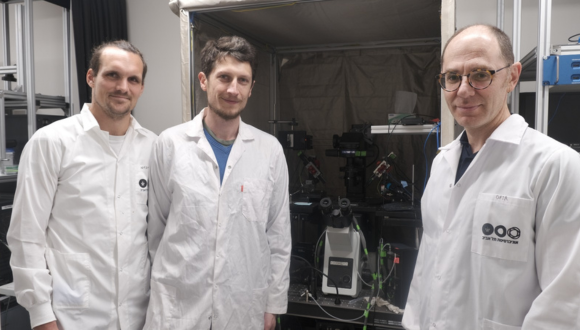
Research team (Left to right): Milan Becker, Nimrod Leberstein & Dr. Mark Shein-Idelson.

How the Turtle Brain Sees

In the study, the researchers focused on the turtle’s dorsal cortex, a region considered an evolutionary homolog of the mammalian cerebral cortex. Using neural recordings in awake animals, along with eye-movement tracking, the researchers examined how the turtle brain responds to repeatedly presented visual stimuli compared with “deviant” stimuli that appear in unexpected locations in the visual field.

Dr. Shein-Idelson: “The truly surprising result emerged when we examined what happens when the turtle moved its head or eyes. Such movements shift the image on the retina and can create ‘confusion’ in the visual system. Yet in turtles, the response to both the deviant and the regular stimulus remained consistent, despite frequent changes in the viewing angle. In simple terms, the turtle’s brain ‘understands’ that something new has occurred in the environment, even if the image is seen from a different angle and no longer falls on the exact same spot on the eye.”

The researchers also found that the turtle’s self-generated movements, such as shifts of the head or eyes, hardly elicit any brain response, even though they substantially alter the image received by the eye. In contrast, a small but unexpected change in the external environment strongly activates the brain. This indicates an ability to distinguish between stimuli resulting from self-motion and new information that requires attention.

Rethinking Brain Evolution

According to the researchers, these findings change the way we understand brain evolution. Until now, it was believed that view invariance is hierarchically computed as information travels from low to high visual areas as observed in monkeys and humans. The new study presents a different picture: even in the brain of early terrestrial vertebrates with a simple cortex, like those of the turtle’s ancestors, there already existed an ability to detect important events in the environment invariantly of viewing angle.

The researchers believe that this ability helped animals understand their spatial environment, learn, and survive complex terrestrial environments. Remarkably, even without a large and folded cerebral cortex, turtles possess a smart system capable of recognizing when something truly important is happening around them.

Dr. Shein-Idelson concludes: “This study demonstrates how the brains of turtles offer a unique window into the evolutionary past. Because turtles and mammals diverged from a common ancestor hundreds of millions of years ago, the discovery of advanced brain mechanisms in turtles suggests that these abilities either evolved hundreds of millions of years ago or convergently evolved due to similar environmental pressures in both lineages. The findings suggest that the ability to detect new and important occurrences in the environment, without being influenced by self-generated head and eye movements, is one of the cornerstones upon which the cortex evolved and points to the importance of this essential computation.”


How Corals Pulse in Perfect Sync Without a Brain?

A TAU–University of Haifa study solves a long-standing mystery about rhythmic movement in nature

A joint study by Tel Aviv University and the University of Haifa set out to solve a scientific mystery: how a soft coral is able to perform the rhythmic, pulsating movements of its tentacles without a central nervous system. The study’s findings are striking, and may even change the way we understand movement in the animal kingdom in general, and in the corals studied in particular.

The study was led by Elinor Nadir, a PhD student at Tel Aviv University, under the joint supervision of Prof. Yehuda Benayahu of the School of Zoology at Tel Aviv University and Prof. Tamar Lotan of the Department of Marine Biology at the Leon H. Charney School of Marine Sciences at the University of Haifa. The findings were published in the prestigious scientific journal PNAS.

An Orchestra Without a Conductor

The research team discovered that the soft coral Xenia umbellata — one of the most spectacular corals on Red Sea reefs — drives the rhythmic movements of its eight polyp tentacles through a decentralized neural pacemaker system. Rather than relying on a central control center, a network of neurons distributed along the coral’s tentacle enables each one to perform the movement independently, while still achieving precise, collective synchronization.

“It’s a bit like an orchestra without a conductor,” explains Prof. Tamar Lotan of the School of Marine Sciences at the University of Haifa. “Each tentacle acts independently, but they are somehow able to ‘listen’ to each other and move in that perfect harmony that so captivates observers. This is a completely different model from how we understand rhythmic movement in other animals.”

Testing the Limits of Coordination

Corals of the Xeniidae family are known for their hypnotic movements — the cyclic opening and closing of their tentacles. Until now, however, it was unclear how they perform this. To investigate, the researchers conducted cutting experiments on the coral’s tentacles and examined how they regenerated and restored their rhythmic motion. To their surprise, even when the tentacles were cut off and separated from the coral — and even when further divided into smaller fragments — each piece retained its ability to pulse independently.

Ancient Genes, Modern Insights

Subsequently, the researchers conducted advanced genetic analyses and examined gene expression at different stages of tentacle regeneration after separation from the coral. They found that the coral uses the same genes and proteins involved in neural signal transmission in far more complex animals, including acetylcholine receptors and ion channels that regulate rhythmic activity. According to the researchers, this discovery suggests that the origin of rhythmic movements — familiar to us from those underlying breathing, heartbeat, or walking — is far more ancient than previously thought. The corals studied demonstrate how coordinated movement can emerge from a simple, distributed system, long before sophisticated control centers evolved in the brains of advanced animals.

Prof. Benayahu adds: “It is fascinating to reach the conclusion that the same molecular components that activate the pacemaker of the human heart are also at work in a coral that appeared in the oceans hundreds of millions of years ago. The coral we studied allows us to look back in time, to the dawn of the evolution of the nervous system in the animal kingdom. It shows that rhythmic and harmonious movement can be generated even without a brain — through remarkable communication among nerve cells acting together as a smart network. There is no doubt that this study adds an important layer to our understanding of the wonders of the coral reef animal world in general, and of corals in particular, and underscores the paramount need to preserve these extraordinary natural ecosystems.”


TAU Revisits 100-Year Mystery of Inherited Traits

An international team led by TAU’s Prof. Oded Rechavi is recreating century-old experiments to explore how traits can be inherited beyond genetics.

In 1902, three prominent Jewish biologists established the Biologische Versuchsanstalt (BVA) in what was then Austro-Hungarian Vienna. Now, an international team led by Tel Aviv University’s Prof. Oded Rechavi has been awarded a $1.2 million grant by the prestigious Human Frontier Science Program (HFSP) to continue their work . HFSP is known for its highly competitive selection process, approving only 4% of proposals submitted each year, and indeed the team’s project is truly exceptional, both scientifically and historically.

“We propose a unique study, combining history and cutting-edge biology, focused on the BVA – one of the most groundbreaking institutes of the early 20th century,” says Prof. Rechavi, of the School of Biochemistry, Neurobiology, and Biophysics at the Wise Faculty of Life Sciences, Tel Aviv University. The institute was notable for conducting long-term experiments in live animals, a new concept in biological study of those days, and its founders, led by Hans Leo Przibram, emphasized the importance of biology as an empirical and quantitative science on the one hand, and of studying animals in habitats as natural as possible on the other. Przibram led and supported very long experiments in hundreds of species of animals, many of which were never used in research later on or even successfully raised in captivity. The BVA was also innovative with the implementation of advanced methods for climate control, allowing researchers to carefully study the influence of the environment on biology.

Breathing New Life into a Controversial Idea

“The BVA gained notoriety through Paul Kammerer, who claimed that environmental factors influenced inheritance and was later accused of fraud. However, other respected researchers at the BVA also studied the inheritance of acquired traits—without disproof. Tragically, the scandal and the Nazi persecution of the institute’s Jewish members led to its collapse. As modern genetics emerged, the entire concept of acquired trait inheritance was set aside —until recent discoveries in epigenetics brought it back into scientific discourse,” adds Prof. Rechavi.

For nearly a century, the idea of inheriting acquired traits was considered scientific heresy. But in the past 15 years, research in epigenetic inheritance has breathed new life into this controversial topic. Prof. Rechavi identified  a molecular mechanism enabling the transgenerational inheritance of acquired traits in the highly useful model organism, the C. elegans nematode, via small RNA molecules. Now, the next challenge is to demonstrate that similar mechanisms exist across other species – potentially reshaping our understanding of evolution. And this is where the BVA’s historical work becomes newly relevant.

Recreating Landmark Experiments

“The papers published by BVA researchers made headlines but were largely ignored because, for a long time, few believed in non-genetic inheritance,” Prof. Rechavi explains. “The question is: can we replicate their experiments using modern tools and knowledge? For example, one of BVA director Hans Przibram’s most promising studies involved growing rats to in warm climate over generations to observe whether the environment can affect their offspring body and tail size. We plan to recreate this experiment as one of our first steps. Today’s improved temperature control systems and the ability to account for genetic variation could allow our team to isolate true epigenetic effects from purely genetic one, potentially validating theories that were ahead of their time more than a century ago.”

International partners

Starting this December, Prof. Oded Rechavi will lead the historical research and assessment of the rich scientific legacy of the BVA, with the support of Prof. Gerd Müller, an expert in the study of the relationship between evolution and development and the editor of a recently published book about the BVA, studying the Viennese sociocultural context at the time of the BVA’s founding.

Prof. Katharina Gapp, an expert in the study of environmentally induced traits, their epigenetic underpinnings and inheritance in rodents, will lead the reproduction of Przibram’s 1925 rat experiments in rodents of genetically identical backgrounds housed in standardized and temperature-controlled cages and complement these observations with molecular studies on small RNA and the mechanistic underpinnings, aided by the expertise in the Rechavi lab.

Prof. Miguel Vences, an expert in the study of amphibian phylogeny and systematics and patterns and processes of species formation, will lead the reproduction of the salamander experiments conducted in the BVA with the goal of identifying if any of these studies indeed succeeded in demonstrating the inheritance of such environmentally triggered changes.

According to Kammerer, his “experimentum crucis” describing acquired traits inheritance was with a sea squirt (ascidian) called Ciona intestinalis, allegedly demonstrating a transgenerational effect of siphon elongation following amputations. Unfortunately, Kammerer never published his study design, and multiple attempts to reproduce it failed to identify transgenerational effects. Prof. Yasunori Sasakura, a world leader in the study of ascidians as models for developmental genetics and evolution, who was the first to make knockout strains of Ciona intestinalis, will lead the search for molecular mechanisms of epigenetic inheritance in the model organism. C. intestinalis is an organism with large phenotypical diversity in different environmental conditions. Identification of such epigenetic inheritance mechanisms in the ascidian could provide an indication to the validity of the experiments conducted at the BVA without reproducing them precisely.


Rare Genetic Disease Decoded by TAU’s All-Women Research Team

A new model developed at TAU following a family’s request is helping researchers study a rare brain disorder known to affect only 40 people worldwide.

When the parents of an 8-year-old Israeli boy reached out to Tel Aviv University, a research team at the Gray Faculty of Medical and Health Sciences stepped up. Their mission: to find answers for a devastating genetic condition with no known cure. The result is a breakthrough mouse model that mimics the disease with striking accuracy — and may pave the way for life-saving treatments.

The study was led by Prof. Moran Rubinstein and Prof. Karen Avraham, Dean of the Faculty. Other participants included students Mor Yam, Julan Nasir, Daniel Gelber, Shir Kavin, Roni Gal, Mor Ovadia, Mor Bordinik-Cohen, and Eden Peled — all from the Gray Faculty of Medical and Health Sciences at Tel Aviv University or the Sagol School of Neuroscience — as well as Dr. Moran Heusman-Kedem and Prof. Aviva Fattal-Valevski from the Pediatric Neurology Institute at Dana-Dwek Children’s Hospital, Tel Aviv Medical Center, and Prof. Christopher McKinnon and Prof. Wayne Frankel from Columbia University in the United States.

Prof. Avraham explains: “We were approached by the parents of an Israeli child named Adam, now 8 years old, who is one of approximately 40 people worldwide suffering from an extremely rare genetic disease. It’s a mutation in a gene called GRIN2D, which causes developmental epilepsy, severe delays in motor and cognitive development, and sometimes even premature death.”

Eden Maimon Benet, Adam’s mother, adds: “At Tel Aviv University, we met a remarkable all-women team that took on the mission: to find a cure for our son. I believe the fact that they got to know Adam and our family personally only deepened their dedication and commitment. When Adam was two years old, we embarked on this long journey together — and today, we can already see real light at the end of the tunnel.”

How Do You Study a Disease No One Understands?

In the first stage, the researchers aimed to better understand the disease’s characteristics. To do so, they created a mouse model with a mutation similar to that found in human patients. However, due to the severity of the disease, most of the mice did not survive their first weeks of life — before any meaningful research observations could be made. This led the team to conclude that while the model mimics the human disease, it poses a major challenge: too few mice could be generated for scientific study.

To overcome this, they used genetic engineering tools to create a strain of mice that carry the mutation but do not develop symptoms. These serve as carriers, with half of the offspring born healthy and the other half born with the disease. The affected mice exhibited symptoms similar to those seen in children with the disease. Most lived only a few weeks, and only a few survived up to three months. The researchers observed their behaviour and development at four key stages: at two weeks old (infancy), three weeks (when mice transition to solid food — roughly equivalent to a one-year-old child), four weeks (roughly age six in children), and five weeks (the onset of sexual maturity).

“Because the disease is so rare, we don’t yet fully understand how it progresses with age,” Prof. Rubinstein says. “The mouse model helped us characterize symptoms at various stages. The tests we conducted revealed interesting findings: neurological symptoms — including epilepsy, hyperactivity, and severe motor impairments — appeared as early as infancy. Cognitive impairments, on the other hand, showed up later and worsened gradually. In addition, their lifespan was short — most of the affected mice did not survive to sexual maturity.”

What Happens in the Brain?

In a follow-up experiment, the researchers monitored communication between neurons in the brains of the model mice, focusing on the cerebellum — the brain region responsible for motor control. The tests showed that by just two weeks of age, pathological changes were already present, expressed as reduced neuronal activity. Later in life, activity levels returned to normal; however, the communication between neurons became impaired. Finally, the researchers identified structural changes in the neurons themselves. All these findings help shed light on the mechanism driving the disease.

EEG recordings conducted on the affected mice revealed a unique brain activity pattern that also characterizes the disease in humans. “In most types of epilepsy, seizures are caused by disruptions in brain activity, but between seizures, brain activity is relatively normal,” explains Prof. Rubinstein. “In this disease — in both children and mice — brain activity is consistently disrupted. Moreover, using specific markers we developed, we identified the same abnormal parameters in both mice and humans — a finding that most clearly demonstrates the validity of the model.”

From Testing to Treatment

After confirming that the mouse model accurately mimics the human disease, the researchers began testing the effects of various drugs on the progression of symptoms. They found that ketamine — a drug previously proposed for treating this condition — actually worsened the seizures. In contrast, memantine, another drug currently used for this disease, led to partial improvement in brain function. The same was true for phenytoin, an anti-seizure medication, which also improved some markers of brain activity.

New Hope for Rare Disease Patients

“Modeling the disease using a mouse model is a key tool in making clinical decisions for treating rare diseases,” explains Dr. Heusman-Kedem, who adds: “The model allows us to test the efficacy of known drugs, as well as the safety and effectiveness of innovative treatments — before administering them to patients. For example, the results found in the mouse model helped clarify that memantine may help prevent seizures. Using a mouse model provides critical insights for developing new treatment strategies for rare diseases, where the number of patients is too small to establish broad statistical conclusions. In such cases, animal studies can offer major breakthroughs and support the development of personalized medicine.”

“In this study, we created a mouse model of a rare genetic disease caused by a mutation in the GRIN2D gene,” concludes Prof. Rubinstein. “The model allowed us to better understand how the disease progresses and to test the effectiveness of several existing drugs. We’re now continuing the research and exploring additional therapies — both pharmaceutical and genetic — and we’ve reached promising results, including improvements in cognition and motor function and increased lifespan in the affected mice. We sincerely hope our work brings hope and real progress to families and children battling this rare and devastating disease — and to those affected by other brain conditions with similar mechanisms.”

Innovative Technology from Tel Aviv University researchers can double IVF Success Rates

New tech enhances sperm selection, boosting IVF success.

A new technology developed at Tel Aviv University and implemented at Barzilai Medical Center in Ashkelon has demonstrated a significant increase in the success rates of fertilization, pregnancy, and the birth of a healthy baby through in vitro fertilization (IVF). According to the findings collected thus far, the technology has increased IVF success rates from 34% to 65% — resulting in 20 pregnancies out of 31 embryo transfers compared to only 14 pregnancies out of 41 embryo transfers in the control group. Among the notable cases was a couple who, after enduring 15 unsuccessful IVF cycles over several years, conceived for the first time using this technology and finally became parents. The research team highlights that this method enables laboratories to select high-quality sperm cells (as defined by the World Health Organization) for fertilization, dramatically improving the likelihood of pregnancy and the birth of a healthy baby.

The groundbreaking technology was developed in the lab of Prof. Natan T. Shaked, Chair of the Department of Biomedical Engineering, Fleischman Faculty of Engineering at Tel Aviv University, and is being implemented through QART Medical, a startup company established with the support of the university’s investment fund, its technology transfer company, Ramot, as well as external investors. The method has been published in leading journals, including PNAS, Advanced Science, and Fertility and Sterility. In addition to Barzilai Hospital in Ashkelon, the technology has recently been implemented in clinical research at Meir Medical Center in Kfar Saba, Assuta Medical Center in Ramat HaHayal, HaEmek Medical Center in Afula, and Galilee Medical Center in Nahariya. It is also used at two leading international medical institutions: UCSF Medical Center in California and the University of Tokyo Hospital in Japan. To date, dozens of couples have enrolled in clinical trials.

Fertility Challenges: Declining Sperm Counts and IVF Solutions

Dr. Bozhena Saar-Ryss, Director of the IVF Unit and the Sperm Bank at Barzilai Medical Center, explains: “Fertility issues are becoming increasingly critical: one in six couples faces fertility problems, with male-related issues accounting for half of the cases. Additionally, in certain countries like Japan, Korea, and Spain, dramatic declines in birth rates are leading to population shrinkage. The causes for this are diverse and include societal trends like career prioritization and delayed marriages, as well as health issues potentially caused by environmental pollutants. Over the past few decades, sperm counts in young, healthy men have dropped by approximately 50%. One of the major challenges in IVF is selecting a sperm cell with high-quality structure and motility to inject into the egg, which enables the development of a healthy embryo”. The clinical study at Brazilai Medical Center was led by the embryologist Dr. Yulia Michailov, the Director of the IVF unit and the sperm lab at Brazilai.

Prof. Natan T. Shaked, Chair of the Department of Biomedical Engineering at Tel Aviv University, explains the technology: “Biological cells are transparent, making it necessary to use chemical dyes to examine their internal structure for research or fertility diagnostic purposes. These dyes enable the analysis and measurement of the cell’s internal structure under conventional microscopes. However, when it comes to IVF, using dyes on sperm cells is prohibited, as the dye may penetrate the embryo’s DNA and cause damage. Currently, because embryologists rely on subjective assessments of sperm cells based on their external appearance and motility, about 90% of sperm cells that appear suitable to embryologists fail to meet the internal morphological criteria recommended by the World Health Organization (WHO). Live birth rates in IVF are only 15–25%, and many couples undergo over five treatment cycles before achieving pregnancy”.

Prof. Natan T. Shaked

Is 3D Imaging the Future of Sperm Selection for IVF?

Prof. Shaked adds: “Our technology provides embryologists with a new and essential tool to identify sperm cells that meet the WHO criteria for IVF labs. This new method provides three-dimensional imaging and visualization of the internal structure of biological cells without chemical staining, as it is based on the light-conducting properties of the cell contents, known as the refractive index. This method allows embryologists to analyze the internal structure and contents of live sperm cells and even measure new parameters like mass and volume. Embryologists can therefore select sperm cells that meet the WHO’s structural criteria, achieving results comparable to chemical staining for live cells in the first time. This significantly increases the chances of successful fertilization, pregnancy, and the birth of a healthy baby, as demonstrated by the clinical trial results”.

Dr. Ronen Kreizman, CEO of Ramot: “Ramot congratulates Prof. Shaked and his team, as well as QART Medical, on their remarkable achievements. Successes like this are a testament to the immense potential of inventions originating from Tel Aviv University. Ramot takes great pride in playing an active role in establishing innovative companies like QART Medical, which implement the groundbreaking technologies developed at Tel Aviv University. We believe that the model of creating companies around research technologies makes a significant contribution both to the economy and to humanity”.

Currently, Prof. Shaked’s team is developing a new method to detect DNA fragmentation in sperm cells, which will be integrated into the new technology. Prof. Shaked: “Our goal is to provide embryologists with a technology that enables individual sperm selection based on three essential criteria: motility, internal structure, and unfragmented DNA. This will allow embryologists to select the best sperm cell for fertilization and dramatically improve success rates in this vital procedure.


What Happens When the Brain Learns Two Behaviors at Once?

TAU researchers reveal the brain resolves conflict by blocking dual learning.

A new study from Tel Aviv University could reshape our scientific understanding of how humans learn and form memories, particularly through classical and operant conditioning. The research team found that our brain engages in fierce competition between these two learning systems and that only one can prevail at any given time. If we try to learn two conflicting actions for the same situation simultaneously, the result will be confusion, making it difficult to perform either action when re-encountering the situation. In their study, the researchers demonstrated this phenomenon in fruit flies. When the flies were trained to associate a smell with a randomly delivered electric shock (classical conditioning) and also to connect their actions to the smell and shock (operant conditioning), the flies became confused and failed to exhibit a clear response to the shock.

The intriguing research was led by Prof. Moshe Parnas and PhD student Eyal Rozenfeld from the Laboratory for Neural Circuits and Olfactory Perception at Tel Aviv University’s Faculty of Medical and Health Sciences. The findings were published in the prestigious journal Science Advances.

The researchers explain that humans learn in a variety of ways. A well-known example of learning is Ivan Pavlov’s famous experiment, where a dog learns to associate the sound of a bell with food. This type of learning is called classical conditioning and involves passive associations between two stimuli. On the other hand, humans can also learn from their own actions: if a specific action produces a positive outcome, we learn to repeat it, and if it harms us, we learn to avoid it. This type of learning is called operant conditioning and involves active behavior.

Freeze or flee? Cracking the brain’s decision code

For many years, scientists believed that these types of memory work together in the brain. But what happens if the two memories dictate conflicting actions? For instance, mice can be trained to fear a certain smell using both conditioning methods, but their responses will differ depending on which method is employed. Under classical conditioning, the mice will freeze in place, while under operant conditioning, they will flee. What happens if both memories are present simultaneously? Will the mice freeze, flee, or simply continue behaving as if nothing happened?

In a unique study conducted on fruit flies (Drosophila), researchers at Tel Aviv University discovered that the brain cannot learn using both classical and operant conditioning simultaneously. The brain actively suppresses the formation of both types of memories at the same time, using this strategy to determine which behavior to execute. During the experiment, the researchers taught the flies to associate a smell with an electric shock.  When classical conditioning was used flies learned to freeze when they smelled the conditioned odor. In contrast, when operant conditioning was used, flies learned to flee from the smell to avoid the electric shock. They demonstrated that the flies could not learn both lessons together and that attempts to teach both types of learning simultaneously led to no learning at all. Furthermore, they identified the brain mechanisms that prioritize one type of learning over the other.

“Our research completely changes the way we have thought for decades about how our brain learns,” explains Prof. Parnas. “You can think of the brain as engaging in a ‘mental tug-of-war’: if you focus on learning through your actions, the brain blocks the formation of automatic associations. This helps avoid confusion but also means you can’t learn two things simultaneously”.

Why multitasking makes you forget

Prof. Parnas adds: “Fruit flies have simple brains, which makes them easy to study, but their brains are surprisingly similar to those of mammals—and thus to our own. Using powerful genetic tools, the researchers gained a deep understanding of how different learning systems compete for ‘space in the brain.’ They found that the brain’s ‘navigation center’ intervenes to ensure that only one type of memory is active at any given moment, preventing clashes between the two systems. This discovery can help us understand why multitasking sometimes leads to forgetting important details”.

Eyal Rozenfeld concludes: “Not only does this discovery reshape what we know about human learning, but it could also lead to the development of new strategies for treating learning disorders. By better understanding how memories are formed in individuals with conditions like ADHD or Alzheimer’s, we might be able to create new treatments. It’s fascinating that our brain selects between different learning systems to avoid confusion—all without us even being aware of it”.

TAU Discovery Decodes a Rare Neurological Disease

This breakthrough could pave the way for neurological treatments.

Researchers at Tel Aviv University have developed an innovative research model that allowed them to decode the mechanism underlying a severe and rare neurological disease. The disease is characterized by symptoms such as epilepsy, developmental delay, and intellectual disability.

According to the researchers: “Decoding the disease mechanism is a critical step toward developing treatments targeting specific cellular functions for this disease and other conditions with similar mechanisms affecting cellular energy production”.

The research was led by Tel Aviv University’s Prof. Abdussalam Azem, Dean of the Wise Faculty of Life Sciences, in collaboration with Prof. Uri Ashery and PhD student Eyal Paz from the School of Neurobiology, Biochemistry and Biophysics at the Wise Faculty of Life Sciences and the Sagol School of Neuroscience. Additional contributors included Dr. Sahil Jain and Dr. Irit Gottfried from the School of Neurobiology, Biochemistry, and Biophysics at Tel Aviv University, Dr. Orna Staretz-Chacham from the Faculty of Health Sciences at Ben-Gurion University, Dr. Muhammad Mahajnah from the Technion, and researchers from Emory University in Atlanta, USA. The findings were published in the prominent journal eLife.

TIMM50 Mutation Linked to Rare Brain Disorders

Prof. Azem explains: “The disease we studied is caused by a mutation in a protein called TIMM50, which plays a crucial role in importing other proteins into the mitochondria—the organelle considered the cell’s energy powerhouse. The human mitochondria operate with about 1,500 proteins (approximately 10% of all human proteins), but only about 13 of them are produced within the mitochondria itself. The rest are imported externally through various mechanisms. In recent years, mutations in the TIMM50 protein, which is responsible for importing about 800 proteins into the mitochondria, were found to cause severe and rare neurological disease with symptoms like epilepsy, developmental delay, and intellectual disability”.

Prof. Ashery adds: “Protein import into the mitochondria has been extensively studied over the years, but how a mutation in TIMM50 affects brain cells was never tested before. To investigate this for the first time, we created an innovative model using mouse neurons that mimics the disease caused by the TIMM50 protein mutation. In this study, we significantly reduced the expression of the protein in mouse brain cells and observed its impact on the cells”.

How Does a Protein Defect Link Energy Loss to Epilepsy?

Eyal Paz explains: “The impairment of the protein led to two main findings: a reduction in energy production in the neurons, which could explain the developmental issues seen in the disease and an increase in the frequency of action potentials (the electrical signals that transmit information along neurons and enable communication between them). This increase in action potential frequency is known to be associated with epilepsy. The change in frequency is likely caused by significant damage to two proteins that function as potassium channels. Imbalances in potassium levels can lead to life-threatening conditions, such as arrhythmias, cardiac arrest, and muscle weakness, potentially leading to paralysis. These potassium channels may serve as potential targets for future drug treatments for the disease”.

Prof. Azem concludes: “Our study decodes the mechanism of a severe and rare neurological disease caused by a mutation in a protein critical for importing proteins into the mitochondria. Understanding the mechanism is a crucial step toward treatment, as it enables the development of drugs targeting the specific issues identified. Additionally, we created a new research model based on mouse neurons that significantly advances the study of protein import into mitochondria in brain cells. We believe that our findings, combined with the innovative model, will enable more in-depth research and the development of treatments for various neurological diseases caused by similar mitochondrial dysfunction mechanisms”.

How Does the Brain Keep Calm?

New Insight into Brain Stability: The Key Role of NMDA Receptors

Researchers at Tel Aviv University have made a fundamental discovery: the NMDA receptor (NMDAR)—long studied primarily for its role in learning and memory—also plays a crucial role in stabilizing brain activity. By setting the “baseline” level for activity in neural networks, the NMDAR helps maintain stable brain function amidst continuous environmental and physiological changes. This discovery may lead to innovative treatments for diseases linked to disrupted neural stability, such as depression, Alzheimer’s disease, and epilepsy.

The study was led by Dr. Antonella Ruggiero, Leore Heim, and Dr. Lee Susman from Prof. Inna Slutsky’s lab at the Faculty of Medical and Health Sciences at Tel Aviv University. Prof. Slutsky, who is also affiliated with the Sagol School of Neuroscience, heads the Israeli Society for Neuroscience and directs the Sieratzki Institute for Advances in Neuroscience. Additional researchers included Dr. Ilana Shapira, Dima Hreaky, and Maxim Katsenelson from the Faculty of Medical and Health Sciences at Tel Aviv University, and Prof. Kobi Rosenblum from the University of Haifa. The study was published in the prestigious journal Neuron.

“In recent decades, brain research has mainly focused on processes that allow information encoding, memory, and learning, based on changes in synaptic connections between nerve cells”, says Prof. Slutsky.

“But the brain’s fundamental stability, or homeostasis, is essential to support these processes. In our lab, we explore the mechanisms that maintain this stability, and in this study, we focused on the NMDAR—a receptor known to play a role in learning and memory”, Slutsky continues.

This comprehensive project used three primary research methods: electrophysiological recordings from neurons in both cultured cells (in vitro) and living, behaving mice (in vivo) within the hippocampus, combined with computational modeling (in silico). Each approach provided unique insights into how NMDARs contribute to stability in neural networks.

Dr. Antonella Ruggiero studied NMDAR function in cultured neurons using an innovative technique called “dual perturbation”, developed in Prof. Slutsky’s lab. “First, I exposed neurons to ketamine, a known NMDAR blocker”, she explains. “Typically, neuronal networks recover on their own after disruptions, with activity levels gradually returning to baseline due to active compensatory mechanisms. But when the NMDAR was blocked, activity levels stayed low and didn’t recover. Then, with the NMDAR still blocked, I introduced a second perturbation by blocking another receptor. This time, the activity dropped and recovered as expected, but to a new, lower baseline set by ketamine, not the original level”. This finding reveals the NMDAR as a critical factor in setting and maintaining the activity baseline in neuronal networks. It suggests that NMDAR blockers may impact behavior not only through synaptic plasticity but also by altering homeostatic set points.

Building on this discovery, Dr. Ruggiero sought to uncover the molecular mechanisms behind the NMDAR’s role in tuning the set point. She identified that NMDAR activity enables calcium ions to activate a signaling pathway called eEF2K-BDNF, previously linked to ketamine’s antidepressant effects.

How NMDARs Set the Brain’s Activity Baseline

Leore Heim investigated whether the NMDAR similarly affects baseline activity in the hippocampus of living animals. A major technical challenge was administering an NMDAR blocker directly to the hippocampus without affecting other brain areas, while recording long-term activity at the individual neuron level. “Previous studies often used injections that delivered NMDAR blockers across the entire brain, leading to variable and sometimes contradictory findings,” he explains. “To address this, I developed a method combining direct drug infusion into the hippocampus with long-term neural activity recording in the same region. This technique revealed a consistent decrease in hippocampal activity across states like wakefulness and sleep, with no compensatory recovery as seen with other drugs. This strongly supports that NMDARs set the activity baseline in hippocampal networks in living animals”.

Mathematician Dr. Lee Susman created computational models to answer a longstanding question: Is brain stability maintained at the level of the entire neural network, or does each neuron individually stabilize itself? “Based on the data from Antonella and Leore’s experiments, I found that stability is maintained at the network level, not within single neurons,” he explains. “Using models of neural networks, I showed that averaging activity across many neurons provides computational benefits, including noise reduction and enhanced signal propagation. However, we need to better understand the functional significance of single-neuron drift in future studies”.

Prof. Slutsky adds: “We know that ketamine blocks NMDARs, and in 2008, it was FDA-approved as a rapid-acting treatment for depression. Unlike typical antidepressants like Cipralex and Prozac, ketamine acts immediately by blocking NMDARs. However, until now, it wasn’t fully understood how the drug produced its antidepressant effects. Our findings suggest that ketamine’s actions may stem from this newly discovered role of NMDAR: reducing the activity baseline in overactive brain regions seen in depression, like the lateral habenula, without interfering with homeostatic processes. This discovery could reshape our understanding of depression and pave the way for developing innovative treatments”.

Hyperbaric Oxygen Therapy: A Promising Treatment for PTSD Symptoms

Biological damage in PTSD sufferers can be treated with a specialized protocol.

Researchers at Tel Aviv University and the Sagol Center for Hyperbaric Medicine and Research at the Shamir Medical Center have demonstrated that hyperbaric oxygen therapy (HBOT) improves the condition of PTSD sufferers who have not responded to psychotherapy or psychiatric medications. The researchers: “Our unique therapeutic protocol affects the biological brain ‘wound’ associated with PTSD, and effectively reduces typical symptoms such as flashbacks, hypervigilance, and irritability. We believe that our findings give new hope to millions of PTSD sufferers and their families, all over the world”.

The study was led by Prof. Shai Efrati and Dr. Keren Doenyas-Barak from the Faculty of Medical and Health Sciences at Tel Aviv University and the Sagol Center for Hyperbaric Medicine and Research at the Shamir Medical Center. Other contributors include Dr. Ilan Kutz, Gabriela Levi, Dr. Erez Lang, Dr. Amir Asulin, Dr. Amir Hadanny, and Dr. Ilia Beberashvili from the Shamir Medical Center, and Dr. Kristoffer Aberg and Dr. Avi Mayo from the Weizmann Institute. The paper was published in The Journal of Clinical Psychiatry.

“At present, we treat hundreds of PTSD sufferers every day”

Prof. Efrati: “Due to our unfortunate circumstances, Israel has become a global leader in the field of PTSD. Before the Hamas attack on Oct. 7, 2023, approximately 6,000 IDF veterans had been recognized as PTSD sufferers, with many others, both soldiers and citizens, not yet acknowledged by the authorities. Following Oct. 7 and the ensuing war, these numbers have risen sharply. Tens of thousands of soldiers, and much larger numbers of civilians, are likely to be diagnosed with PTSD. The world-leading Sagol Center for Hyperbaric Medicine, the largest of its kind in the world, is rising to the challenge – with a comprehensive therapeutic array comprising hyperbaric facilities combined with diverse mental health professionals, psychologists and psychiatrists. At present, we treat hundreds of PTSD sufferers every day, aiming to reach one thousand patients per year”.

Dr. Doenyas-Barak: “PTSD (Post-Traumatic Stress Disorder) is defined as the mental outcome of exposure to a life-threatening event. About 20% of those who have undergone such an experience will develop PTSD, which can lead to substantial social, behavioral, and occupational dysfunctions. In extreme cases, the disorder can severely impact their quality of life, family life, and professional performance. Symptoms include a range of emotional and cognitive changes, nightmares and flashbacks, hypervigilance, irritability, and avoidance – so as not to trigger traumatic experiences. In many cases, PTSD is resistant to psychotherapy and common psychiatric medications. Past studies on therapy-resistant sufferers have found changes in the structure and function of brain tissues, or a ‘biological wound’ that explains such treatment resistance. In our study, we wanted to determine whether hyperbaric therapy can help these patients”.

Testing HBOT for PTSD Relief

The study, which began in 2019 and ended in the summer of 2023, included 98 male IDF veterans diagnosed with combat-associated PTSD, who had not responded to either psychotherapy or psychiatric medications. Participants were divided into two groups: one group received HBOT treatment, breathing pure high-pressure oxygen, while the other underwent the same procedure, but received a placebo treatment, breathing regular air. 28 members of each group completed the process and the following evaluation.

Dr. Doenyas-Barak: “The HBOT was administered in accordance with a unique treatment protocol developed at our Center. Every patient is given a series of 60 two-hour treatments in our hyperbaric chamber, during which they are exposed to pure 100% oxygen at a pressure of 2 atmospheres (twice the normal air pressure at sea level). Our protocol specifies alternately breathing oxygen and regular air: every 20 minutes the patient removes the oxygen mask and breathes regular air for five minutes. The drop in oxygen level, at the tissue level, activates healing processes and thus enhances the therapeutic effect”.

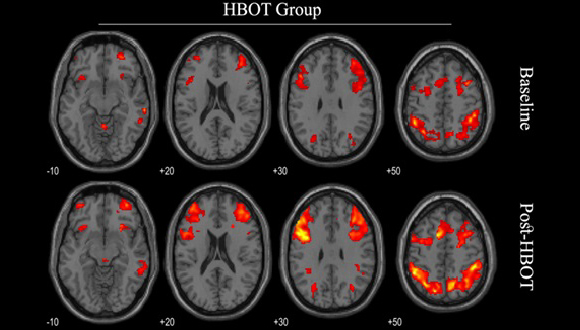
Functional MRI before and after HBOT  Photo credit: The Shamir Medical Center.

Functional MRI before and after HBOT. Photo credit: The Shamir Medical Center.

The results were encouraging, with improvements observed both at the clinical level and in fMRI imaging.  The group that received hyperbaric therapy showed improved connectivity in brain networks, alongside a decline in all typical PTSD symptoms. In the placebo group, on the other hand, no change was observed in either the brain or clinical symptoms. Prof. Efrati: “Our study demonstrated that HBOT induces biological healing in the brain of PTSD sufferers. Curing the biological wound also impacts clinical symptoms. We believe that HBOT, based on the special protocol we have developed, can bring relief to numerous PTSD sufferers worldwide, allowing them to resume a normative life in their community and family”.

Prof. Efrati emphasizes:

“Patients suffering from PTSD should undergo HBOT only at professional hyperbaric centers, where treatment is delivered by multidisciplinary teams experienced in trauma care. Unsupervised, private hyperbaric chambers are unable to provide a proven, effective protocol. Additionally, patients must receive a thorough professional evaluation to ensure they are suitable for HBOT and to determine what additional support is needed throughout their treatment journey”.

Israel’s Ministry of Defense funds HBOT for veterans who need it.

Victoria

Phone: +61 3 9296 2065
Email: office@aftau.asn.au

New South Wales

Phone: +61 02 7241 8711
Email: admin@aftau.org.au

Western Australia

Phone: :+61 0418 46 5556
Email: davidsolomon@aftau.org.au